Drawing skills Addition & Subtraction Worksheets for 8-Year-Olds
6 filtered results
-
From - To
Enhance your child's math journey with our "Drawing Skills Addition & Subtraction Worksheets" designed specifically for 8-year-olds. These engaging worksheets combine fundamental math practices with creative drawing exercises, making learning fun and interactive. As children solve addition and subtraction problems, they simultaneously develop artistic skills, boosting their fine motor abilities and creativity. Our expertly crafted activities nurture logical thinking, attention to detail, and the ability to follow instructions. Created by education professionals, these worksheets provide a balanced approach to learning, making them an unbeatable tool in both classroom and home settings. Improve math comprehension while sparking your child's artistic flair!
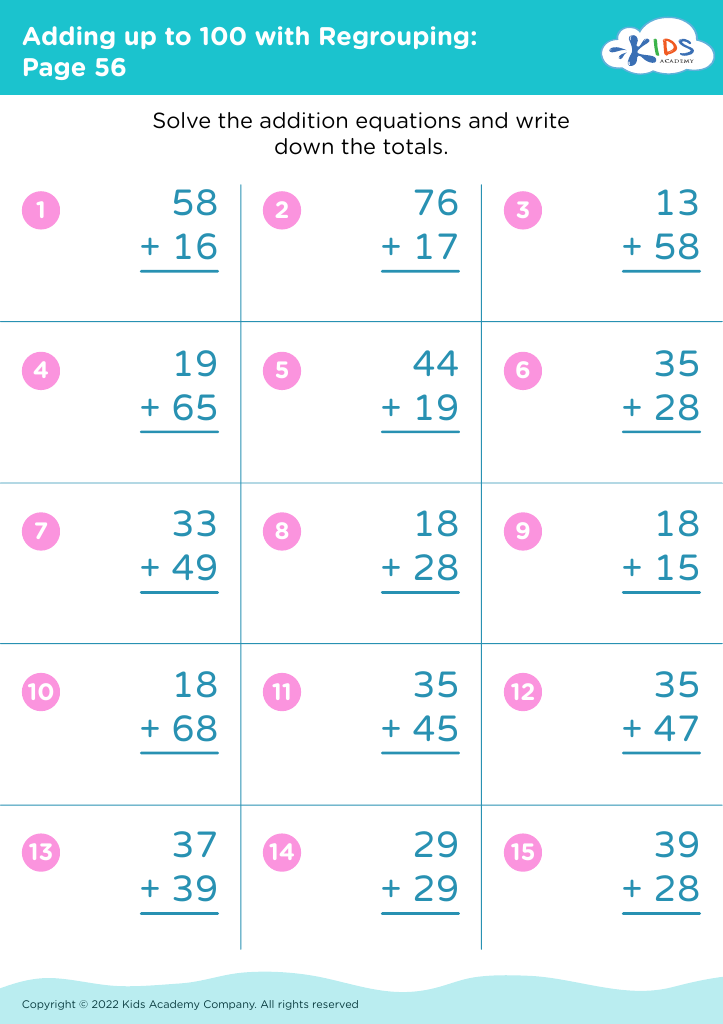
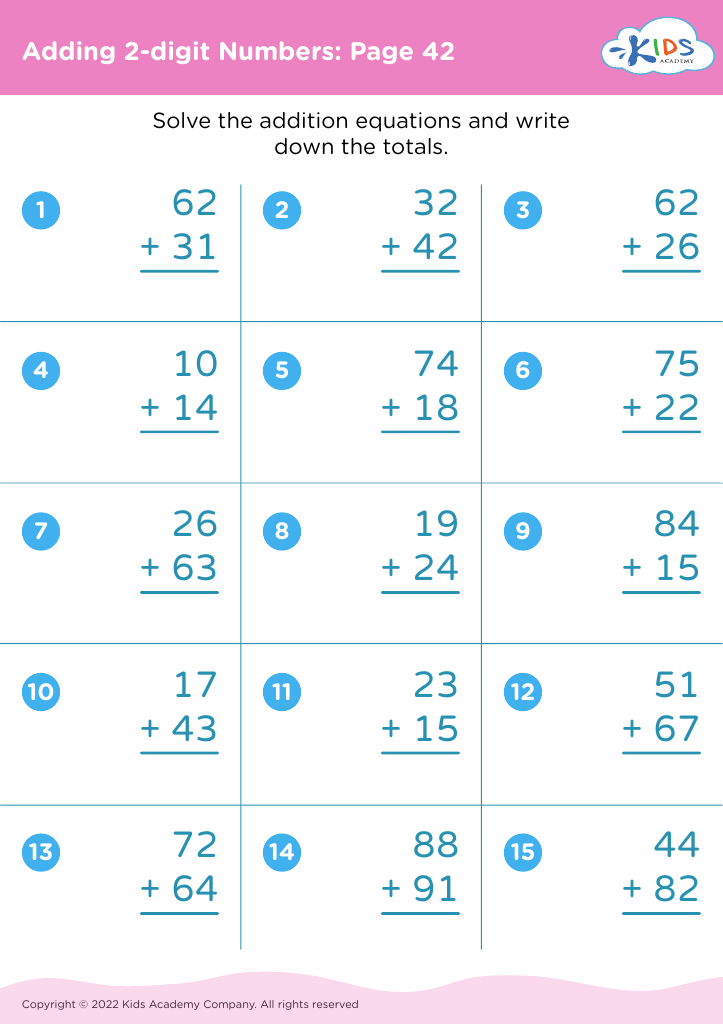








Drawing skills, addition, and subtraction are fundamental aspects of an 8-year-old's cognitive development that parents and teachers should avidly nurture. Firstly, drawing skills are not just about creativity; they enhance fine motor skills, hand-eye coordination, and spatial awareness. These art-related capabilities pave the way for better handwriting and more precise manual tasks, contributing to overall academic performance.
Moreover, drawing fosters emotional expression and cognitive processing. When children illustrate their thoughts and feelings, they develop problem-solving skills and verbalize complex emotions, leading to healthier social interactions and improved emotional intelligence.
On the other hand, mastering addition and subtraction at this age lays the foundation for future mathematical proficiency. These fundamental arithmetic operations introduce children to logical thinking and analytical reasoning. Developing accuracy and speed in these basic calculations is crucial for tackling more complex mathematical concepts in the later grades confidently.
Combining these skills enriches a child’s learning experience. For instance, drawing numerical problems as pictures or visual stories can help bridge understanding and retention. Engaging with math in a tactile and visual way ensures that abstract ideas become more relatable.
Ultimately, fostering both artistic and arithmetic skills helps create well-rounded, capable, and confident individuals. Parents and teachers play a crucial role in providing diverse opportunities and resources, ensuring a stimulating, supportive environment for children to thrive.








