Practice addition Addition & Subtraction Worksheets for 8-Year-Olds
5 filtered results
-
From - To
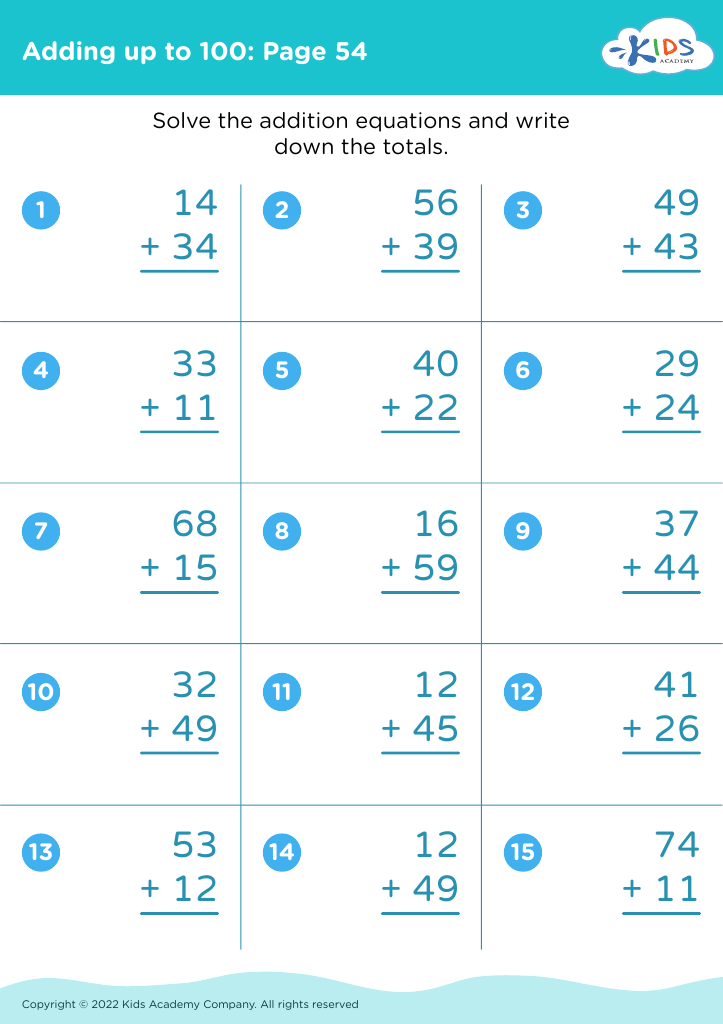
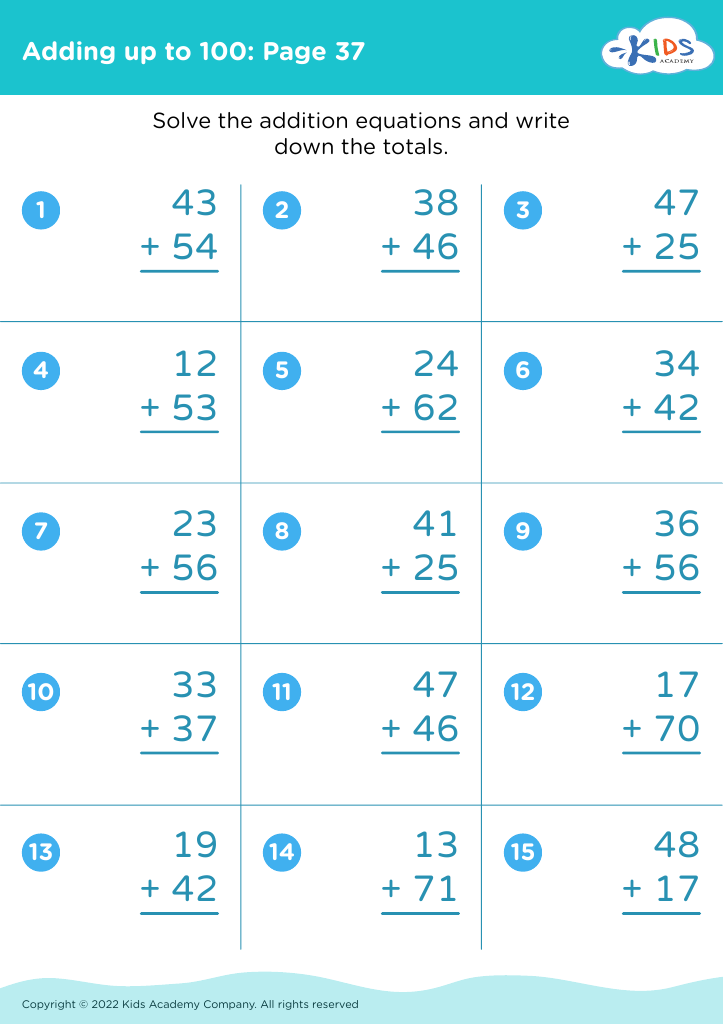
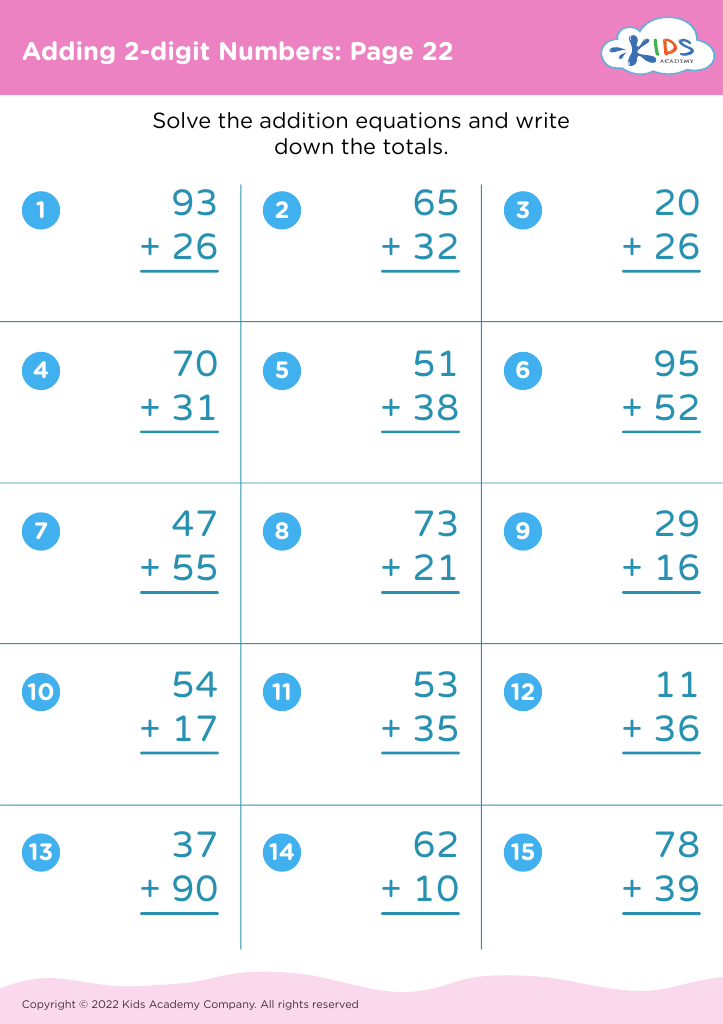
Discover our engaging Addition & Subtraction Worksheets, specifically designed for 8-year-olds! These worksheets by Kids Academy help children practice foundational math skills through fun and interactive exercises. Tailored to meet the learning needs of second graders, the practice sheets cover a range of problems, from basic sums and differences to more challenging equations. With colorful illustrations and step-by-step guidance, our worksheets make math enjoyable and accessible. Boost your child's confidence and academic performance by incorporating these printable resources into their daily learning routine. Access an array of free worksheets to ensure your child’s success and inspire a love for math.
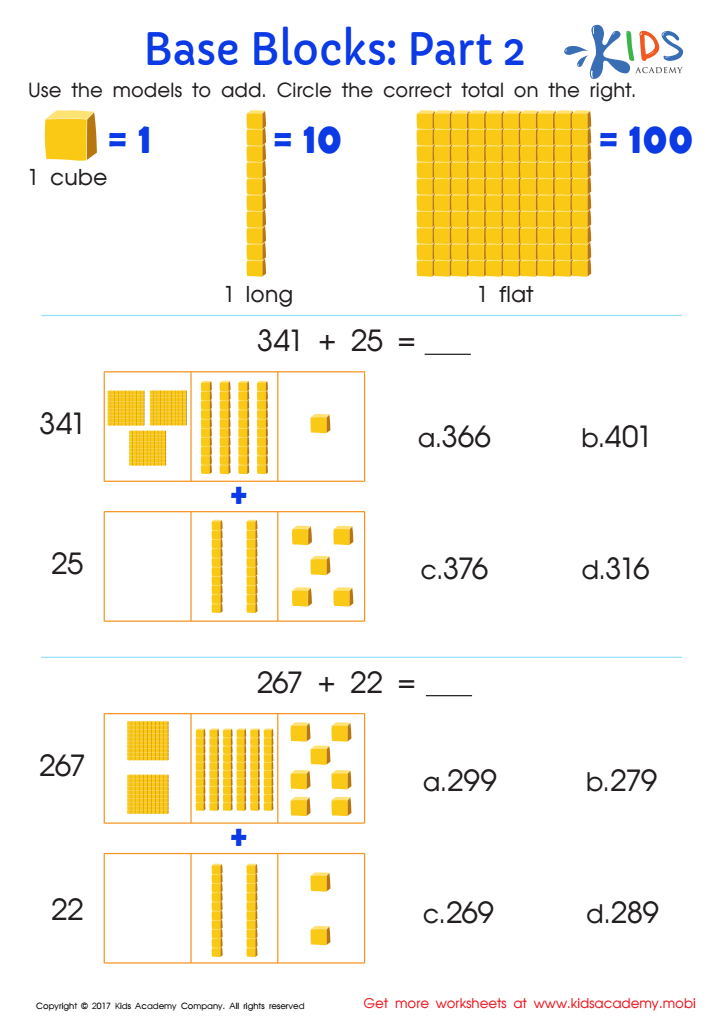
Base Ten Blocks Worksheet: Part 2
 Assign to My Students
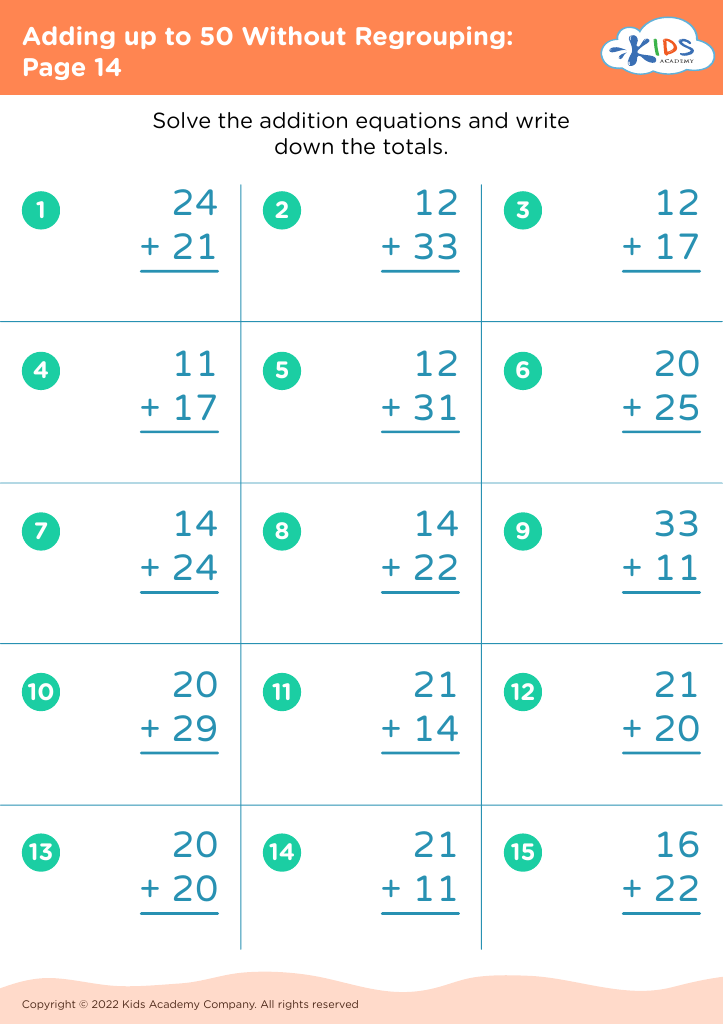








It's essential for parents and teachers to focus on practicing addition and subtraction with 8-year-old children because these foundational arithmetic skills form the bedrock of their future mathematical understanding. Mastery of these basic operations not only enhances their ability to solve everyday math problems but also prepares them for more complex mathematical concepts like multiplication, division, fractions, and eventually algebra. When children repeatedly practice addition and subtraction, they develop stronger number sense, which is crucial for mental math, estimation, and problem-solving skills.
Moreover, consistent practice of these activities can improve a child's confidence in their mathematical abilities. This boost in confidence can translate into a more positive attitude toward math as a whole, increasing their willingness to engage with challenging concepts in the future. Importantly, these arithmetic exercises are opportunities to strengthen cognitive functions such as memory, attention to detail, and logical thinking.
Additionally, parents playing an active role in their child's math homework creates a supportive learning environment, reinforcing the importance of education. Similarly, teachers who emphasize practice exercises ensure that students receive ample opportunities to solidify their skills. Both parents and teachers can make these practices engaging with games, interactive activities, and real-life math applications, making math fun and meaningful for young learners.








