Understand number relationships Addition & Subtraction Worksheets for 8-Year-Olds
3 filtered results
-
From - To
Explore our engaging "Understand Number Relationships Addition & Subtraction Worksheets" designed specifically for 8-year-olds! These worksheets help young learners grasp fundamental math concepts, focusing on the connections between addition and subtraction. Through fun and interactive activities, children will enhance their problem-solving skills and develop a strong foundation for more advanced math. Our resources are aligned with educational standards and aim to boost confidence in math through practice and understanding. Whether at home or in the classroom, these worksheets are perfect for reinforcing critical number relationships, ensuring your child enjoys learning while mastering essential math skills. Start your math journey today!
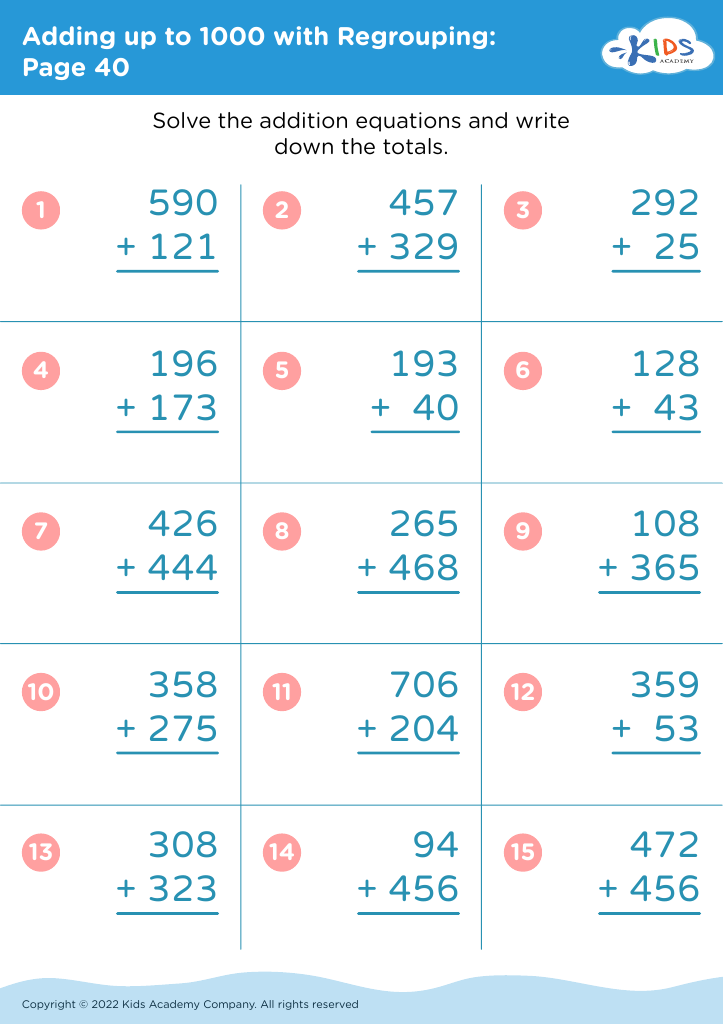
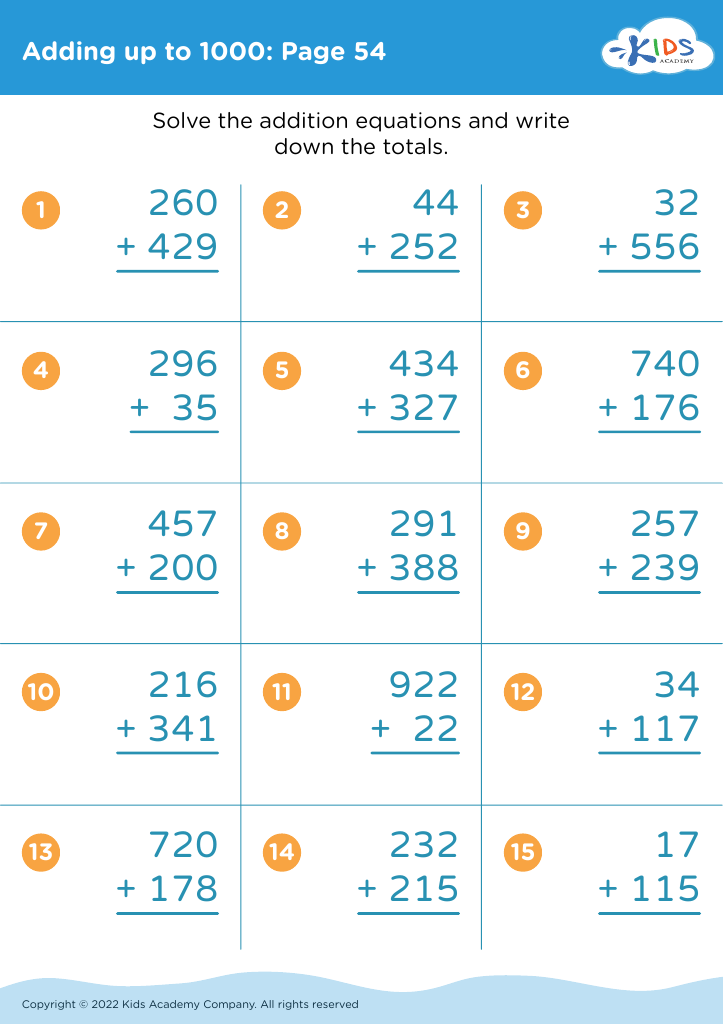
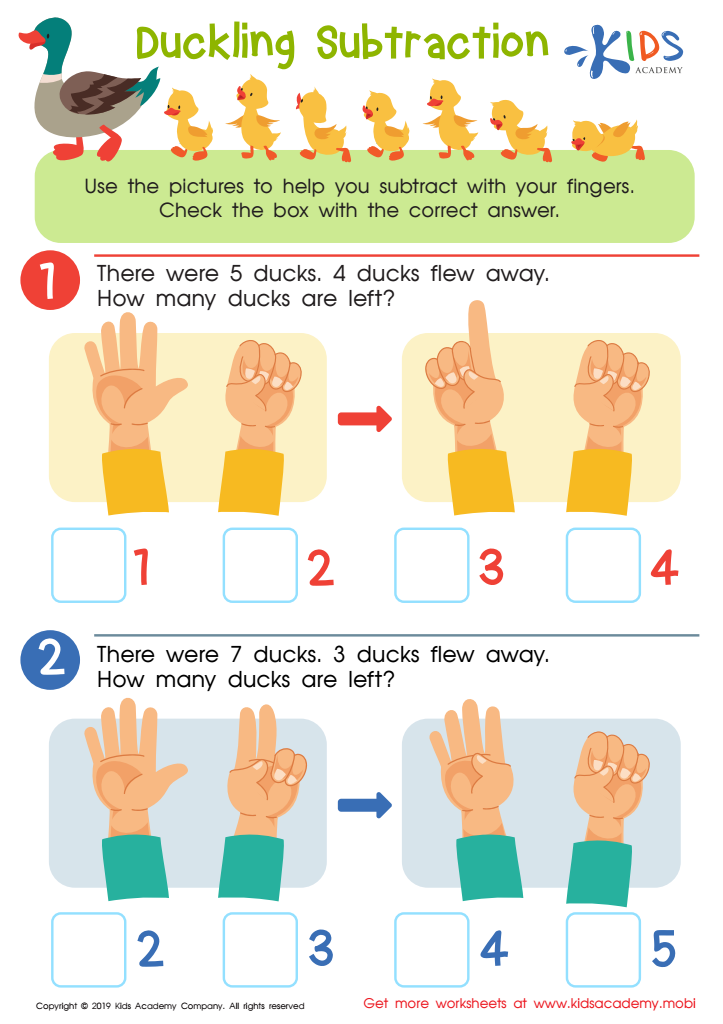
Duckling Subtraction Worksheet
 Assign to My Students








Understanding number relationships, particularly in addition and subtraction, is crucial for 8-year-olds as it forms the foundation for later mathematical concepts and everyday problem-solving skills. At this age, children begin to transition from basic arithmetic to more complex applications, such as understanding the relationships between numbers, place value, and the concept of regrouping. This understanding fosters logical thinking, which helps them tackle mathematical challenges more effectively.
Parents and teachers should care because solidifying these skills now promotes confidence in their ability to engage with math in future academic settings. When children grasp how numbers relate to one another—recognizing, for example, that adding a number and then subtracting the same number brings them back to the original value—they develop an intuitive sense of quantities. This foundational knowledge not only aids in mathematics but also enhances their reasoning and critical thinking across other subjects, including science, technology, engineering, and beyond.
Moreover, children who understand number relationships are better equipped to handle real-life situations involving budgeting, time management, and even cooking, thus giving them essential life skills. Engaging with this topic instills a lasting appreciation for mathematics, contributing to their long-term success and enjoyment in learning.








