Understanding addition Addition & Subtraction Worksheets for 8-Year-Olds
7 filtered results
-
From - To
Empower your 8-year-old with our "Understanding Addition" worksheets designed to enhance their math skills through engaging and interactive activities. These comprehensive resources make learning addition fun and accessible, featuring colorful visuals and practical examples that foster a solid grasp of basic math concepts. Students will practice various addition techniques, from summing single-digit numbers to exploring larger values, all while developing critical thinking abilities. Ideal for both classroom and home use, our worksheets promote independent learning and reinforce essential foundational skills. Unlock your child’s potential in math with our thoughtfully crafted, hands-on addition worksheets today!
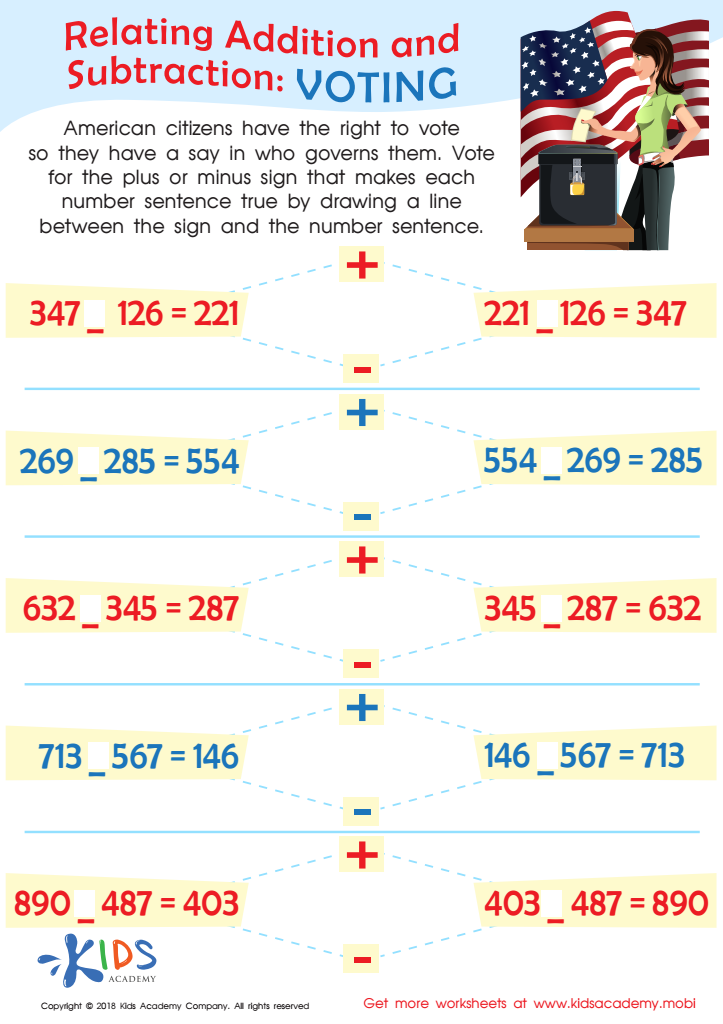
Voting Worksheet
 Assign to My Students
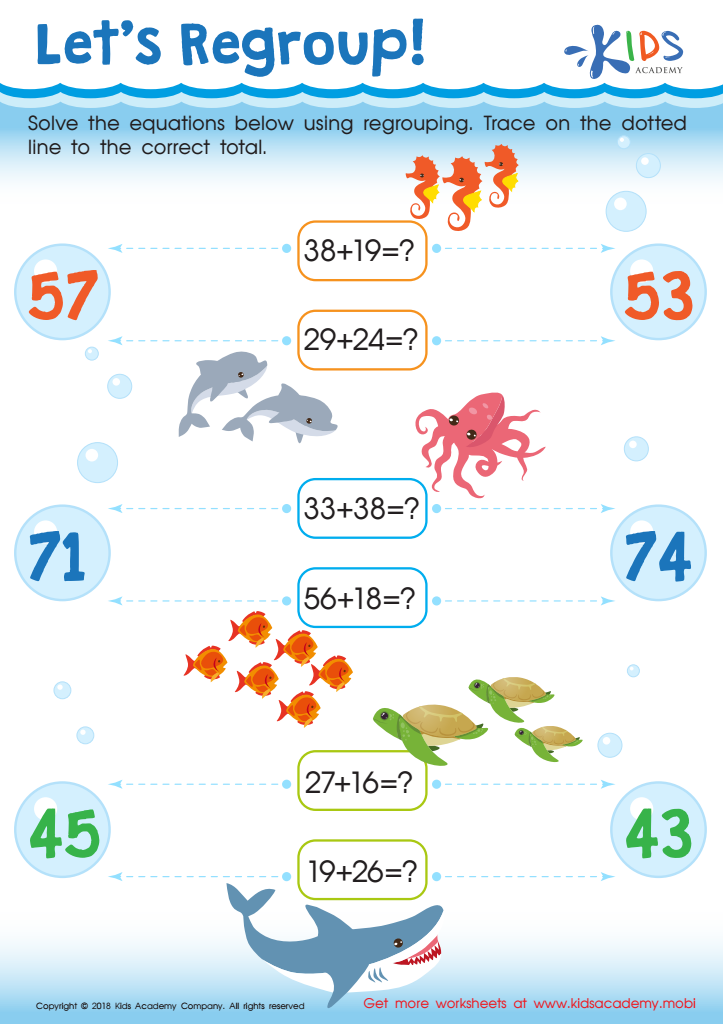
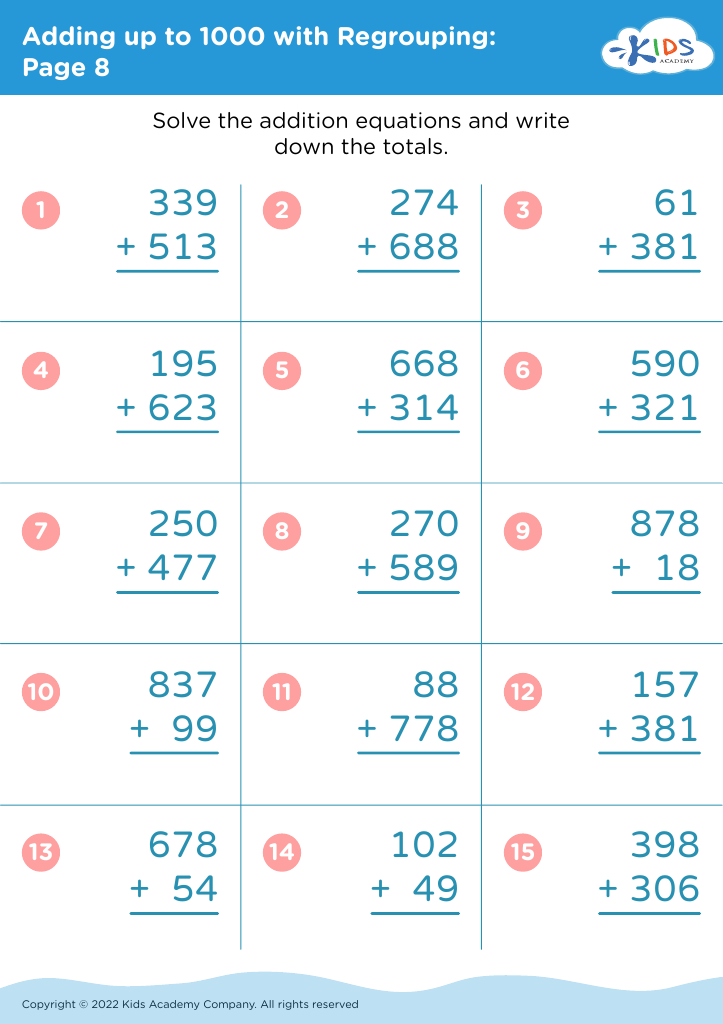
Let's Regroup! Worksheet
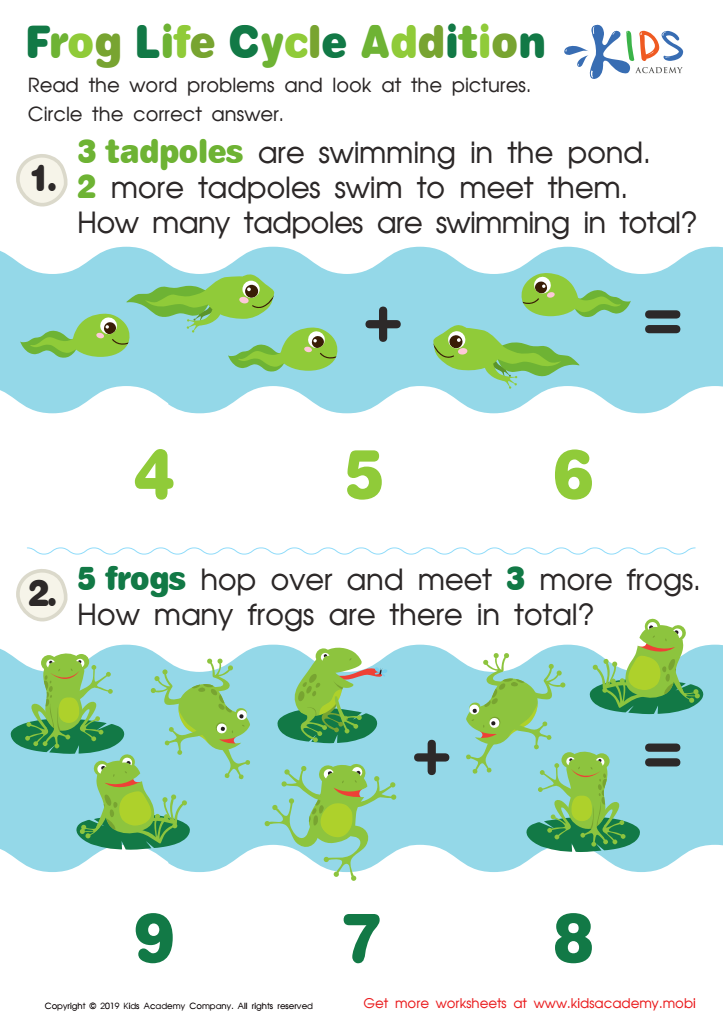
Frog Life Cycle Addition Worksheet
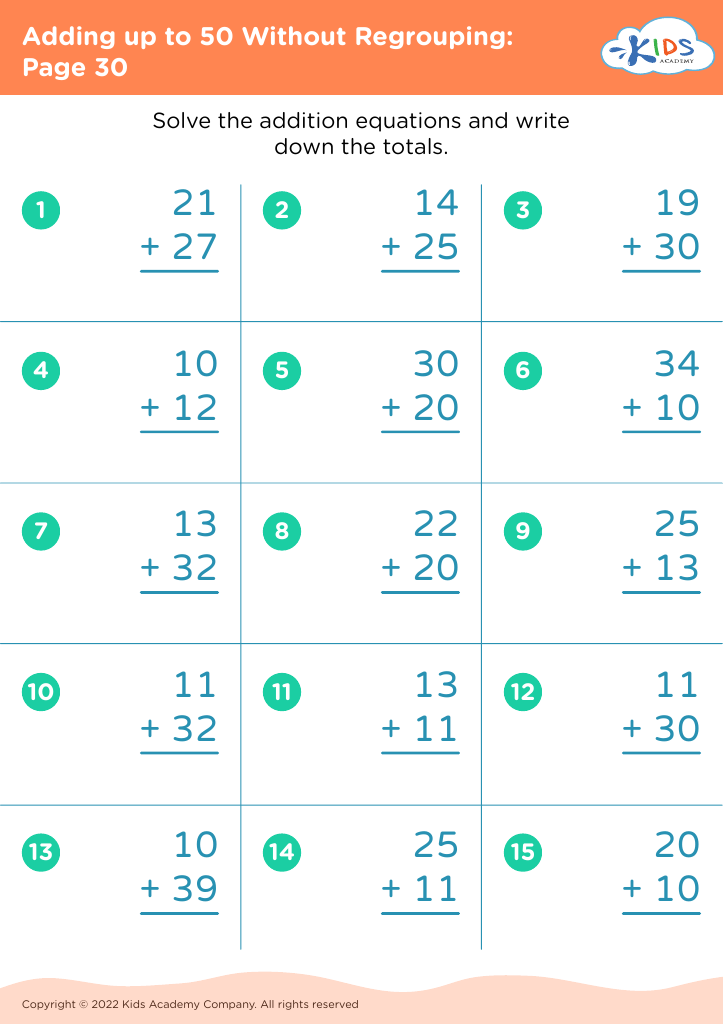








Understanding addition and subtraction is crucial for 8-year-olds as it lays the foundation for their mathematical comprehension and problem-solving skills. At this age, children transition from basic arithmetic to more complex concepts, making it essential for both parents and teachers to actively engage with these topics. Mastery of addition and subtraction not only enhances numerical fluency but also boosts confidence, allowing children to tackle more advanced math as they progress.
Furthermore, these skills are applicable in everyday life, such as budgeting, shopping, and cooking, fostering essential life skills. When parents and teachers prioritize understanding these operations, they help children develop critical thinking abilities, enabling them to analyze situations and solve problems logically.
Moreover, supporting an 8-year-old's grasp of these concepts provides a departmental purpose; it transforms abstract numbers into relatable, tangible outcomes. This process nurtures a positive attitude toward math, counteracting common anxieties associated with the subject.
Encouraging a strong foundation in addition and subtraction promotes diligence, perseverance, and a love for learning, setting the stage for lifelong mathematical skills essential in our increasingly quantitative world. Ultimately, parents and teachers play a pivotal role in shaping children's perceptions and competencies in math during these formative years.








