Understanding number sequences Addition & Subtraction Worksheets for 8-Year-Olds
4 filtered results
-
From - To
Our "Understanding Number Sequences: Addition & Subtraction Worksheets for 8-Year-Olds" are designed to help children grasp the foundational concepts of math. Tailored for young learners, these worksheets enhance problem-solving skills and mathematical fluency through engaging exercises. They focus on creating, identifying, and analyzing number patterns, enabling students to confidently master addition and subtraction within meaningful sequences. Fun, educational, and well-structured, these resources make learning enjoyable while reinforcing critical thinking. Ideal for both classroom use and additional home practice, our worksheets are the perfect tools for any child who aims to excel in basic math skills.
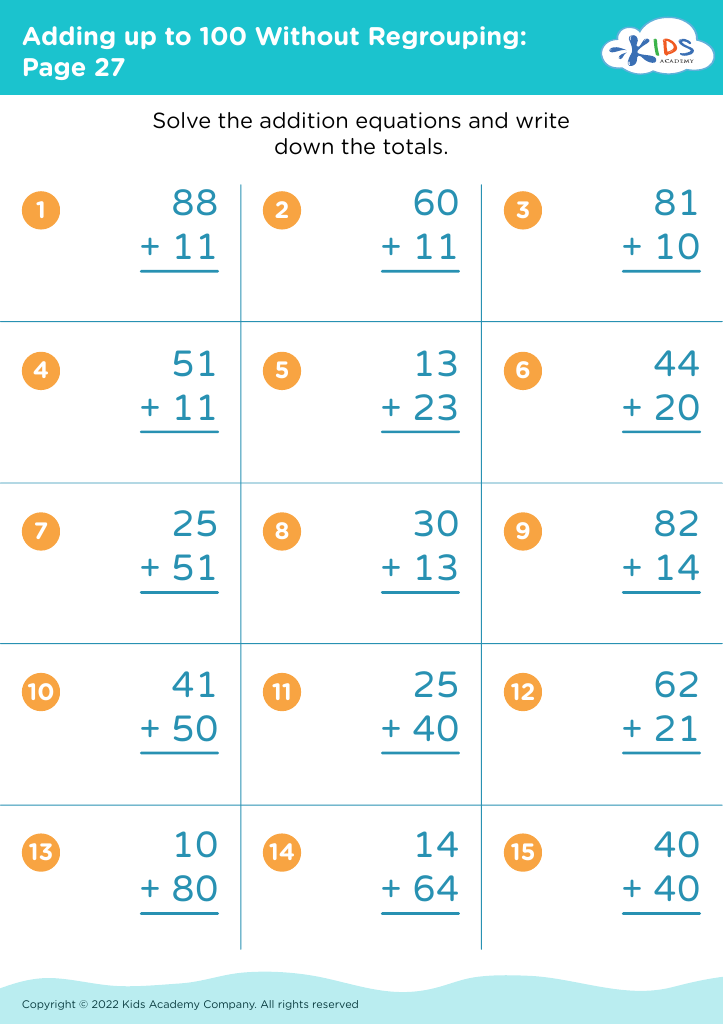
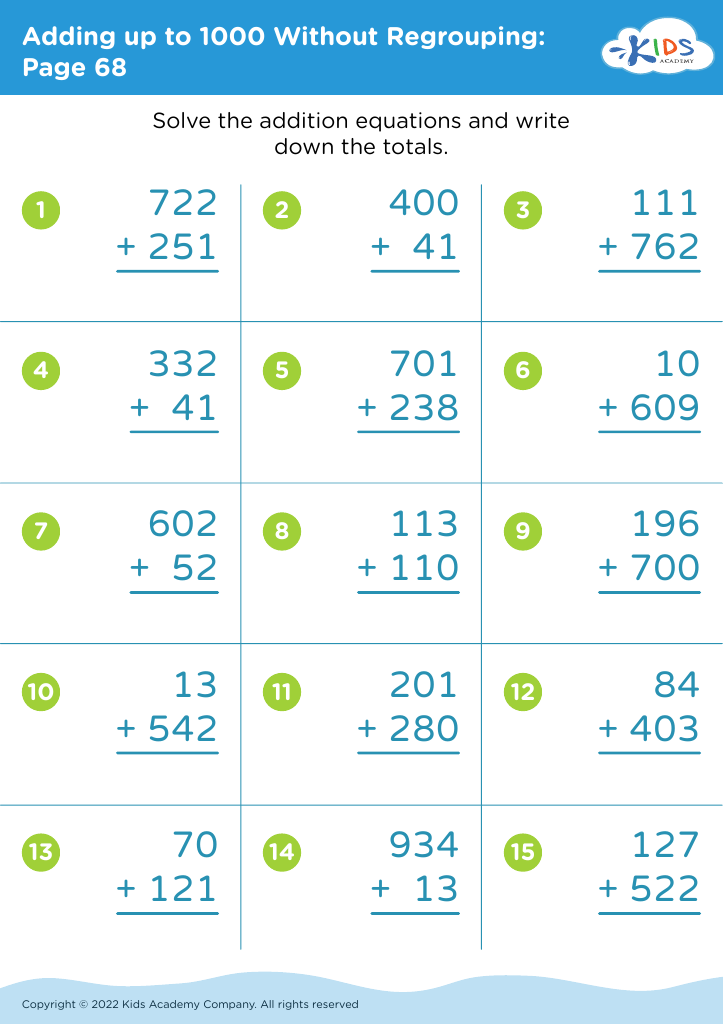
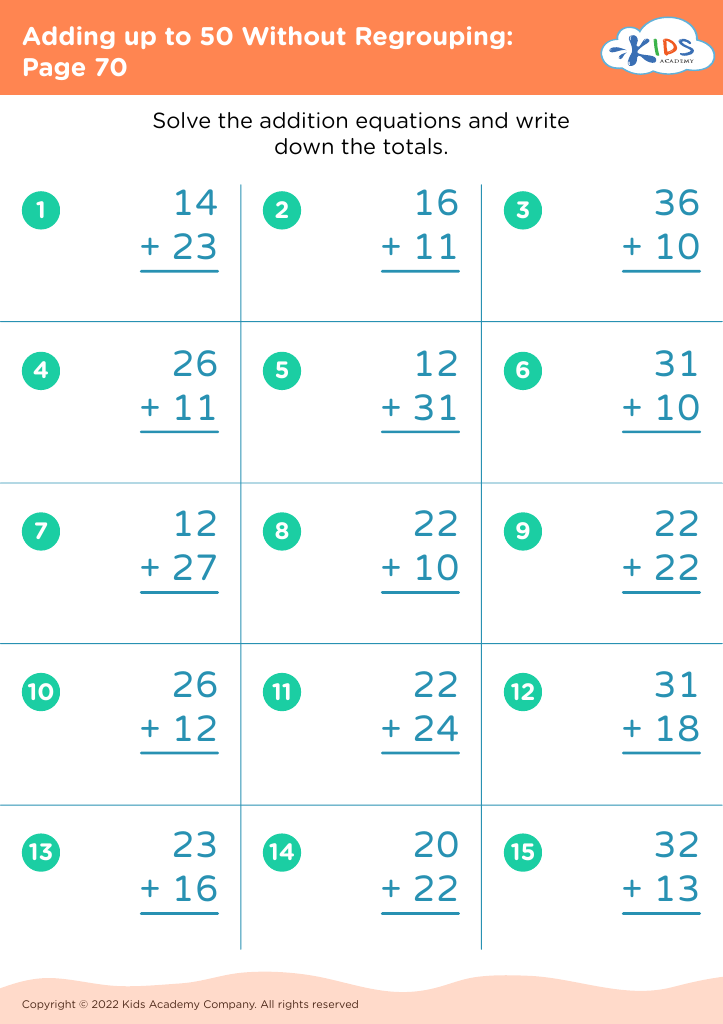
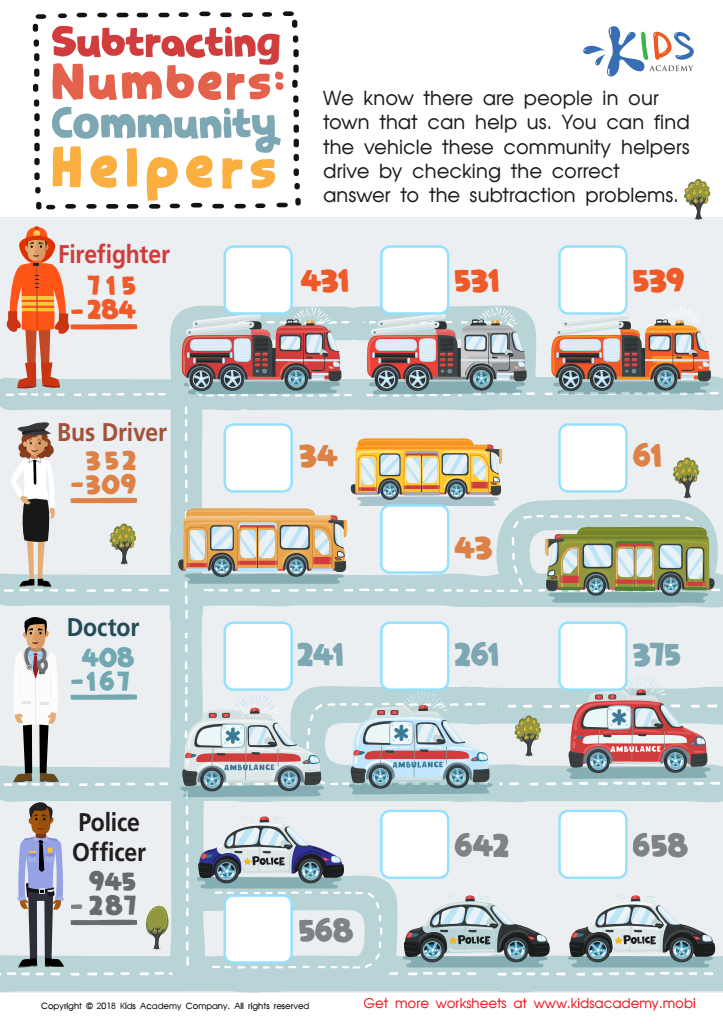
Subtracting Numbers: Community Helpers Worksheet
 Assign to My Students








Understanding number sequences, addition, and subtraction is crucial for 8-year-olds as it lays the foundation for all higher mathematical concepts. Number sequences help children recognize patterns and develop logical thinking, which is essential not just in mathematics but in everyday problem-solving. Adding and subtracting are the basic operations that form the building blocks for more complex mathematical ideas such as multiplication, division, fractions, and algebra.
For teachers and parents, fostering a strong grasp of these concepts at an early age can lead to better academic performance. Competence in these areas aids in developing confidence and a positive attitude toward mathematics. When children are confident in handling numbers, they will be more likely to tackle challenging problems without fear.
Moreover, a solid understanding of these basics has practical daily applications. From calculating allowances to understanding time and measurements, children frequently encounter situations that require mental or written arithmetic. Early encouragement and support in mastering these foundational skills empower children to navigate more complex tasks with ease as they grow older.
Involvement from teachers and parents is vital in making learning enjoyable and engaging. Through games, real-life problem-solving situations, and encouraging a curious attitude toward numbers, adults can make a lasting impact on a child’s mathematical journey and overall academic success.








