Understanding sequencing Addition & Subtraction Worksheets for 8-Year-Olds
7 filtered results
-
From - To
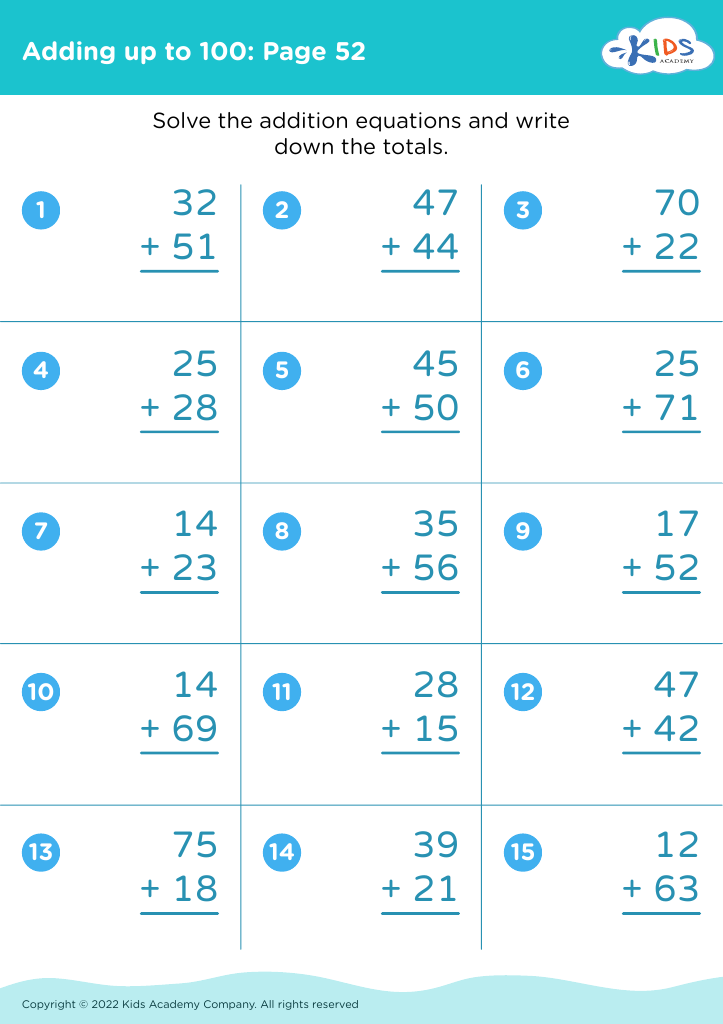
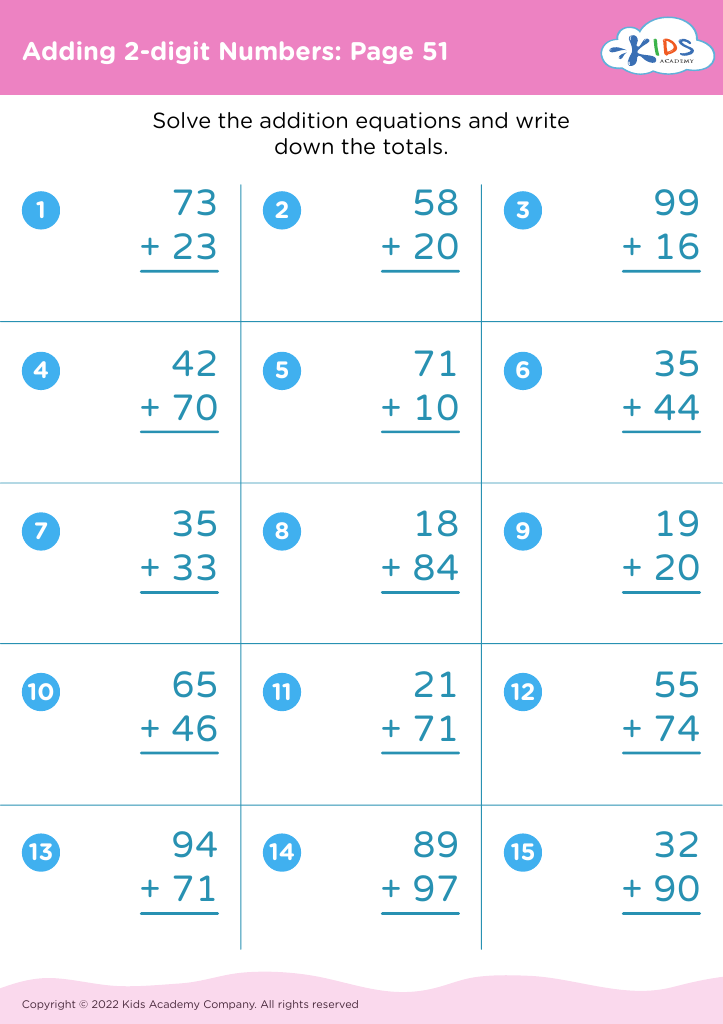
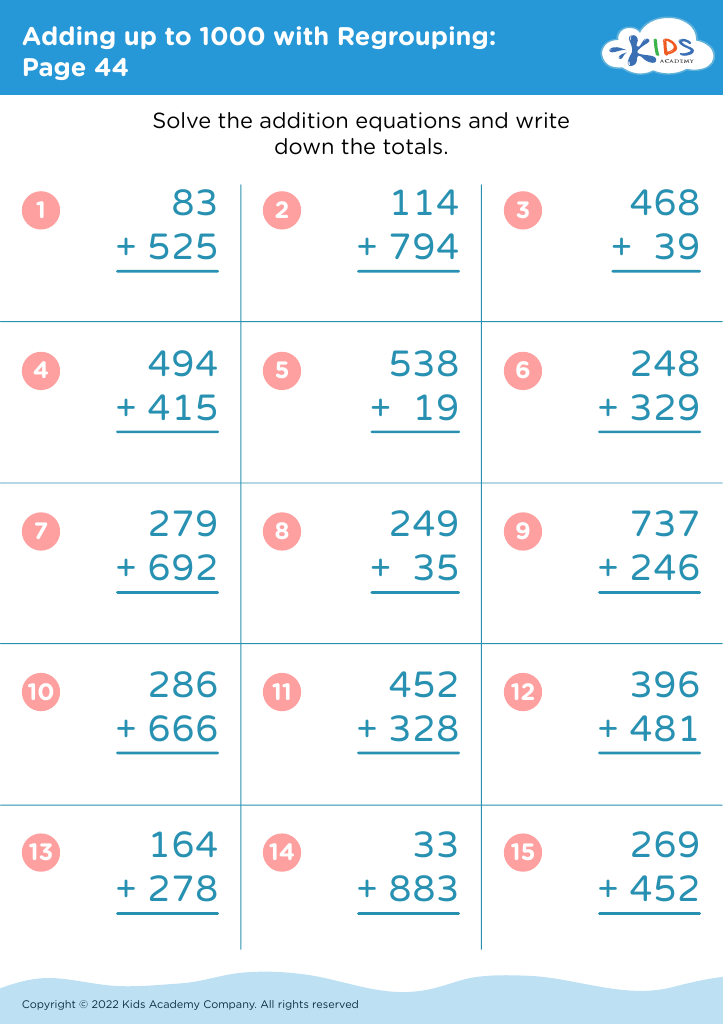
Explore our comprehensive "Understanding Sequencing Addition & Subtraction Worksheets" designed specifically for 8-year-olds. These engaging worksheets focus on enhancing critical skills through sequencing number operations, laying a solid foundation for mathematical reasoning. Each activity encourages children to recognize patterns, build fluency in addition and subtraction, and develop problem-solving strategies. Perfect for classroom or home learning, these worksheets foster a deeper understanding of how math concepts connect, making learning both fun and effective. Equip your child with the tools they need to master sequencing and become confident in their math capabilities. Download and watch their skills soar!
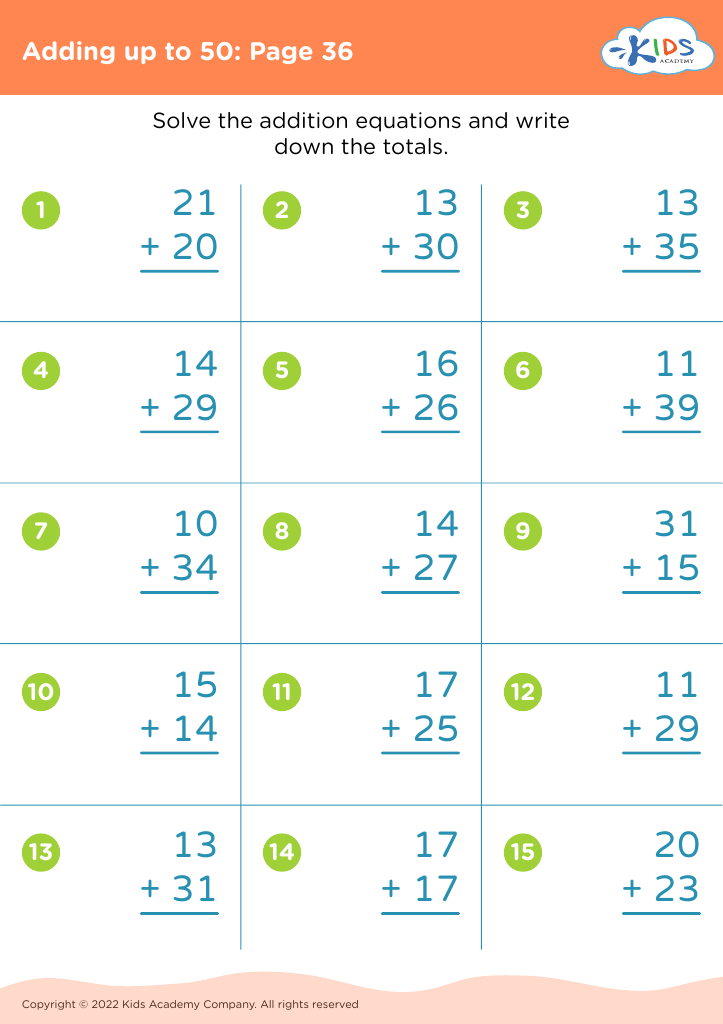
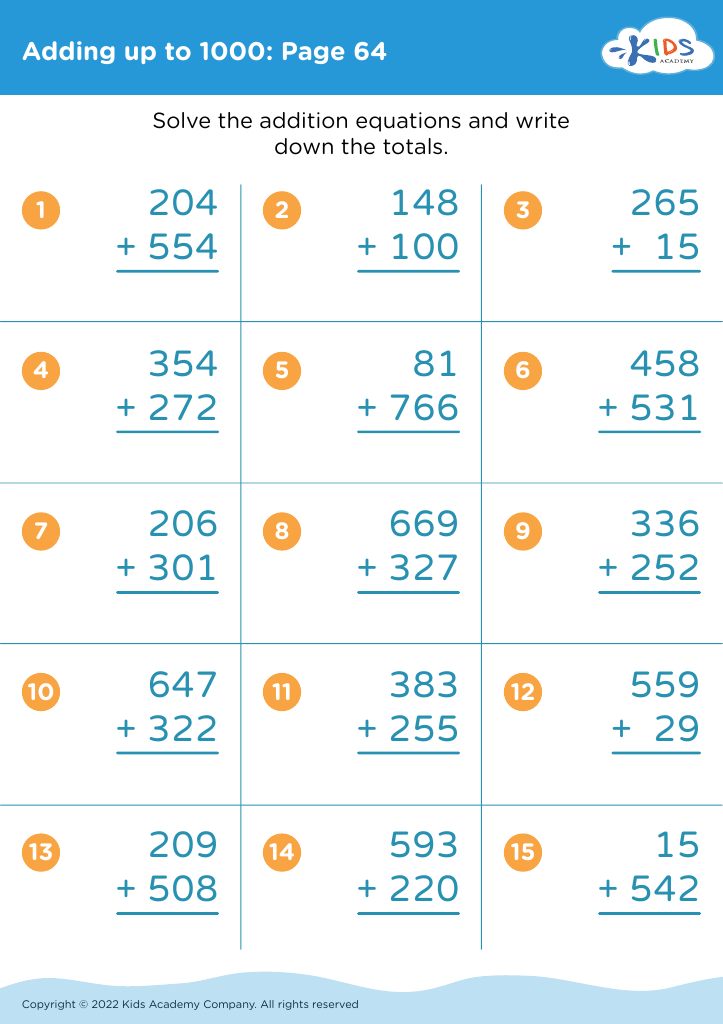
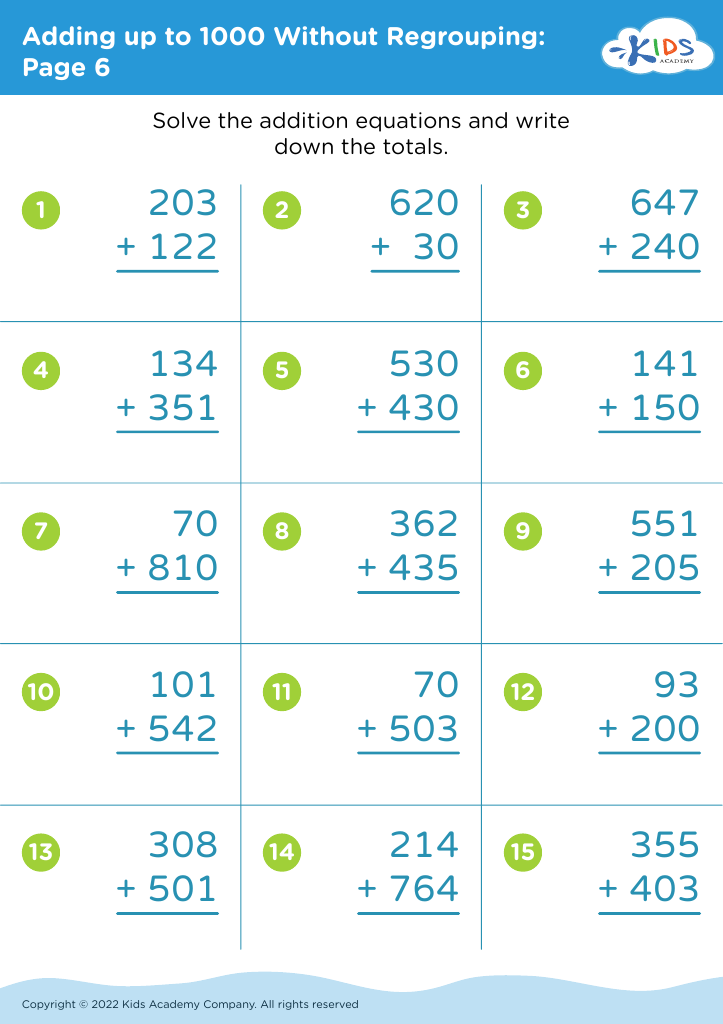
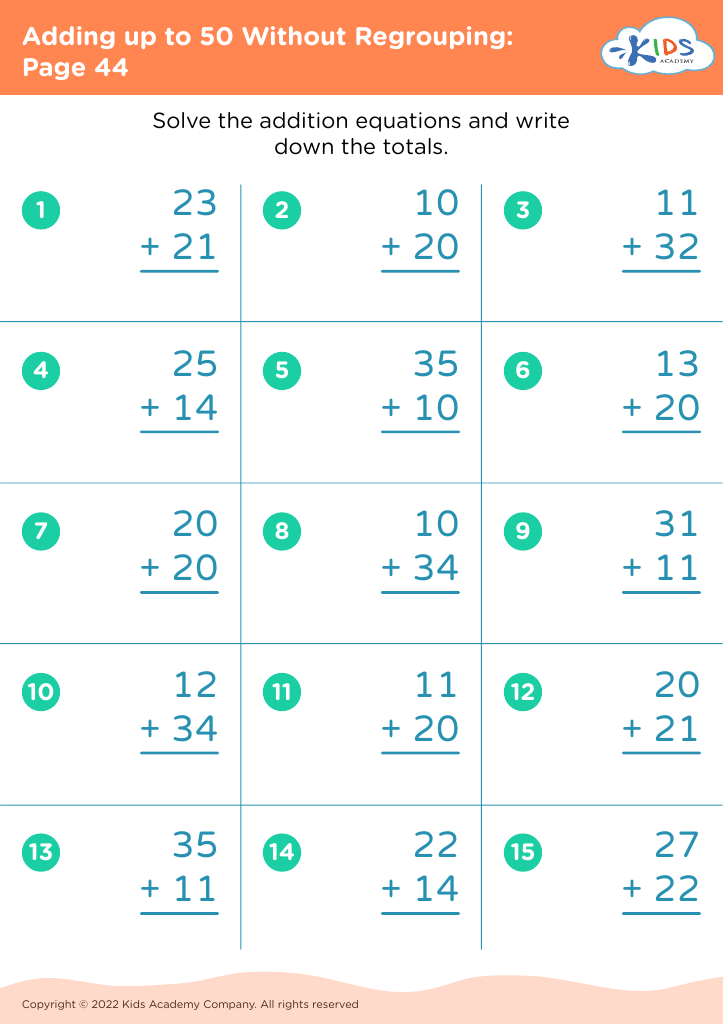








Understanding sequencing in addition and subtraction is crucial for 8-year-olds, as it lays the foundation for more advanced mathematical concepts. At this age, children begin to deepen their comprehension of numbers and operations, moving from basic computation to problem-solving. Sequencing helps them recognize that mathematical operations are not just isolated steps but part of a cohesive process.
When students learn to sequence correctly, they enhance their ability to solve multi-step problems. For instance, understanding which addition or subtraction operations to perform first in a word problem can significantly impact their ability to arrive at the correct solution. This skill is vital not just in math but also in developing logical thinking and reasoning abilities.
Moreover, mastering sequencing can boost a child's confidence in their mathematical skills. Parents and teachers play a vital role by providing engaging activities and real-world scenarios where sequencing is applied, making math fun and relevant. By caring about their understanding of sequencing, adults contribute to children's overall mathematical literacy, opening doors for future STEM opportunities and fostering critical thinking skills that will benefit them in many areas of life.








