Addition of fractions Addition Worksheets for 8-Year-Olds
3 filtered results
-
From - To
Discover engaging Addition of Fractions worksheets designed specifically for 8-year-olds! These user-friendly resources help young learners master the concept of adding fractions with like and unlike denominators. Each worksheet features colorful visuals and interactive problems that make practicing math both fun and effective. With step-by-step guidance, children will build confidence as they enhance their understanding of fractions. Perfect for home or classroom use, these worksheets cater to diverse learning styles and motivate kids to improve their math skills. Download printable worksheets now and watch your child excel in their fraction addition abilities! Let’s make math enjoyable and educational!
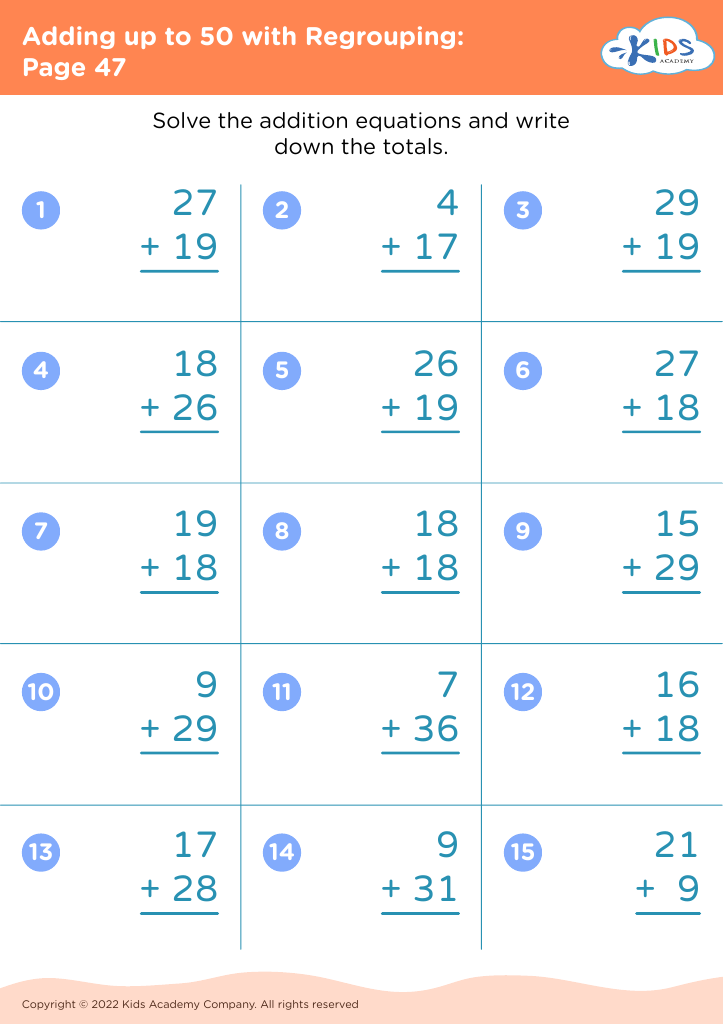
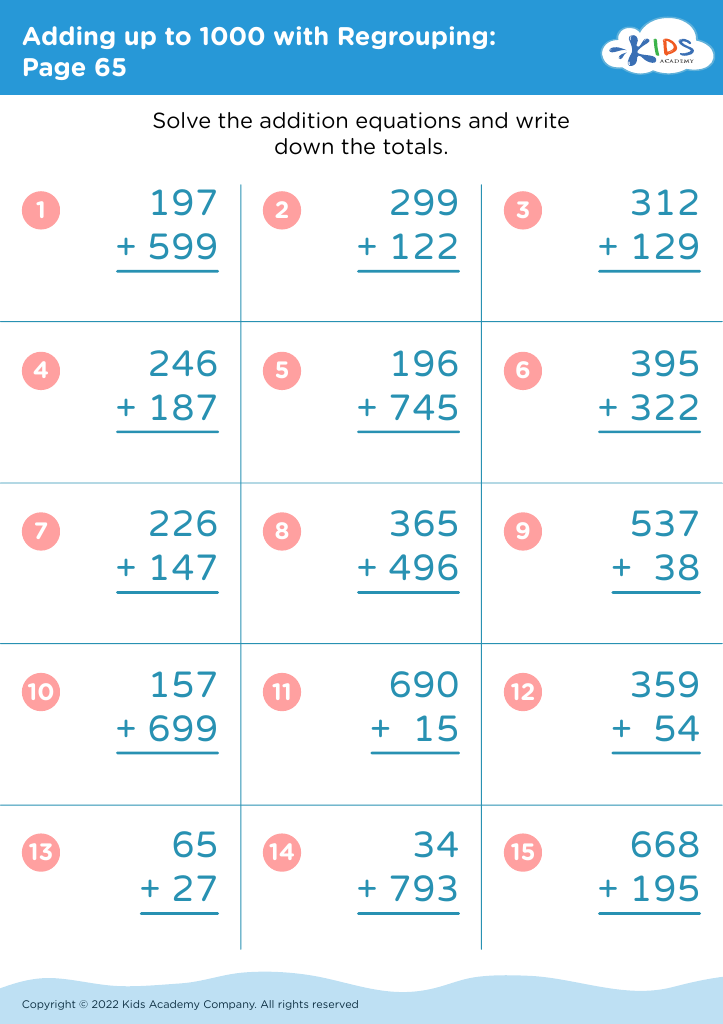
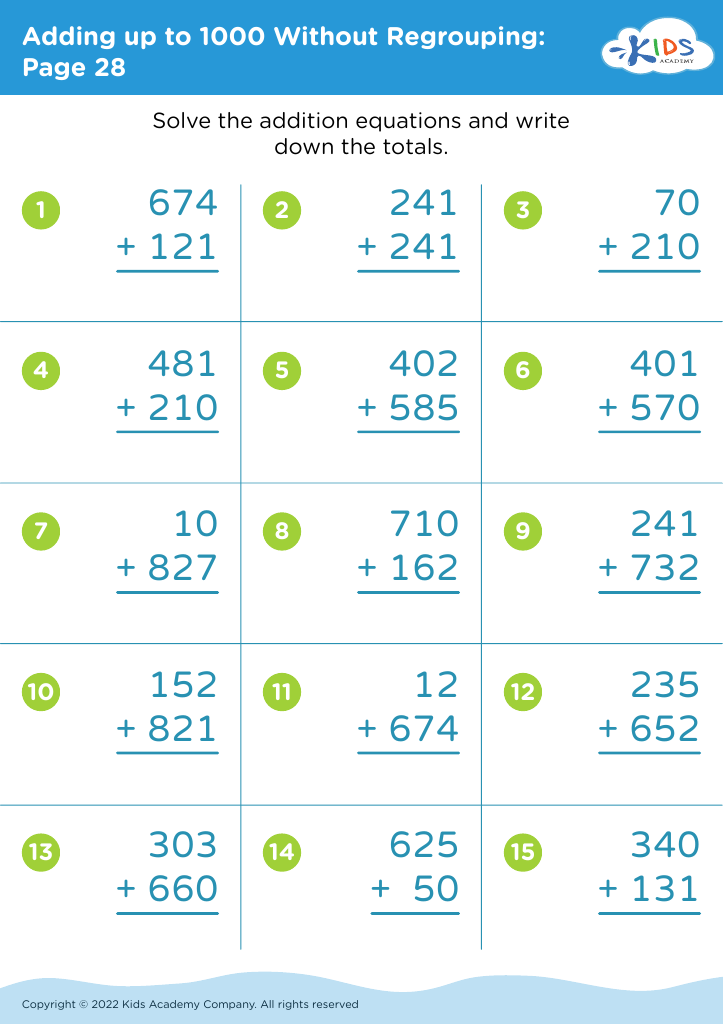







.jpg)
Parents and teachers should care about teaching 8-year-olds how to add fractions because this concept forms the foundation for more advanced mathematical skills. At this age, children are developing critical thinking and problem-solving abilities, and understanding fractions is essential in real-life situations, such as cooking, shopping, and sharing.
Addition of fractions helps children recognize the importance of having a common denominator, enhancing their logical reasoning. This skill encourages them to love math and view it as a useful tool rather than an isolated subject. Additionally, mastering fractions promotes their ability to work with ratios and proportions in later grades, thereby ensuring academic success.
Moreover, learning to add fractions fosters perseverance and resilience, as students encounter challenges that require them to experiment with different strategies. These traits are invaluable in every aspect of life.
Furthermore, it aids in cognitive development, helping to sharpen their attention to detail—an essential quality in both math and wider educational contexts. When parents and teachers prioritize fraction addition, they equip students with essential life skills, motivate them to engage with math positively, and lay a strong foundation for future learning in mathematics and beyond.








