Color matching Addition Worksheets for 8-Year-Olds
3 filtered results
-
From - To
Discover our engaging Color Matching Addition Worksheets tailored for 8-year-olds! These fun, interactive resources combine math practice with vibrant colors to enhance learning. Children will develop their addition skills by matching colored objects while reinforcing their understanding of numbers. These worksheets are perfect for homeschooling or classroom activities, promoting visual learning and creativity. Designed to cater to various learning styles, our color matching activities help boost confidence and make math enjoyable. Explore our collection today to support your child's mathematical journey with an exciting and colorful twist!
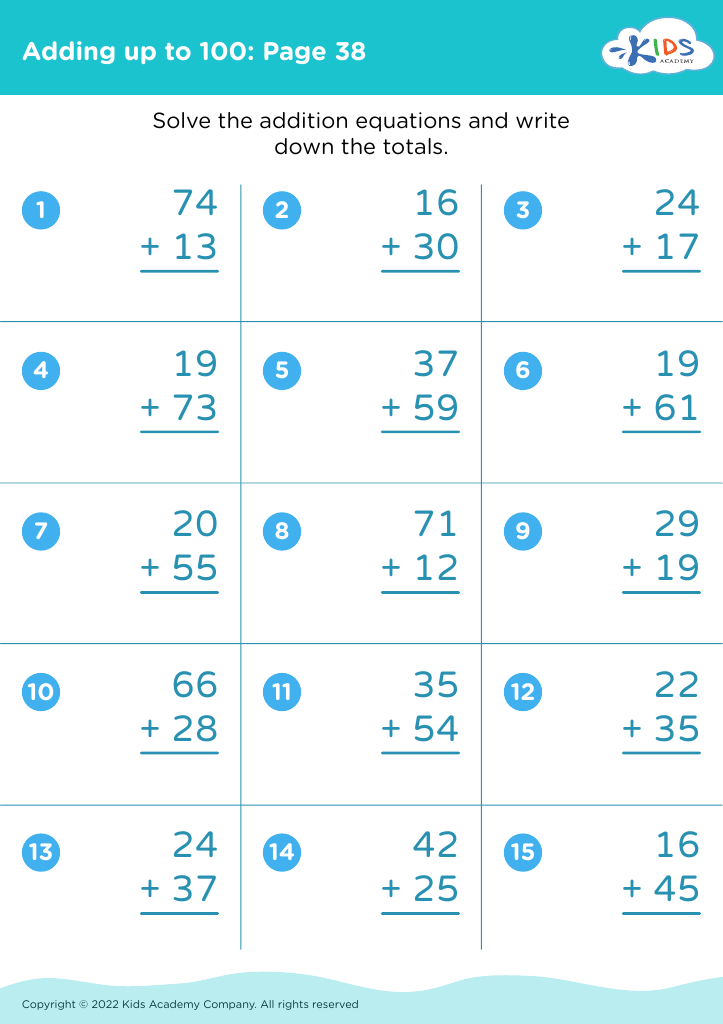
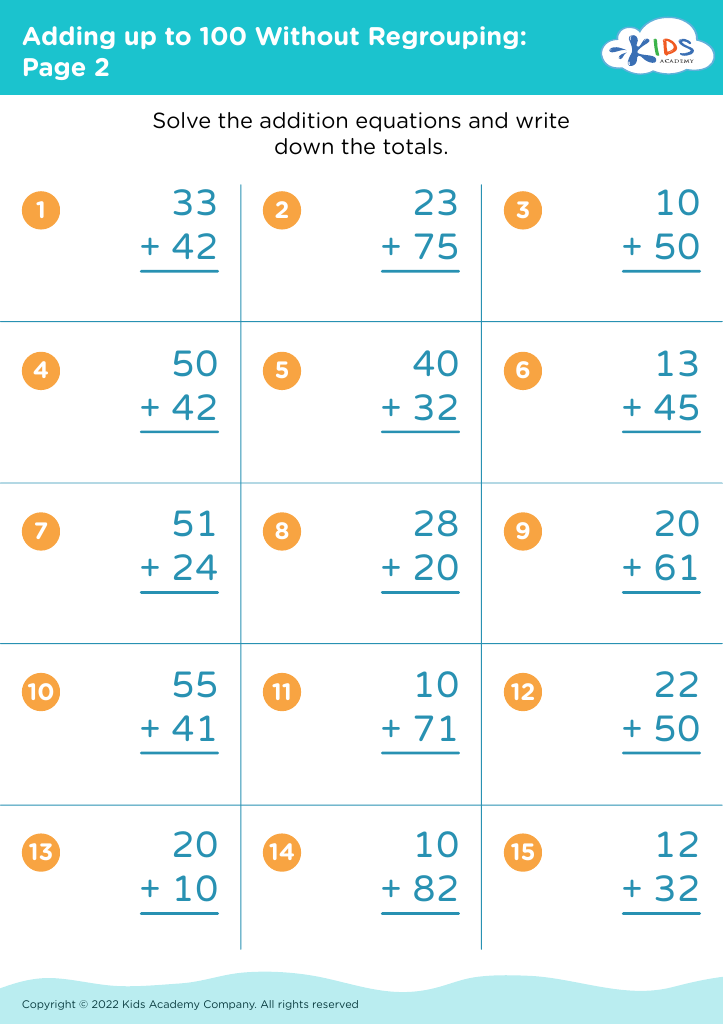
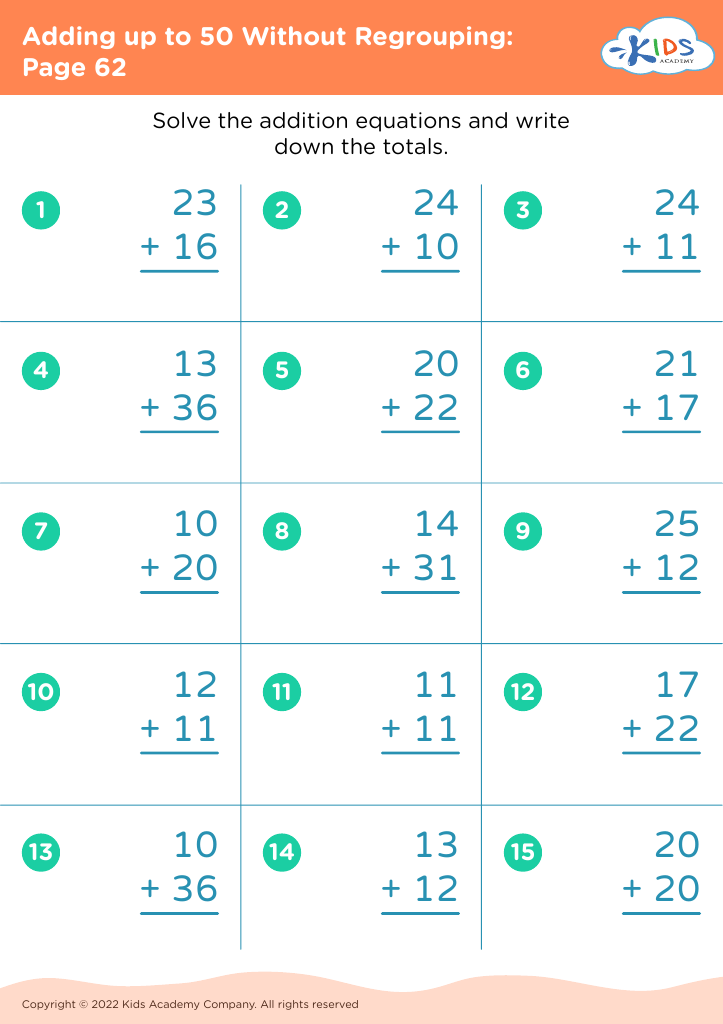








Color matching addition is a vibrant and engaging method that enhances the learning experiences of 8-year-olds when it comes to mathematics. At this age, children are not only developing their numerical skills but also their ability to think critically and solve problems. Incorporating color into addition activities makes learning fun and visually stimulating, which can increase motivation and engagement.
Parents and teachers should care about color matching addition because it nurtures both cognitive and emotional development. By associating numbers with colors, children can better visualize relationships between quantities, enhancing their understanding of addition concepts. This approach also caters to different learning styles, accommodating visual learners who thrive on seeing and manipulating their environment.
Moreover, color matching activities can foster collaboration among peers, encouraging teamwork and communication as children work together to solve problems. As they engage with their peers, they also build social skills, boosting their overall developmental trajectory.
Lastly, by utilizing engaging methods like color matching addition, educators and parents can help create a positive attitude towards math, reinforcing the idea that math can be enjoyable. This foundational enjoyment can lead to better performance and a lifelong appreciation for mathematics.








