Counting objects Addition Worksheets for 8-Year-Olds
8 filtered results
-
From - To
Explore our engaging Counting Objects Addition Worksheets designed specifically for 8-year-olds! These worksheets provide students with fun and interactive ways to enhance their addition skills through visual counting activities. Children will learn to count objects in various fun themes, enabling them to understand the concept of addition better. By recognizing the quantity of objects and adding them up, students will build a strong foundation in math. Our worksheets are perfect for in-class learning or at-home practice, reinforcing essential skills while keeping children motivated. Ignite your child’s love for math today with our colorful and diverse addition worksheets!
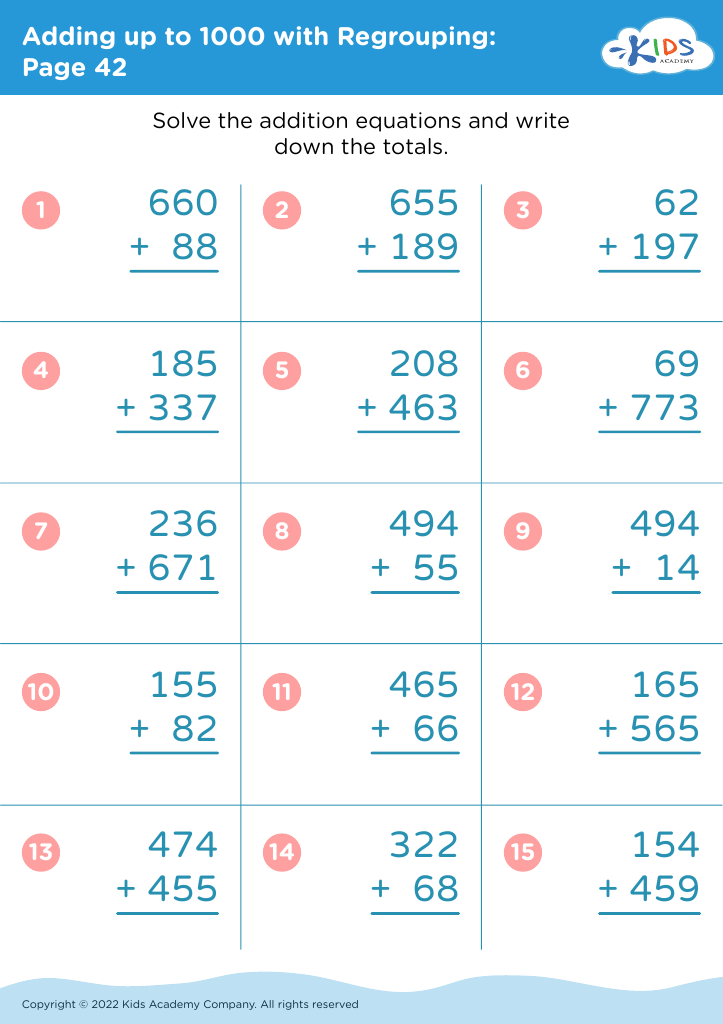
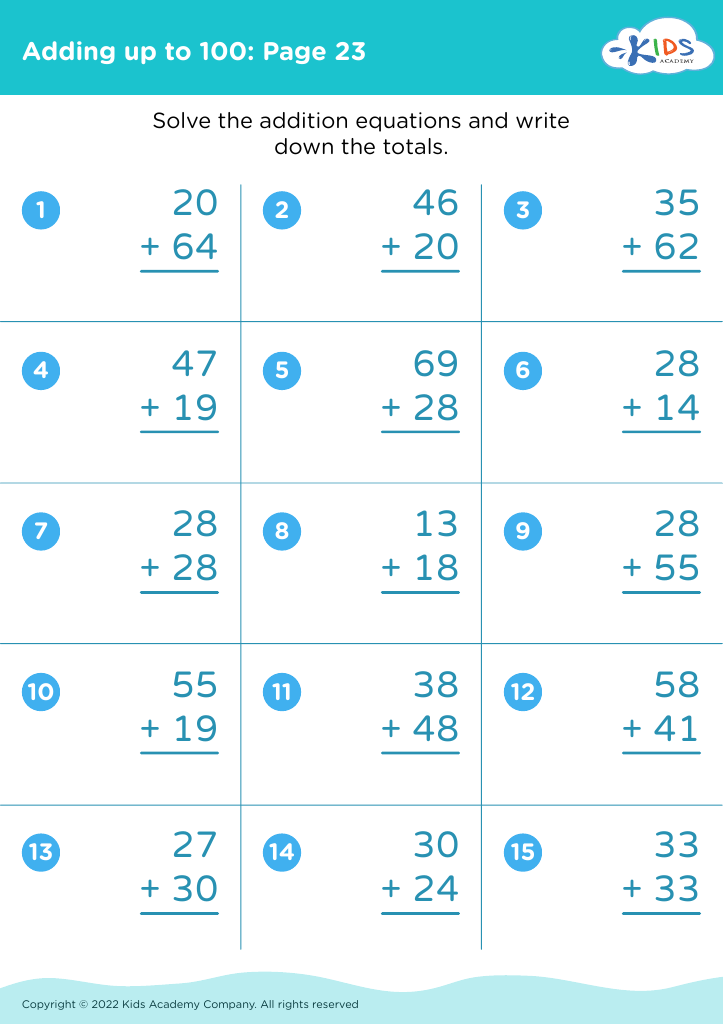
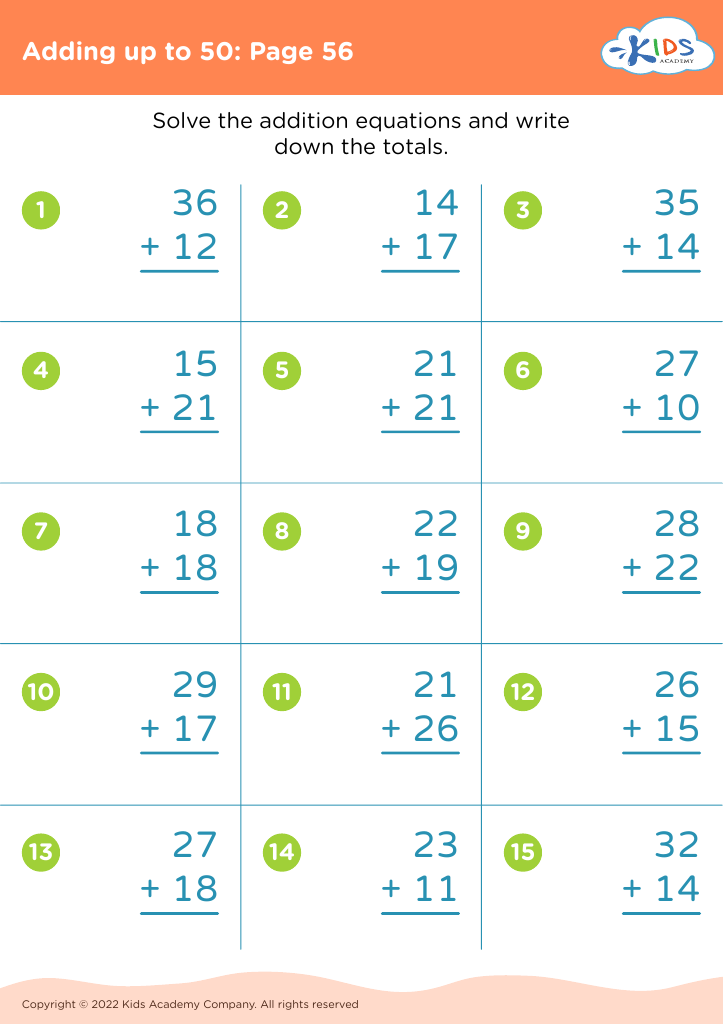
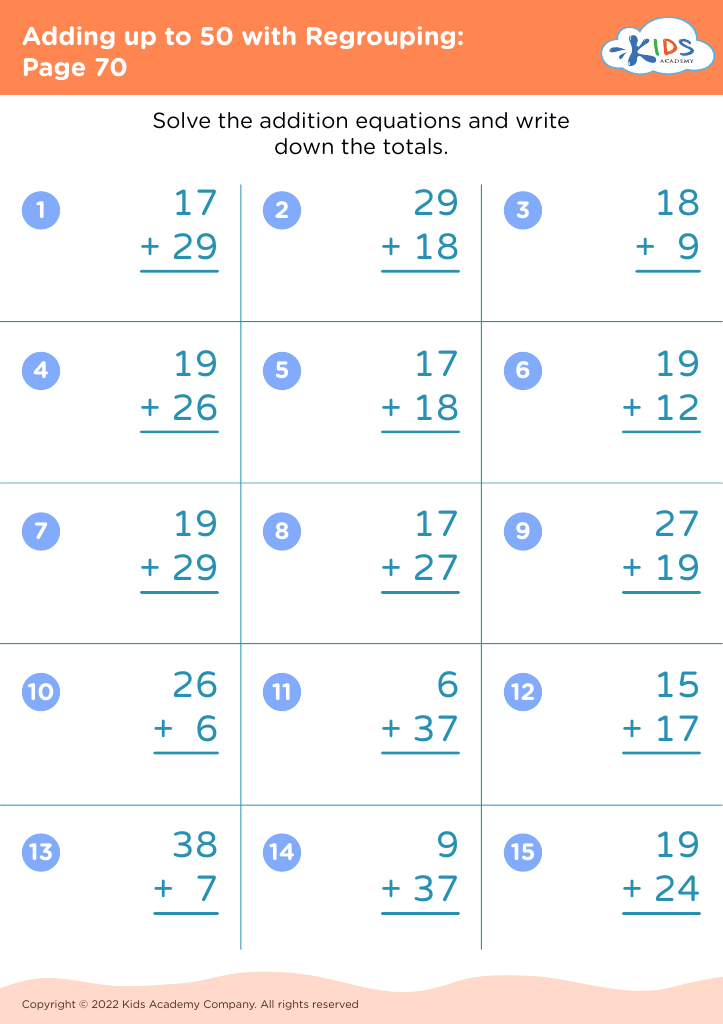
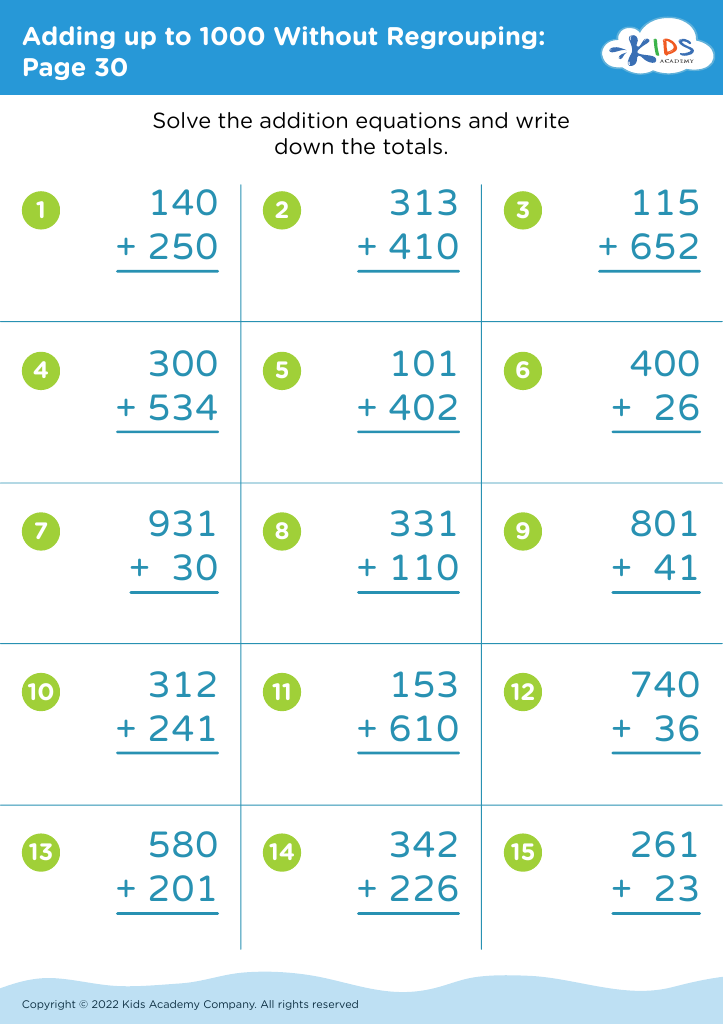
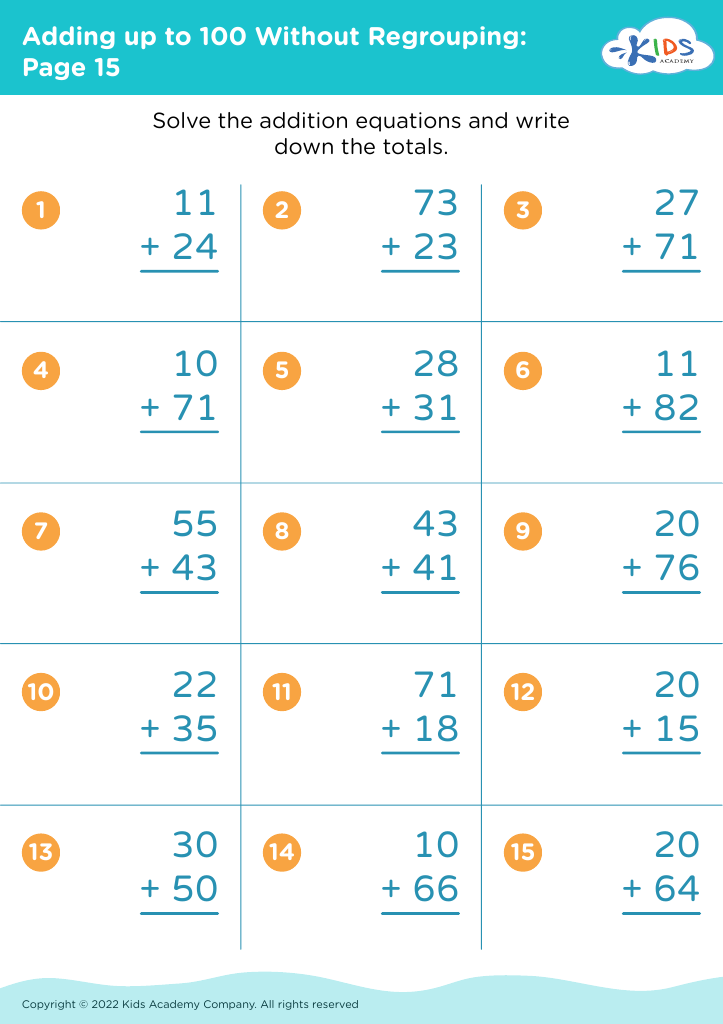
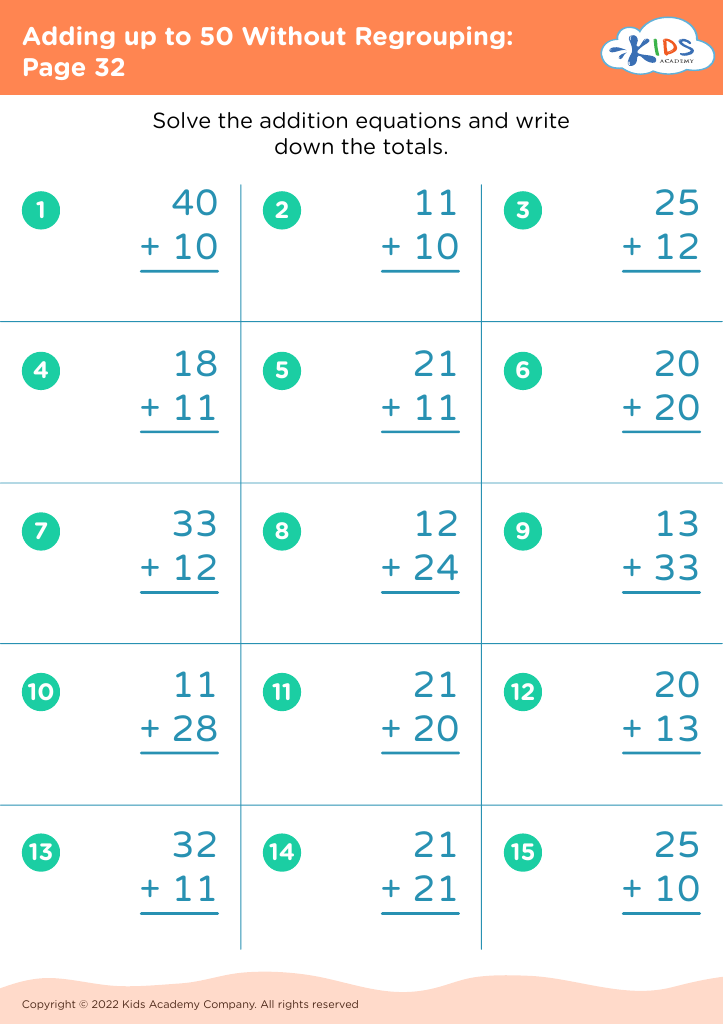
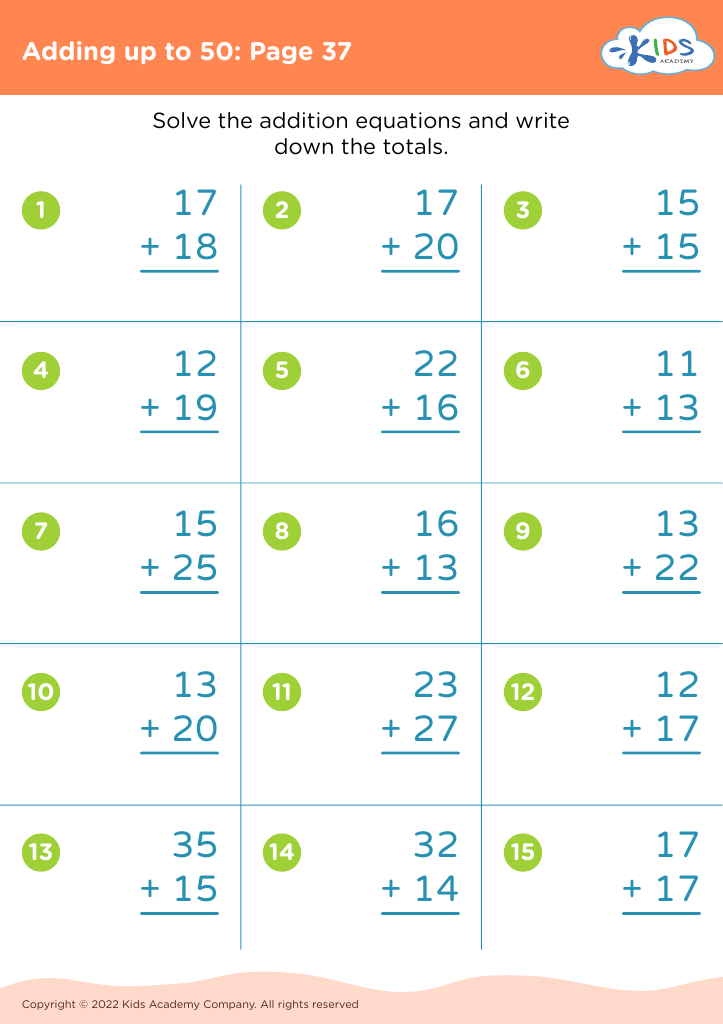






.jpg)

Counting objects and basic addition are foundational skills in early mathematics that are crucial for 8-year-olds. At this age, children are transitioning from basic number recognition to more complex mathematical concepts. These skills help develop their numerical fluency, which is essential not just in math classes but in everyday life situations.
When parents and teachers place emphasis on counting and addition, they facilitate better problem-solving skills. Children learn to manipulate numbers, understand quantity, and develop logical reasoning. This understanding creates a solid base for tackling more advanced math concepts in the future, like subtraction, multiplication, and division.
Moreover, counting objects and practicing addition plays a significant role in cognitive development. Engaging with tangible items, like toys or snacks, can make the learning process enjoyable and interactive, catering to various learning styles. This active participation reinforces their ability to grasp abstract concepts later on.
Finally, these skills also promote confidence. When kids master counting and addition, they gain a sense of achievement that can motivate them in other academic subjects. Therefore, both parents and teachers should prioritize these skills to support their children’s overall development and lifelong learning journey.








