Critical thinking development Addition Worksheets for 8-Year-Olds
3 filtered results
-
From - To
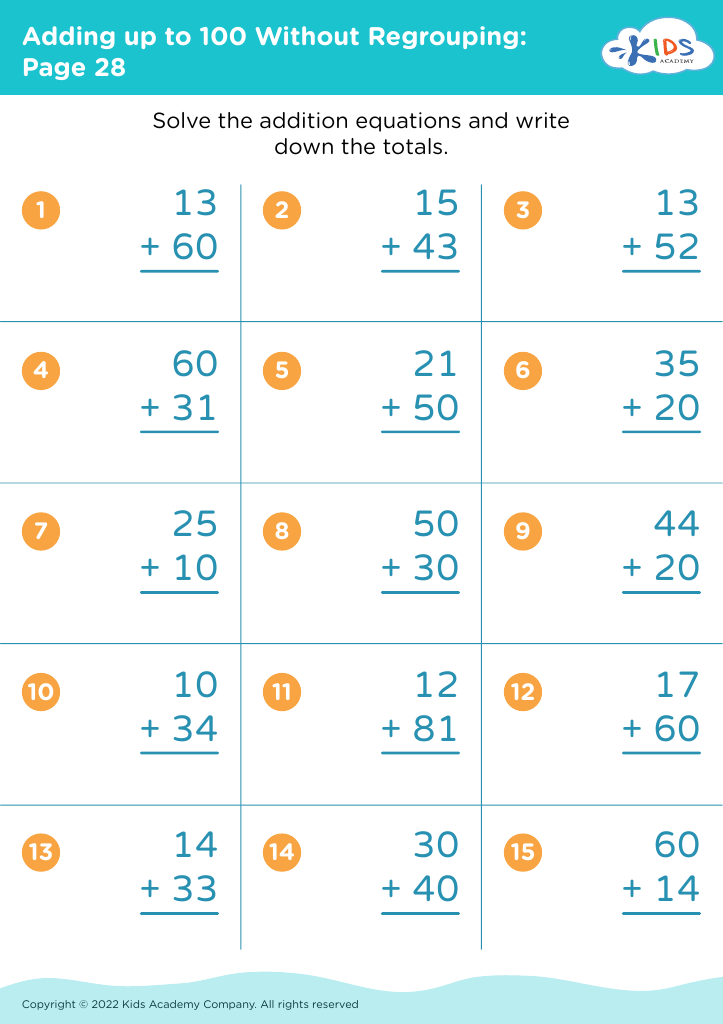
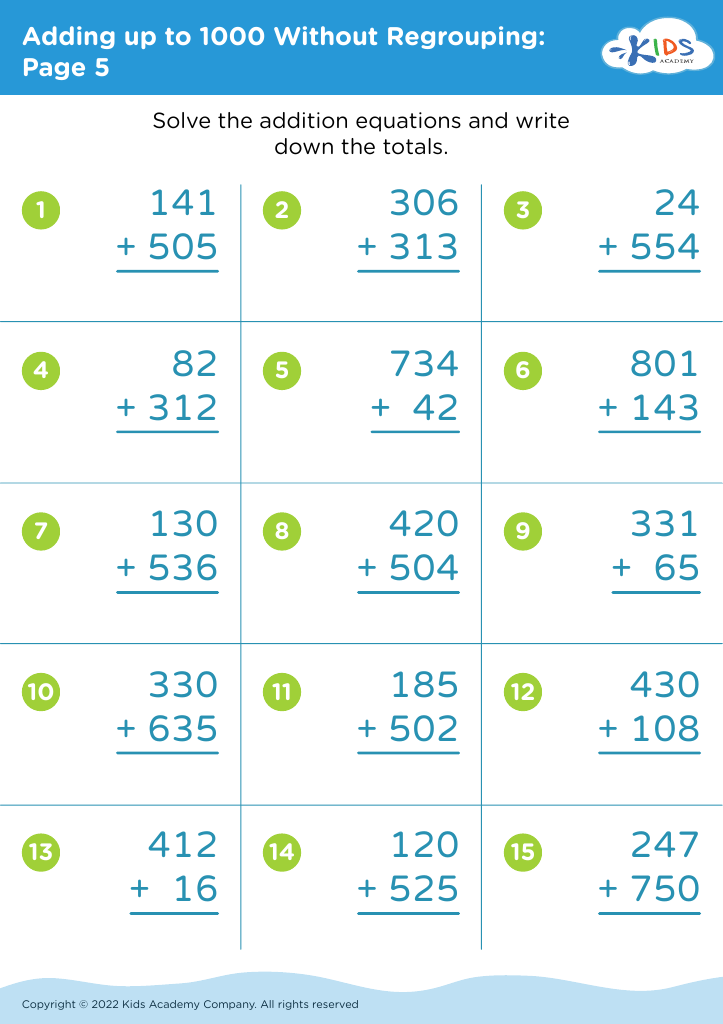
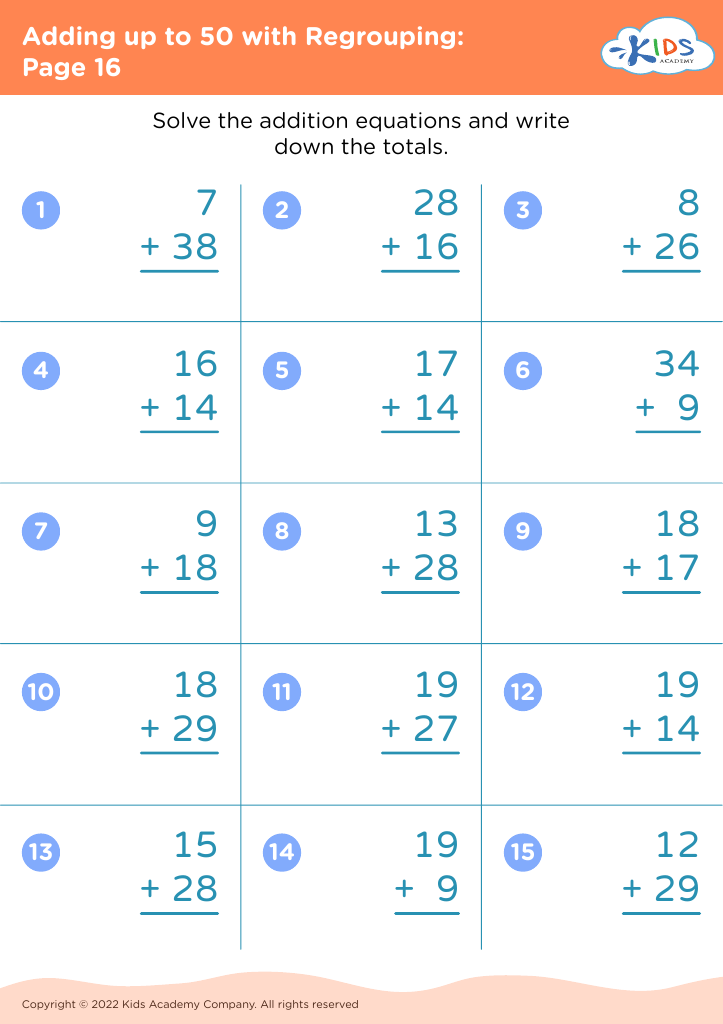
Enhance your child’s math skills and critical thinking abilities with our specially designed Addition Worksheets for 8-Year-Olds! These engaging worksheets go beyond simple calculations, encouraging children to analyze problems and develop reasoning skills. With a variety of fun and challenging exercises, students will explore different addition strategies while honing their critical thinking. Our resources foster independent learning, making math both enjoyable and beneficial. Ideal for home or classroom use, these worksheets are a great way to support your child's academic growth. Unlock their potential in mathematics and critical thinking today! Explore our collection to empower your young learner!








Critical thinking is an essential skill for children, particularly at the age of 8, as it lays the foundation for future learning and problem-solving. Parents and teachers should prioritize its development because it encourages children to analyze information, question assumptions, and make reasoned decisions. At this age, children are naturally curious and beginning to engage more deeply with the world around them. By nurturing critical thinking, adults help them harness this curiosity constructively.
Additionally, critical thinking fosters resilience and adaptability. As 8-year-olds encounter new challenges in academics and social situations, those equipped with critical thinking skills are better prepared to navigate complexities and emerging issues. This not only boosts their self-esteem but also enhances their ability to collaborate with peers.
Moreover, critical thinking supports lifelong learning. In an increasingly complex and fast-changing world, children who can evaluate information critically are more adept at understanding diverse perspectives and forming well-rounded opinions. Encouraging these skills at a young age further prepares them for success in higher education and future careers.
In summary, development of critical thinking in 8-year-olds benefits them academically and socially, promotes effective problem-solving, and instills a sense of confidence that will serve them throughout life.








