Drawing skills Addition Worksheets for 8-Year-Olds
6 filtered results
-
From - To
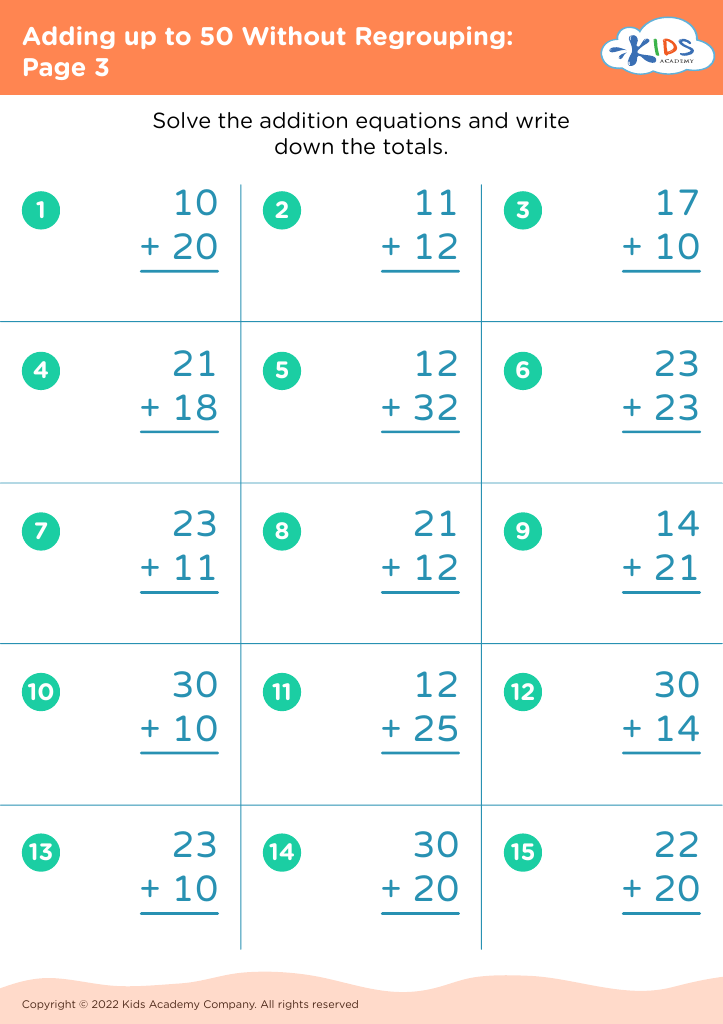
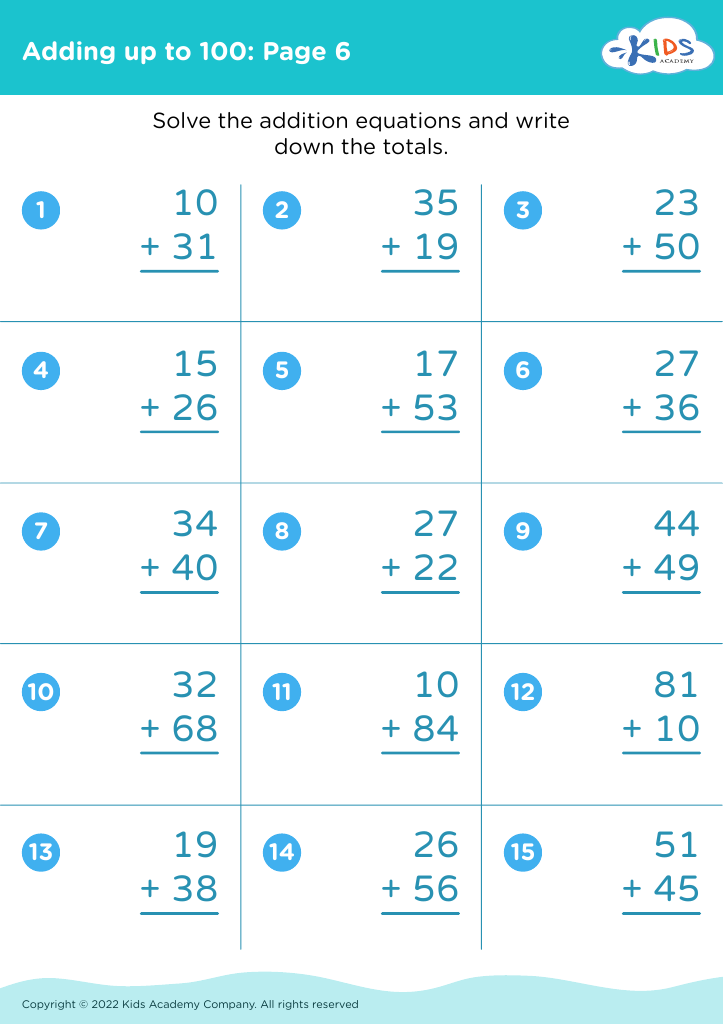
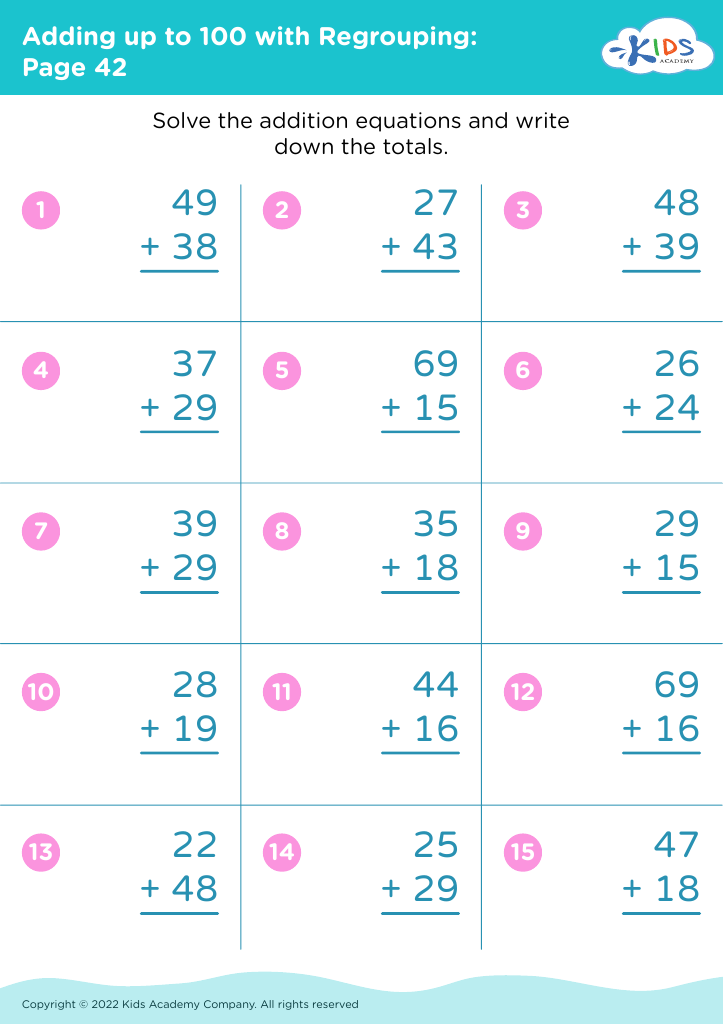
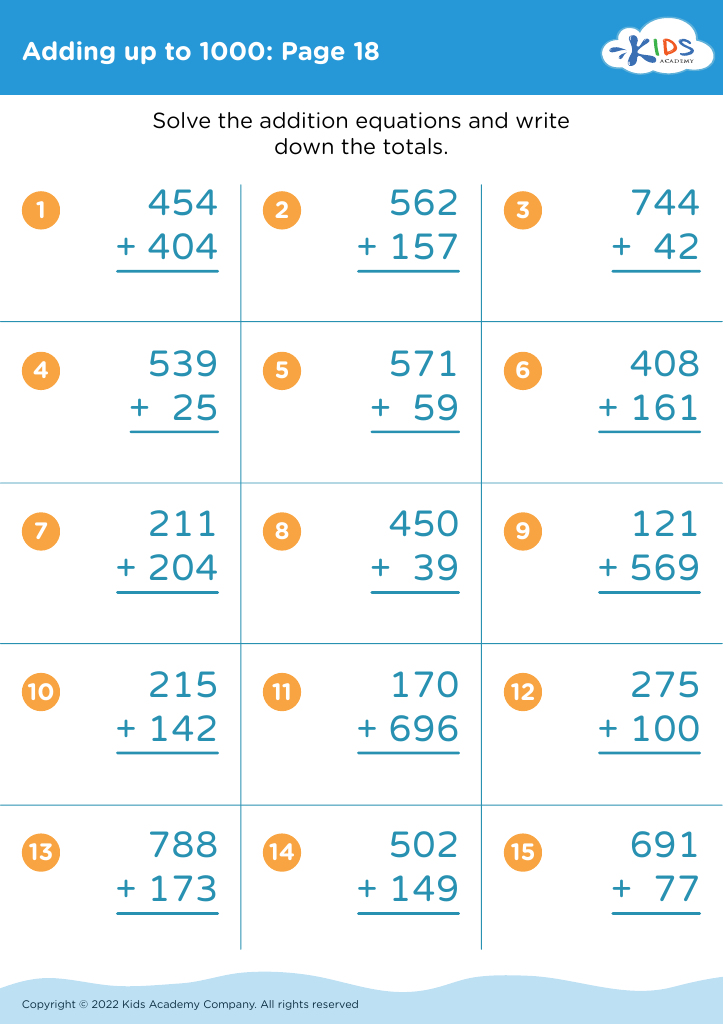
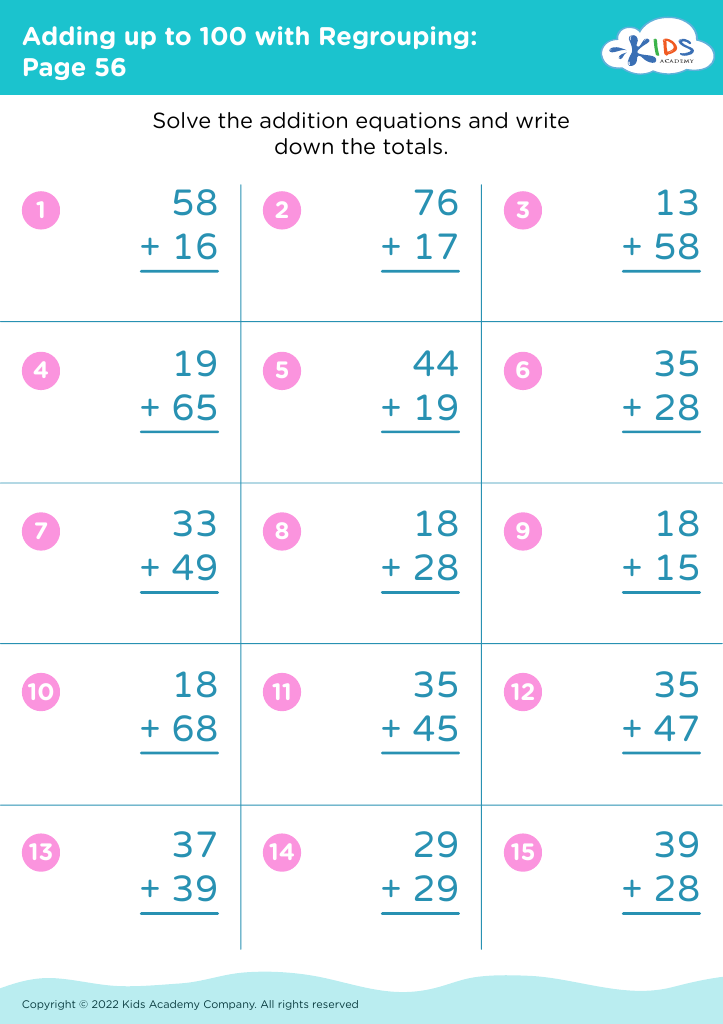
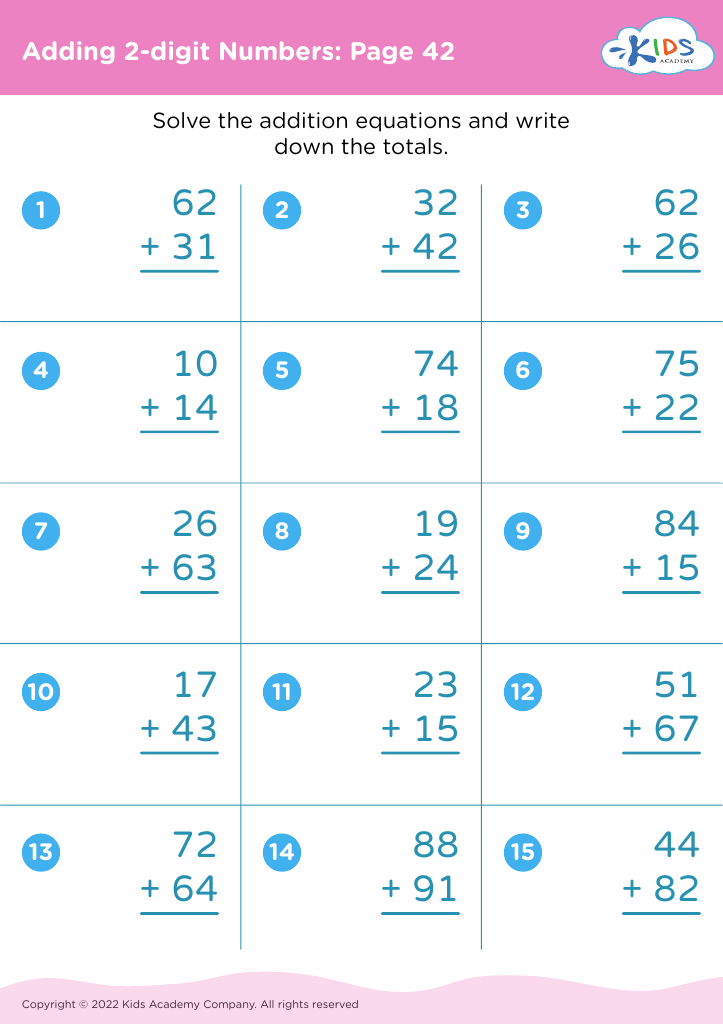
Enhance your child's arithmetic abilities with our "Drawing Skills Addition Worksheets for 8-Year-Olds." These engaging worksheets merge the creativity of drawing with essential addition practice, creating a delightful educational experience. Designed specifically for 8-year-olds, our worksheets encourage young learners to solve addition problems through fun drawing activities, making math both enjoyable and effective. Children will love adding up colorful illustrations, fortifying their mathematical skills while unleashing their inner artist. Ideal for at-home practice or classroom use, these worksheets offer a playful approach to mastering addition, ensuring that learning math is always a vibrant and positive experience.





.jpg)


Drawing skills addition for 8-year-olds can greatly benefit their overall development, and parents or teachers should consider its importance for several reasons. First, drawing enhances fine motor skills, improving hand-eye coordination and agility, which are foundational for other activities such as writing. Moreover, the creative process involved aids in the development of problem-solving and critical thinking skills as children learn to express ideas and emotions visually.
Art fosters emotional expression, offering a safe outlet for children to communicate feelings they might not have the vocabulary for yet. This aids in emotional intelligence and mental well-being. Socially, drawing in group settings encourages collaboration as children can share and discuss their art, teaching them cooperation and receptiveness to feedback.
Cognitively, the act of drawing helps to continuously refine and expand a child's visual and cognitive understanding. It stimulates the brain, helping with task focus, planning, and the categorization of elements, which can boost academic performance. Additionally, incorporating more drawing activities can help detect early signs of learning disabilities or developmental delays, allowing for timely intervention.
Ultimately, nurturing drawing skills fosters a balanced maturation, harmonizing intellectual, social, emotional, and physical growth, and equipping children with versatile tools for their educational journey.








