Enhance concentration Addition Worksheets for 8-Year-Olds
4 filtered results
-
From - To
Boost your child's math skills with our "Enhance Concentration Addition Worksheets" designed specifically for 8-year-olds! These engaging worksheets provide a fun and effective way to strengthen addition skills while improving focus and concentration. With diverse problems ranging from simple sums to more complex challenges, students will enjoy exploring math while honing their attention to detail. Our worksheets are tailored to various learning styles, ensuring every child can succeed. Perfect for classroom activities or home learning, these resources not only promote mathematical understanding but also foster critical thinking skills. Unlock your child's potential today and watch their confidence soar!
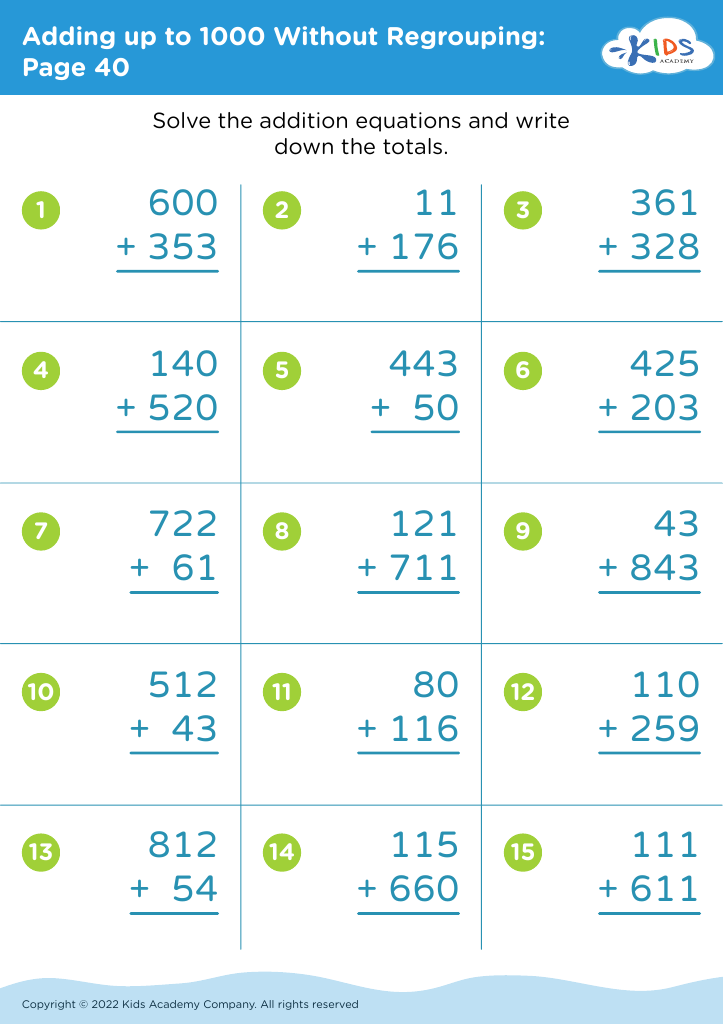
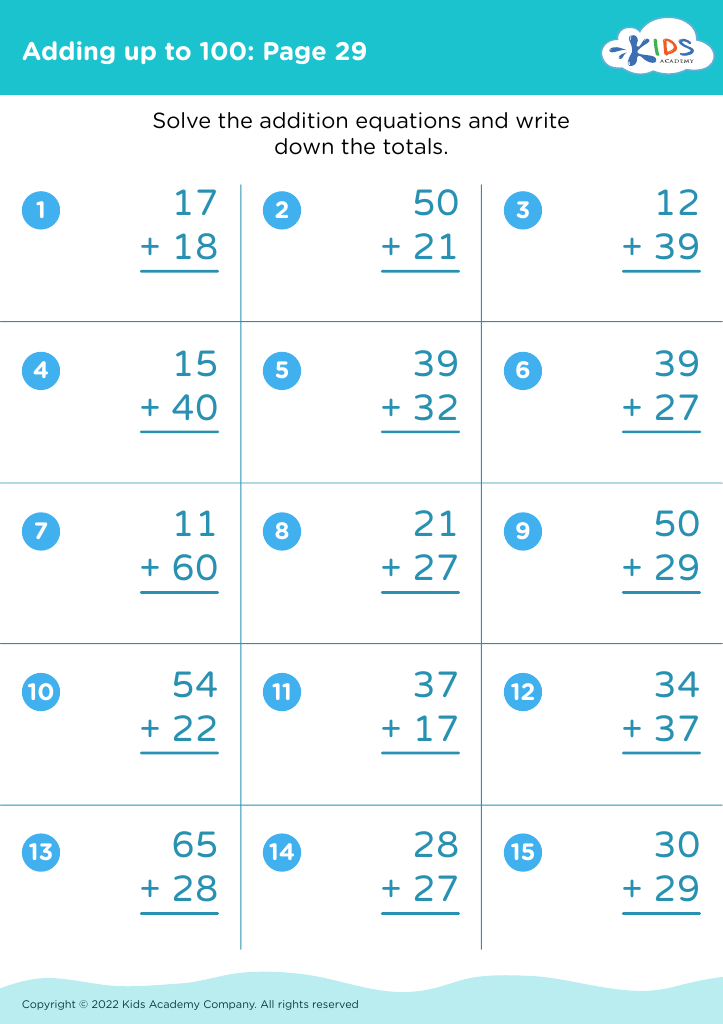
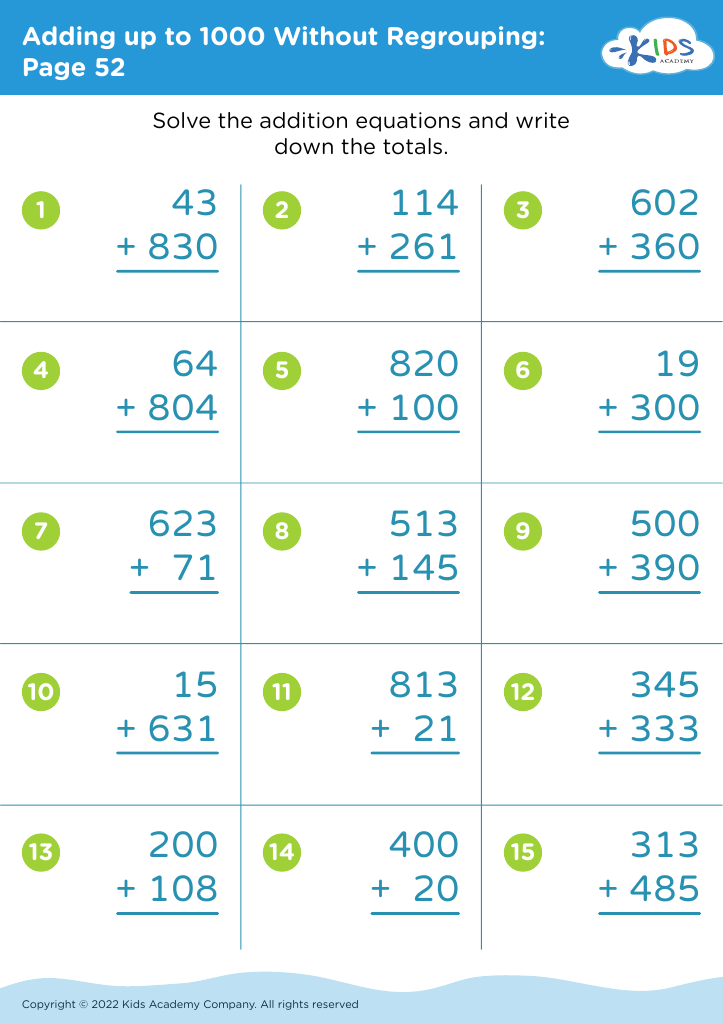
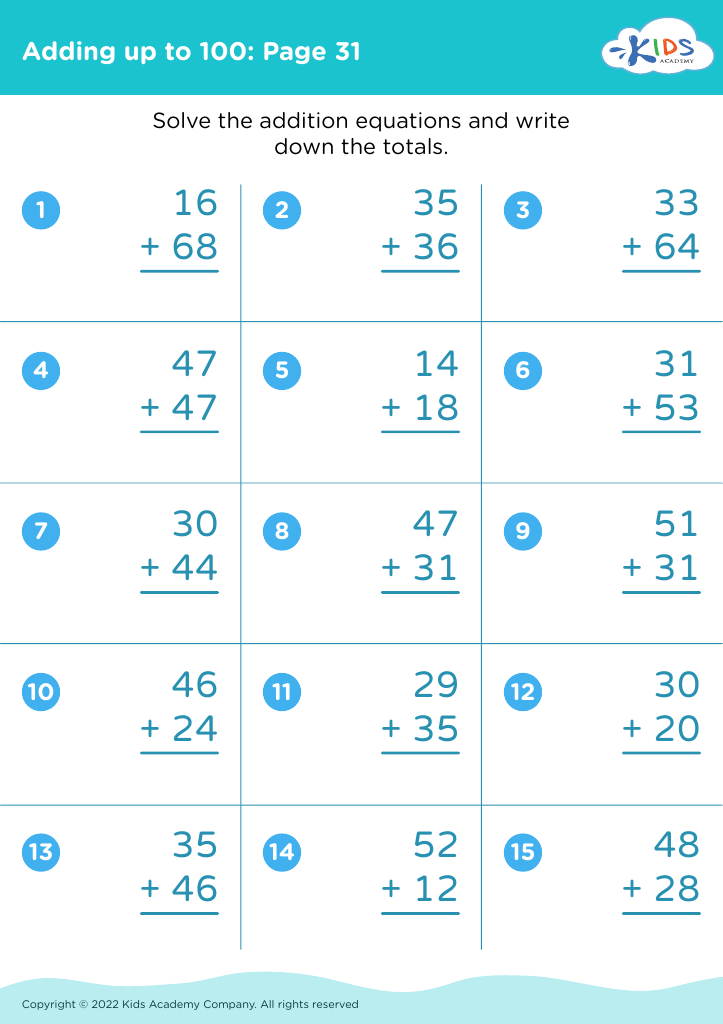








Enhancing concentration skills in 8-year-olds, especially in the context of addition, is crucial for several reasons. At this age, children are developing foundational mathematical skills that are vital for their future academic success. Strong concentration skills enable them to engage more effectively with tasks, reducing errors and improving their ability to grasp new concepts.
When children can focus, they are more likely to complete their homework efficiently, participate actively in classroom activities, and retain information. This not only fosters a sense of accomplishment but also boosts their confidence in tackling increasingly challenging material. Moreover, concentration in addition helps children develop problem-solving skills, critical thinking, and the ability to approach more complex mathematical operations in later years.
For parents and teachers, fostering concentration can lead to a more harmonious learning environment. Children who can focus are less disruptive; they also experience lower levels of frustration, making learning more enjoyable. Consequently, investing effort into enhancing concentration not only supports academic achievement but also promotes emotional well-being. By prioritizing concentration skills, parents and teachers cultivate lifelong learners who are better equipped to face educational challenges, setting a solid foundation for future success.








