Enhance fine motor skills Addition Worksheets for 8-Year-Olds
3 filtered results
-
From - To
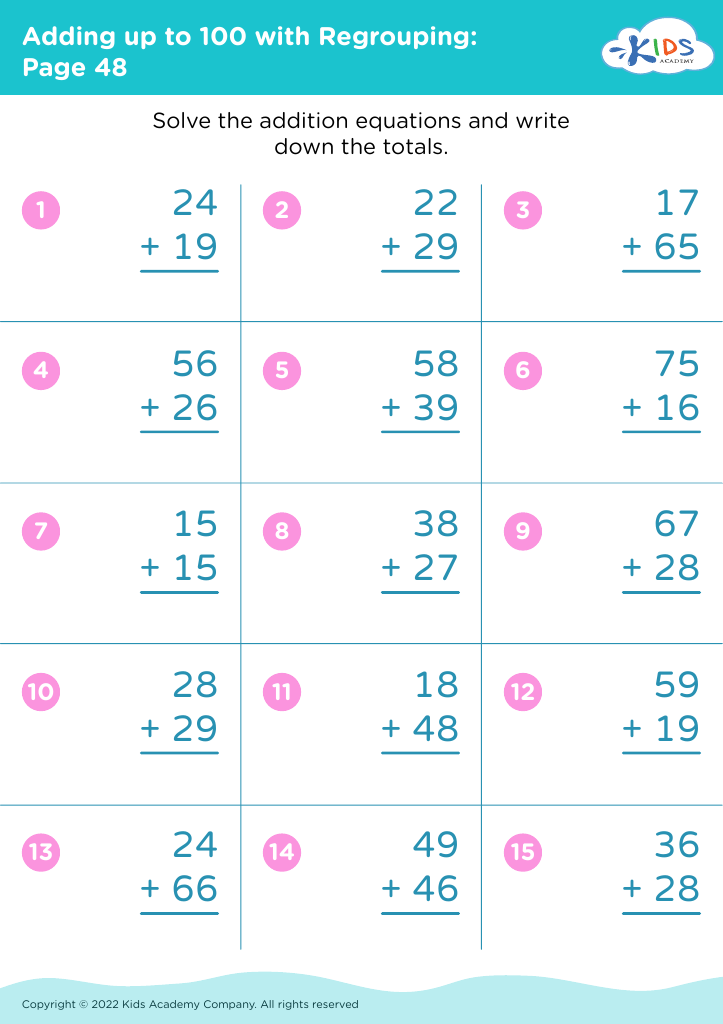
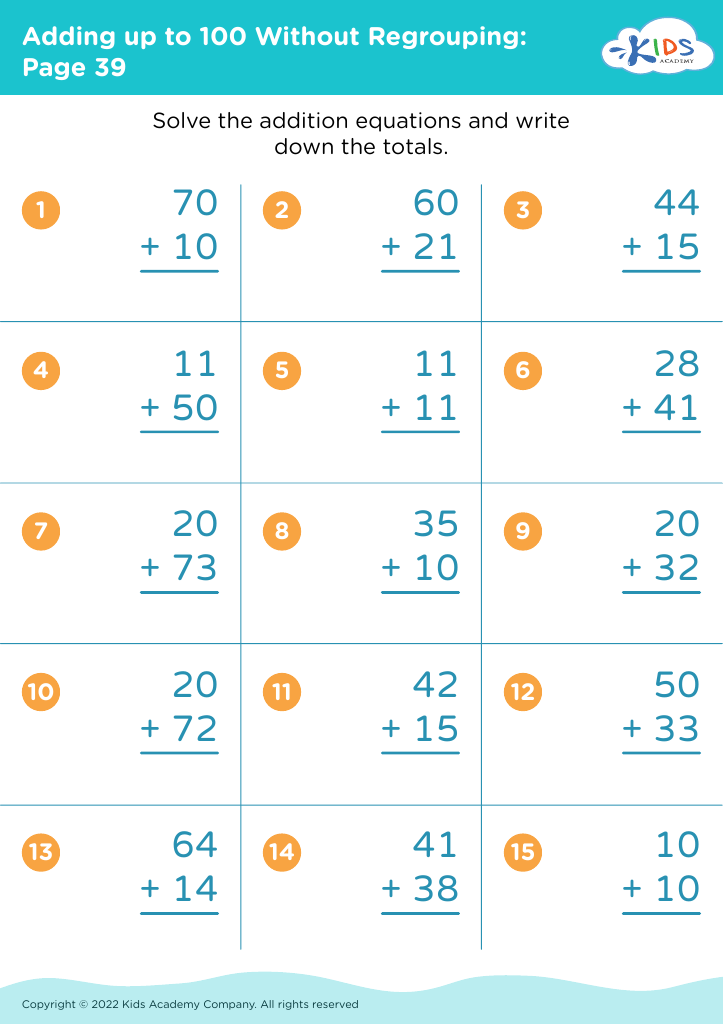
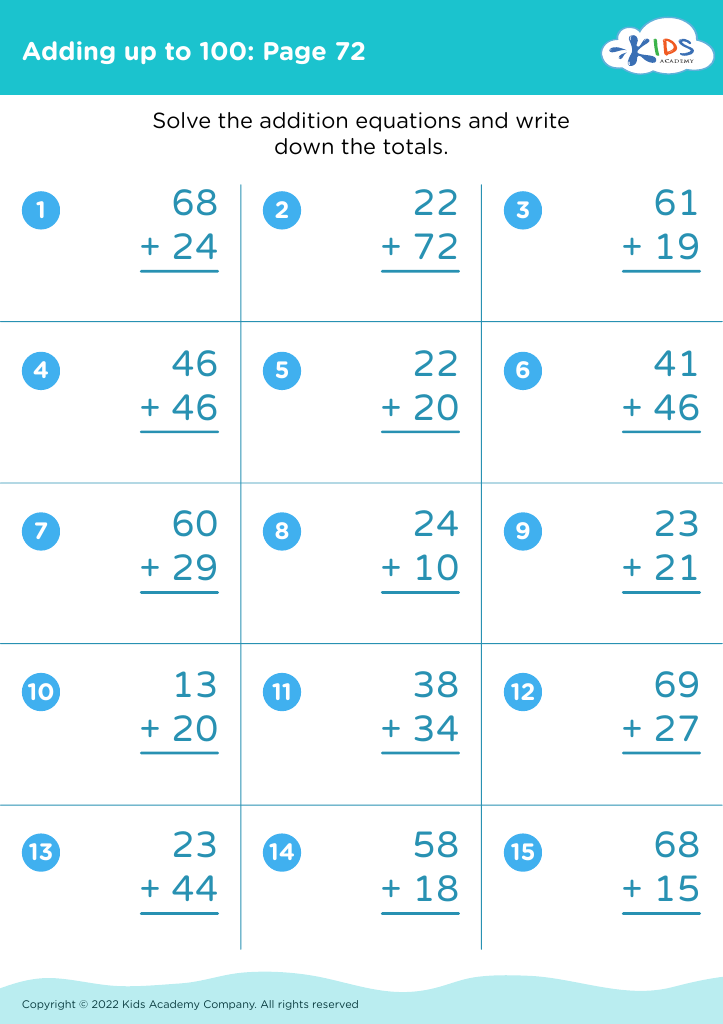
Discover our engaging "Enhance Fine Motor Skills Addition Worksheets for 8-Year-Olds" at Kids Academy! These thoughtfully designed worksheets are perfect for young learners to boost their addition skills while also developing essential fine motor abilities. With fun, interactive exercises, your child will improve hand-eye coordination, finger dexterity, and precision, all while mastering addition concepts. These worksheets feature a variety of colorful, exciting math problems that make learning enjoyable and effective. Perfect for both classroom and at-home use, our addition worksheets are a fantastic resource to support your child's educational journey. Start enhancing those skills today!








Enhancing fine motor skills in 8-year-olds is vital for their development and success in both academic and daily life activities. Fine motor skills involve the coordination of small muscles in the hands and fingers, which are crucial for tasks such as writing, using scissors, typing, and manipulating objects. When children develop these skills, they are better equipped to perform classroom activities efficiently and with greater ease.
For parents and teachers, focusing on fine motor skill improvement can lead to significant benefits. Writing legibly, for instance, becomes easier, allowing children to express their thoughts clearly and without frustration. Better handwriting means more confidence in schoolwork and lessen stress during test completion and assignments. Additionally, refined fine motor skills support the development of eye-hand coordination, which is essential for tasks beyond academics, such as tying shoelaces, buttoning clothes, and engaging in various arts and crafts.
Moreover, fine motor skill activities, such as puzzles, playdough, or building blocks, also foster patience, attention to detail, and problem-solving abilities. By prioritizing fine motor skill enhancement, parents and teachers can promote children's overall cognitive and emotional development, preparing them not only for academic challenges but also for life skills necessary in everyday activities.








