
Enhance logical thinking Addition Worksheets for 8-Year-Olds
3 filtered results
Difficulty Level
Grade
Age
-
From - To
Subject
Activity
Standards
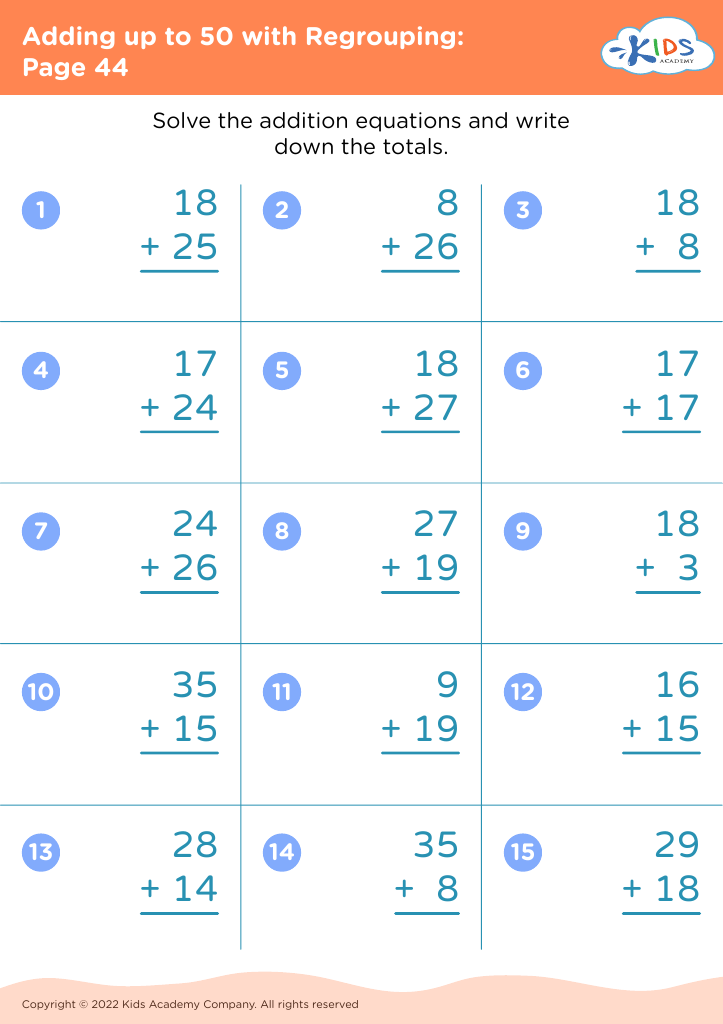
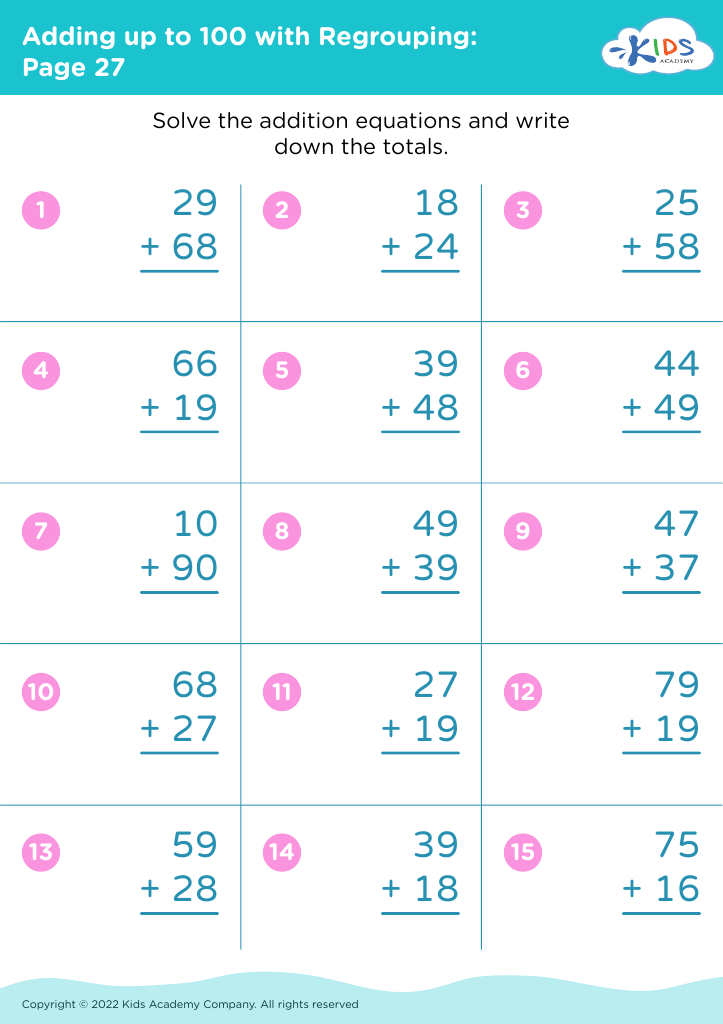
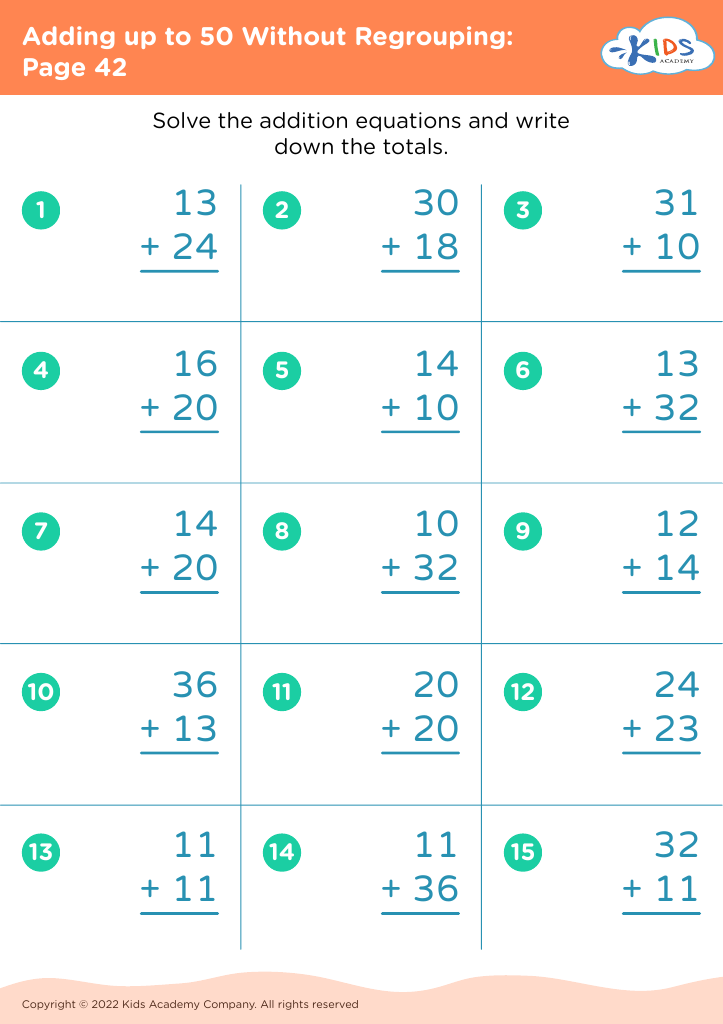
Boost your child's logical thinking with our engaging addition worksheets specifically designed for 8-year-olds. These interactive activities foster critical thinking and problem-solving skills while reinforcing essential math concepts. Each worksheet provides unique challenges that encourage children to apply addition in practical scenarios, enhancing their numerical understanding and analytical abilities. Ideal for at-home practice or classroom use, these worksheets are perfect for developing a firm mathematical foundation. Explore a variety of fun themes and problem types that make learning addition enjoyable and effective. Prepare your child for future success in math by enhancing their logical thinking through exciting worksheet exercises!
Favorites
With answer key
Interactive
Join Kids Academy for Free
Who is primarily going to use this learning content?








Enhancing logical thinking through addition for 8-year-olds is crucial as it lays the foundation for problem-solving skills and critical thinking that the child will use throughout life. At this age, children are transitioning from concrete to more abstract thinking, meaning they start grasping the relationships between numbers and concepts. Strengthening their logical abilities allows them to tackle more complex mathematical operations, which will be essential as curricula advance.
Furthermore, enhancing logical thinking fosters greater engagement and motivation in learning. When children understand how and why addition works, they develop a stronger confidence in their mathematical abilities, which can lead to a more positive attitude towards learning overall. This positive experience can have lasting impacts, encouraging a love for math and developing persistence when facing challenging problems.
Parents and teachers play a vital role in this development by providing supportive environments that challenge children educationally while also supporting their emotional well-being. Engaging in activities that require logical thinking through addition—like puzzles, games, and real-world problem scenarios—can be transformative. Ultimately, equipping children with strong logical thinking and addition skills not only benefits their academic journey but also prepares them for the complexities of daily life.








