Enhance problem-solving skills Addition Worksheets for 8-Year-Olds
6 filtered results
-
From - To
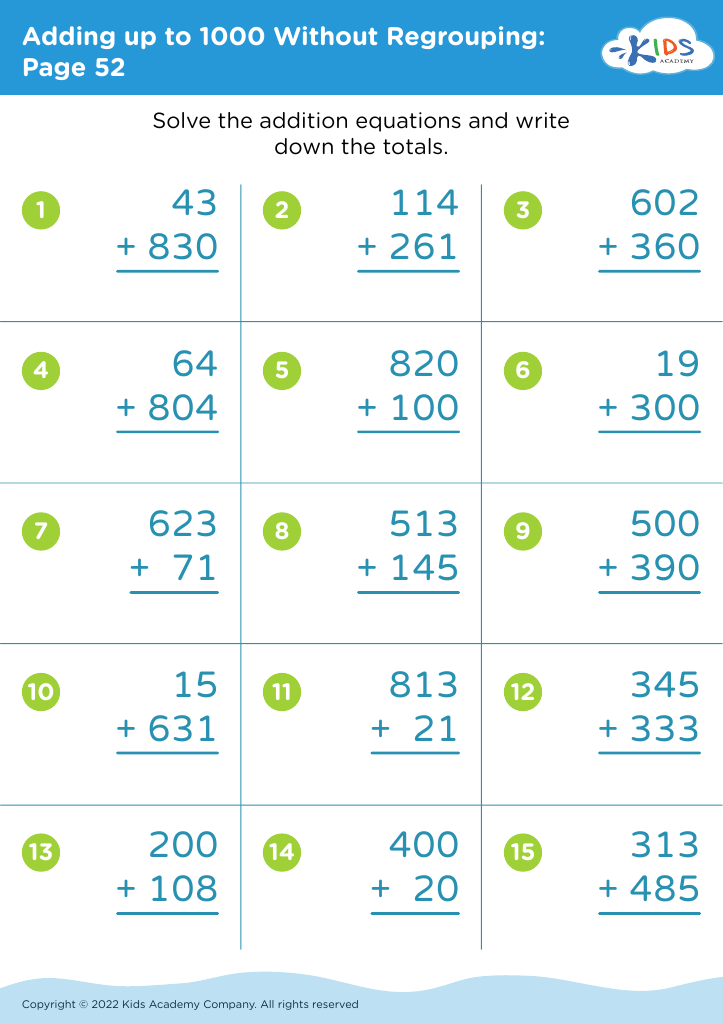
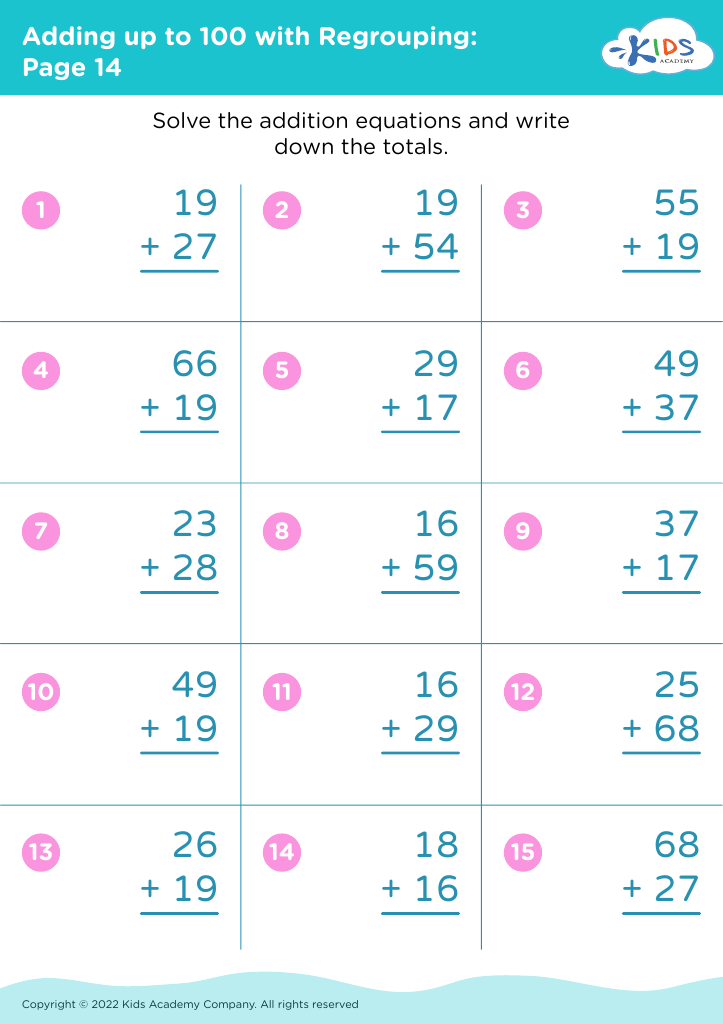
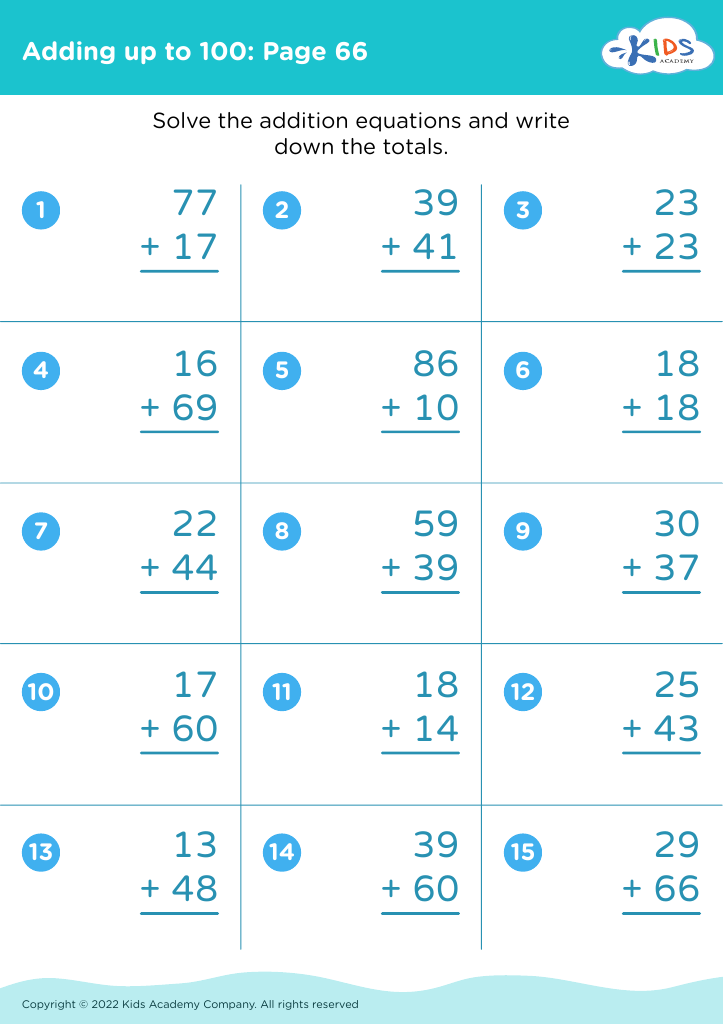
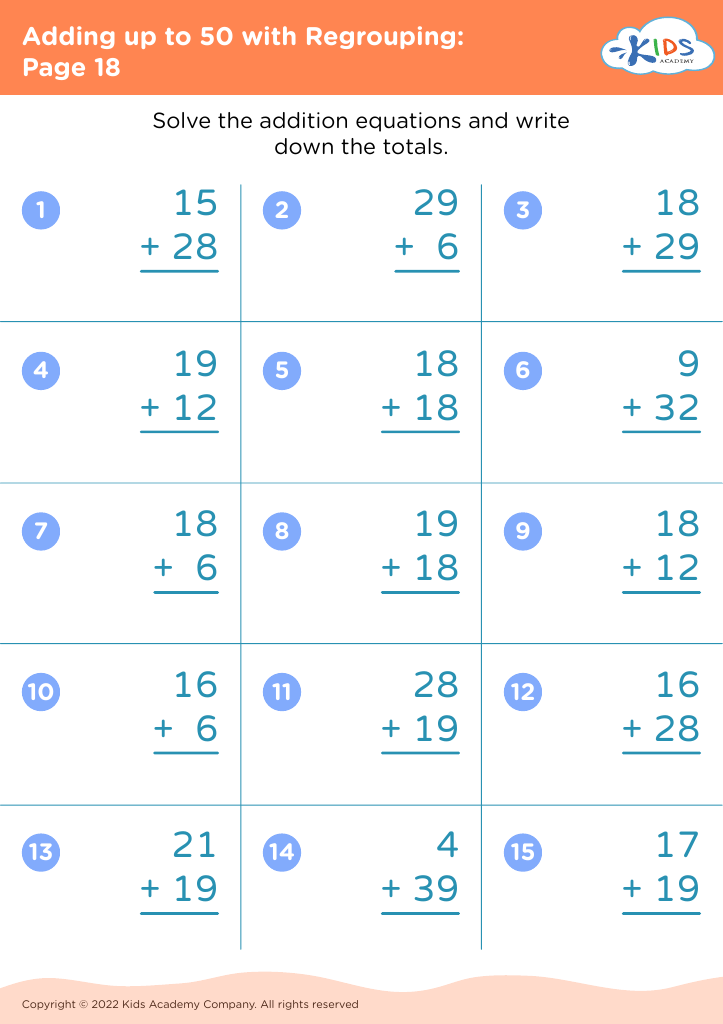
Discover our engaging Addition Worksheets for 8-Year-Olds, expertly crafted to enhance problem-solving skills. These worksheets offer a variety of tasks tailored to challenge young minds, making math fun and educational. Students will build their arithmetic abilities through practical exercises and improve their critical thinking and logical skills. Parents and educators can easily integrate these worksheets into daily lessons or as extra practice at home. Foster a love for learning with activities designed to boost confidence and mastery in addition. Perfect for providing the foundational skills needed for more advanced math concepts. Get started today and watch your child’s skills soar!
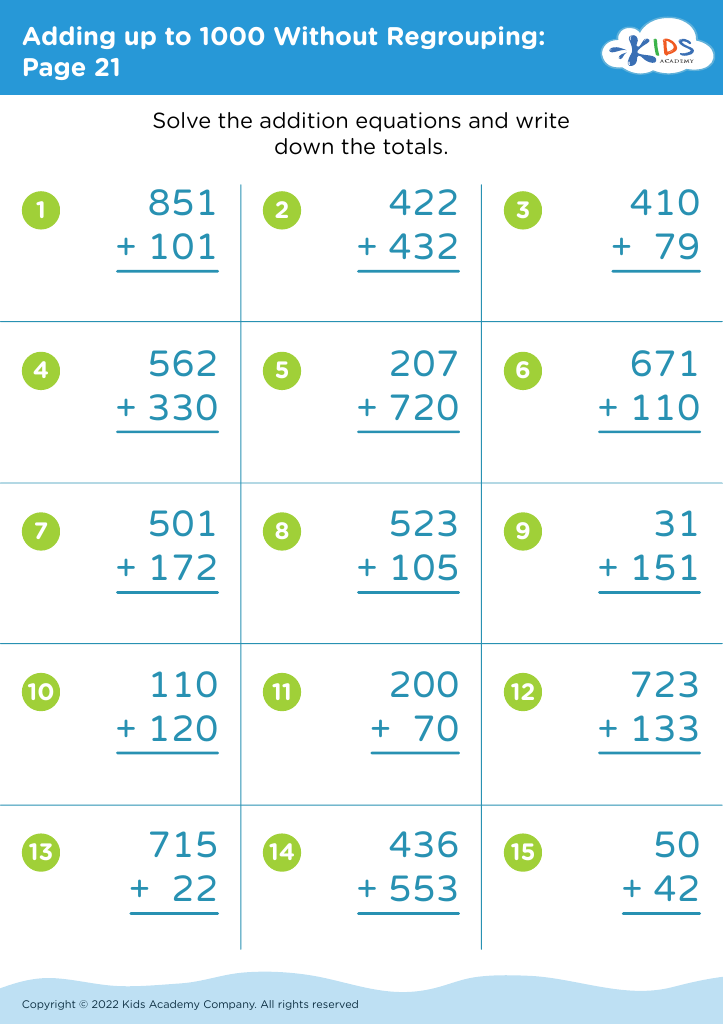
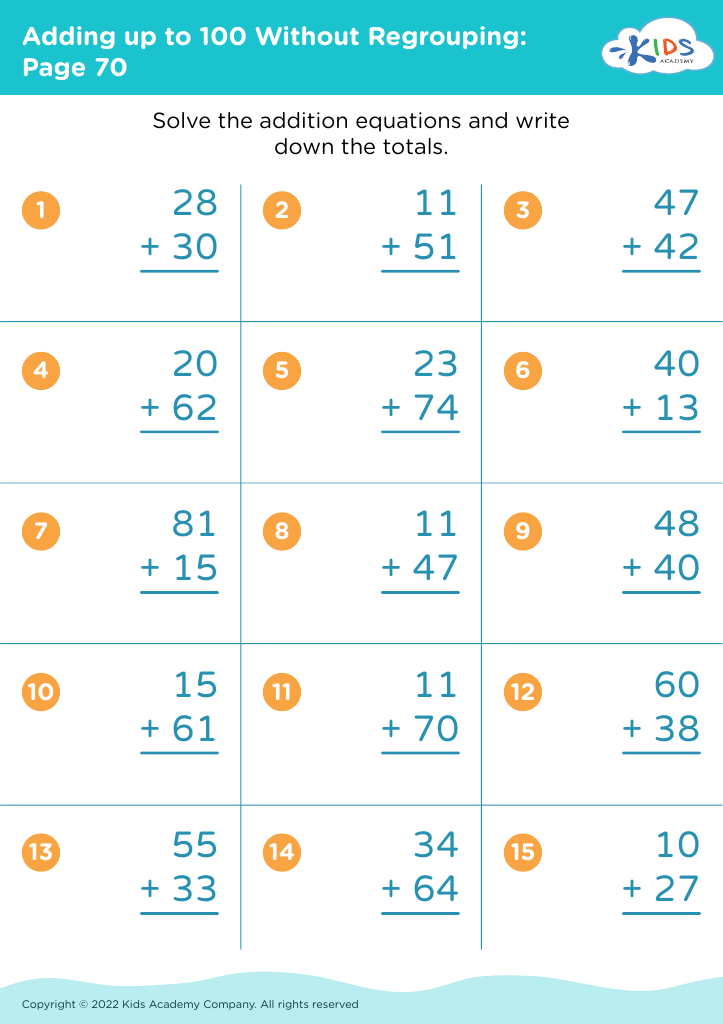








Enhancing problem-solving skills, particularly in addition, for 8-year-olds is crucial for several fundamental reasons:
Firstly, addition is a cornerstone of arithmetic, forming the basis for more complex mathematical concepts like multiplication, division, and fractions. Strengthening these skills at an early age builds a strong numerical foundation, facilitating easier comprehension of advanced topics in later years.
Secondly, problem-solving in addition is more than just rote learning. It cultivates logical thinking, analytical skills, and the ability to approach problems from multiple angles. These cognitive benefits extend beyond math, aiding in other subjects and real-life situations. For instance, children learn to break down tasks, recognize patterns, and develop strategies to reach solutions—a skill set beneficial for science, reading comprehension, and everyday decision-making.
Moreover, math-related problem-solving boosts confidence in young learners. Success in solving addition problems can enhance a child's self-esteem, promoting a positive attitude toward learning and school in general. This confidence can motivate them to tackle challenges, nurturing resilience and a growth mindset.
Finally, engaging young minds with practical and fun problem-solving exercises encourages curiosity and a love for learning, critical for lifelong educational success. Thus, parents and teachers supporting the development of problem-solving skills in addition foster not only academic proficiency but also essential life skills.








