
Following instructions Addition Worksheets for 8-Year-Olds
13 filtered results
Difficulty Level
Grade
Age
-
From - To
Subject
Activity
Standards
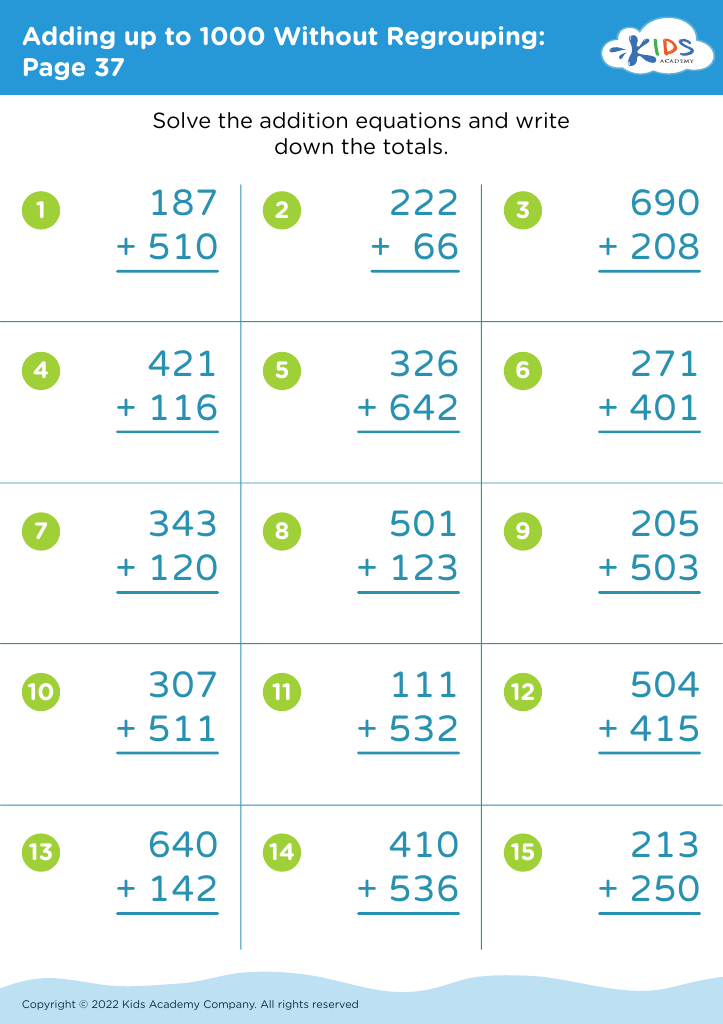
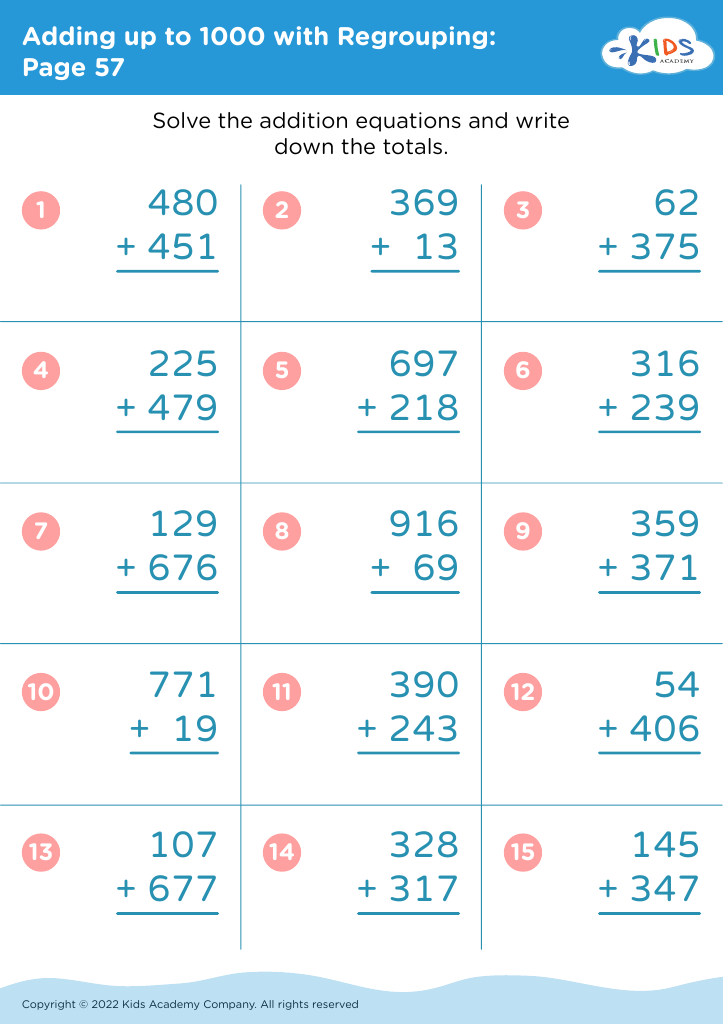
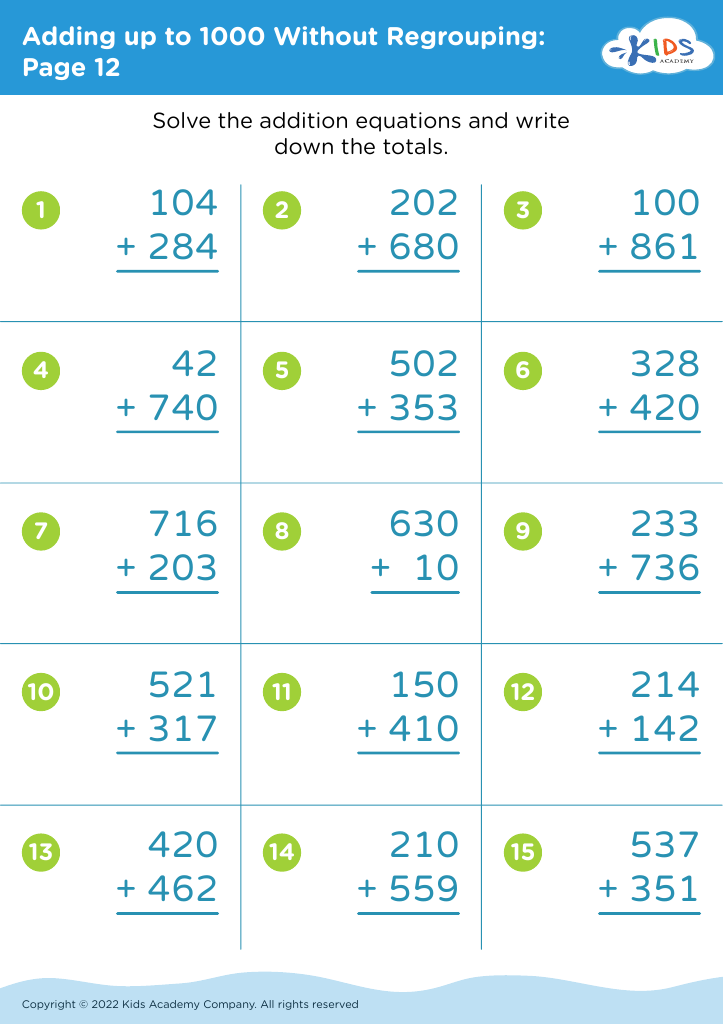
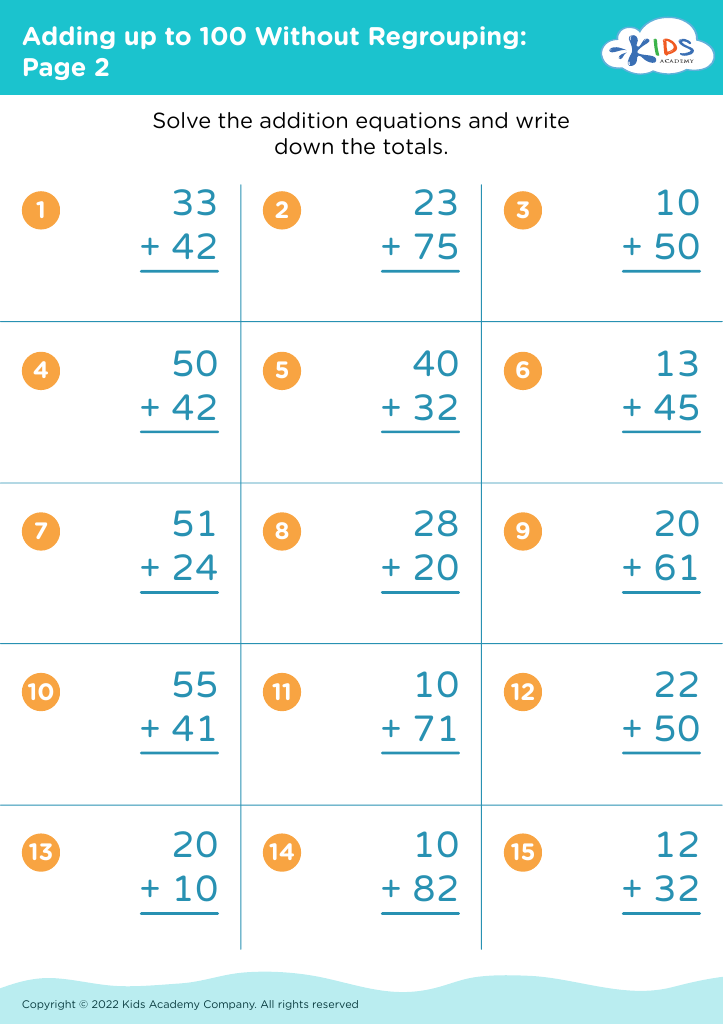
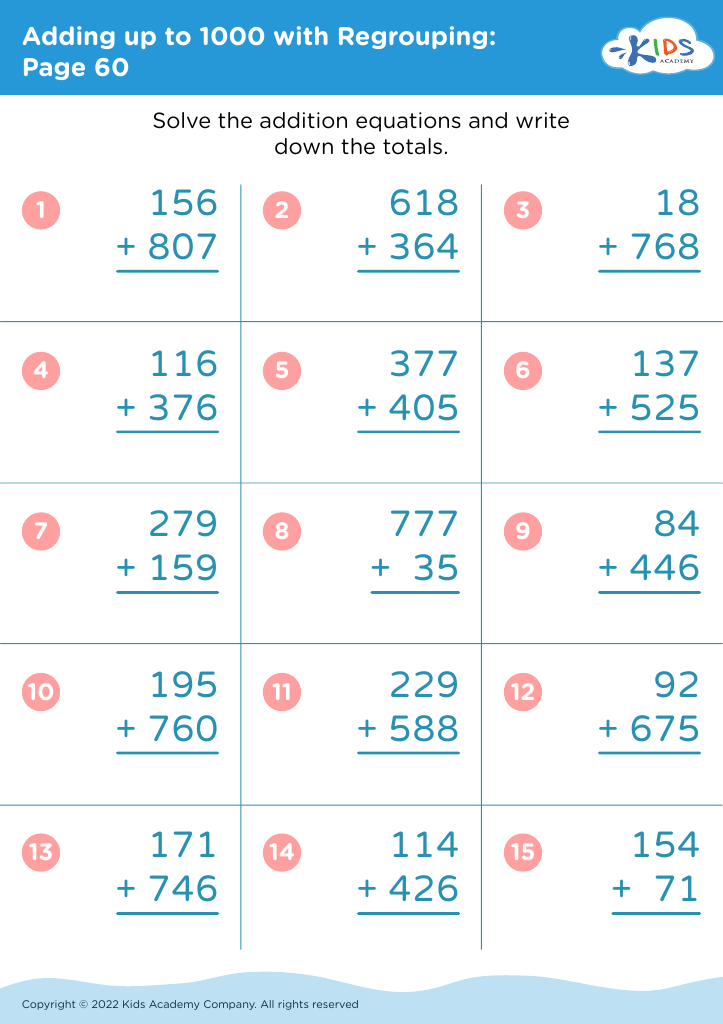
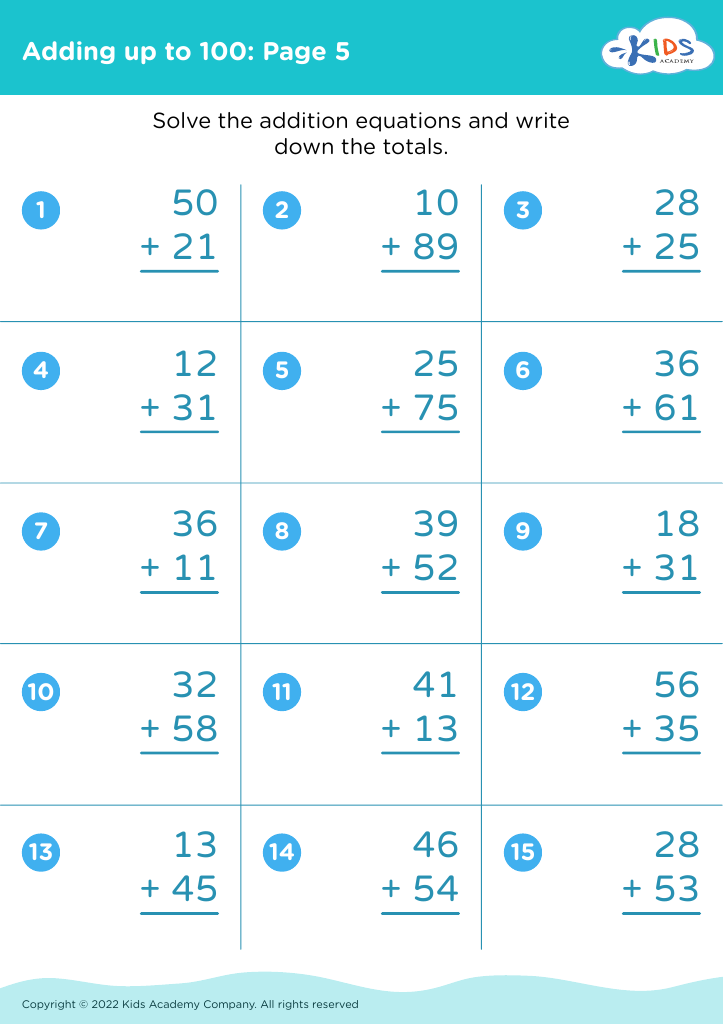
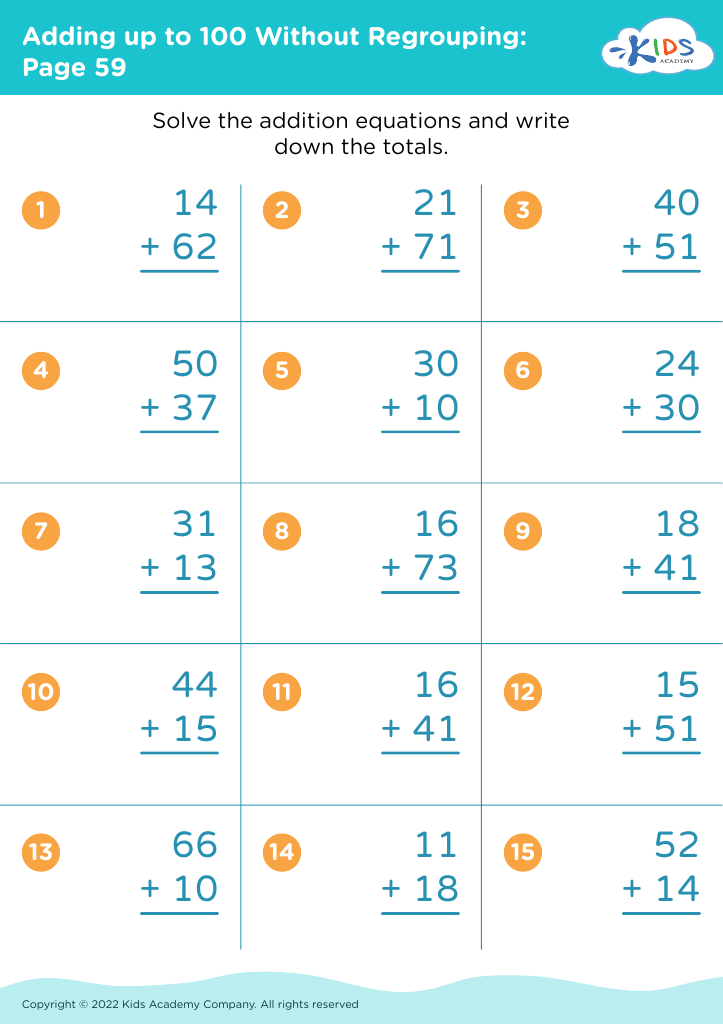
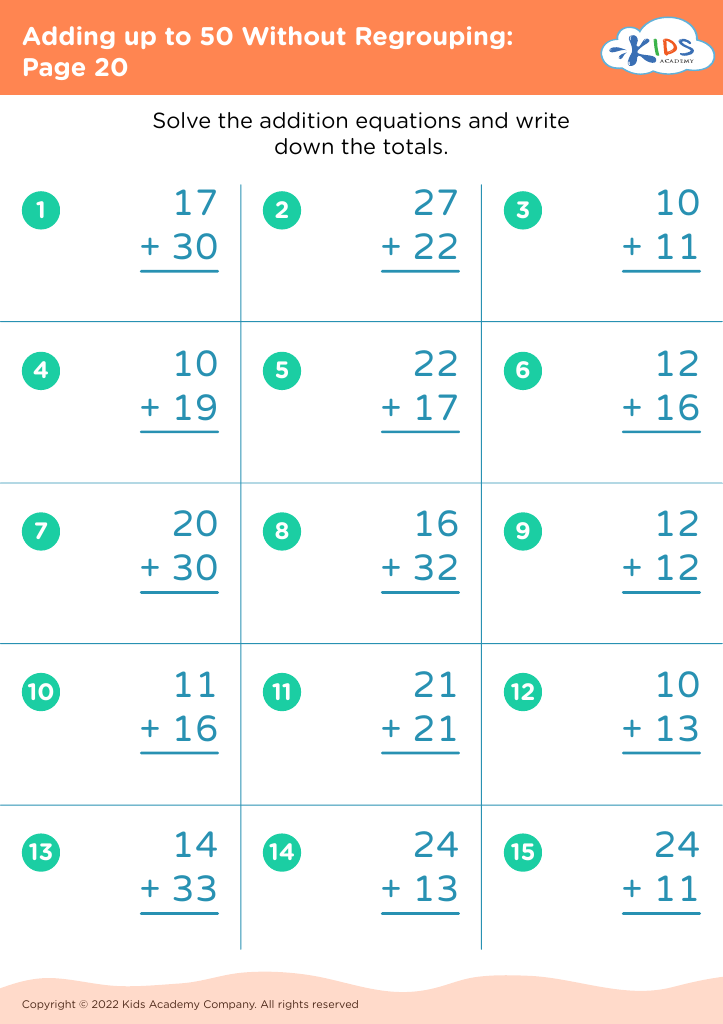
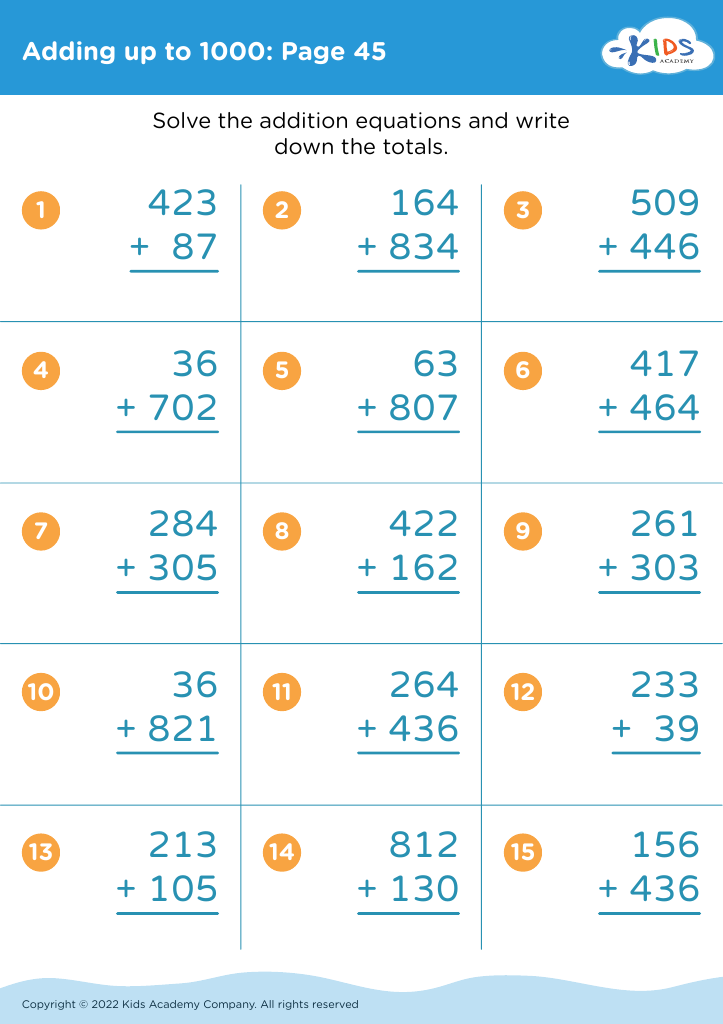
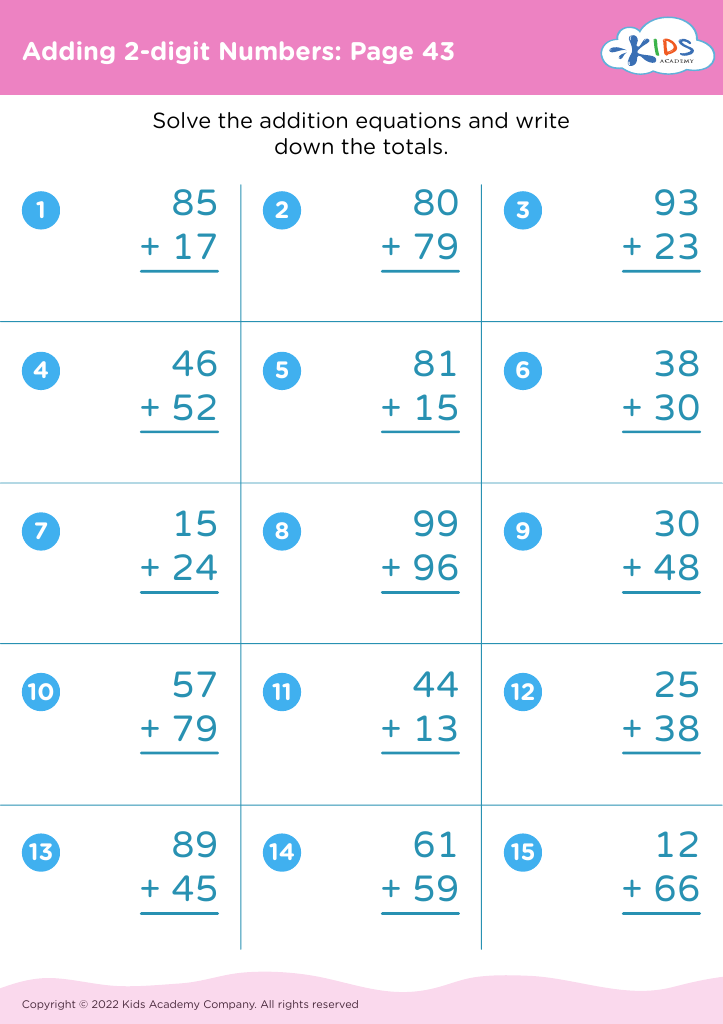
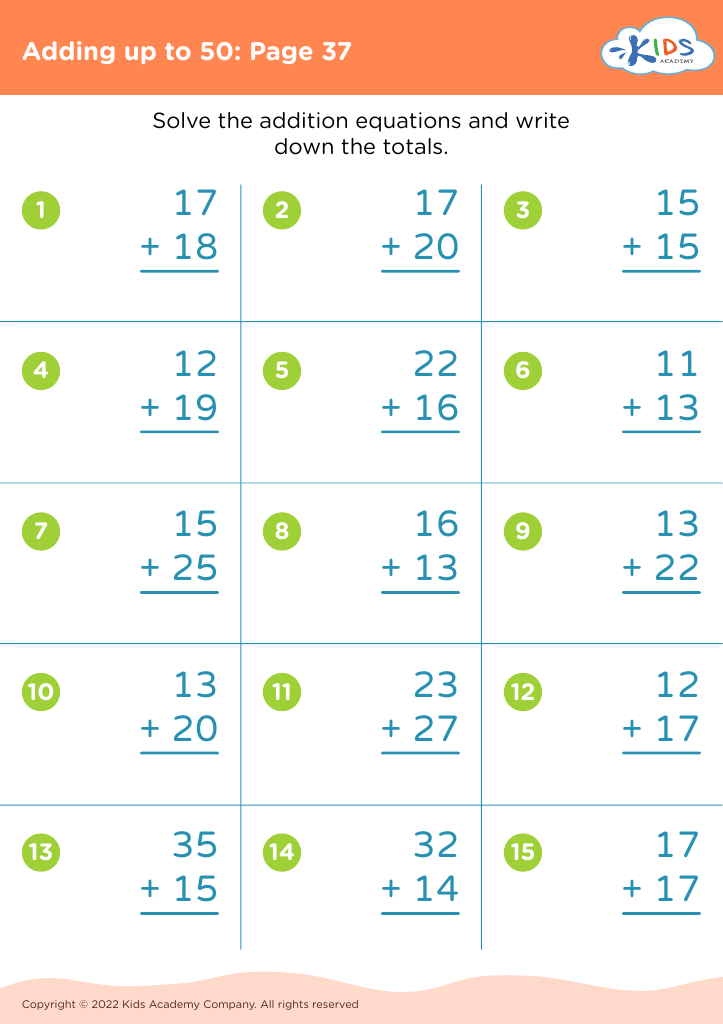
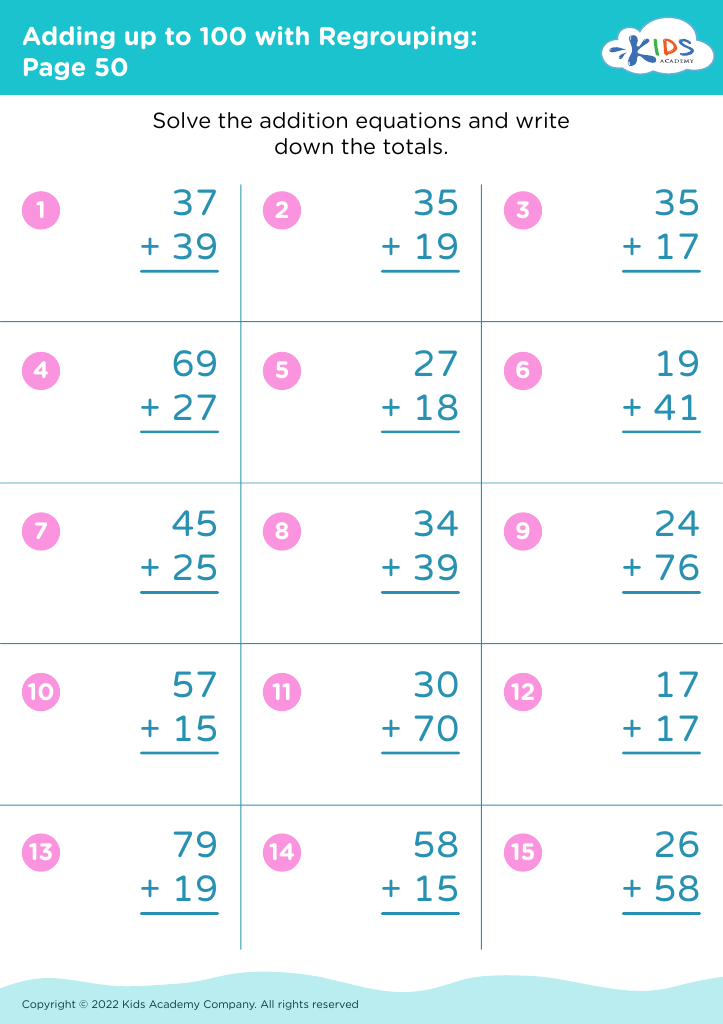
Boost your child's math skills with our Following Instructions Addition Worksheets, specifically designed for 8-year-olds! These engaging and interactive worksheets encourage kids to practice addition while developing their ability to follow multi-step directions. Each worksheet features colorful illustrations and fun exercises that capture their attention, making learning enjoyable. By completing these activities, children will not only enhance their addition skills but also improve their comprehension and critical thinking abilities. Perfect for at-home learning or classroom use, our worksheets ensure your little learner stays focused and motivated. Explore our collection today and watch your child's confidence flourish in math!
Favorites
With answer key
Interactive
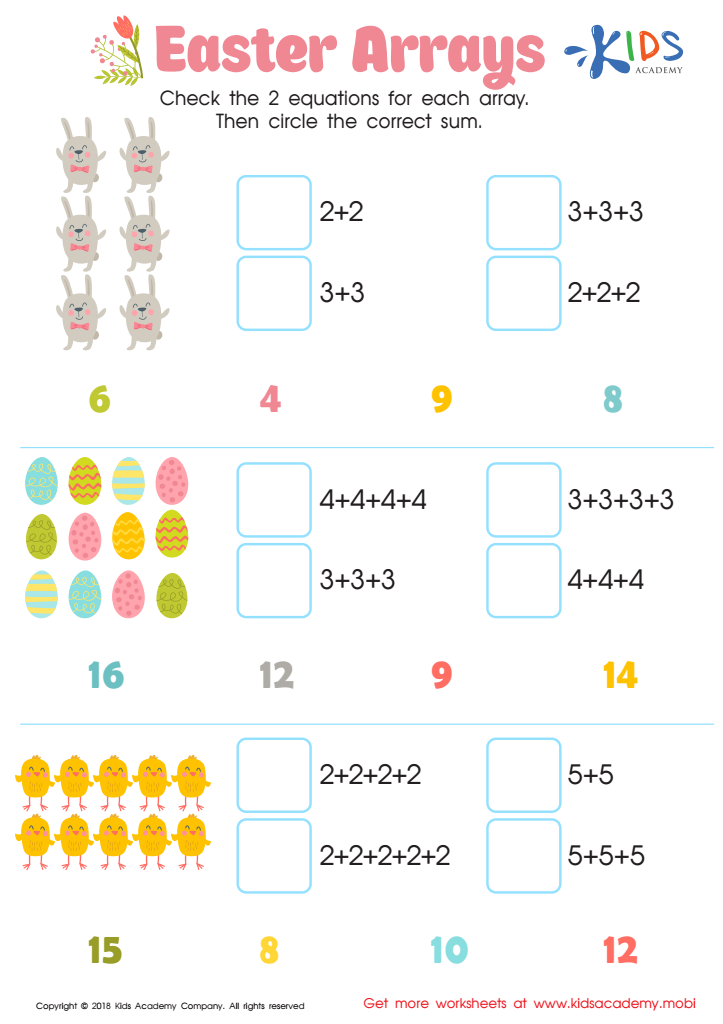
Easter Arrays Worksheet
Does your child love Easter? Do they adore the Easter bunny and egg hunts? Help them have fun with this worksheet! Go through it with them and check the equations for each array. Then, have them circle the correct sum. It's a great way to make the holiday extra exciting!
 Assign to My Students
Easter Arrays Worksheet
Worksheet
Join Kids Academy for Free
Who is primarily going to use this learning content?








Parents and teachers should prioritize teaching 8-year-olds to follow instructions in addition for several important reasons. At this age, children are developing critical cognitive and social skills. Following instructions during math lessons helps reinforce important concepts while building their problem-solving abilities. It encourages them to practice patience and focus, which are vital for academic success in all subjects.
Moreover, mastering addition through explicit instructions fosters independence and self-confidence in children. They learn how to approach problems methodically, breaking them down into manageable steps. This skill is not only vital for math but essential in everyday life, from cooking to completing homework.
Additionally, understanding how to follow instructions nurtures positive behavior and cooperation in group settings, where children often work collaboratively. It instills a sense of responsibility as they learn the importance of completing tasks thoroughly and accurately.
When both parents and teachers prioritize following instructions, they contribute to the overall development of the child, equipping them with the necessary tools to navigate future challenges in both academic and real-world scenarios. Encouraging children to follow directions not only enhances their math skills but also lays the foundation for lifelong learning and success.








