Handwriting improvement Addition Worksheets for 8-Year-Olds
4 filtered results
-
From - To
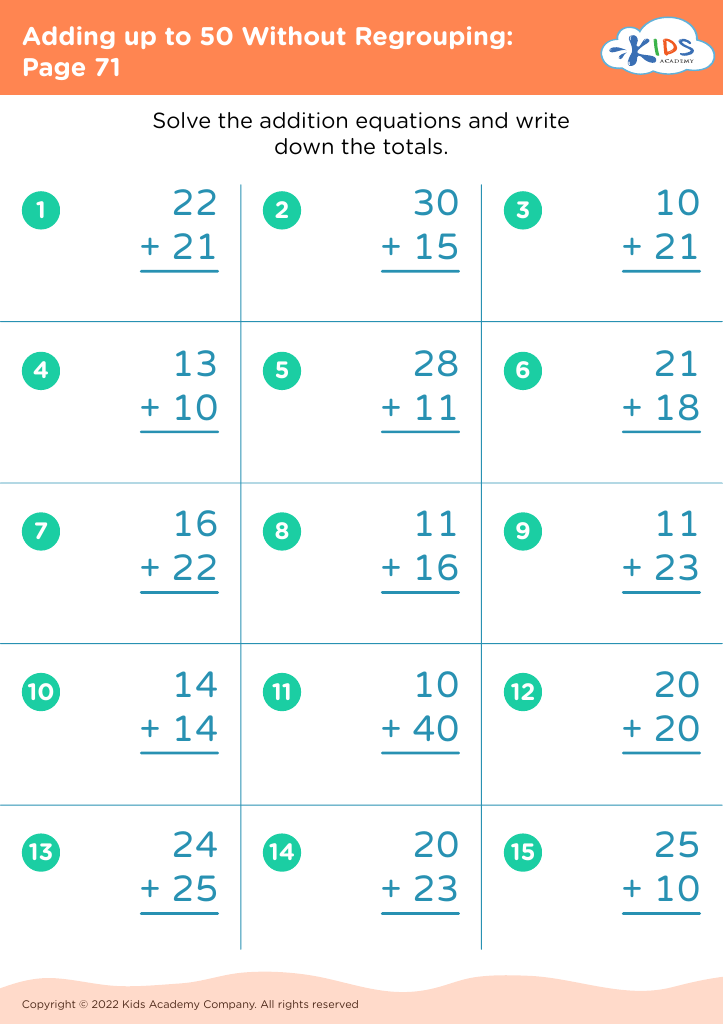
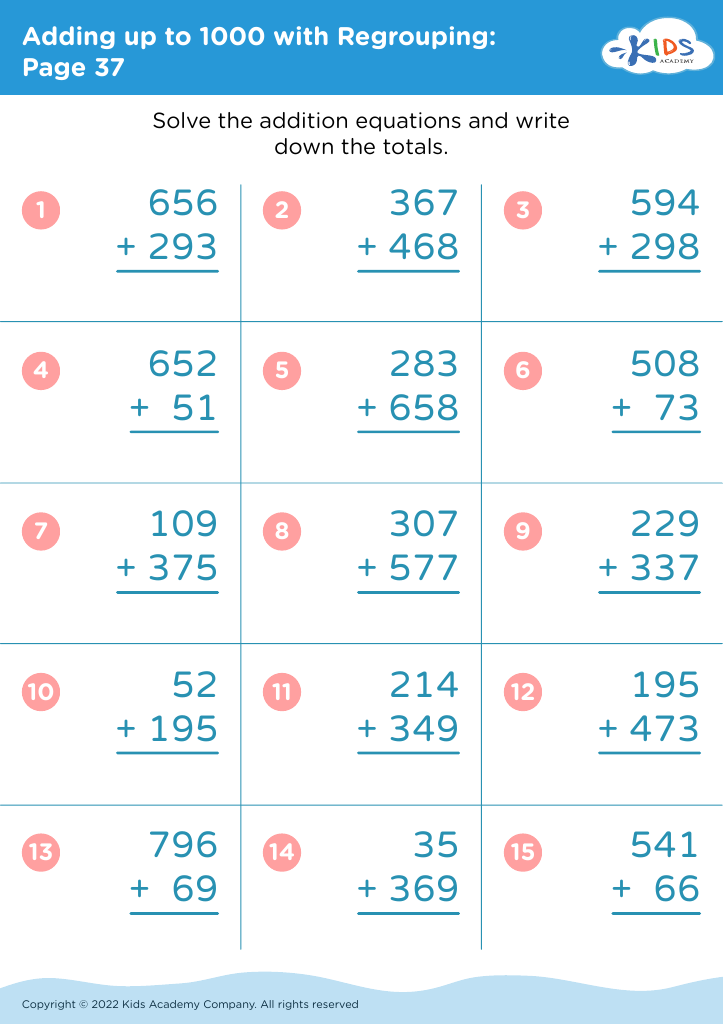
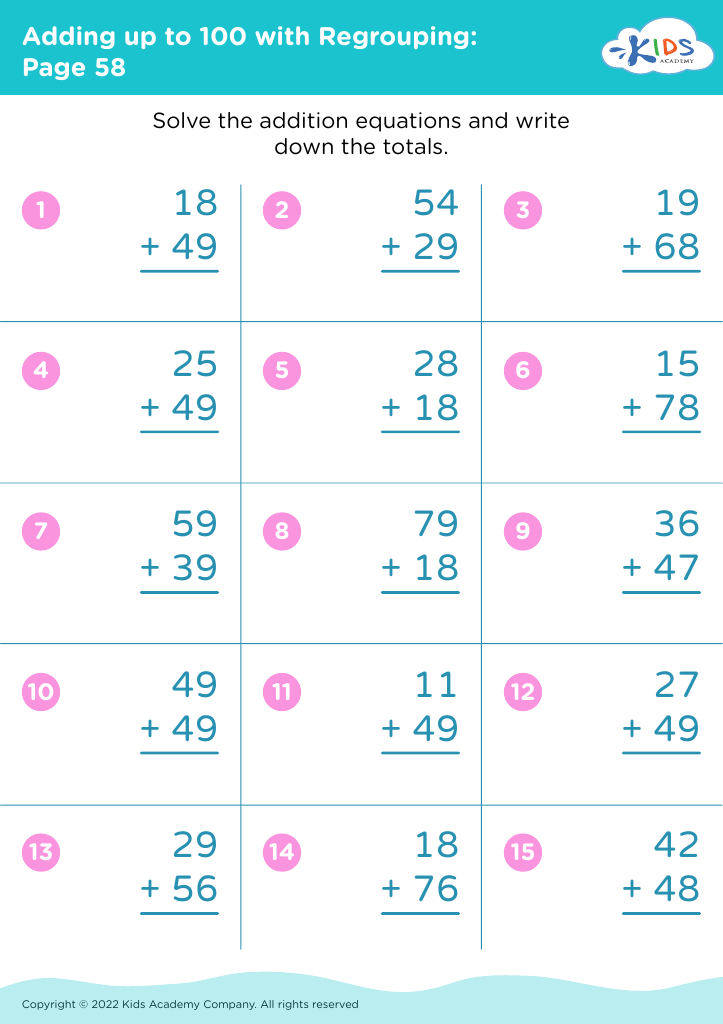
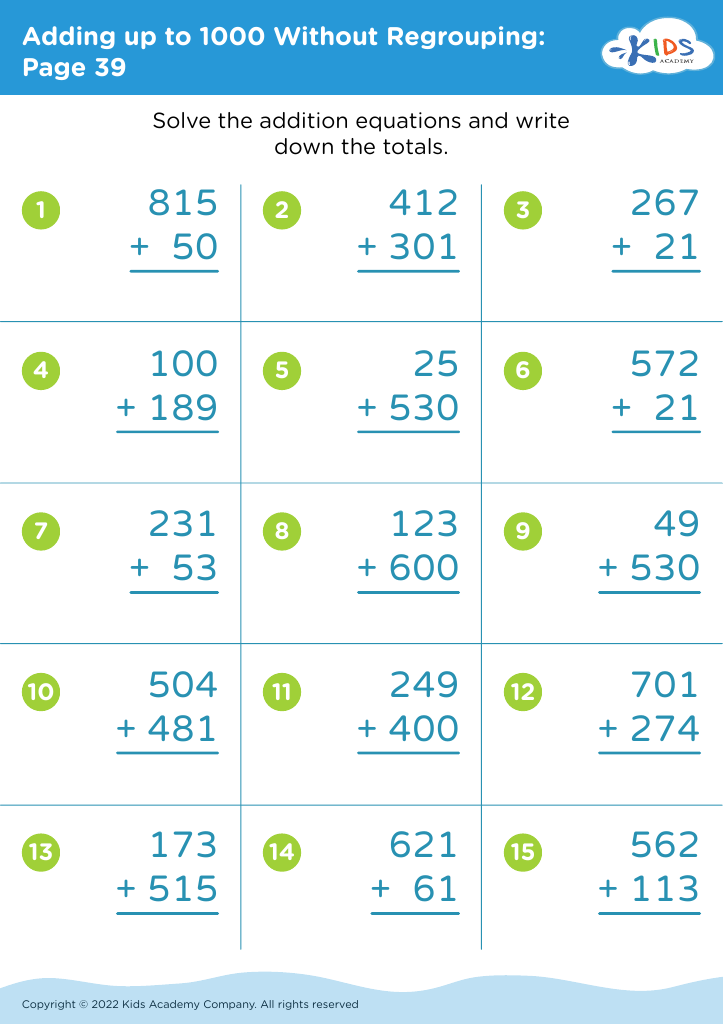
Enhance your child's handwriting skills while mastering addition with our Handwriting Improvement Addition Worksheets designed specifically for 8-year-olds. These engaging worksheets provide a fun and interactive way for young learners to practice their writing and math skills simultaneously. Each worksheet features clear instructions and visually appealing graphics to keep kids motivated. By integrating handwriting practice with addition exercises, children will improve their letter formation, spacing, and overall penmanship. Perfect for at-home learning or classroom enrichment, our worksheets make learning enjoyable and effective. Boost your child's confidence and proficiency in both handwriting and math today!








Handwriting improvement is crucial for 8-year-olds because it plays a fundamental role in their overall academic success and self-esteem. At this age, children are transitioning from learning to write to writing to learn. Legible handwriting facilitates clearer communication of ideas during writing tasks, which are critical for subjects like English, Social Studies, and Science. Improved handwriting also allows students to focus on the content of their writing rather than the mechanics, fostering creativity and critical thinking.
Moreover, developing good handwriting habits early on can significantly influence a child’s confidence in their writing abilities. Children who struggle with handwriting may become frustrated and reluctant to express themselves, leading to a lack of engagement in classroom activities. Good handwriting can also support fine motor skills development, which is essential for the child's overall physical coordination.
For parents and teachers, prioritizing handwriting improvement helps create a more conducive learning environment. Engaging children in fun, interactive handwriting exercises can turn practice into a playful experience. Additionally, reinforcing the importance of clear handwriting sets a foundation for effective communication skills that will serve children well beyond their early years in school. Ultimately, supporting handwriting improvement is an investment in a child's future learning and social experiences.








