
Handwriting practice Addition Worksheets for 8-Year-Olds
5 filtered results
Difficulty Level
Grade
Age
-
From - To
Subject
Activity
Standards
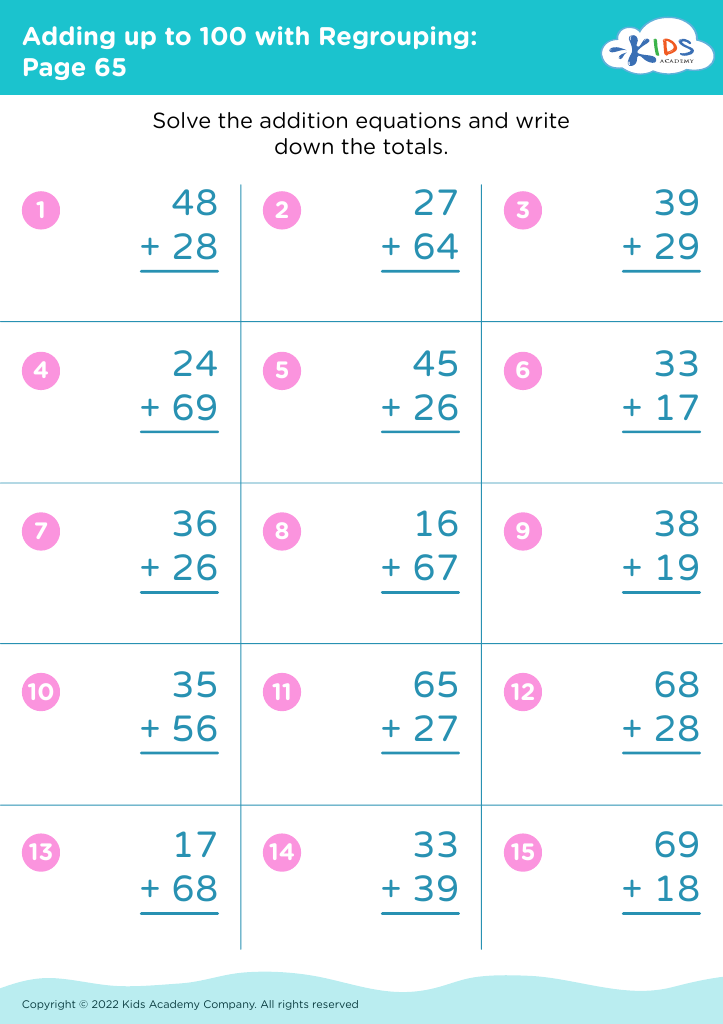
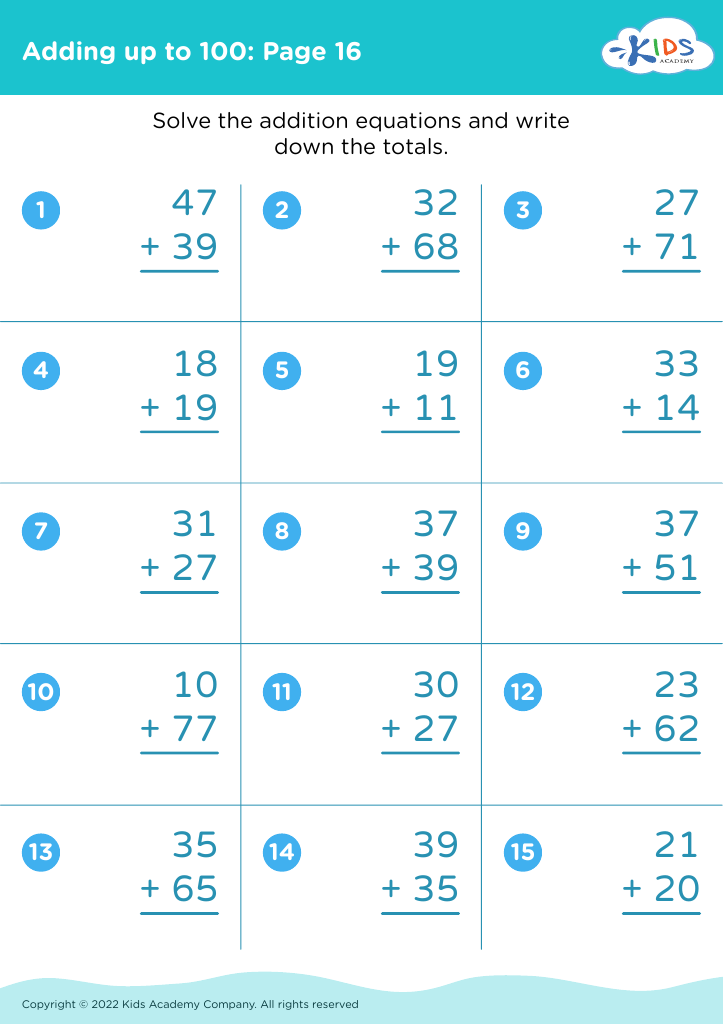
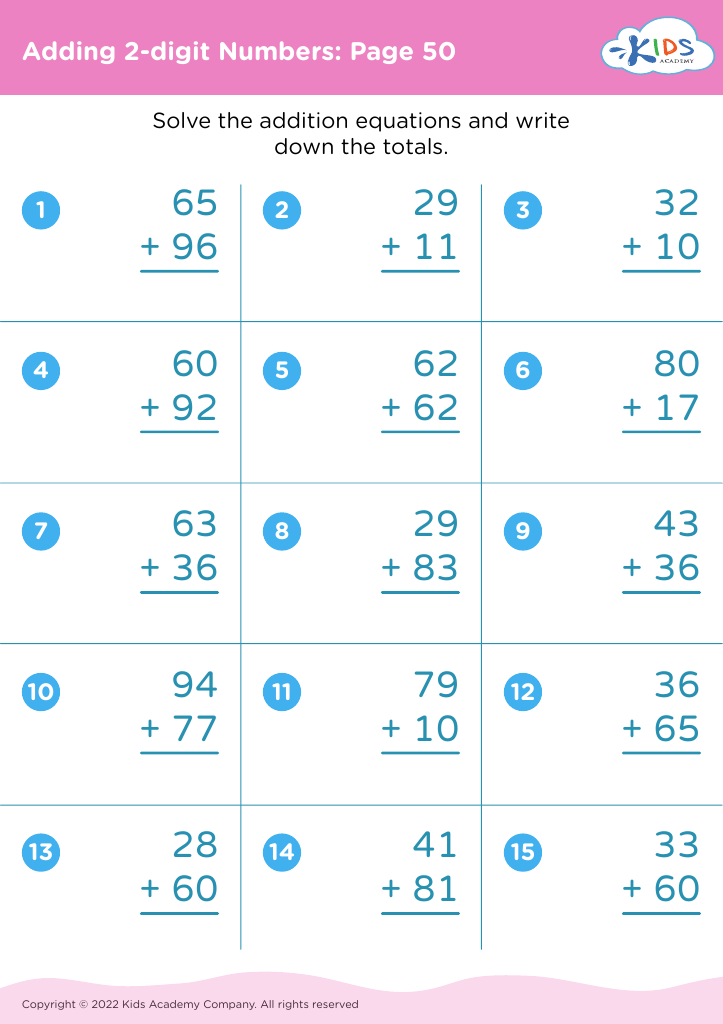
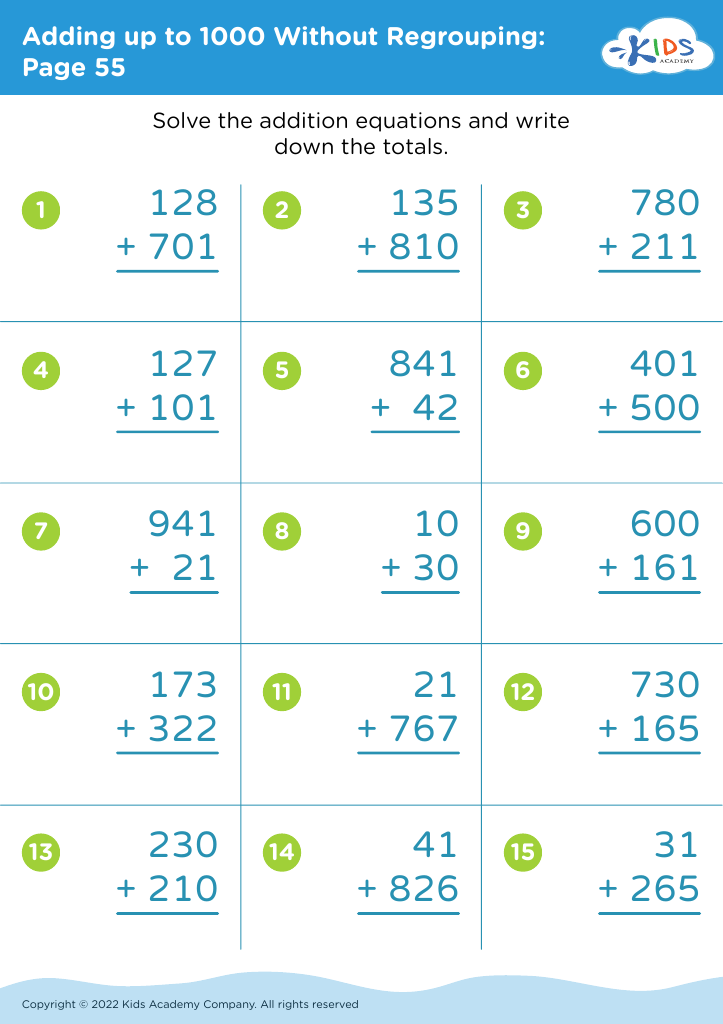
Unlock the power of seamless learning with our "Handwriting Practice Addition Worksheets for 8-Year-Olds." Specifically designed to nurture developing minds, these worksheets blend essential math skills with handwriting practice. Each activity is crafted to enhance fine motor skills while reinforcing fundamental addition concepts. Perfectly tailored for second graders, our worksheets offer engaging exercises that make learning fun and effective. Whether your child is solving basic sums or advancing to more complex additions, these printable resources are ideal for building confidence and academic success. Make math a delightful experience with Kids Academy's expertly designed worksheets—happy learning!
Favorites
With answer key
Interactive
Join Kids Academy for Free
Who is primarily going to use this learning content?








Handwriting practice and addition are foundational skills that significantly influence a child's academic success and cognitive development. For 8-year-olds, who are typically in the second or third grade, honing these skills is crucial for several reasons.
Firstly, proficient handwriting facilitates clear and effective communication. At this age, children are moving from learning to write to writing to learn, and being able to write legibly helps them express their ideas more coherently. Good handwriting also supports better note-taking and reading their own writing, which is crucial for studying and assessments.
Secondly, addition is a fundamental math skill that serves as a building block for more complex arithmetic operations like multiplication, division, and fractions. By practising addition, children improve their number sense, enabling them to understand and manipulate numbers more easily. This reinforces critical thinking and problem-solving skills essential for daily life and future mathematical learning.
Moreover, both handwriting and addition practice help in developing fine motor skills and cognitive abilities. Writing by hand activates areas of the brain involved in memory and learning, while practising addition enhances mental calculation abilities, logical reasoning, and concentration.
Investing time in these practices ultimately promotes a child’s overall academic growth, self-confidence, and lifelong learning habits, making it indispensably valuable for both parents and teachers to support and encourage these activities regularly.








