Letter recognition Addition Worksheets for 8-Year-Olds
3 filtered results
-
From - To
Enhance your child's learning experience with our engaging Letter Recognition Addition Worksheets for 8-year-olds! These worksheets seamlessly combine essential math skills with fun letter recognition activities. Designed to help young learners improve their addition skills while identifying letters, our worksheets feature colorful illustrations and interactive exercises. Each page focuses on vital learning objectives that foster cognitive development and boost confidence in math and literacy. Perfect for at-home practice or classroom use, these resources make learning enjoyable and effective. Download our Letter Recognition Addition Worksheets today and watch your child thrive in both mathematics and language arts!
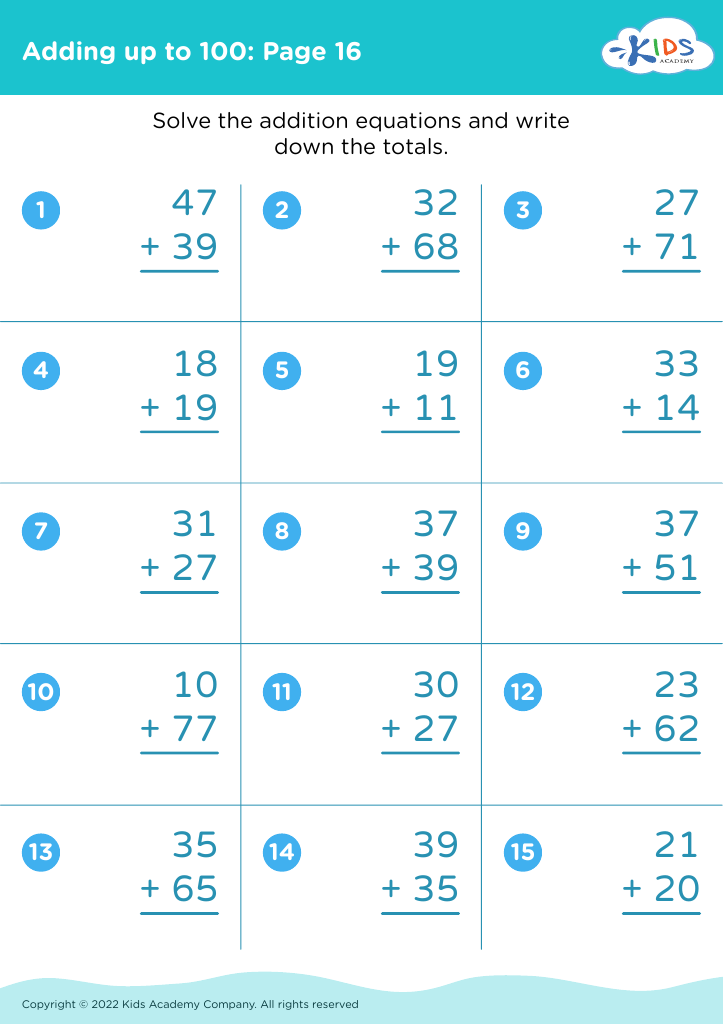
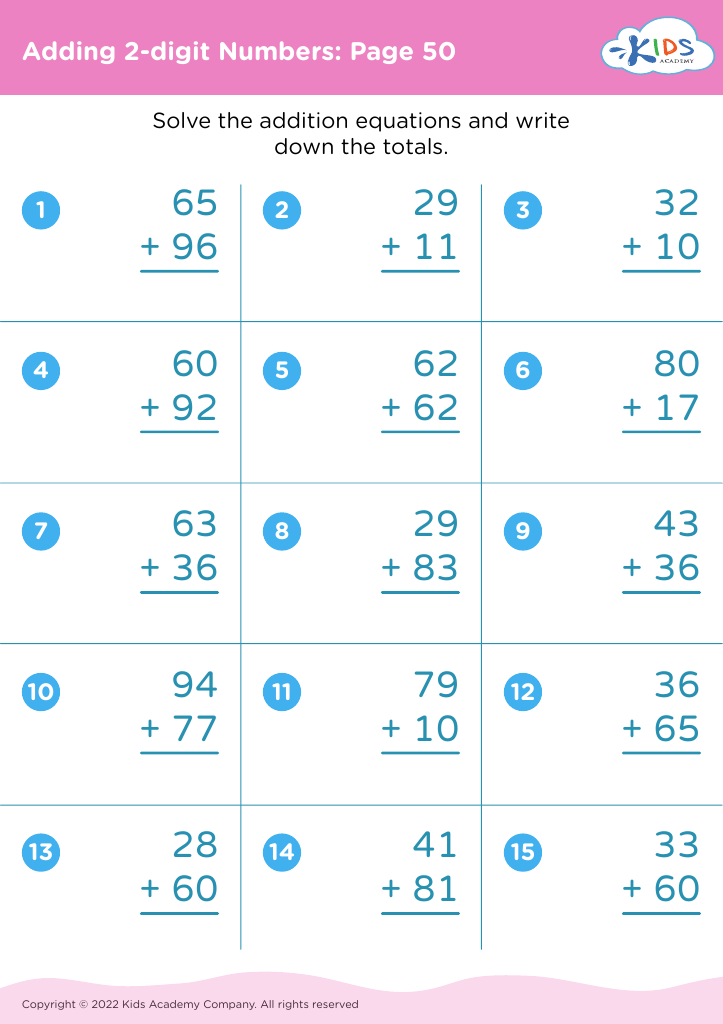
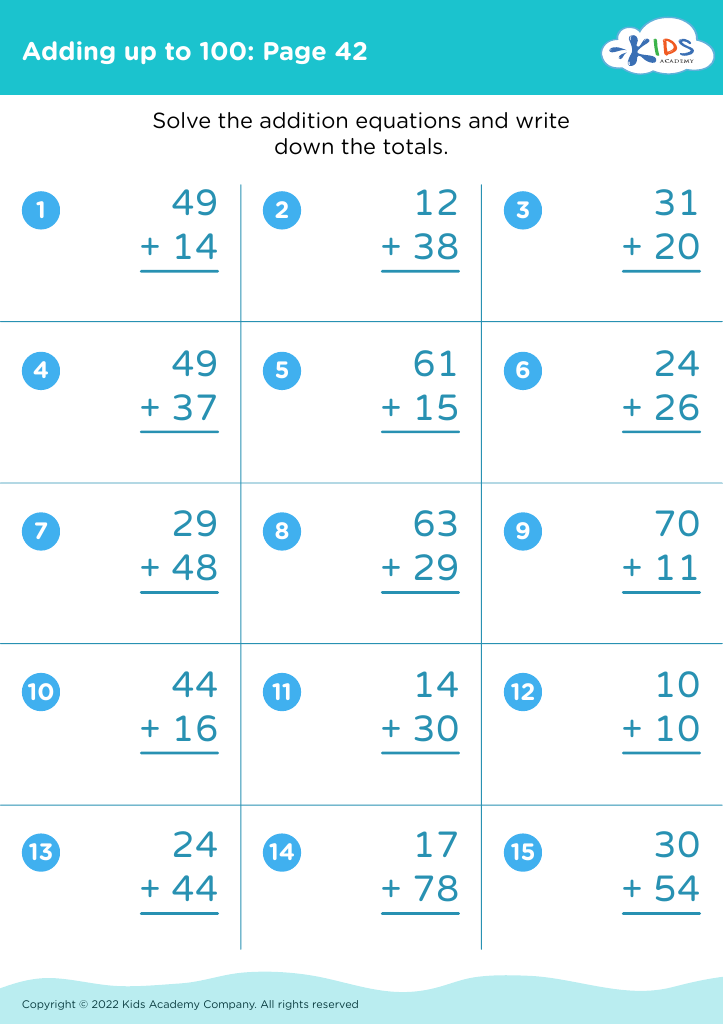








Letter recognition and addition skills are crucial foundations for eight-year-olds as they significantly contribute to their overall academic development. Understanding letter sounds and formations enhances reading proficiency, which is vital for language acquisition and effective communication. Kids at this age begin to encounter more complex texts, and strong letter recognition skills allow them to decode unfamiliar words, expanding vocabulary and comprehension.
Furthermore, addition skills foster mathematical fluency, helping children grasp essential concepts like number relationships and problem-solving strategies. When children are confident in their ability to recognize letters and perform basic addition, they are better equipped to tackle more advanced subjects in both language arts and mathematics.
Parents and teachers play a pivotal role in emphasizing these skills. By creating a supportive and engaging learning environment, they can encourage daily practice through games, storytelling, or innovative activities. Developing these abilities can help boost a child's self-esteem, foster a love for learning, and pave the way for future academic success in more rigorous subjects. Thus, prioritizing both letter recognition and addition in a child's curriculum can lead to a strong educational foundation, providing them with the necessary tools to navigate the learning landscape effectively.








