Logical thinking development Addition Worksheets for 8-Year-Olds
8 filtered results
-
From - To
Enhance your child's logical thinking skills with our engaging Addition Worksheets designed for 8-year-olds. These worksheets provide a fun and interactive way for young learners to master addition while developing critical thinking skills. Each activity encourages students to solve problems, identify patterns, and work through challenges, fostering a deeper understanding of mathematical concepts. With colorful illustrations and age-appropriate content, our worksheets make learning enjoyable and effective. Ideal for use at home or in the classroom, these resources are perfect for reinforcing classroom lessons or providing additional practice. Unlock your child's potential in math and logical reasoning today!
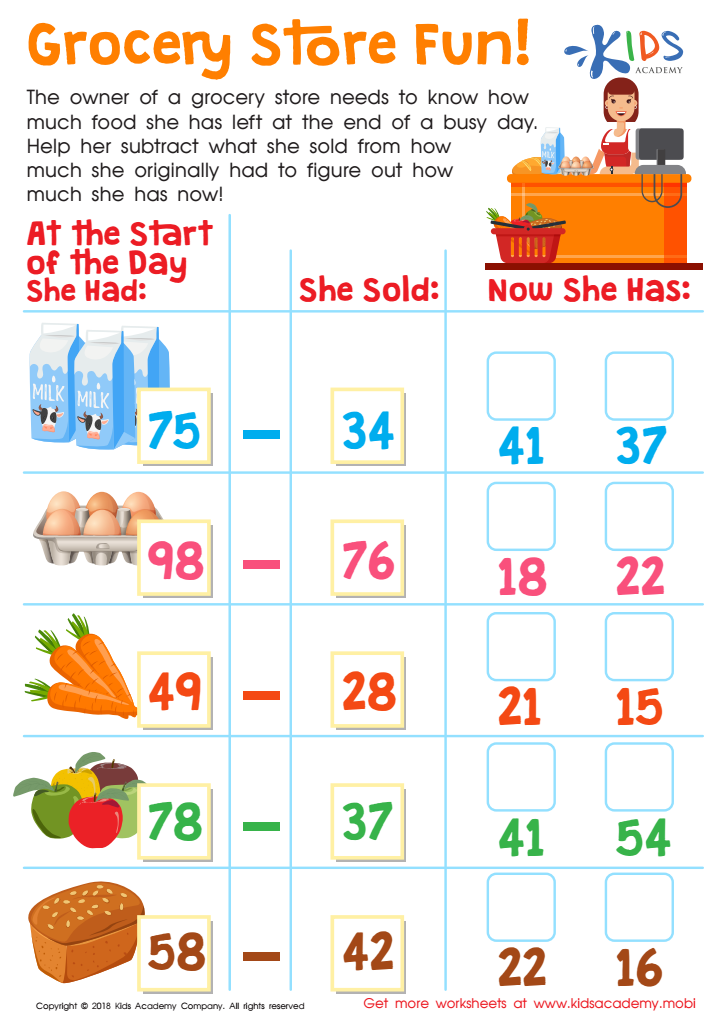
Grocery Store Fun! Worksheet
 Assign to My Students
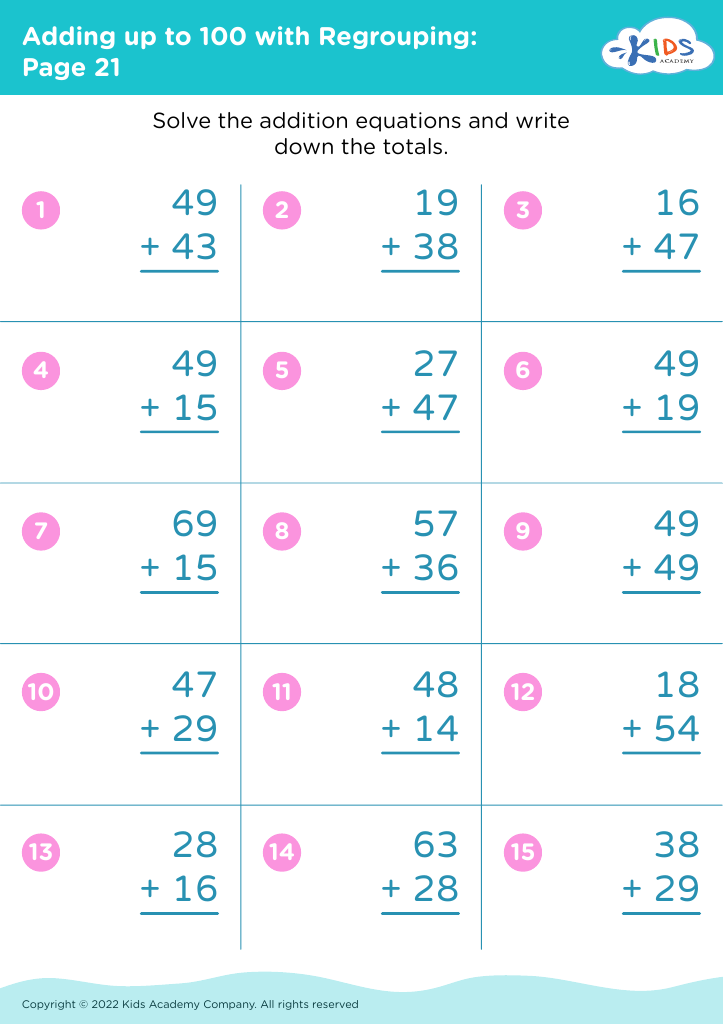
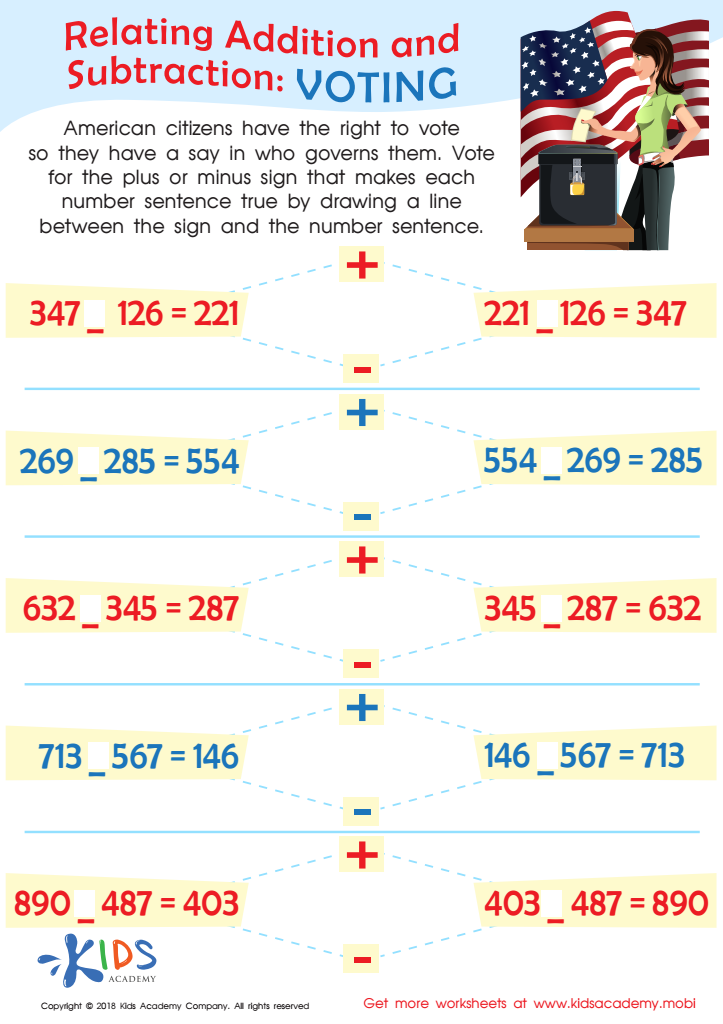
Voting Worksheet
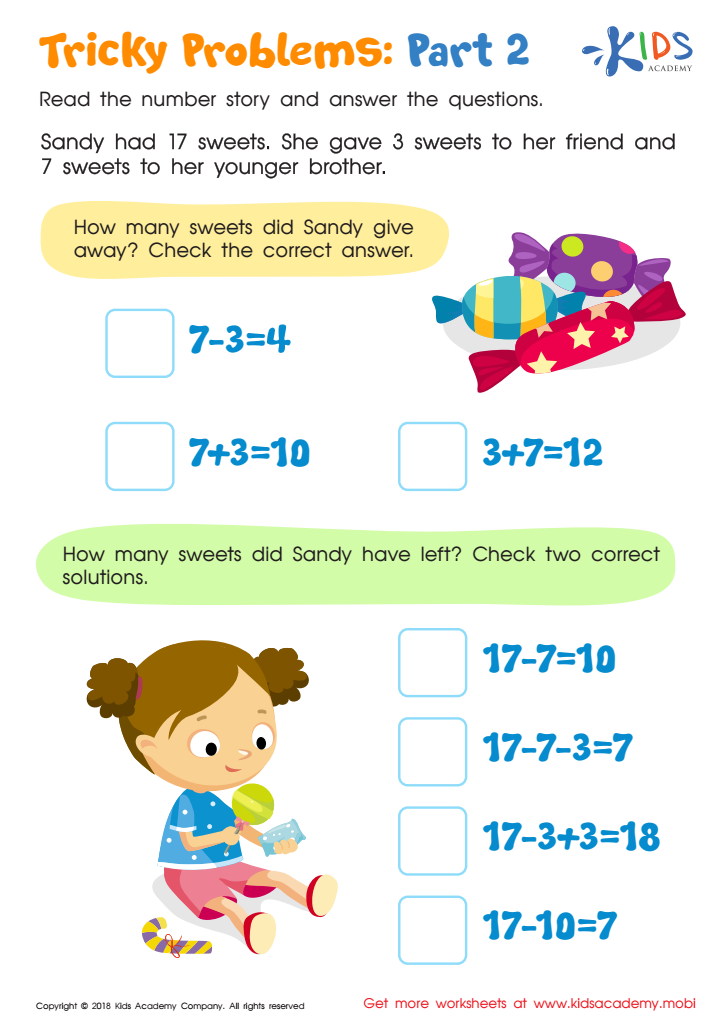
Tricky Problems Worksheet: Part 2
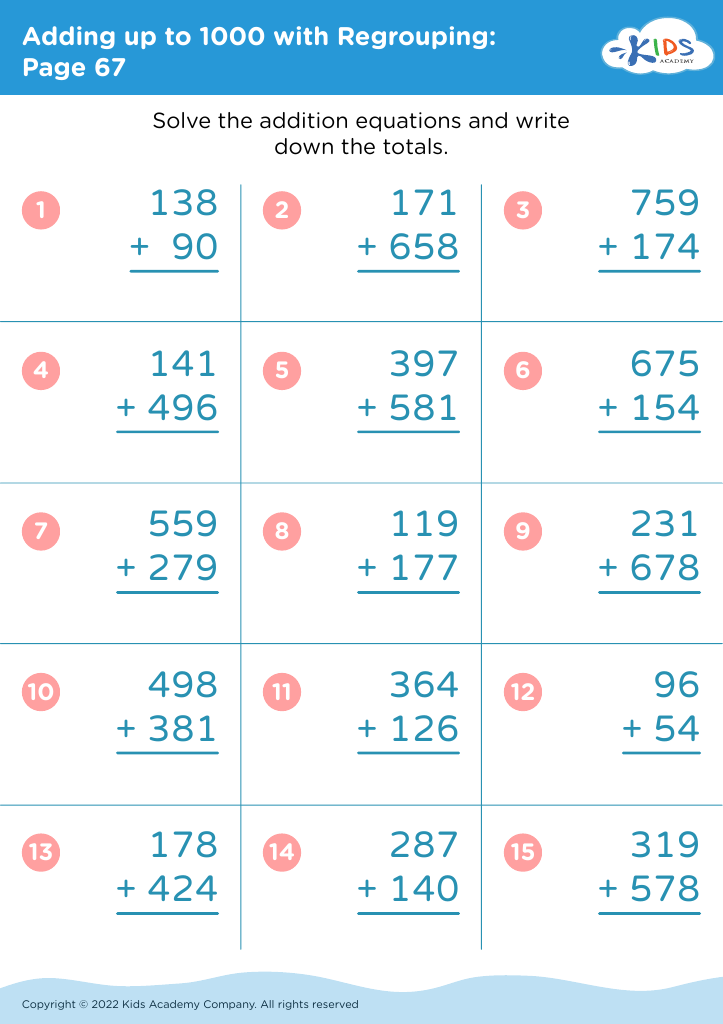
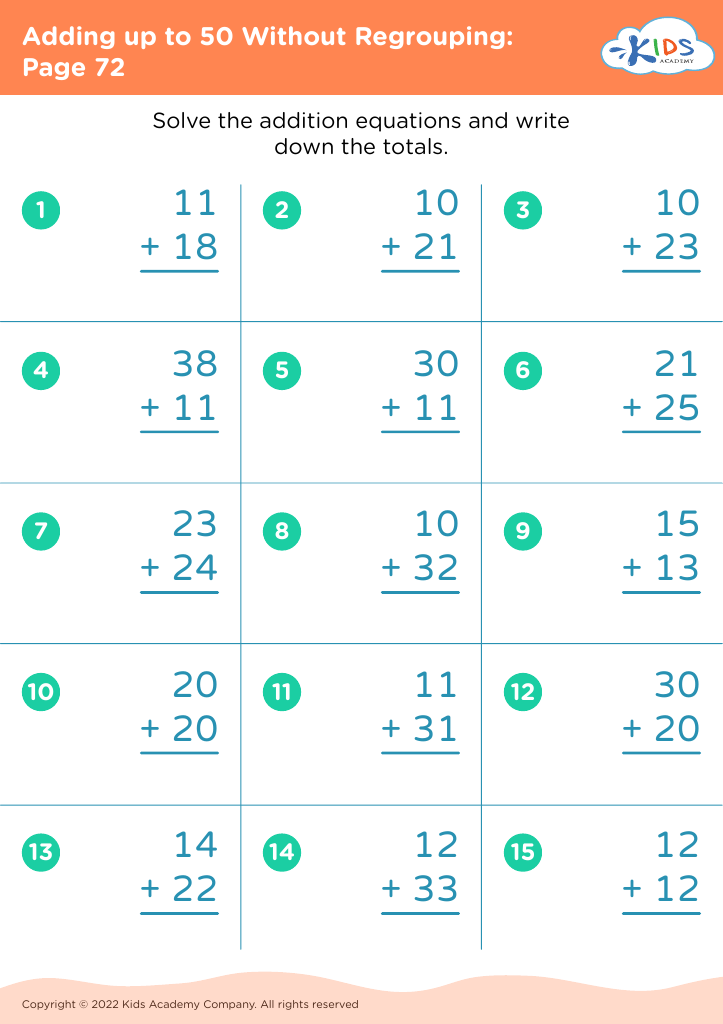
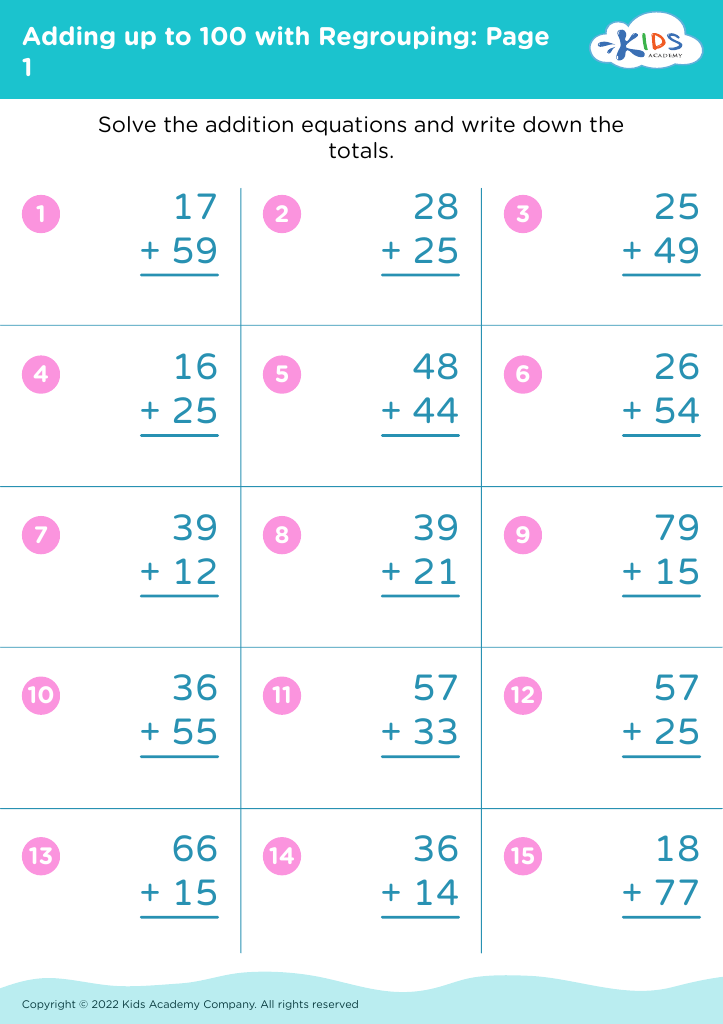
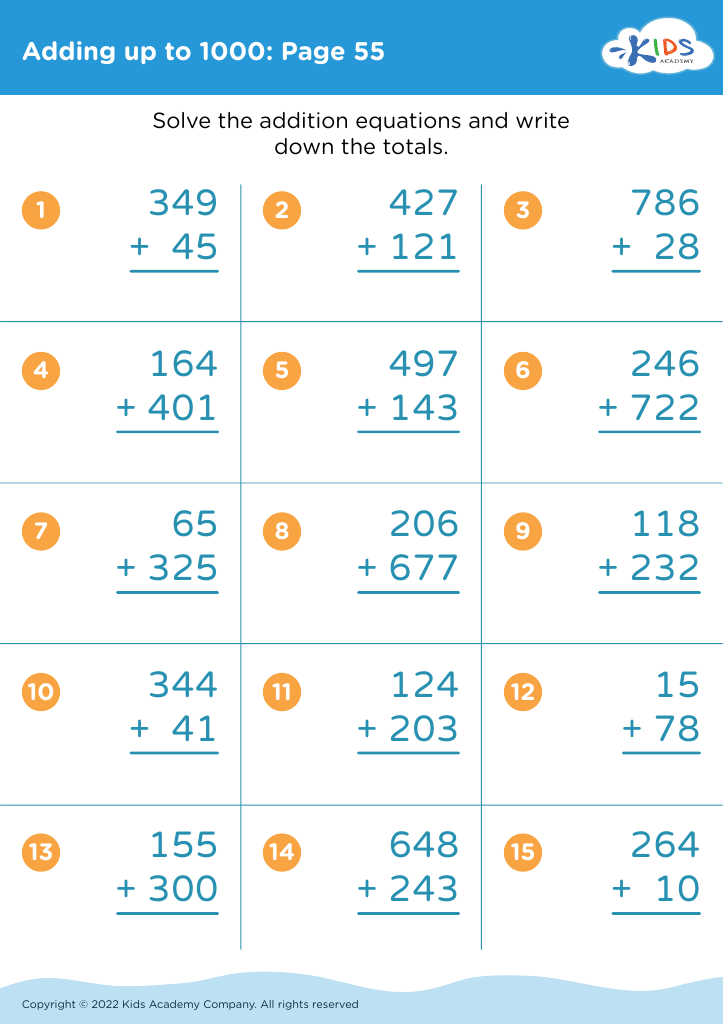








Logical thinking is a foundational skill that plays a crucial role in a child’s overall cognitive development. At the age of 8, children are at a pivotal stage in their learning where they begin to comprehend and apply logical reasoning, especially in subjects like mathematics. Developing logical thinking during addition helps children understand the relationship between numbers, patterns, and operations, which builds a solid framework for more complex math concepts in the future.
When parents and teachers prioritize logical thinking in the context of addition, they equip children with problem-solving skills that extend beyond the classroom. As children learn to think critically and reason through problems, they gain confidence in their abilities, fostering a positive attitude towards learning. This proficiency can lead to improved academic performance and increased engagement in mathematical activities.
Moreover, logical thinking skills train children to analyze situations systematically, which is essential for making informed decisions in everyday life. By emphasizing the importance of logical thinking in simple addition, parents and teachers help nurture a generation of thinkers who approach challenges thoughtfully and creatively, setting them up for success not only in math but in various aspects of life as well. Thus, fostering logical thinking during this stage is vital for holistic development.








