Math problem-solving Addition Worksheets for 8-Year-Olds
7 filtered results
-
From - To
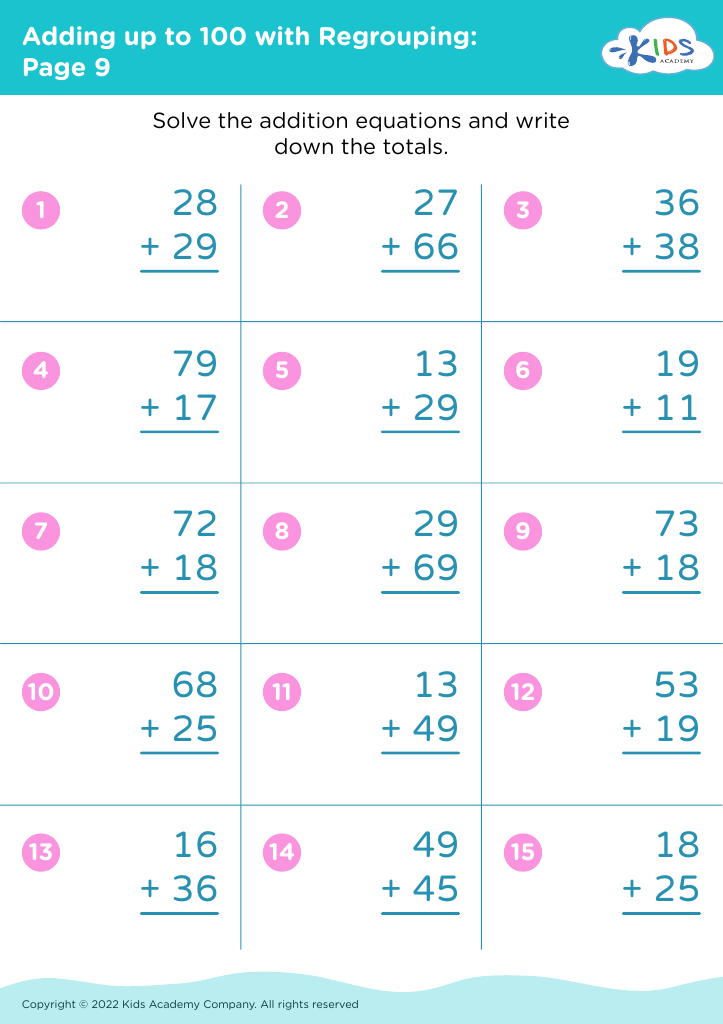
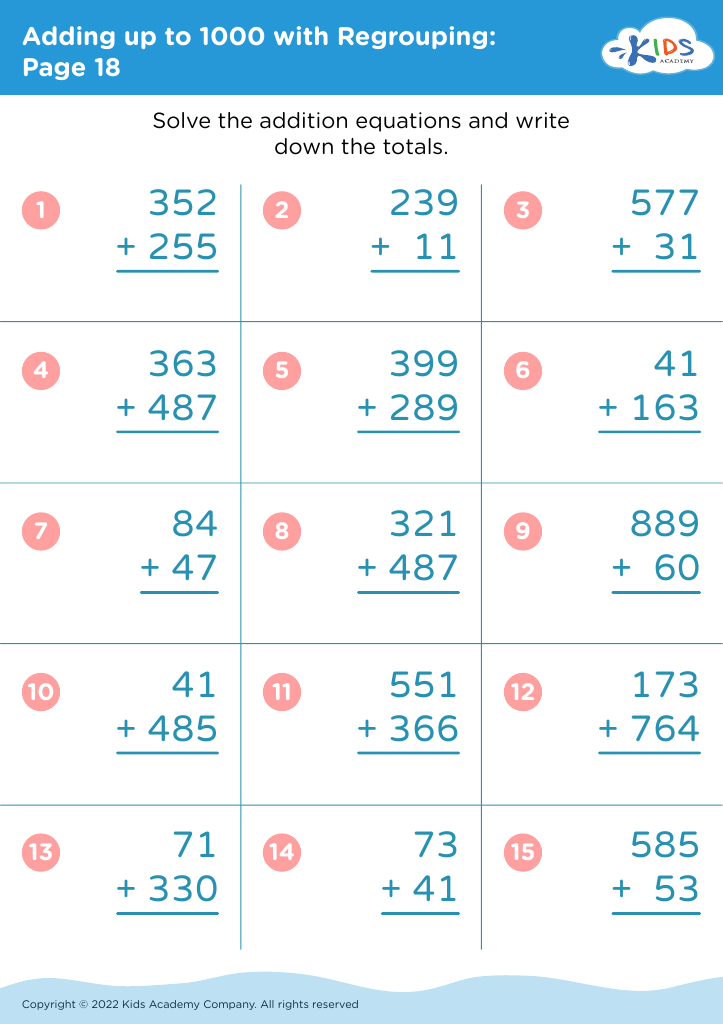
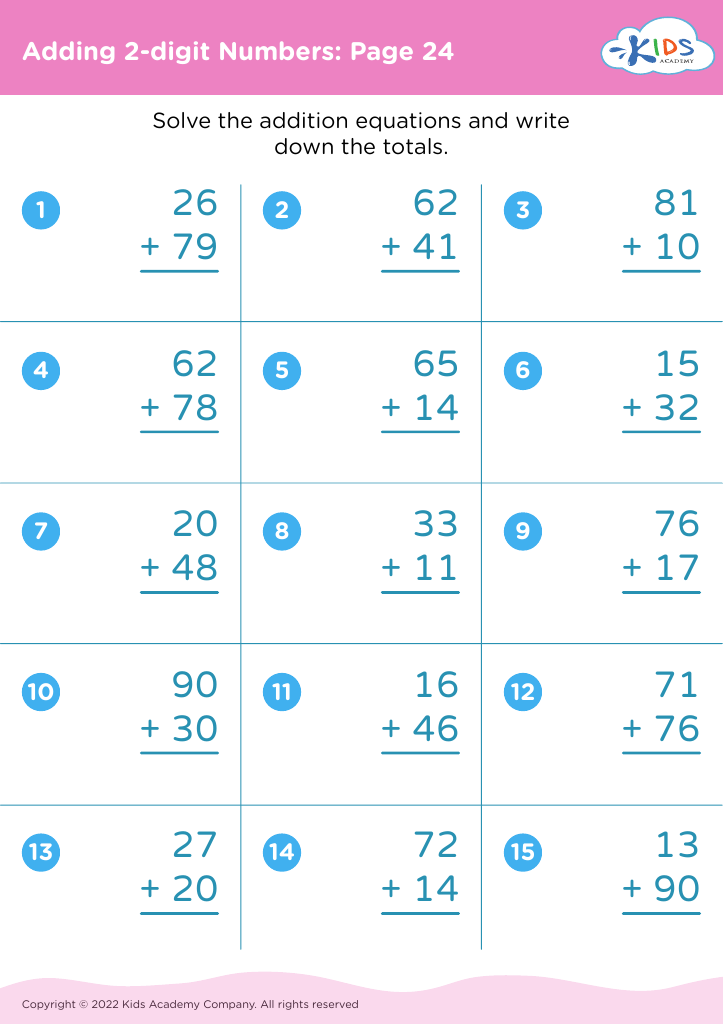
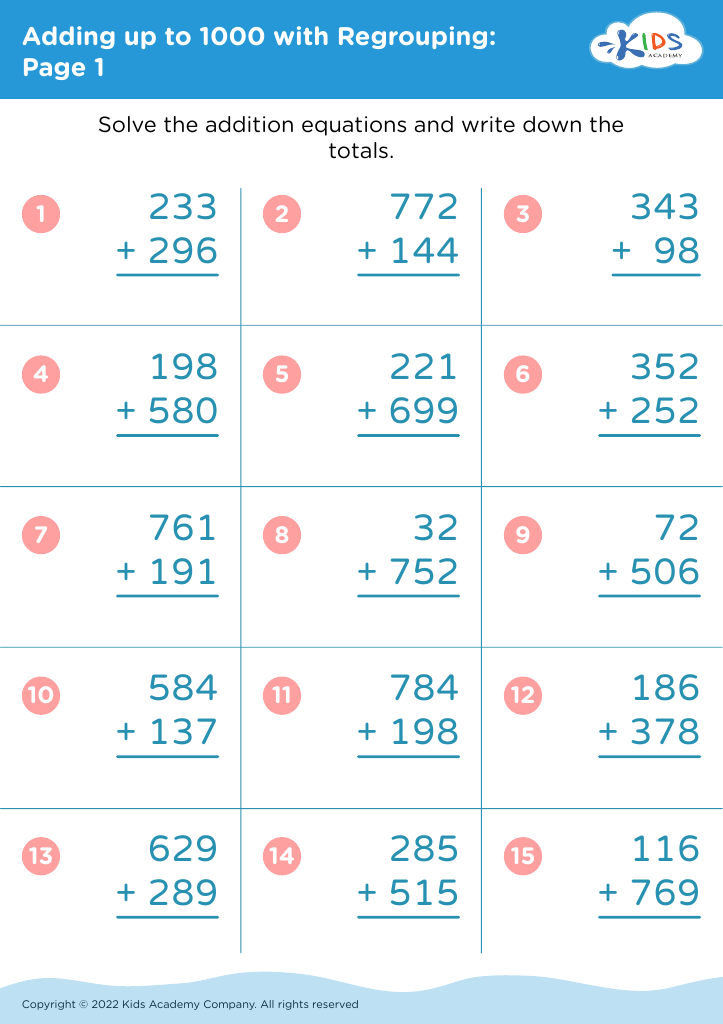
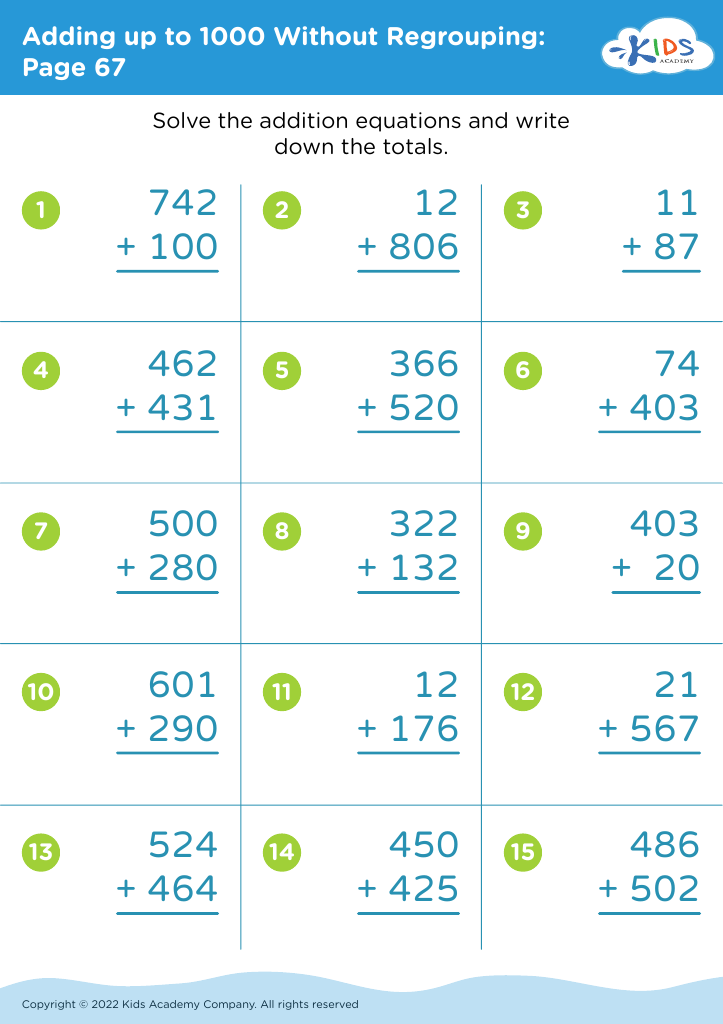
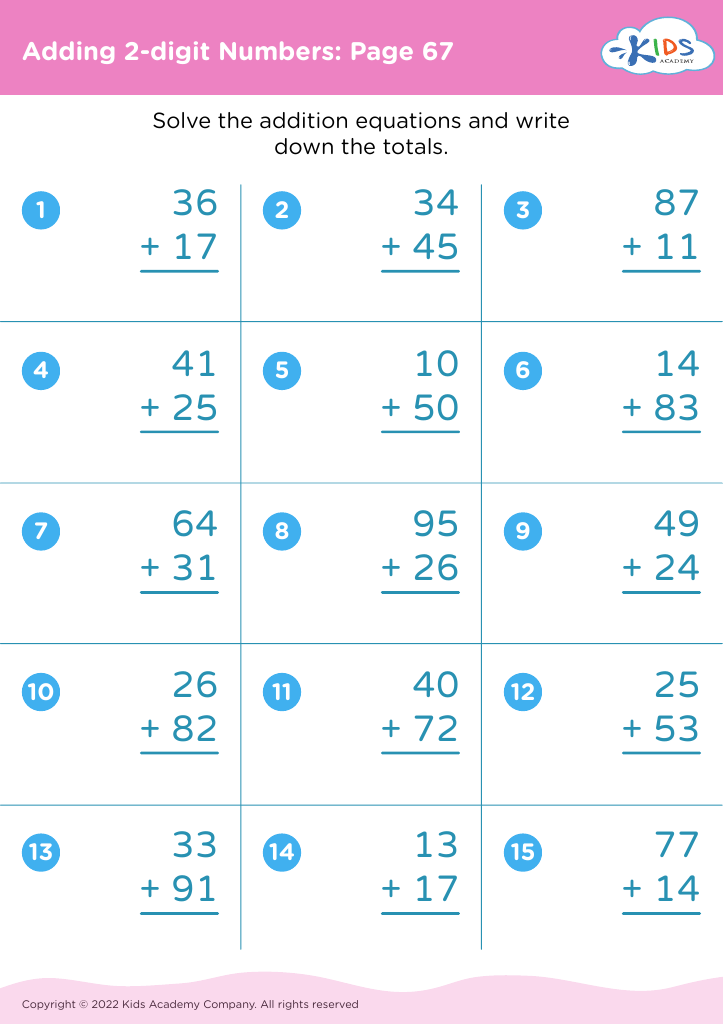
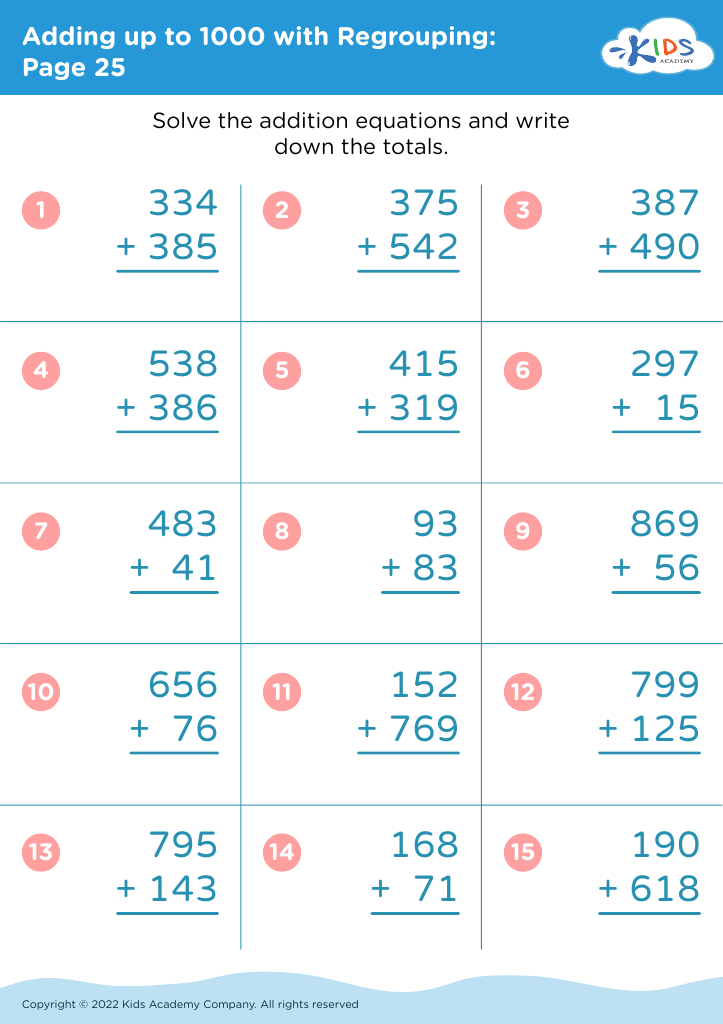
Help your young learner enhance their math skills with our "Math Problem-Solving Addition Worksheets for 8-Year-Olds." Designed to make learning fun and effective, these worksheets offer a variety of addition problems that challenge and engage. From simple sums to more complex equations, our resources aim to build confidence and improve problem-solving abilities. Perfect for home practice or classroom use, these printable worksheets will support your child's addition journey and lay a strong foundation for future math success. Encourage a love for math and watch your child thrive with targeted, age-appropriate practice!






.jpg)

Math problem-solving, particularly addition, forms a critical building block for an 8-year-old’s cognitive development, and both parents and teachers should prioritize it. At this stage, children's brains are like sponges, absorbing foundational concepts that will underpin their future learning. Mastering addition helps develop their numerical fluency, a key skill essential for tackling more complex mathematical challenges in later grades.
Beyond academic performance, learning addition enhances logical thinking and problem-solving abilities. These skills have broader applications beyond the classroom - from understanding time management in daily routines to making sense of money in real-life situations such as shopping. Developing these cognitive abilities early on can foster a more profound appreciation for learning and encourage a analytical mindset.
Moreover, practicing addition can boost a child's confidence. As they consistently solve addition problems, they gain a sense of achievement that propels a positive attitude toward learning, resilience, and perseverance.
Parents and teachers play an essential role in nurturing these abilities. Through engaging activities and supportive encouragement, they can create an enjoyable learning environment. When math is presented positively, children are more likely to develop a sustained interest and passion for the subject, laying down a strong foundation for their educational journey and everyday life skills.








