
Mathematical reasoning Addition Worksheets for 8-Year-Olds
21 filtered results
Difficulty Level
Grade
Age
-
From - To
Subject
Activity
Standards
Boost your child's math skills with our "Mathematical Reasoning Addition Worksheets for 8-Year-Olds." Designed to align with educational standards, these worksheets provide exciting and challenging addition problems that encourage logical thinking and problem-solving abilities. Perfect for classroom or at-home practice, our worksheets make learning fun with engaging activities and colorful visuals. Kids will master addition concepts while developing critical skills like pattern recognition, sequencing, and analytical reasoning. Give your child the tools to succeed and watch their confidence in math soar! Explore our selection today and inspire a love for mathematics through practical and enjoyable exercises.
Favorites
With answer key
Interactive
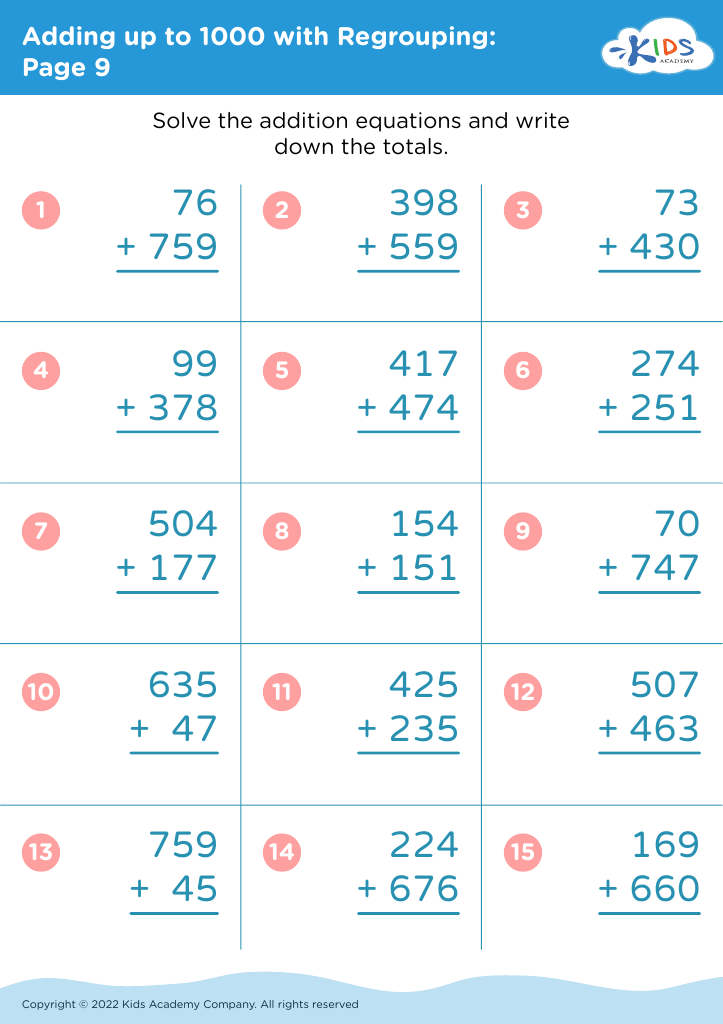
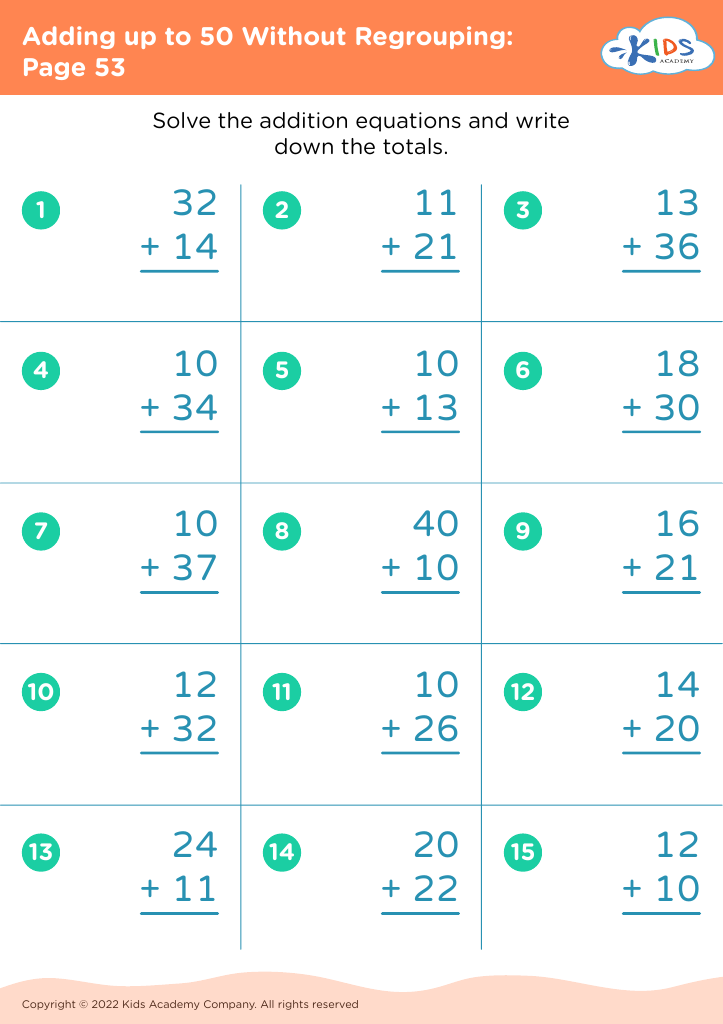
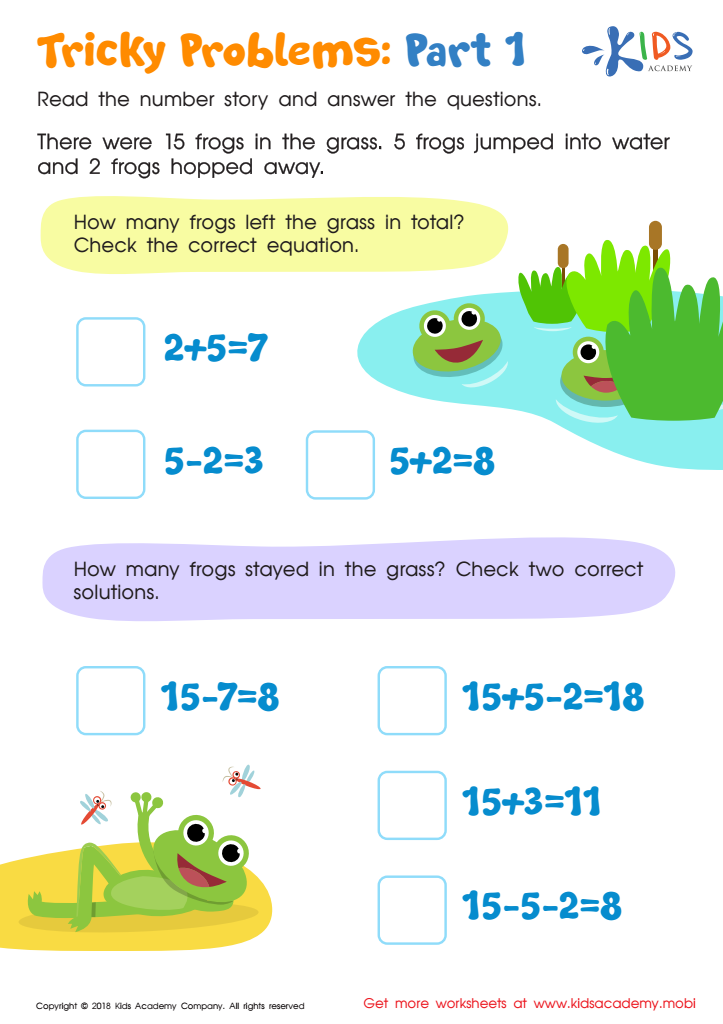
Tricky Problems Worksheet: Part 1
Visualizing word problems can help students solve them. This fun PDF worksheet encourages students to create mental images using math facts, then check boxes to match the equations for basic addition problems. It's a great way to build confidence in solving math.
 Assign to My Students
Tricky Problems Worksheet: Part 1
Worksheet
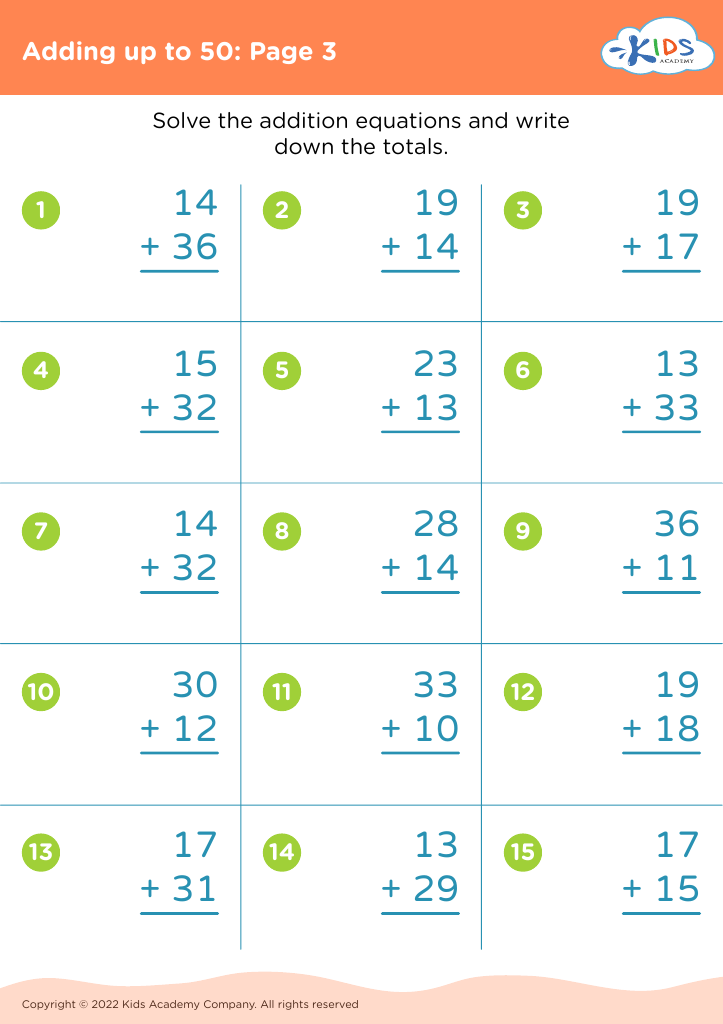
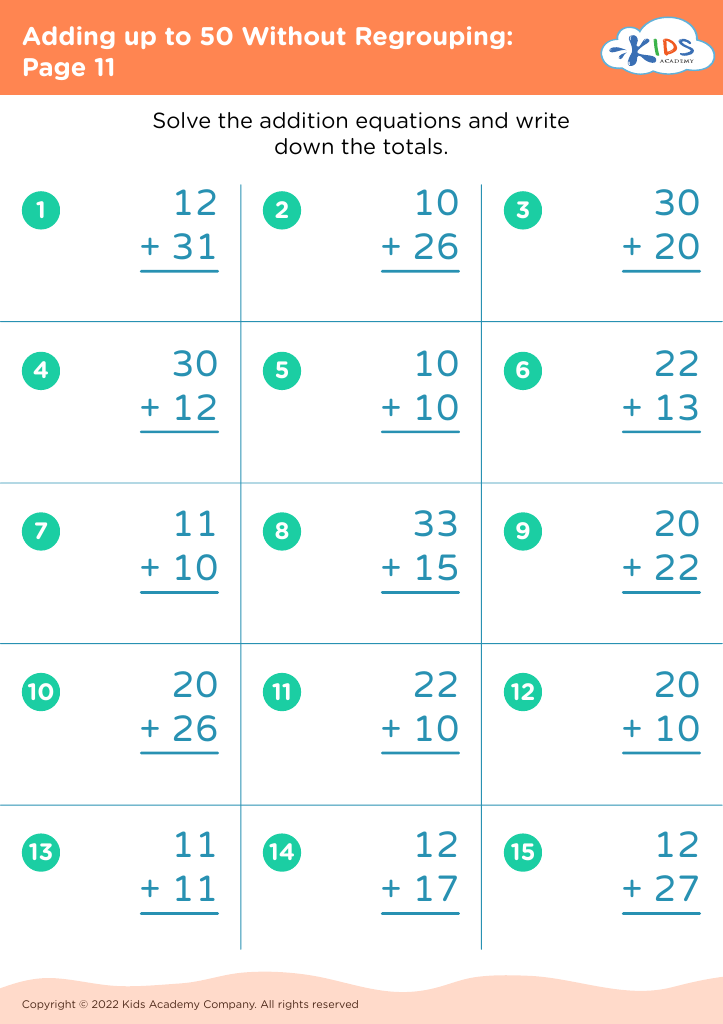
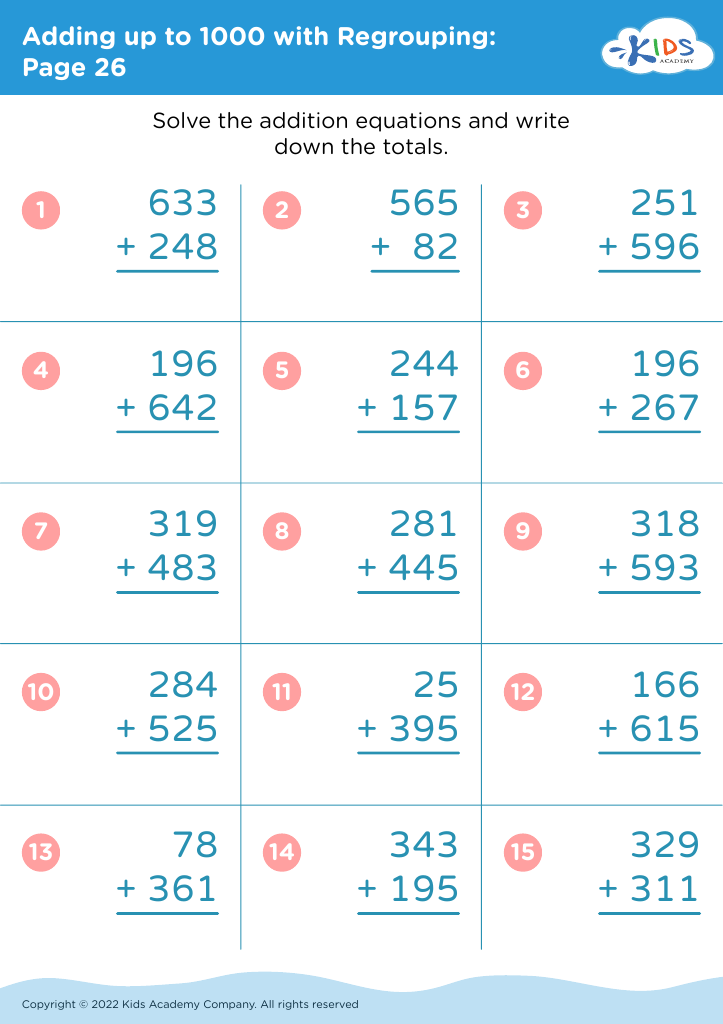
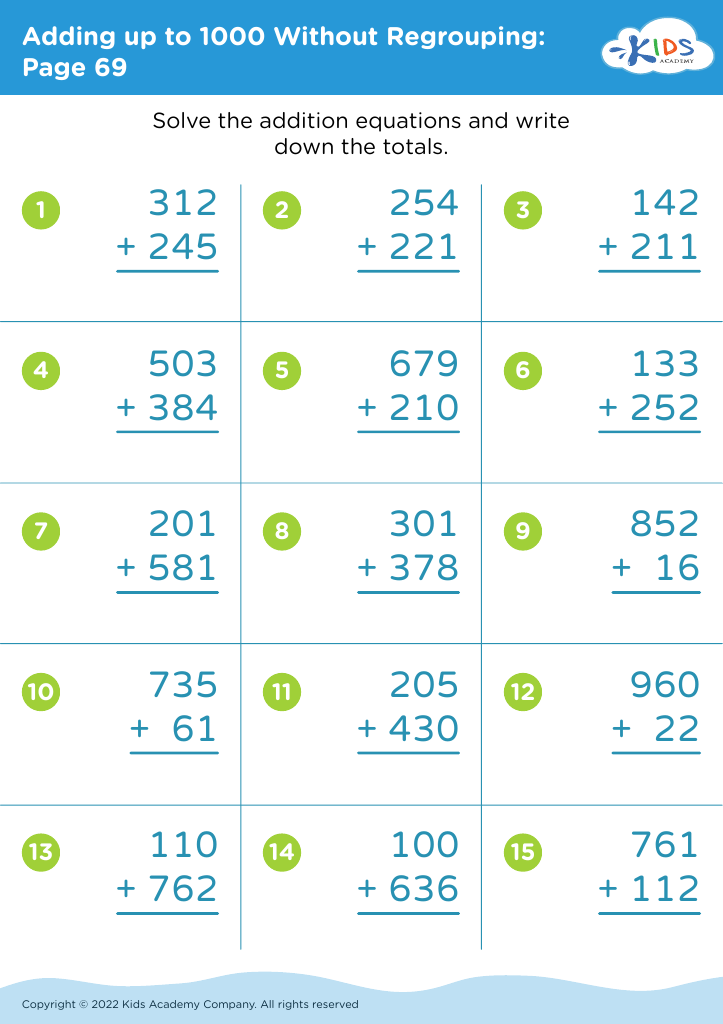
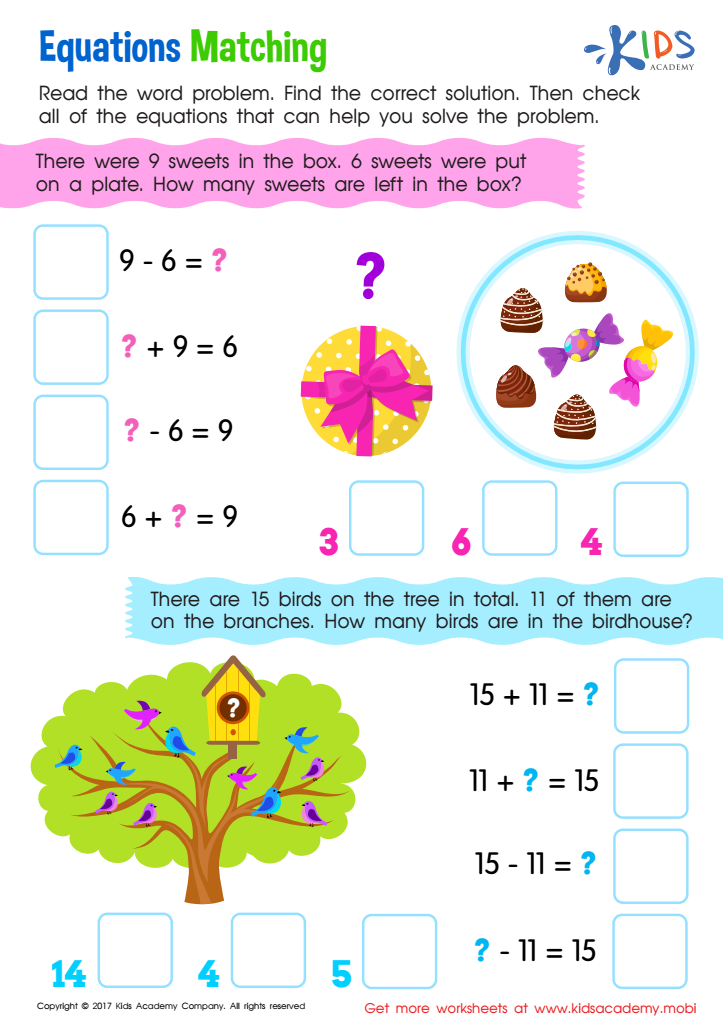
Equations Matching Word Problems Worksheet
Download this worksheet and give your young mathematician practice in solving equations using matching numbers and number family facts. They'll solve word problems, develop critical thinking and algebraic reasoning, and gain success with addition and subtraction.
Equations Matching Word Problems Worksheet
Worksheet
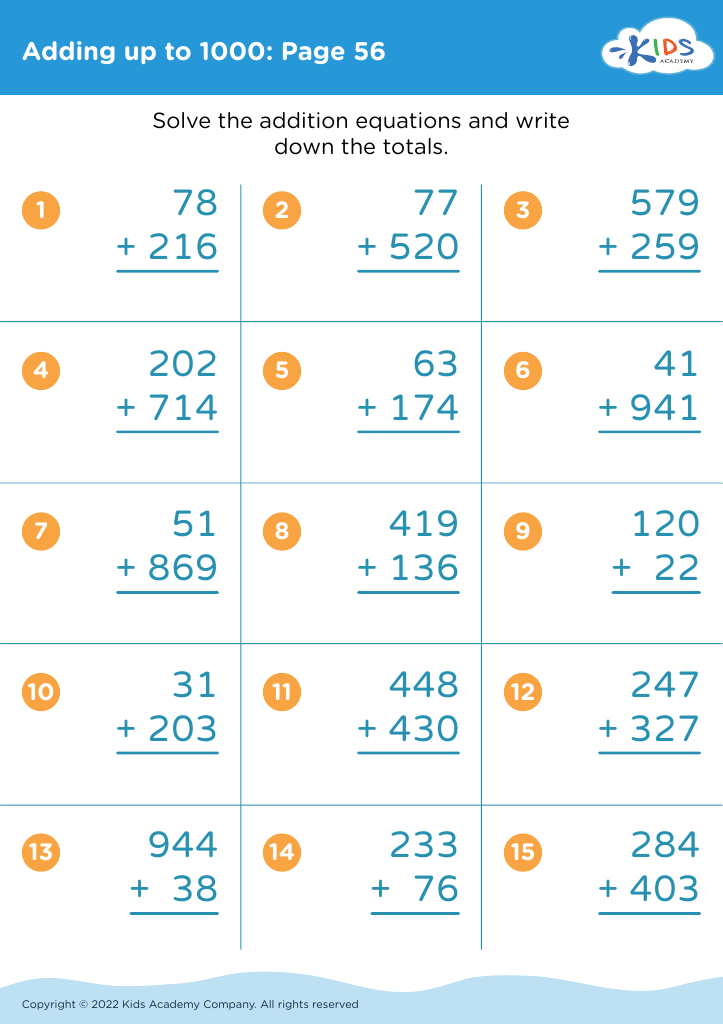
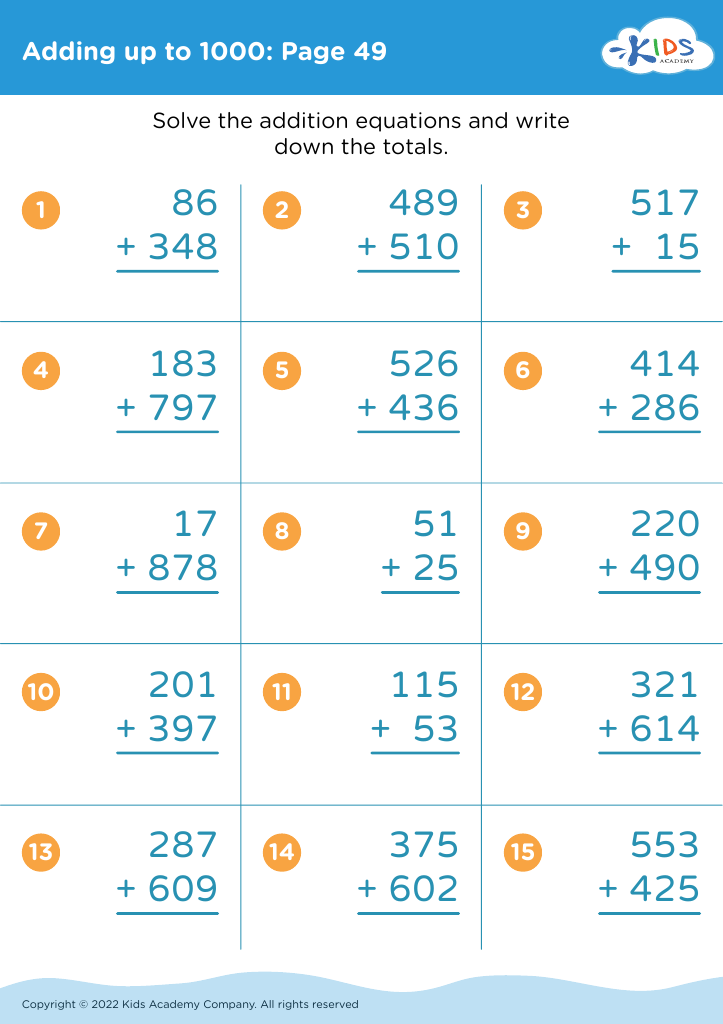
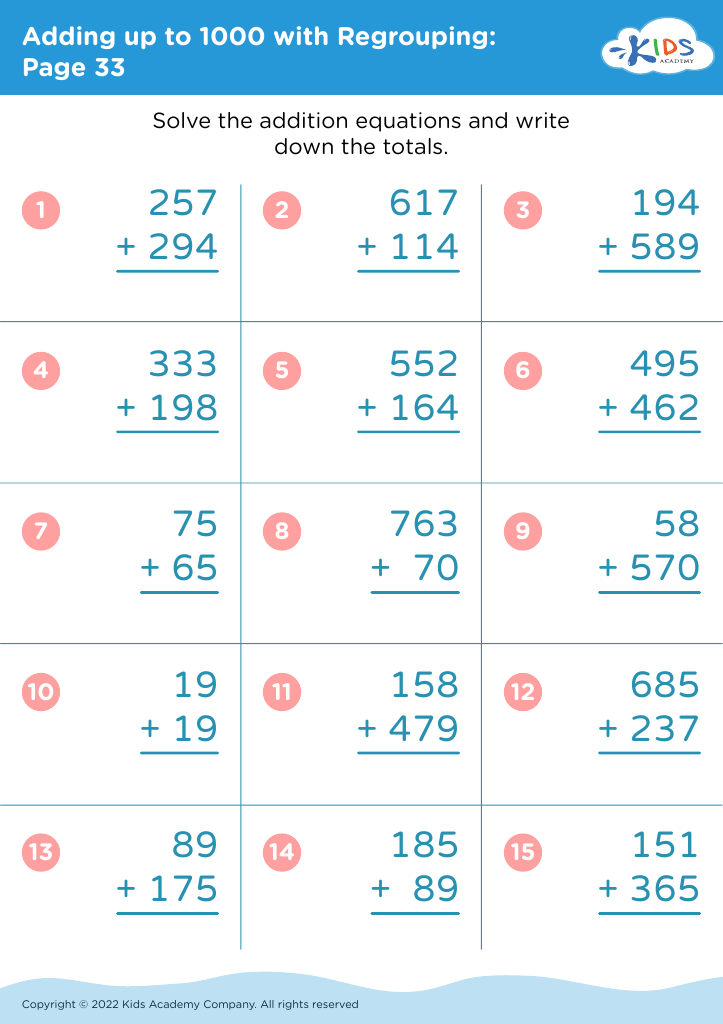
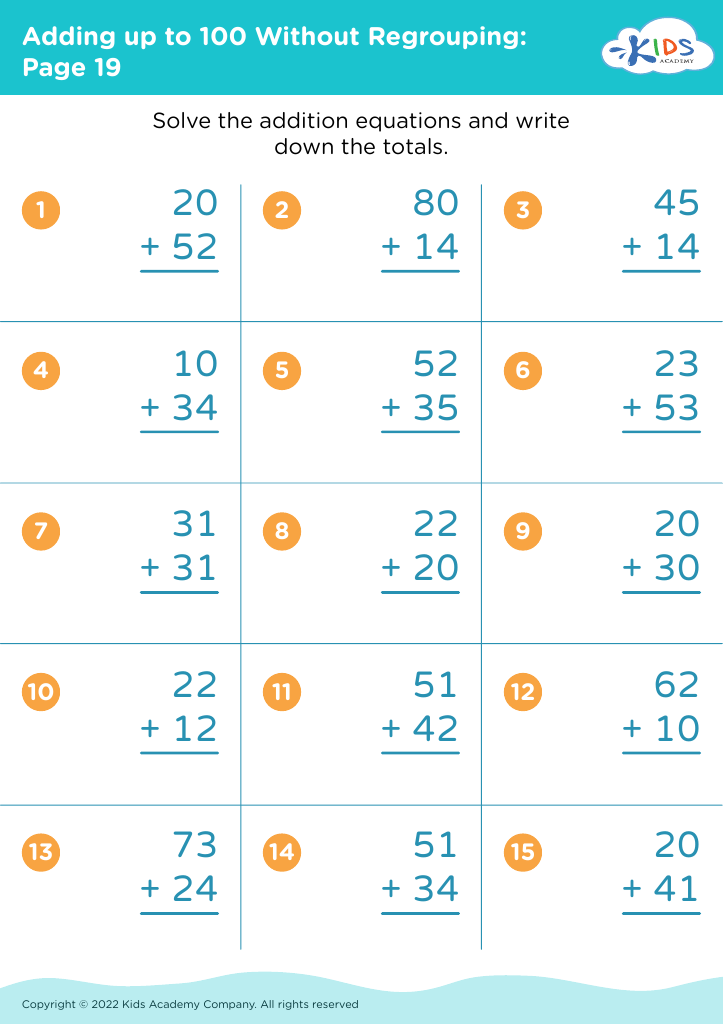
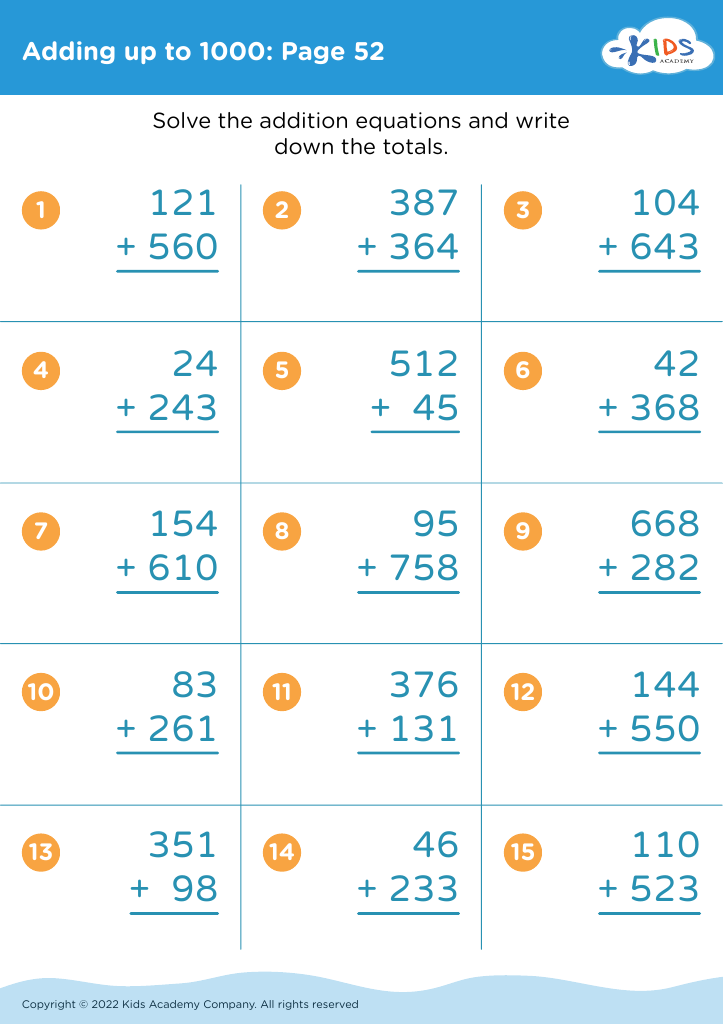
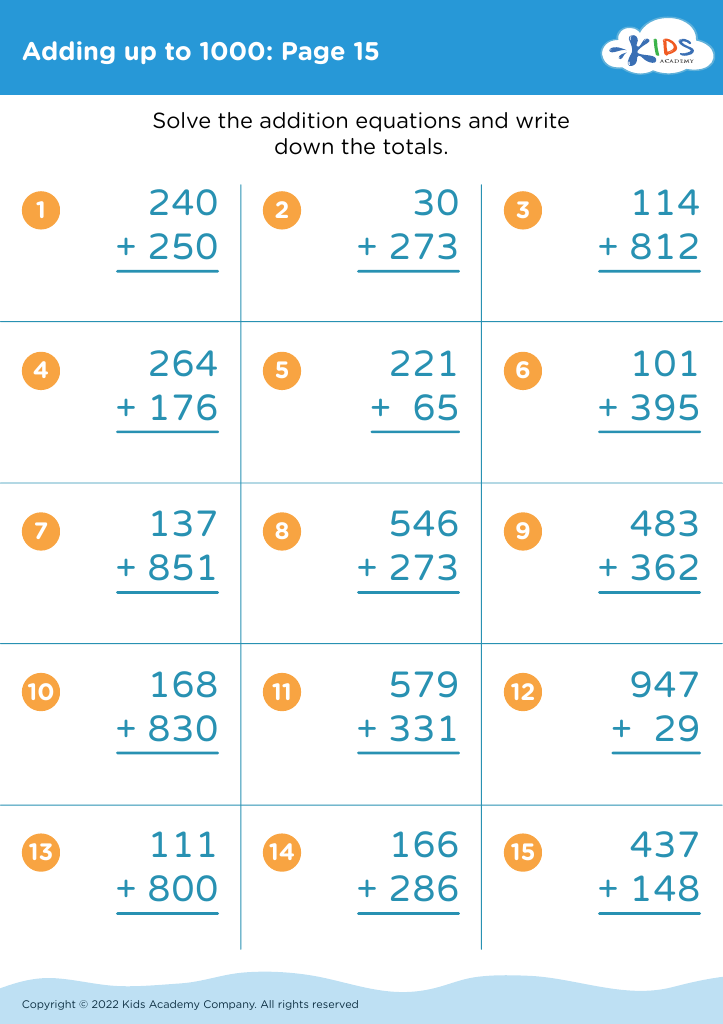
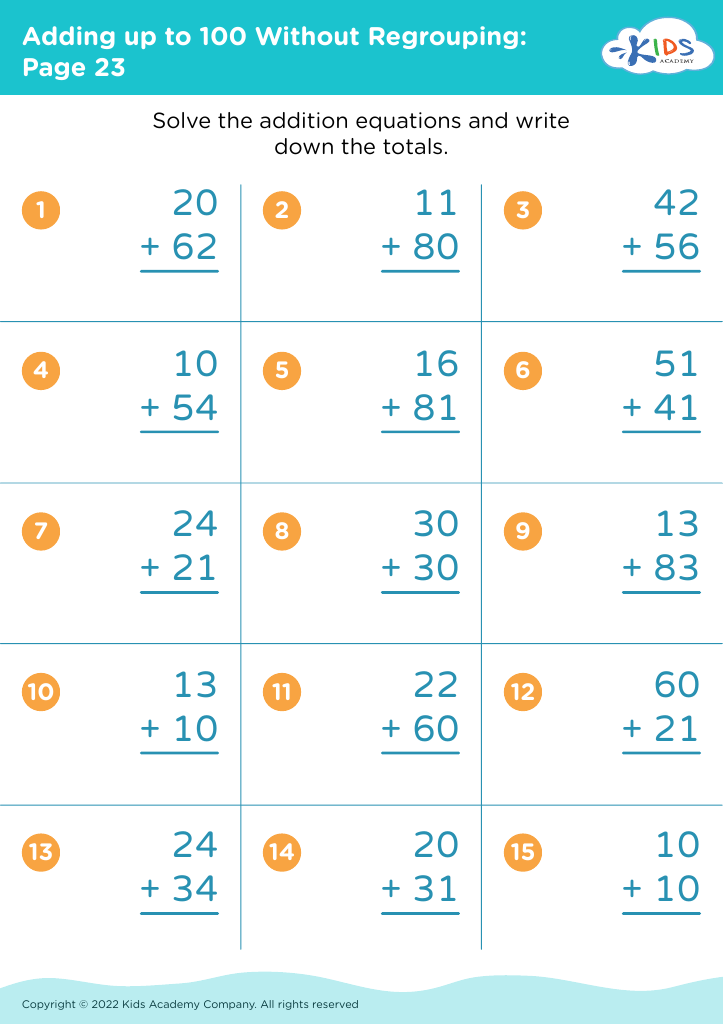
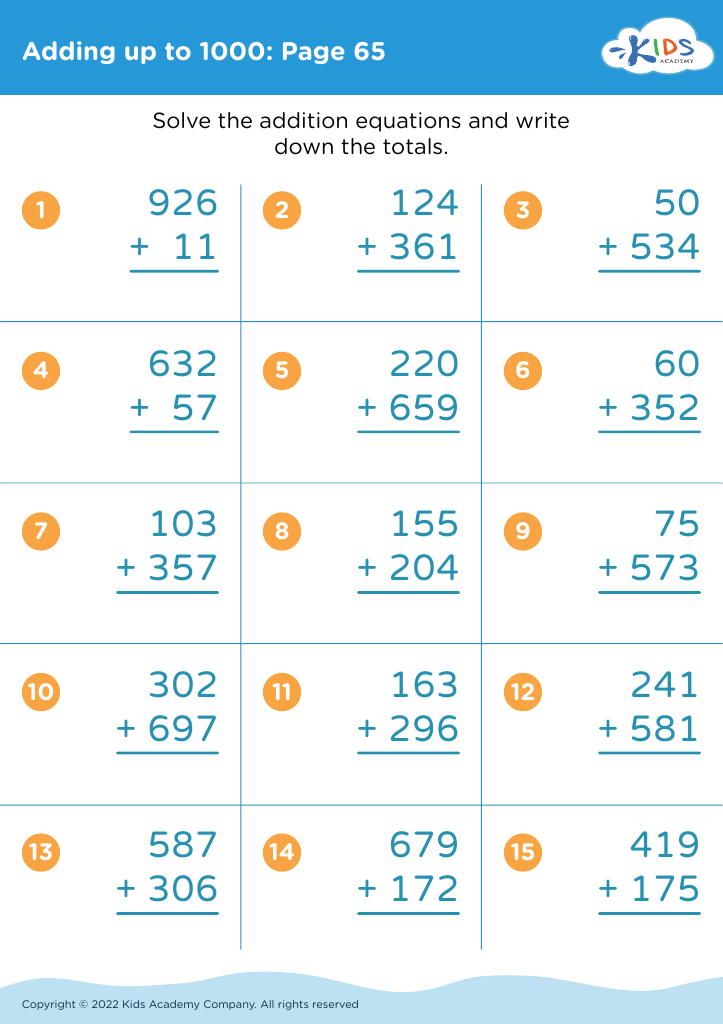
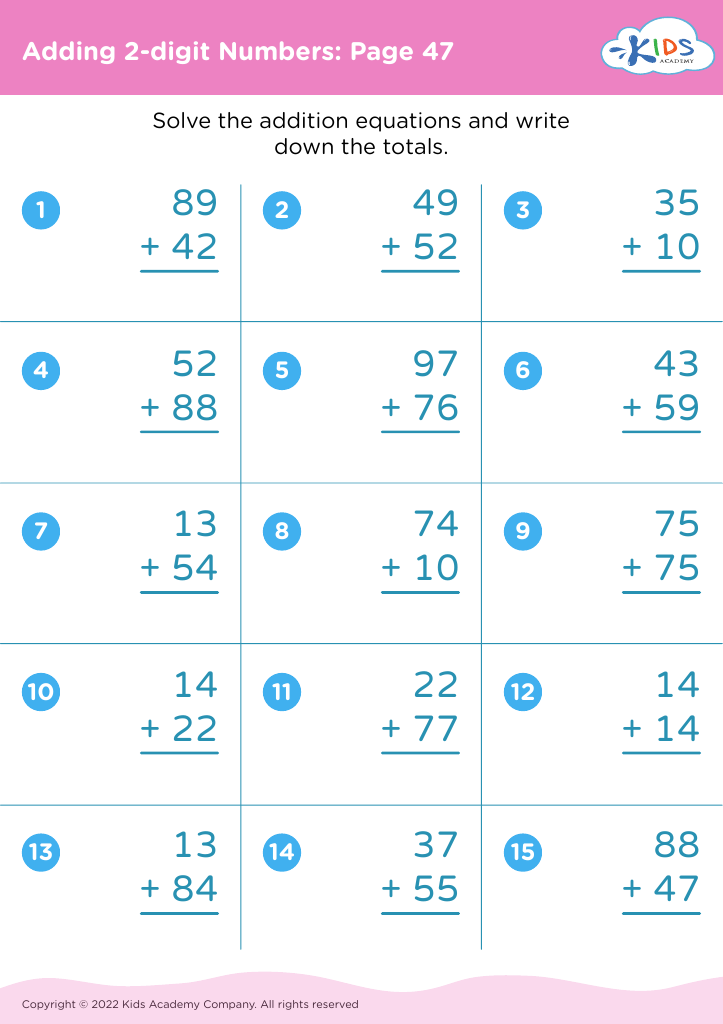
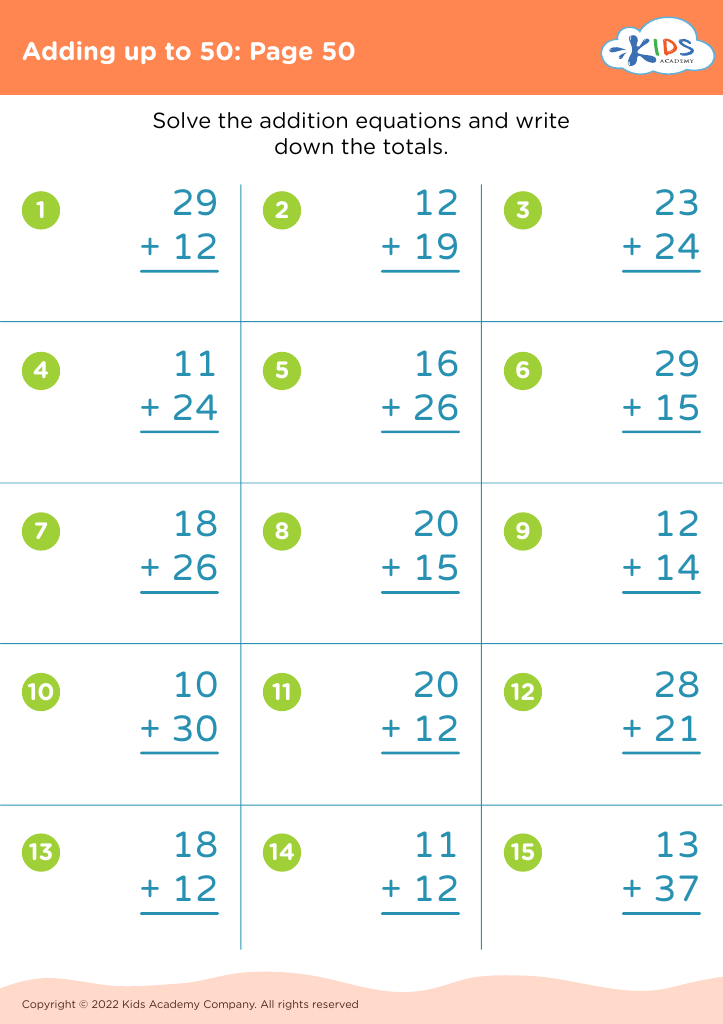
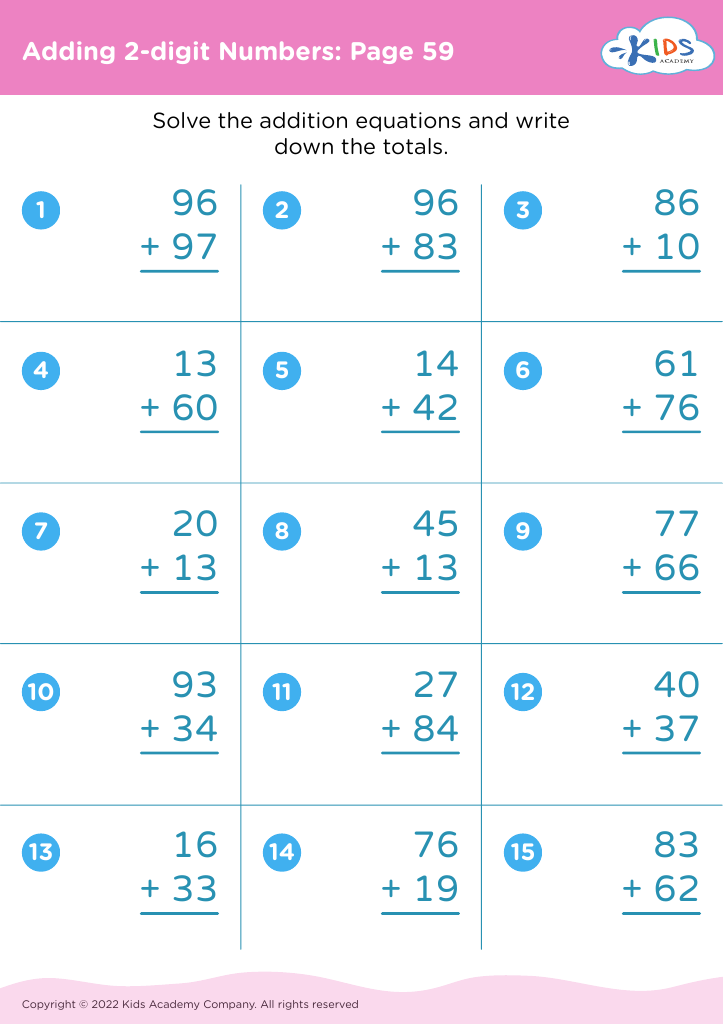
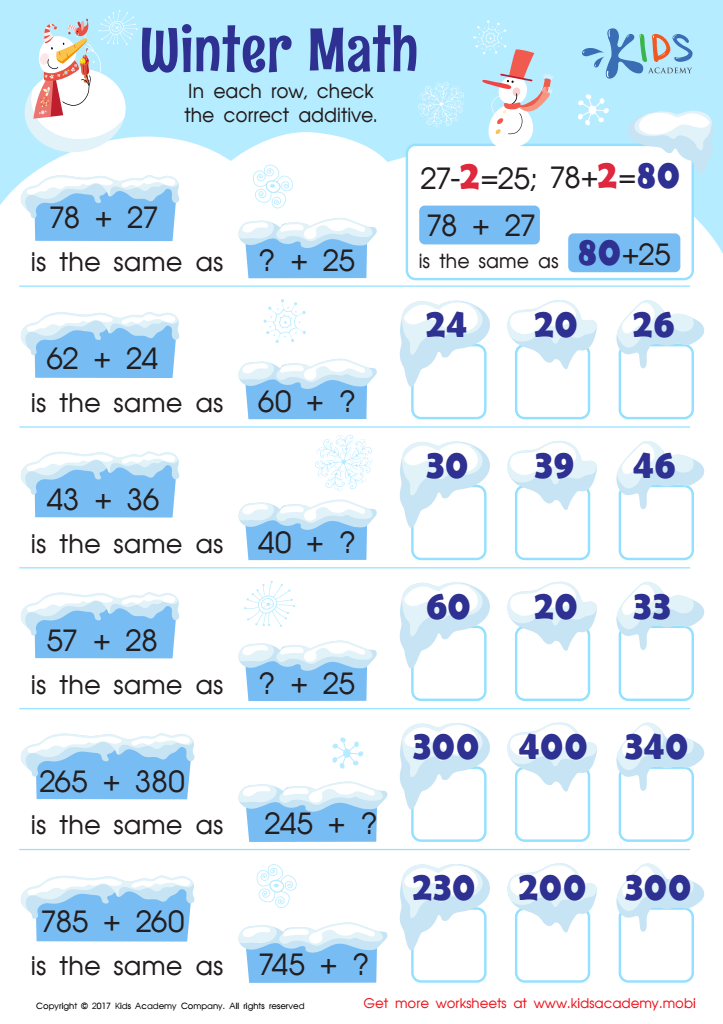
Free Addition Worksheet
Perfect for a wintry day, challenge your 3rd grader to compare addition equations and fill in the missing numbers in the PDF.
This winter-themed worksheet is sure to bring a smile while your 3rd grader practices their addition skills. Perfect for a blustery day, challenge your child to compare addition equations and complete the missing numbers in the PDF.
Free Addition Worksheet
Worksheet
Join Kids Academy for Free
Who is primarily going to use this learning content?








Mathematical reasoning in addition for 8-year-olds is crucial for several reasons, both educationally and developmentally. At this formative age, children are building the foundations for all future mathematical learning. Mastery of addition helps them develop essential problem-solving skills and logical thinking.
First, understanding addition is not just about getting the right answer; it’s about enabling children to comprehend why and how numbers work together. This paves the way for more complex concepts in mathematics, such as multiplication, division, and fractions.
Second, mathematical reasoning enhances cognitive development. Children learn to analyze situations, recognize patterns, and make decisions based on logical conclusions. These skills are transferable across all areas of learning and everyday life, fostering better academic performance overall.
Third, early success in mathematics boosts self-confidence. When children feel competent in math, they are more likely to engage with it positively, reducing anxiety and encouraging persistence even with challenging problems.
Lastly, fostering mathematical reasoning in addition at an early age helps children appreciate the practical applications of math. From managing allowances to understanding how to share things equally, these skills are indispensable. Educators and parents play a pivotal role in nurturing these abilities, setting children up for lifelong numeracy and critical thinking skills.








