Pattern recognition Addition Worksheets for 8-Year-Olds
5 filtered results
-
From - To
Discover our Pattern Recognition Addition Worksheets designed specifically for 8-year-olds! These engaging resources help young learners enhance their addition skills while nurturing their ability to recognize patterns. Each worksheet features fun, colorful illustrations that captivate attention and make learning enjoyable. With various difficulties, children will solve addition problems that require them to identify and continue numeric patterns, improving both their math proficiency and critical thinking skills. Ideal for use at home or in the classroom, our worksheets support the development of essential early math concepts. Help your child build a strong foundation in math with our expertly crafted addition activities today!
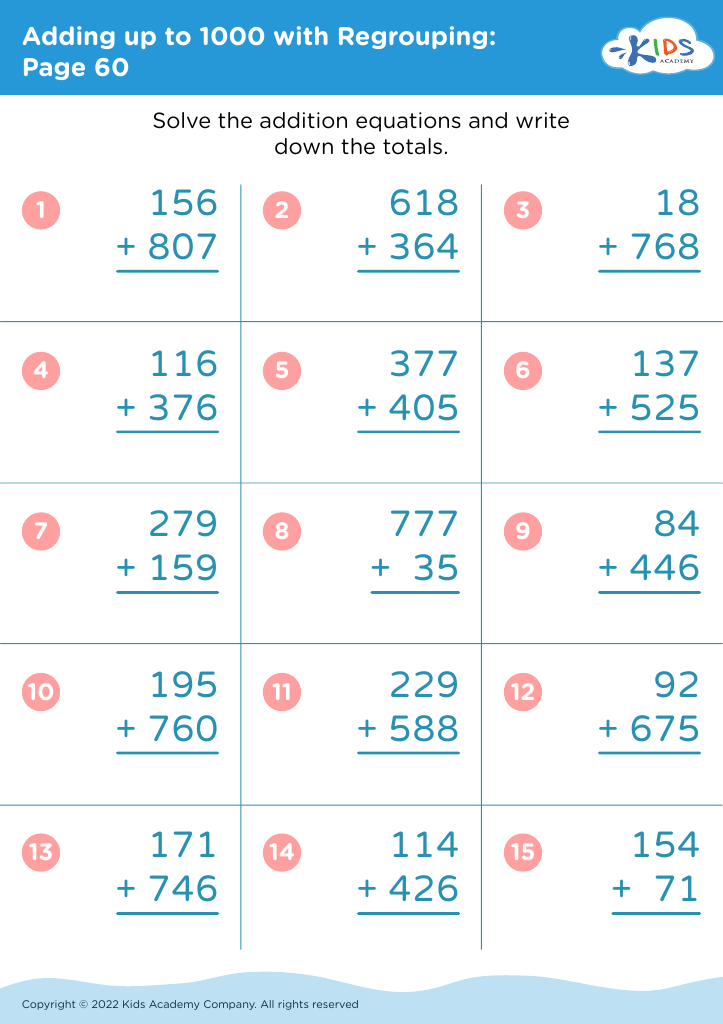
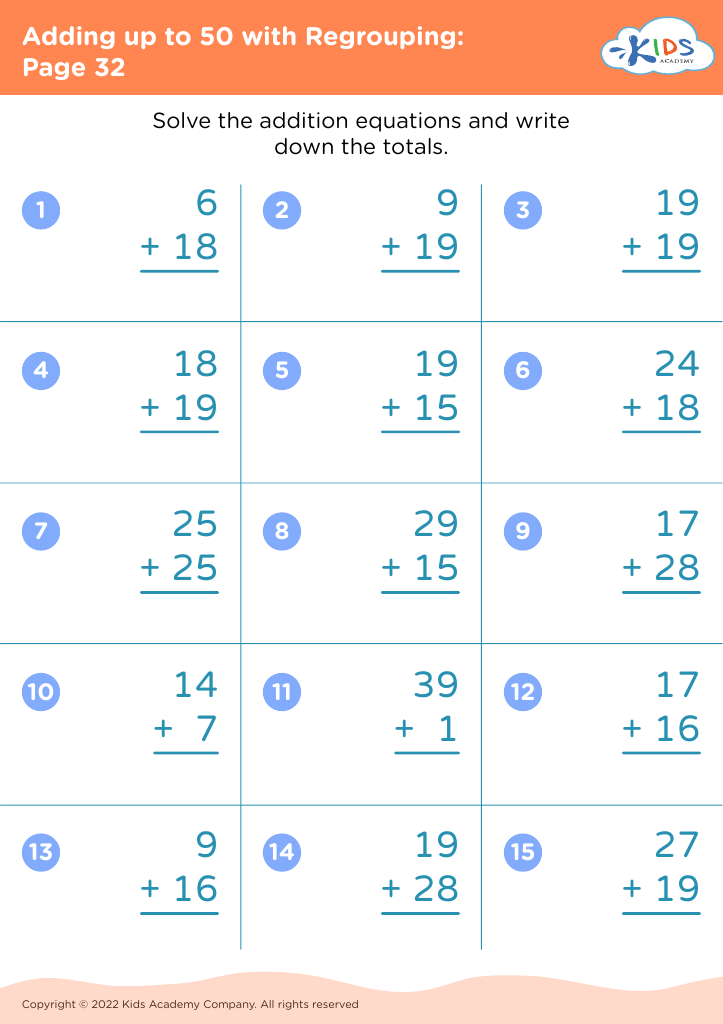
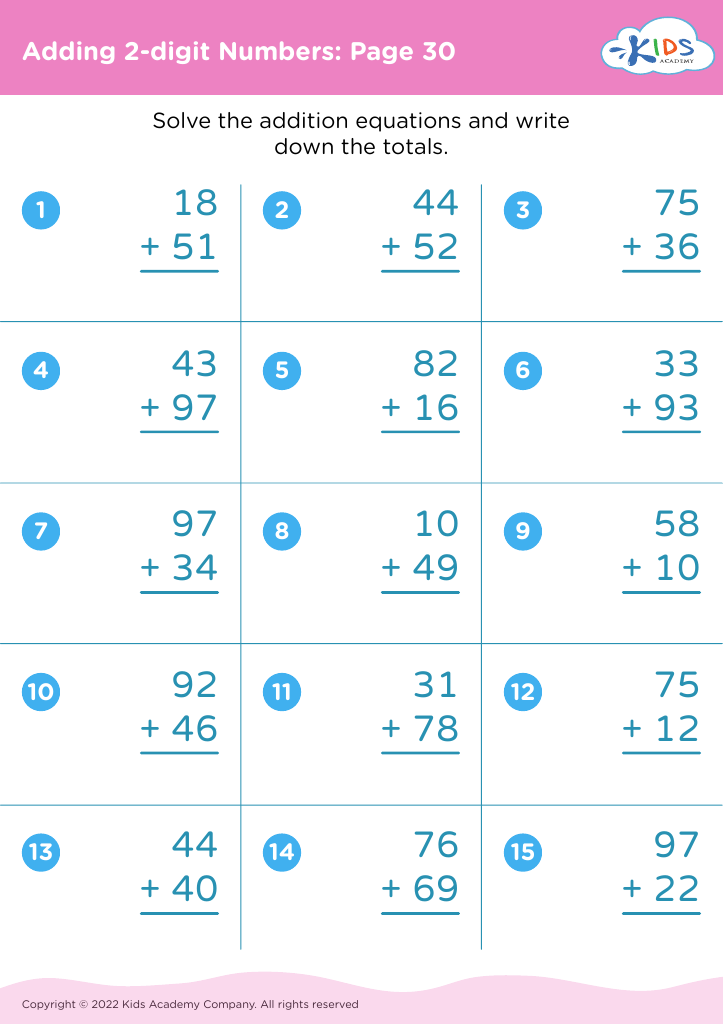
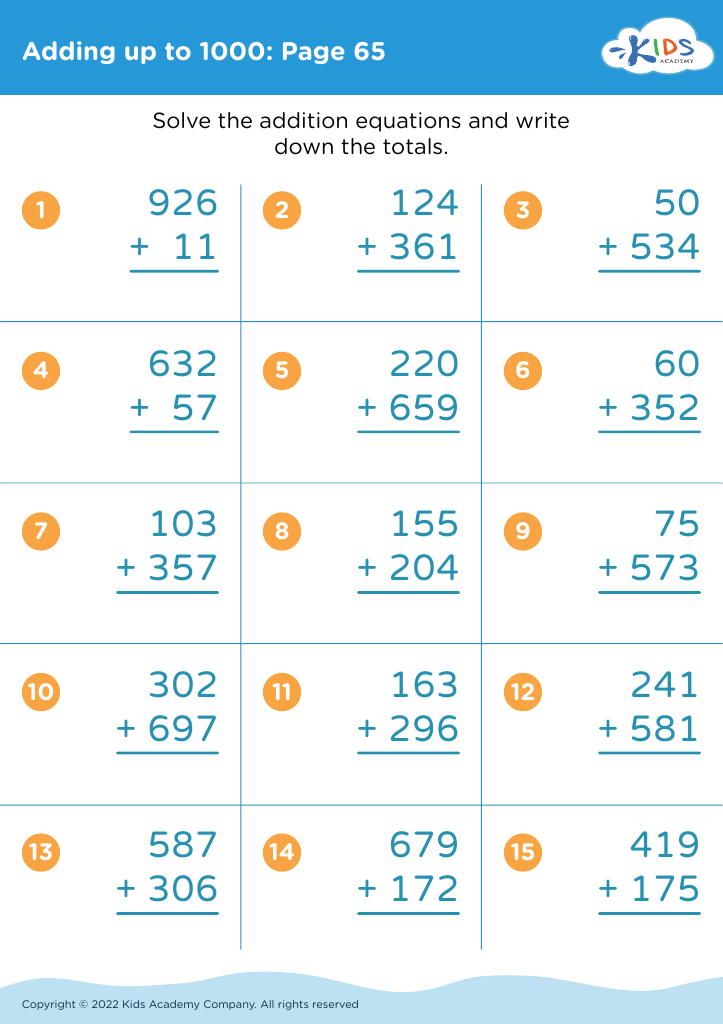
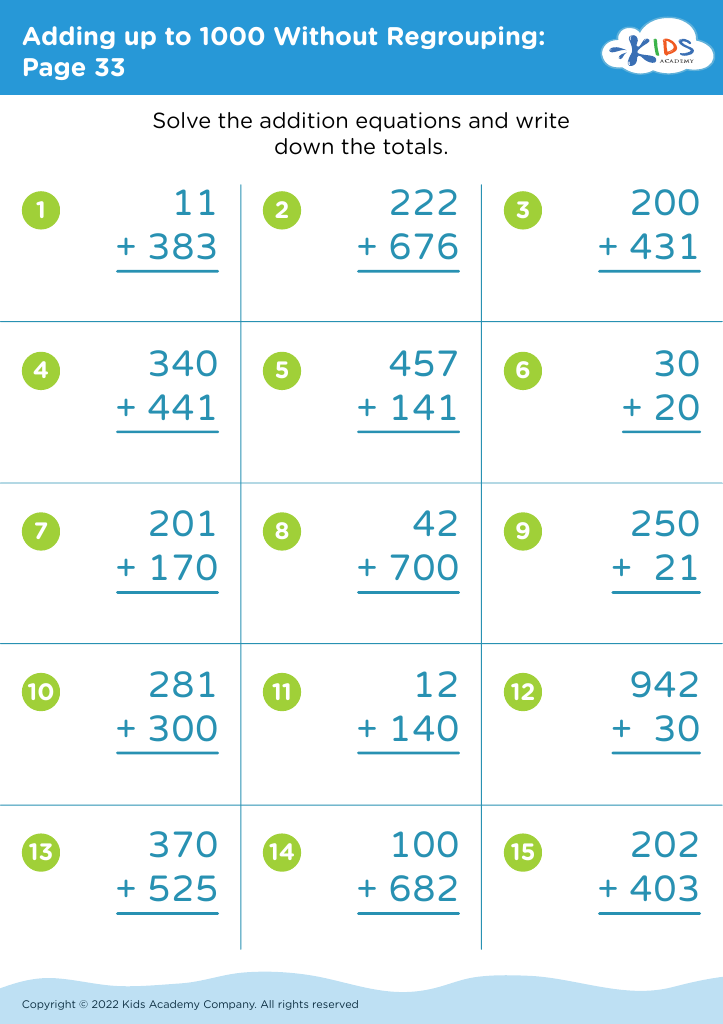








Pattern recognition in addition is a crucial skill for 8-year-olds, and both parents and teachers should prioritize its development for several reasons. Firstly, it enhances mathematical fluency and problem-solving abilities. Recognizing patterns helps students understand the relationships between numbers, leading to quicker and more accurate calculations. For example, identifying patterns in how numbers add up (like recognizing that adding 9 is the same as adding 10 and subtracting 1) can simplify complex problems and boost confidence.
Additionally, pattern recognition is foundational for more advanced math concepts. Understanding patterns paves the way for skills in algebra, geometry, and beyond—essential for future academic success. As children become adept at recognizing numerical patterns, they cultivate critical thinking and analytical skills that are valuable not only in mathematics but across all areas of learning.
Moreover, engaging in pattern activities fosters curiosity and motivation. When children see math as a series of interesting patterns rather than a series of isolated facts, they become more enthusiastic learners. By illuminating the connections between concepts, adults can create a richer educational experience that prepares children for lifelong learning. Thus, caregivers and educators hold a powerful role in nurturing this essential skill, helping children navigate the world of mathematics with confidence and creativity.








