
Practice multiplication Addition Worksheets for 8-Year-Olds
8 filtered results
Difficulty Level
Grade
Age
-
From - To
Subject
Activity
Standards
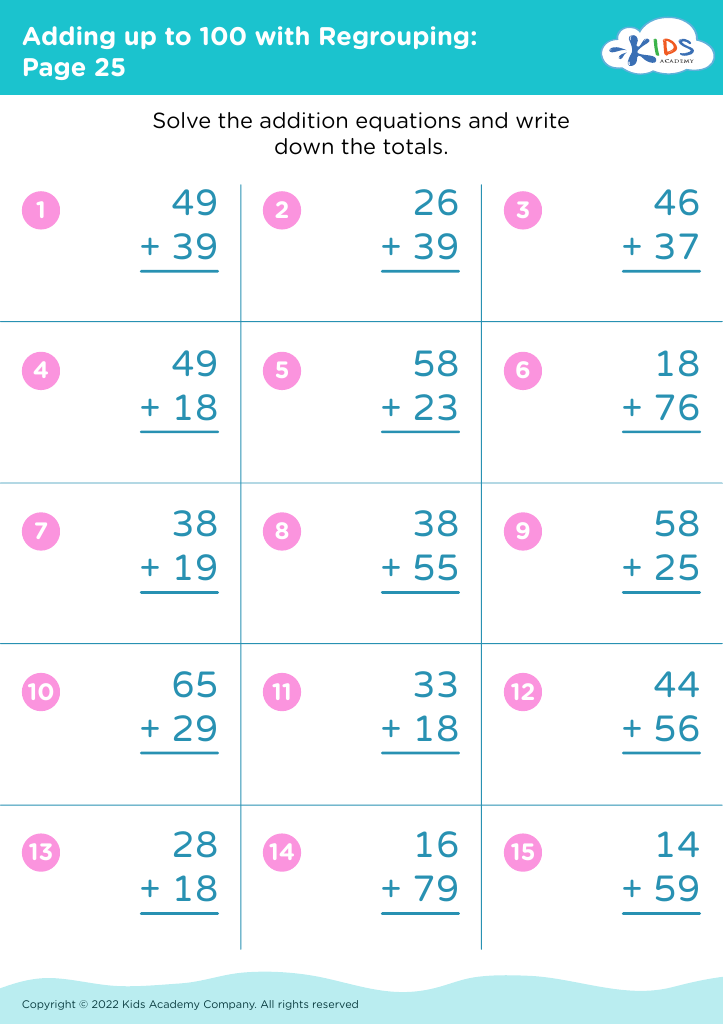
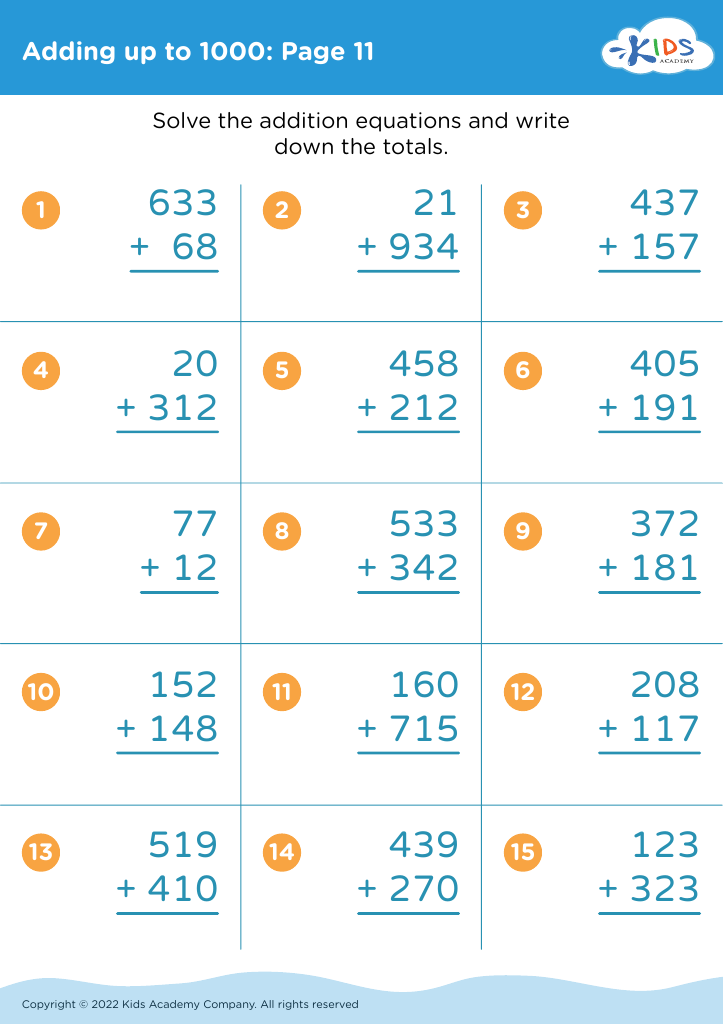
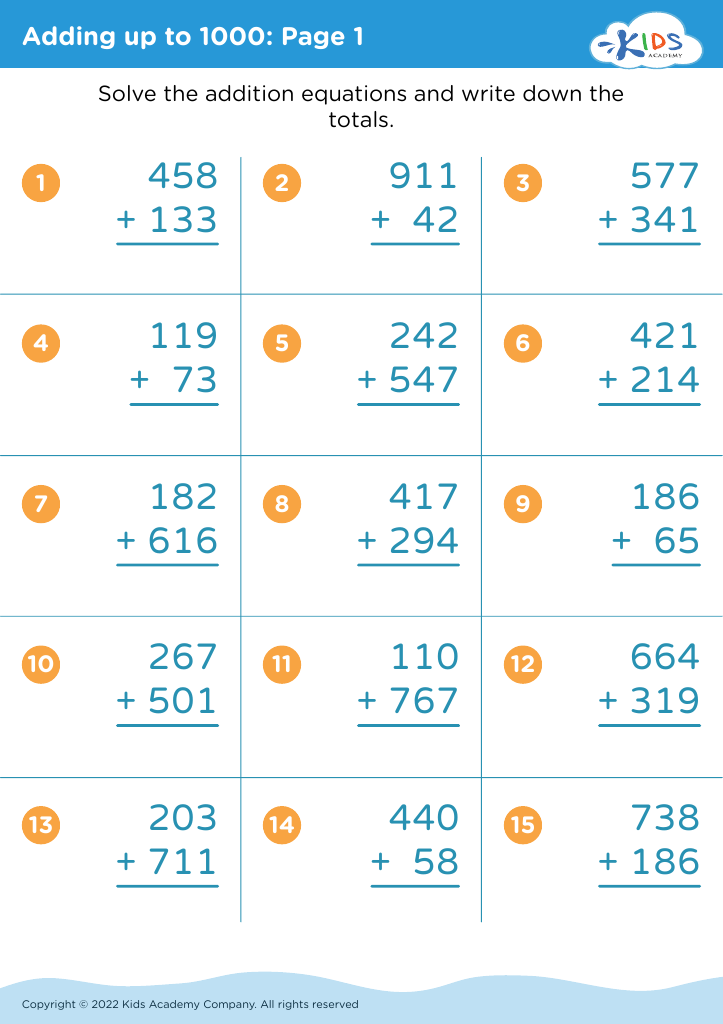
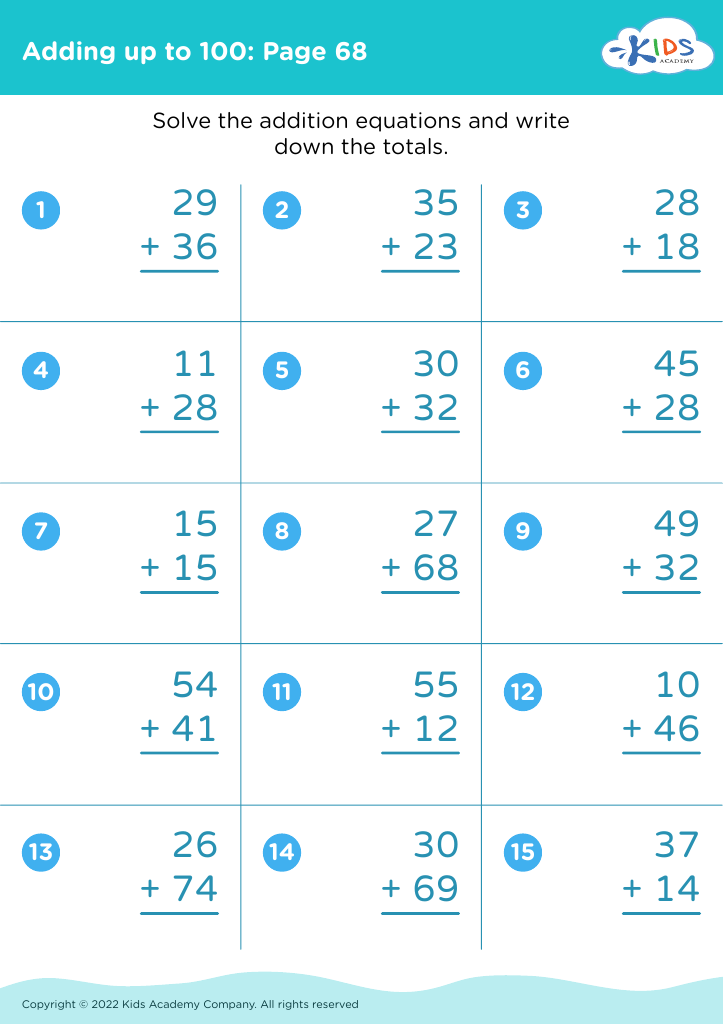
Help your 8-year-old master fundamental math skills with our "Practice Multiplication Addition Worksheets." Specifically designed for young learners, these engaging worksheets offer a variety of exercises to sharpen both multiplication and addition skills. Each activity promotes problem-solving abilities and fosters confidence in math. The unique blend of fun illustrations and practical problems keeps kids motivated and excited to learn. Created by educational experts, our worksheets align with standard curriculums and provide a solid foundation for future math success. Perfect for both classroom and home use, these worksheets are an excellent resource for boosting math proficiency.
Favorites
With answer key
Interactive
Join Kids Academy for Free
Who is primarily going to use this learning content?








Parents and teachers should invest effort in practicing multiplication and addition with 8-year-olds because these foundational arithmetic skills are crucial for mathematical fluency. At this age, children are in a critical stage of cognitive development where they begin to move from concrete to more abstract thinking. Mastery of addition helps them understand the basic concept of combining quantities, which is a fundamental mathematical skill.
Multiplication, on the other hand, builds on addition and introduces children to concepts of grouping and rapid retrieval of number facts. Being proficient in these skills not only boosts a child's confidence in their mathematical abilities, making them more likely to engage and perform well in more complex mathematical challenges in the future, but it also supports critical problem-solving skills that are applicable in everyday situations.
Moreover, practicing these skills strengthens neural pathways and enhances memory and cognitive function. Effective practice turns these operations into an automaticity, helping to ease cognitive load during higher-order problem solving. The importance extends beyond math class: it develops logical thinking and pattern-recognition skills relevant in science, technology, art, engineering, and daily life. Encouraging practices of multiplication and addition sets a strong educational foundation, making it easier for children to grasp advanced topics and succeed academically and in life.








