Reading clocks Addition Worksheets for 8-Year-Olds
3 filtered results
-
From - To
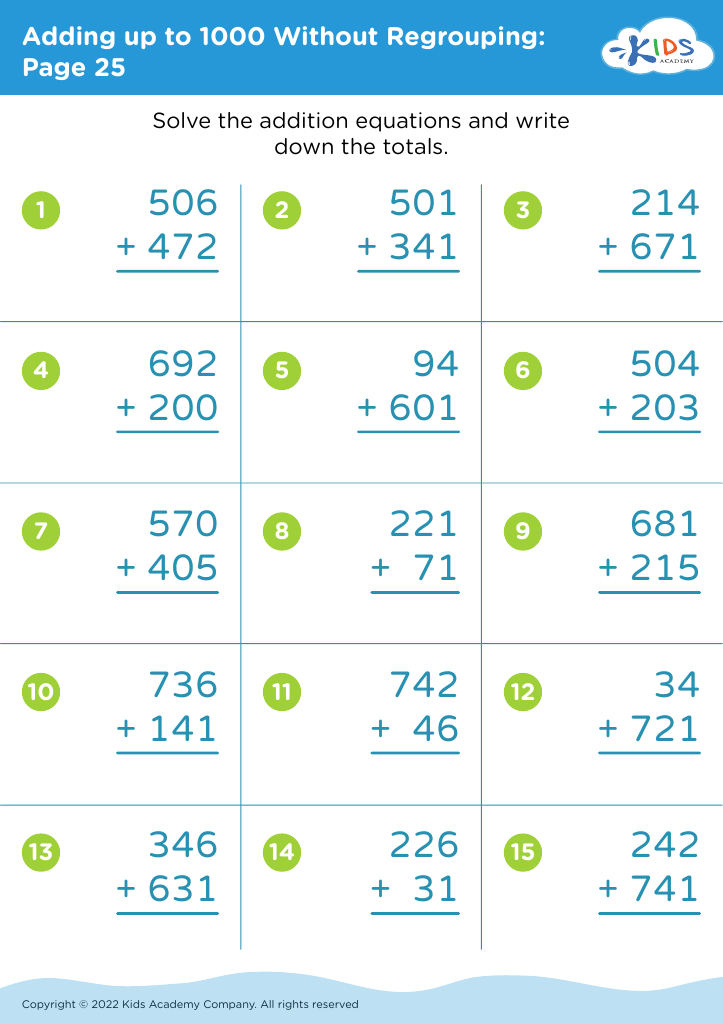
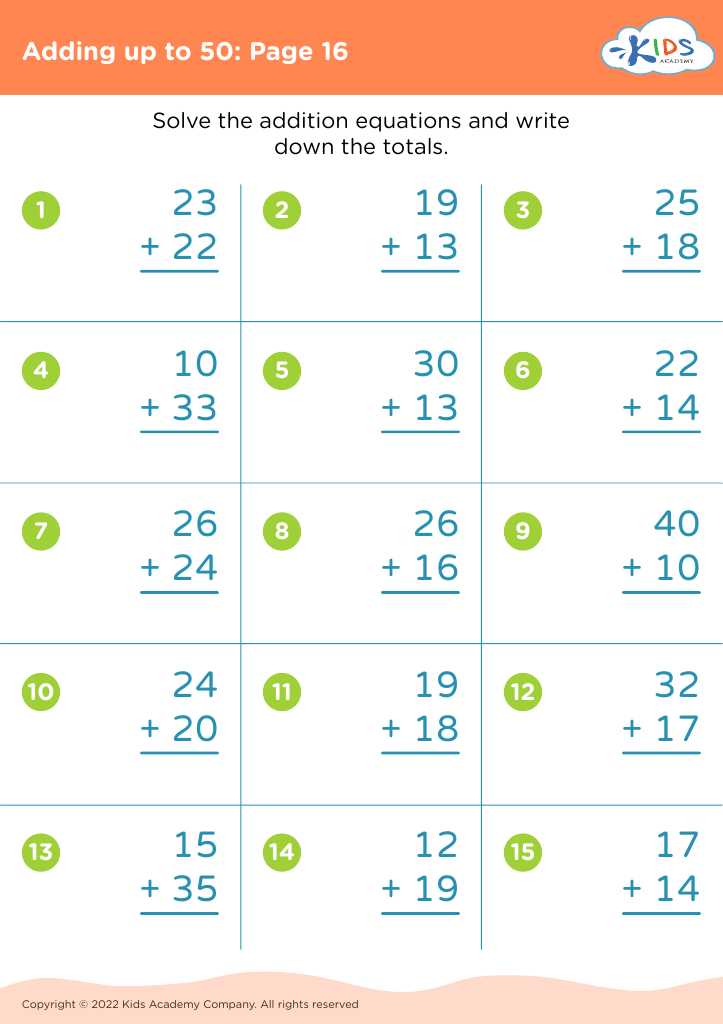
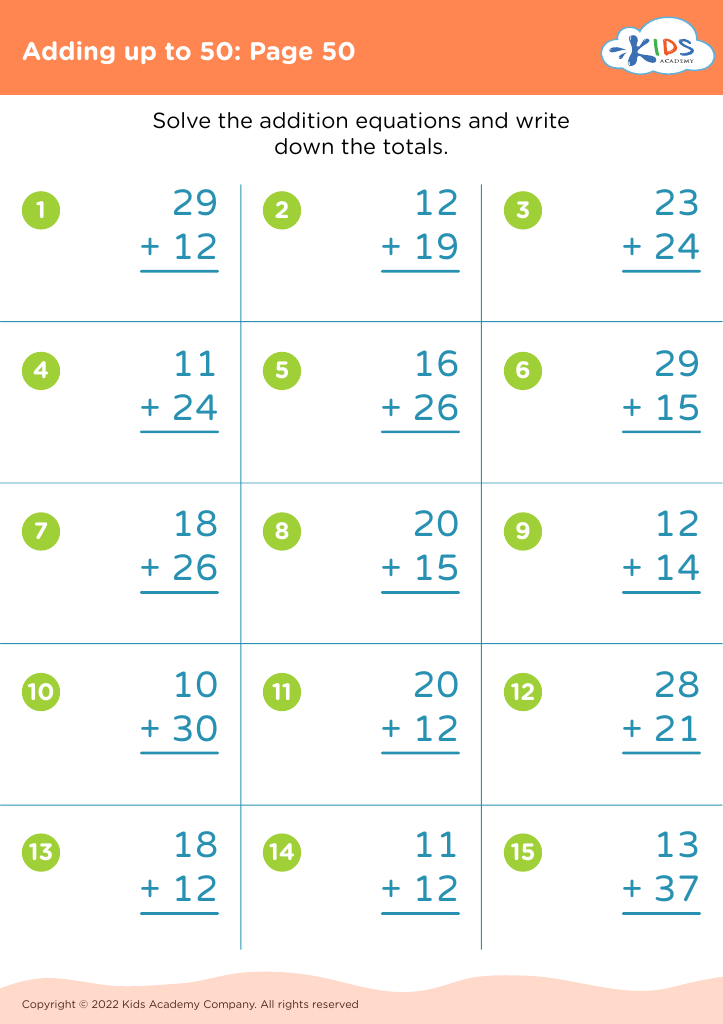
Discover our engaging "Reading Clocks Addition Worksheets" designed specifically for 8-year-olds! These worksheets combine math and time-telling skills, helping young learners to master addition while enhancing their ability to read analog clocks. With a variety of fun and interactive exercises, children will develop confidence in both arithmetic and time management. Ideal for classroom use or at-home practice, our resources support educational growth through a hands-on approach. Parents and teachers alike will appreciate the attention to detail in these carefully crafted worksheets that make learning enjoyable. Dive into the world of math with our colorful and stimulating worksheets today!








Understanding how to read clocks and perform addition involving time is an essential skill for 8-year-olds, and both parents and teachers should prioritize it for several reasons. First, reading clocks fosters time management abilities, helping children recognize the importance of being punctual and organized in their daily activities. As they learn to correlate time with actions, mastery of this skill enhances their independence, crucial as they engage more in extracurricular activities and social events.
Additionally, addition involving time equips children with an understanding of mathematical concepts beyond the classroom. It integrates real-life applications, as they calculate durations for activities, identify meal times, or schedule playdates. These scenarios enhance their critical thinking skills and reinforce their numerical understanding in a practical context.
Furthermore, mastering these concepts can boost a child's confidence in math, building a strong foundation for more complex mathematical tasks in the future. Parents and teachers can promote this learning by engaging in hands-on activities like timing events or playing clock-reading games, making learning fun and interactive. Ultimately, fostering an understanding of clocks and addition helps develop not just mathematical competencies but also valuable life skills in organization and planning.








