Telling time Addition Worksheets for 8-Year-Olds
3 filtered results
-
From - To
Unlock the joy of learning with our Telling Time Addition Worksheets designed specifically for 8-year-olds! These engaging worksheets combine essential addition skills with the concept of telling time, making math both fun and relevant. Students will solve various problems related to time intervals, enhancing their understanding of clocks and clock reading. Our resources are tailored to foster critical thinking, boost confidence, and reinforce essential math concepts in an interactive format. Perfect for classroom use or at-home learning, these activities will help young learners apply mathematical skills in everyday situations. Empower your child’s learning adventure today with our enriching worksheets!
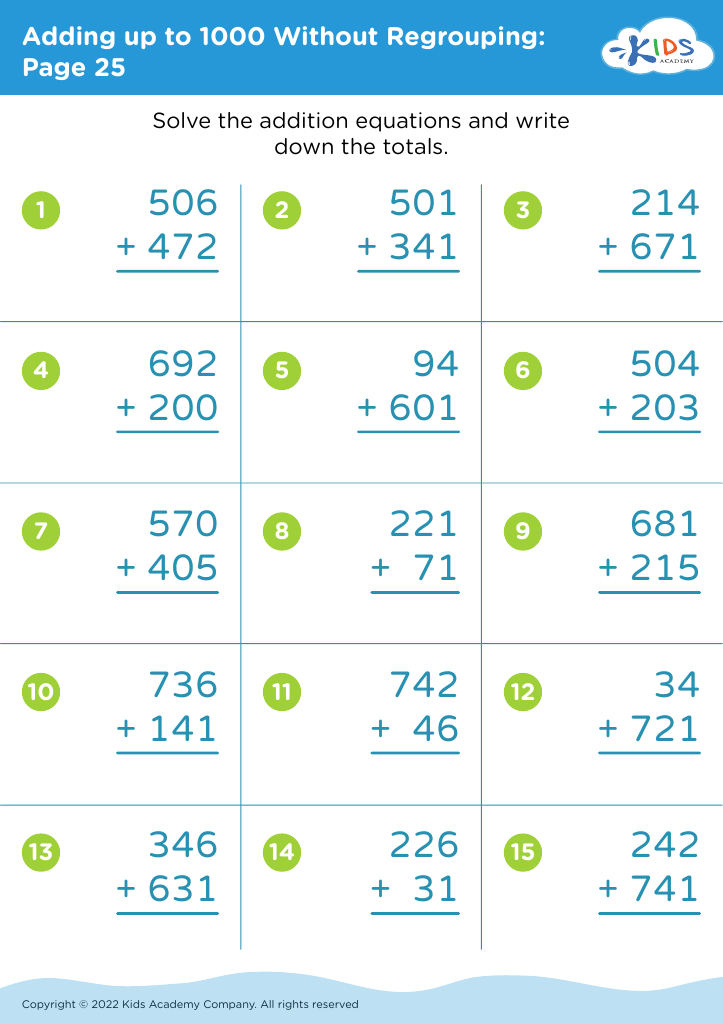
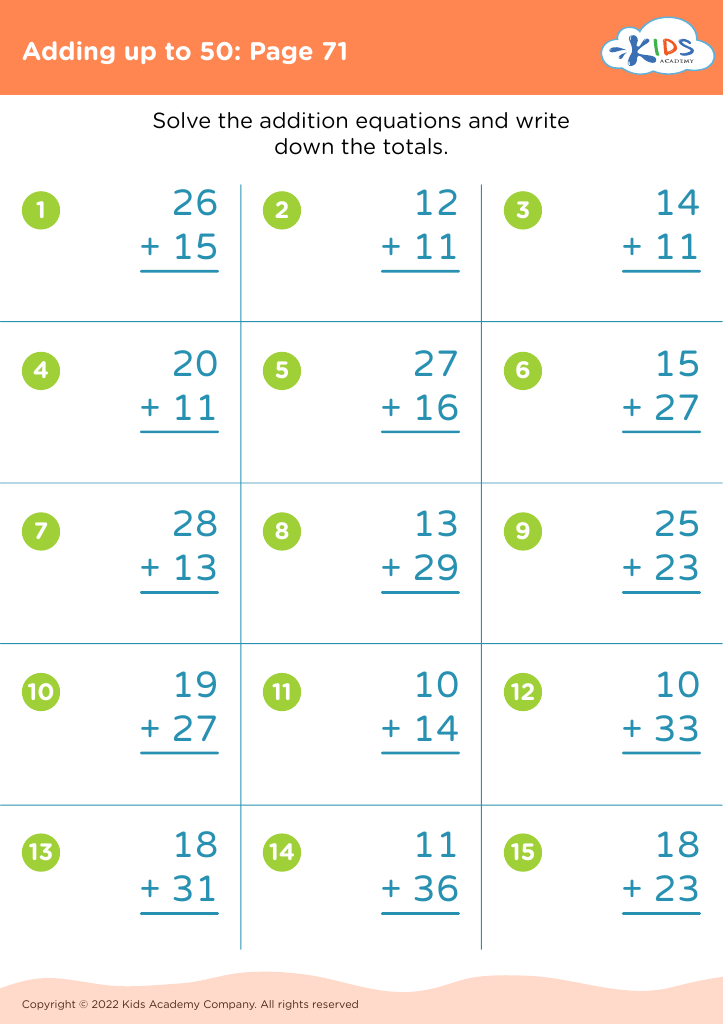
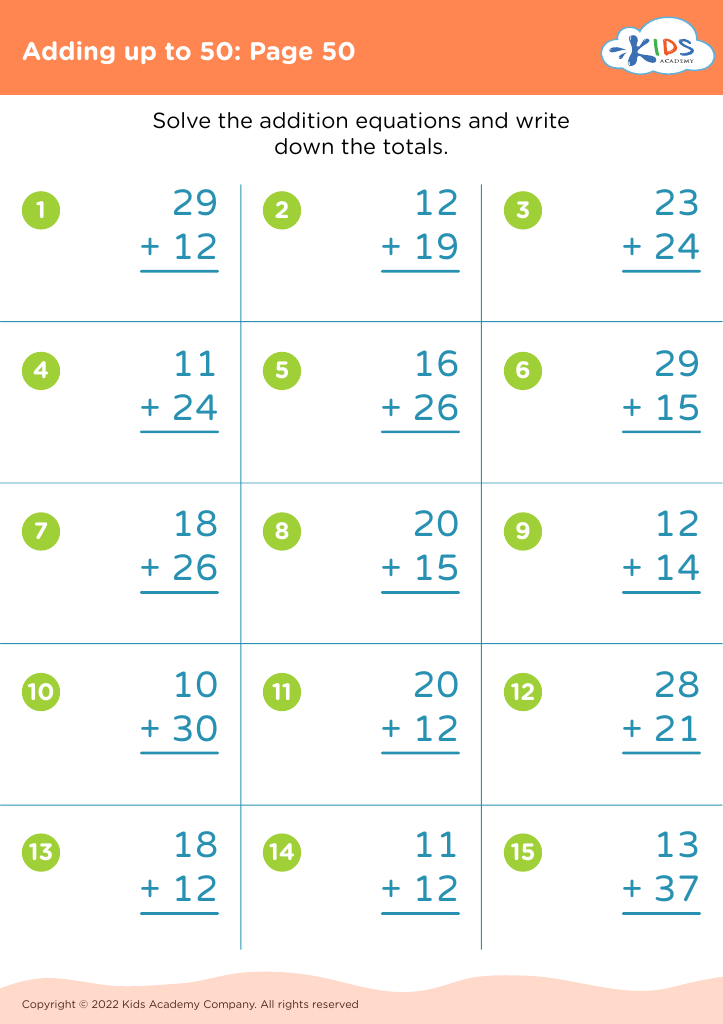








Teaching 8-year-olds how to tell time and understand how to use addition with time is crucial for their overall development. At this age, children are typically moving into a stage where they start to grasp more complex mathematical concepts, and time is a perfect real-world application of addition.
Understanding how to tell time helps children develop crucial life skills, such as managing their daily activities, understanding schedules, and planning. When children learn to add time, they can calculate durations, figure out when events are scheduled, and understand timelines, which is essential in daily life.
For teachers and parents, focusing on time addition can enhance motivation and sharpen problem-solving skills. It intersects math, logic, and real-life application, allowing children to see the relevance of what they are learning.
Furthermore, teaching this concept fosters independence, as children learn to manage their own time more effectively. Engaging in fun activities that involve telling time and adding time can also strengthen parent-child and teacher-student relationships, initiating stimulating conversations around daily routines and responsibilities. Ultimately, fostering these skills prepares children for future educational endeavors and real-life scenarios, laying a solid foundation for their growth.








