Understanding number sequence Addition Worksheets for 8-Year-Olds
3 filtered results
-
From - To
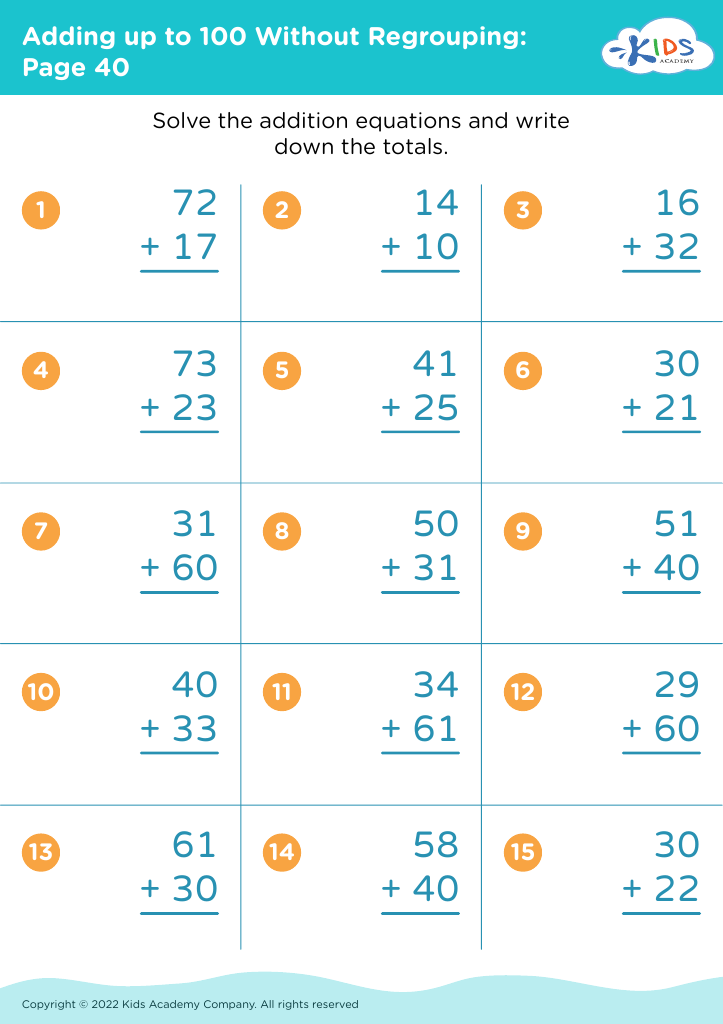
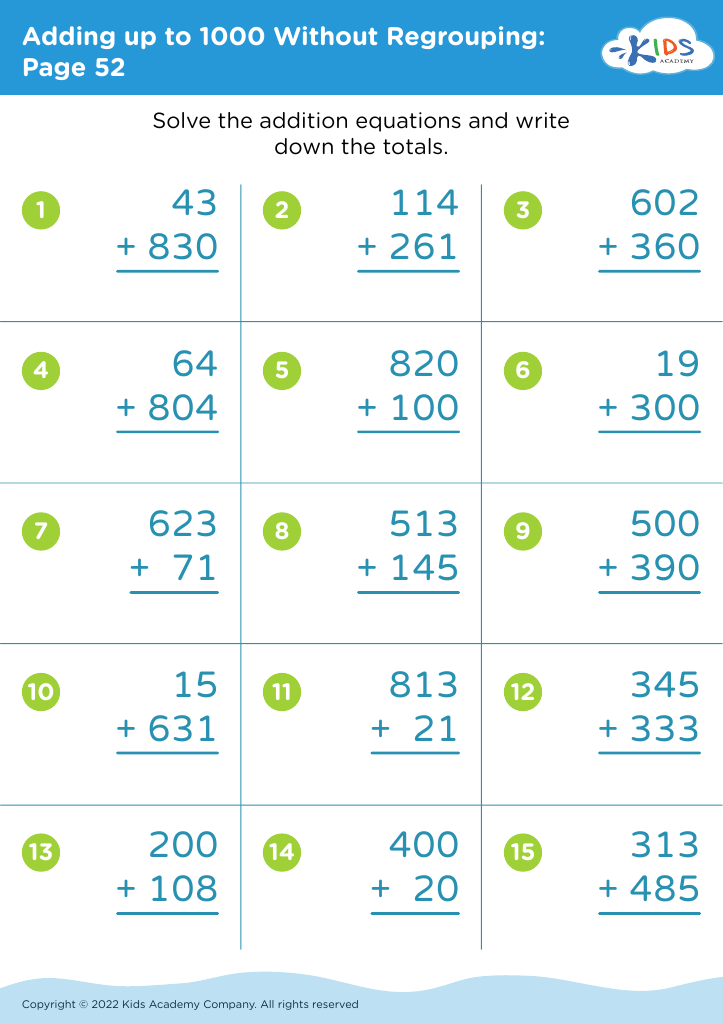
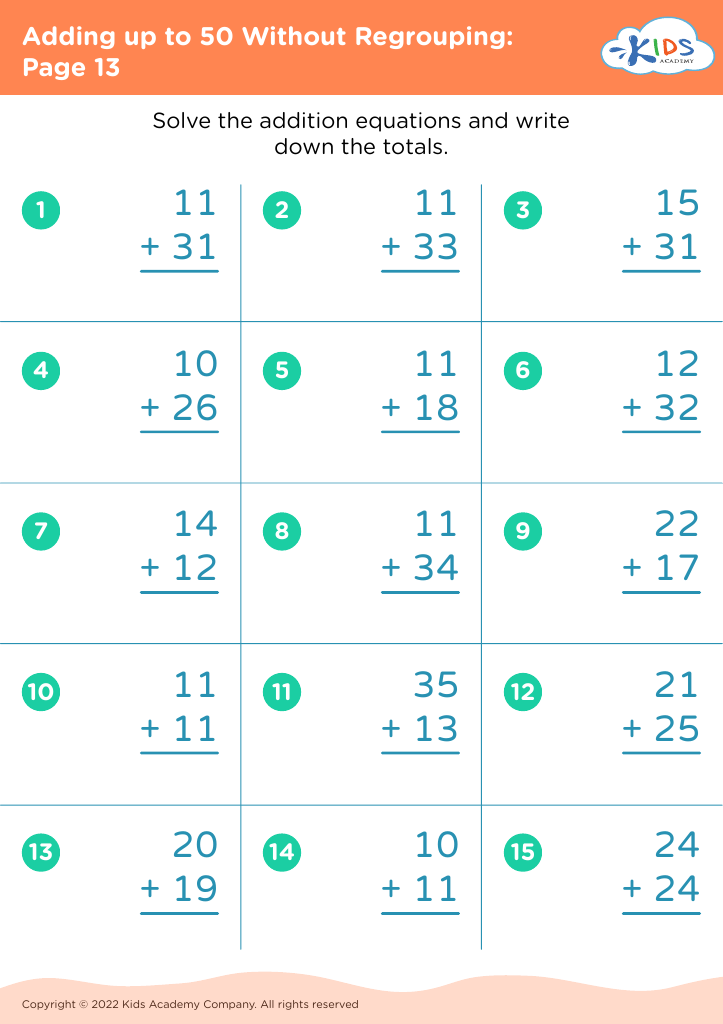
Explore the engaging world of number sequence addition worksheets designed specifically for 8-year-olds! These interactive resources help students understand number patterns, enhance their addition skills, and build a strong foundation in mathematics. Our carefully crafted worksheets encourage children to recognize sequences and apply addition strategies effectively. By practicing with fun exercises, kids can boost their confidence in handling numbers and develop critical thinking skills. Perfect for at-home learning or classroom use, these worksheets make math enjoyable and accessible. Empower your child to master number sequences and addition with our delightful and educational materials tailored for young learners!


.jpg)





Understanding number sequences and addition is crucial for 8-year-olds as it forms the foundation for more complex mathematical concepts later on. At this age, children are transitioning from basic arithmetic to more advanced problem-solving skills. Grasping number sequences helps them recognize patterns, facilitating quicker calculation and enhancing their ability to predict outcomes.
For parents and teachers, fostering this understanding promotes cognitive development. When children learn to identify sequences, they not only strengthen their addition skills but also enhance critical thinking and logic. These skills are essential not just in math but across subjects, as they contribute to organizing information and making connections.
Moreover, proficiency in addition is key for real-world applications – whether managing money, measuring ingredients in cooking, or understanding time. Children who struggle with these fundamental skills may experience frustration in more advanced studies, leading to a lack of confidence.
Engaging activities like games or puzzles that emphasize number sequences can support learning. By nurturing these abilities early on, parents and teachers can help ensure that children build a solid mathematical foundation, paving the way for success in their educational journey and everyday life.








