Visual representation comprehension Addition Worksheets for 8-Year-Olds
5 filtered results
-
From - To
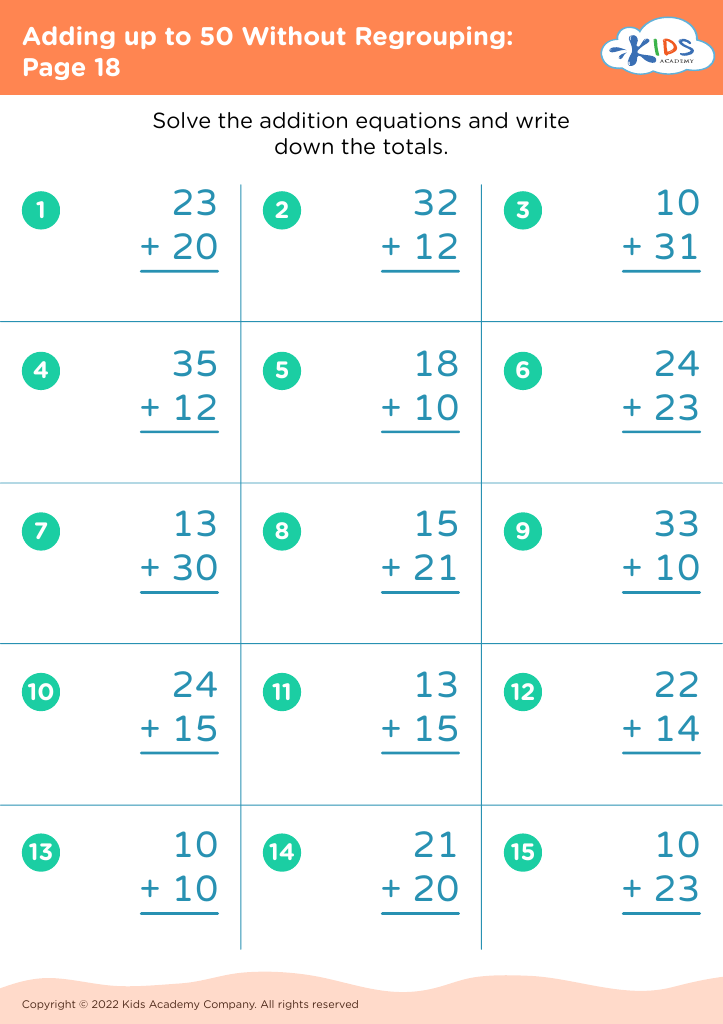
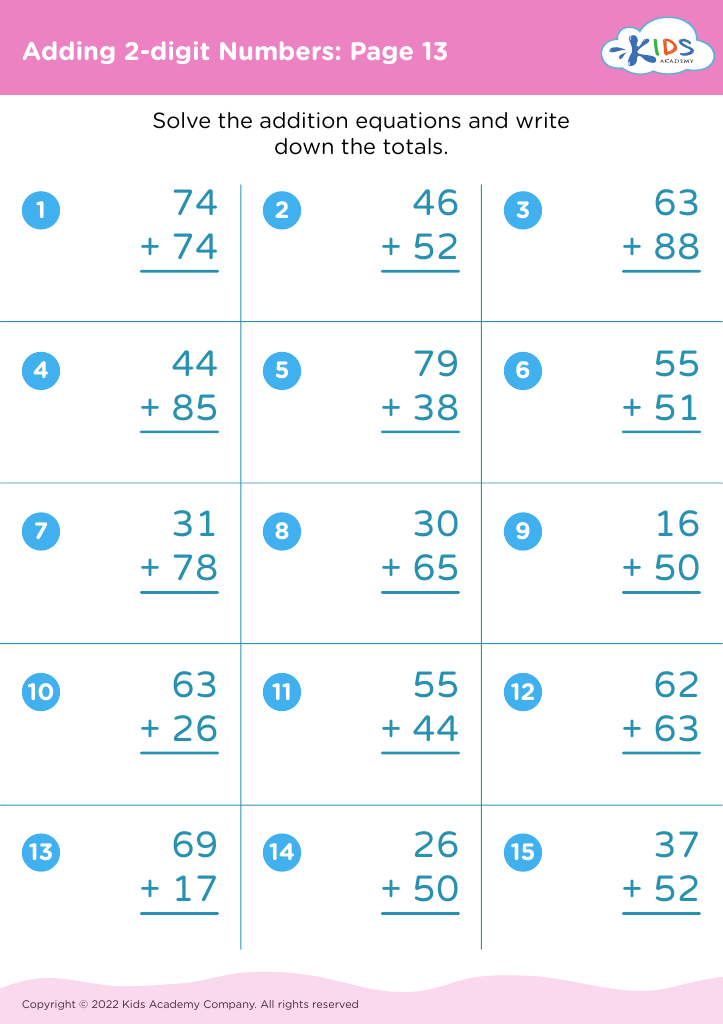
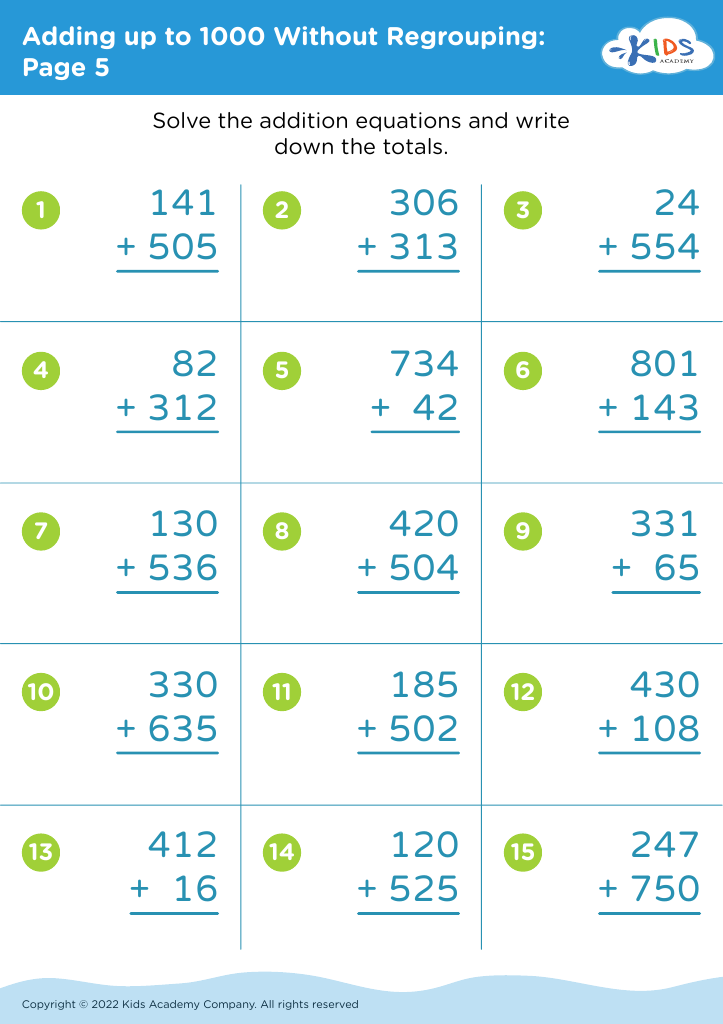
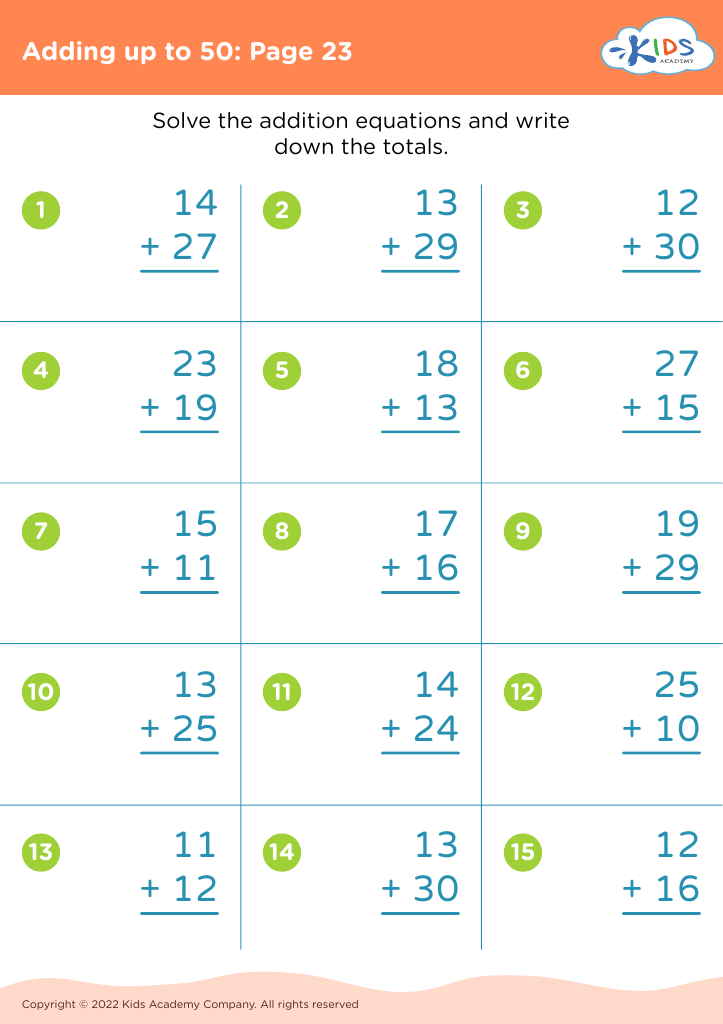
Visual Representation Comprehension Addition Worksheets for 8-Year-Olds are designed to make mastering addition fun and engaging. These worksheets use colorful visual aids to help children understand and solve addition problems more effectively. Perfect for young learners, these practice sheets enhance cognitive skills by encouraging kids to interpret visual data alongside numerical data. Designed by educational experts, these resources support classroom learning or home study sessions, ensuring that 8-year-olds grasp addition concepts with ease. Ideal for both teachers and parents, these worksheets make math enjoyable, aiming to build a strong mathematical foundation for every child.
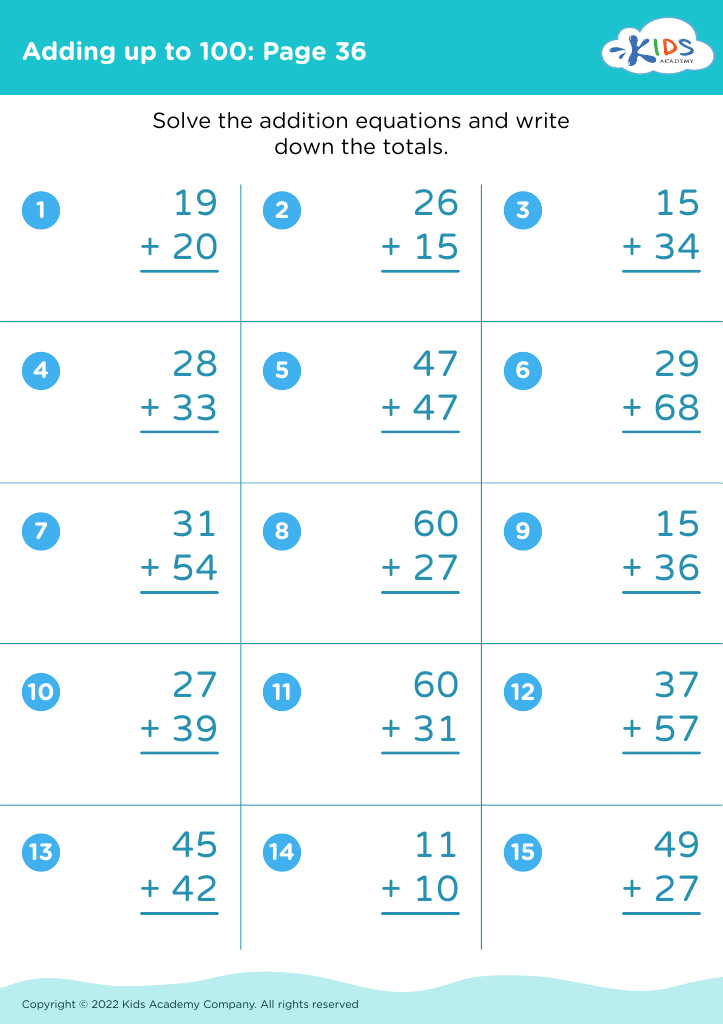








Understanding visual representation of addition is crucial for 8-year-olds because it builds a strong foundation for their mathematical development. At this age, children are transitioning from concrete to abstract thinking, and visual aids help bridge this gap. Visual representations like number lines, counters, and bar models enable children to grasp addition concepts concretely before advancing to more abstract calculations.
Parents and teachers should care because visual learning supports different learning styles and fosters deeper comprehension. When children can see and manipulate visual objects, they better understand the relationships between numbers and the concept of combining them to form a sum. This method also encourages problem-solving and critical thinking skills. For example, seeing that 5 + 3 on a number line is the same as shifting five spaces and then three more spaces reinforces both arithmetic and spatial reasoning.
Moreover, early positive experiences with math through visual representation build confidence and reduce math anxiety. Children who grasp these concepts early are more likely to enjoy mathematics and perform better in future, more complex areas like multiplication and division. By supporting visual learning, parents and teachers pave the way for a lifelong understanding and appreciation of mathematics.








