Vocabulary Building Addition Worksheets for 8-Year-Olds
5 filtered results
-
From - To
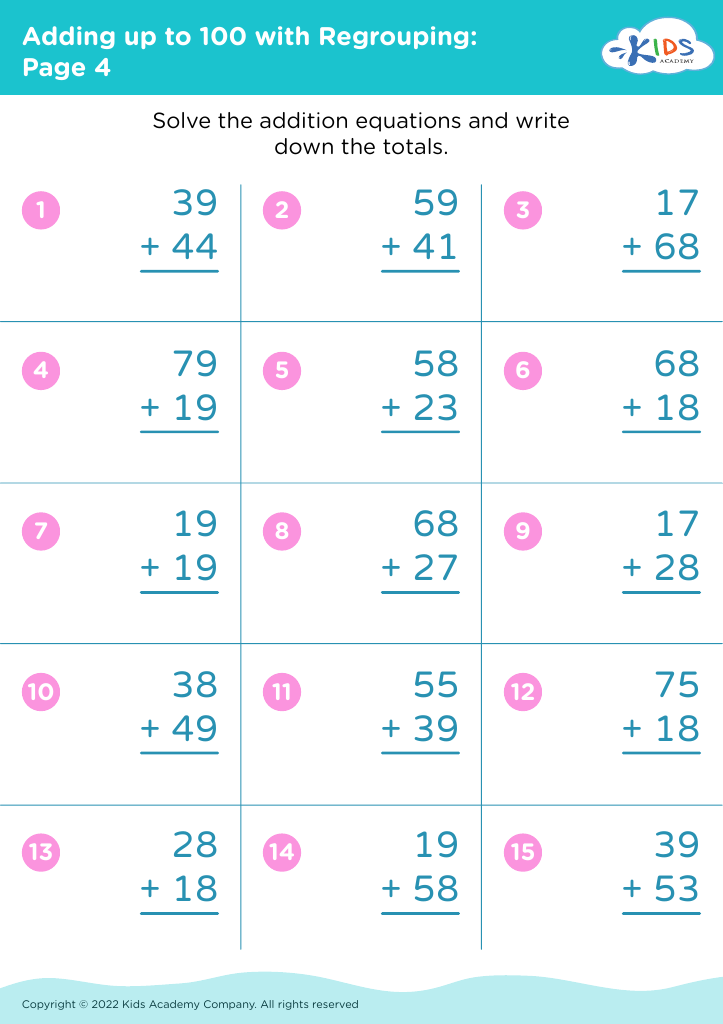
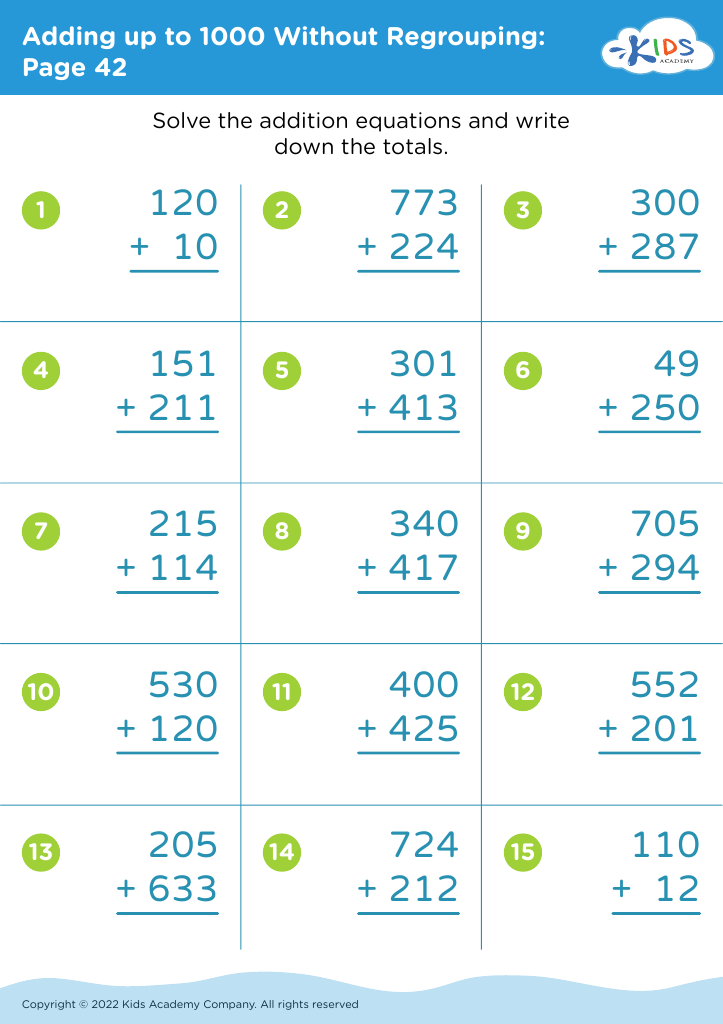
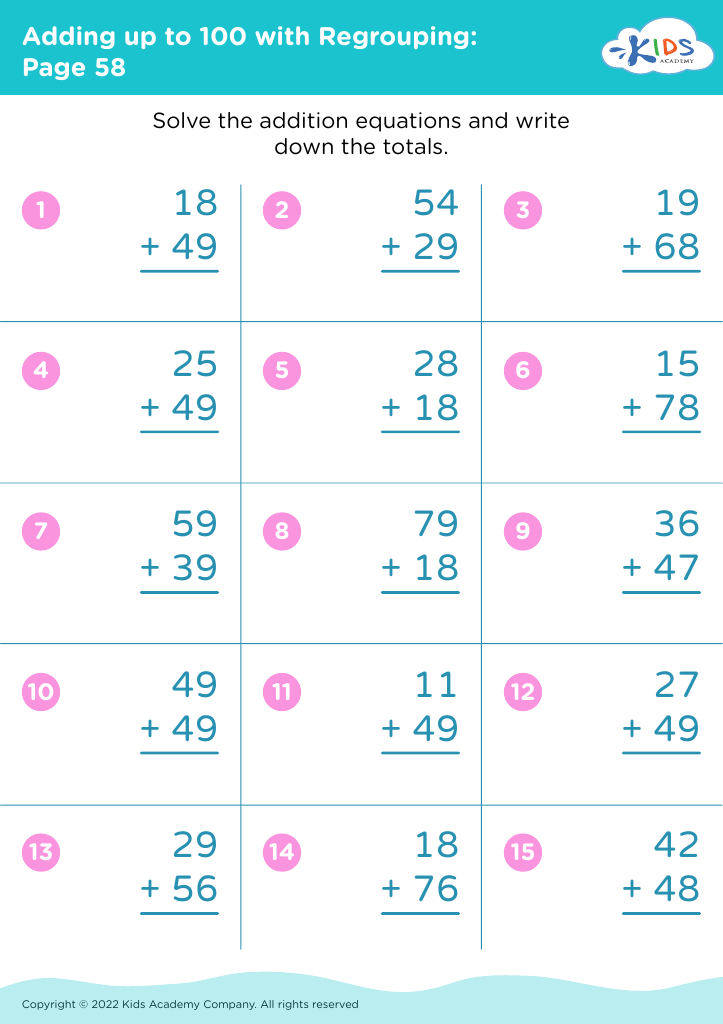
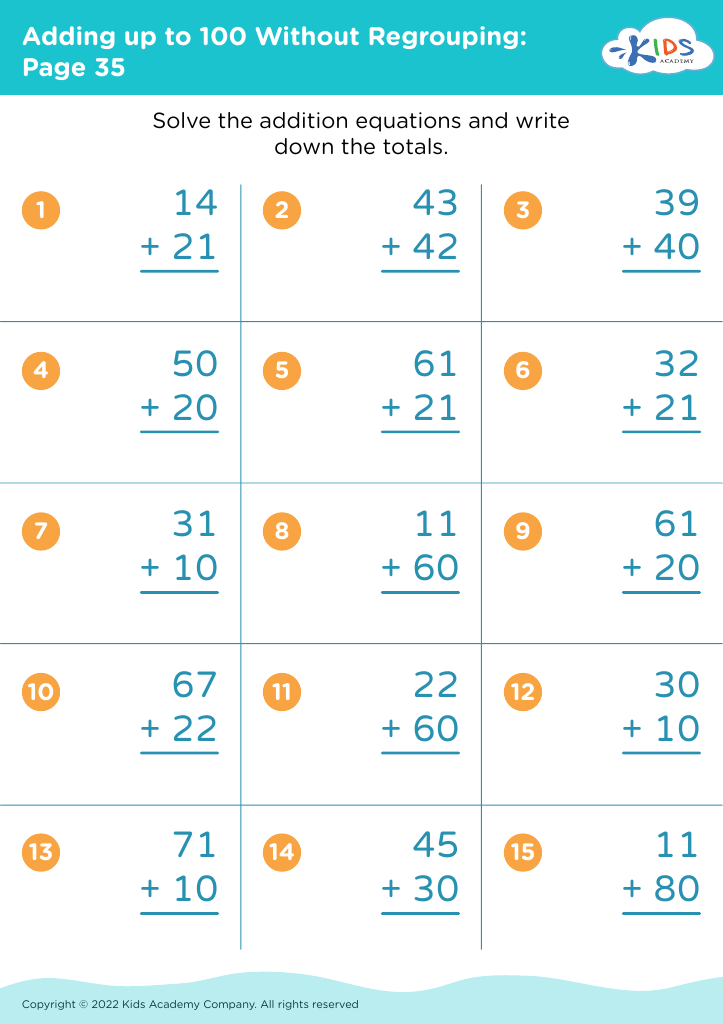
Enhance your child's vocabulary while honing their addition skills with our specially designed "Vocabulary Building Addition Worksheets" for 8-year-olds! These fun and engaging worksheets combine math practice with language development, featuring addition problems that encourage children to explore new words and concepts. Perfect for supporting curriculum goals, our worksheets include a variety of activities that promote critical thinking, problem-solving, and vocabulary expansion. Parents and educators will appreciate the easy-to-use format, helping kids to learn math terminology in an enjoyable way. Download these printable resources today and watch your child's confidence and skills grow in both addition and vocabulary!








Vocabulary building is crucial for 8-year-olds, as it lays the foundation for reading comprehension, effective communication, and overall academic success. At this age, children are transitioning from learning to read to reading to learn. A rich vocabulary enhances their ability to understand complex texts, express ideas clearly, and participate in discussions both in and outside of the classroom.
Moreover, strong vocabulary skills are directly correlated with positive outcomes in literacy and learning. Children with robust vocabularies are better equipped to grasp new concepts, make connections between ideas, and engage in critical thinking. This empowerment fosters a love for learning and encourages curiosity about the world.
Additionally, understanding diverse words can boost children's confidence in their interactions with peers and adults, helping them navigate social situations effectively. For teachers and parents, investing time in vocabulary building activities—such as reading together, playing word games, and encouraging children to learn new words—stimulates both cognitive and emotional development. This commitment not only supports academic mastery but also nurtures a sense of achievement and self-worth in children, making language and communication exciting and impactful parts of their lives. Hence, prioritizing vocabulary building now is essential for a bright educational future.








