Money recognition Money Worksheets for 8-Year-Olds
5 filtered results
-
From - To
Explore our engaging Money Recognition Worksheets designed specifically for 8-year-olds! These interactive resources help young learners master the art of identifying and counting various coins and bills. With colorful illustrations and fun activities, children can practice money skills through hands-on exercises, promoting critical thinking and confidence in financial concepts. Ideal for homeschooling or classroom use, our worksheets are aligned with educational standards to support math learning. Instill important money management knowledge in your child while ensuring they enjoy the process of learning. Dive into our collection today and watch your little ones become money-savvy experts!
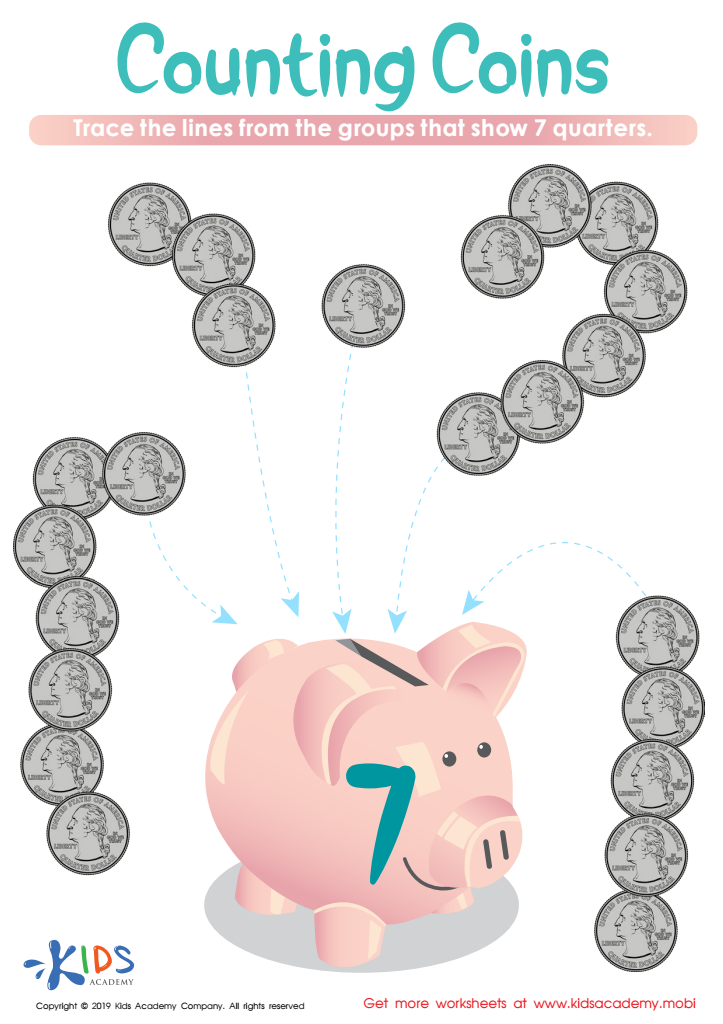
Counting Coins Worksheet
 Assign to My Students
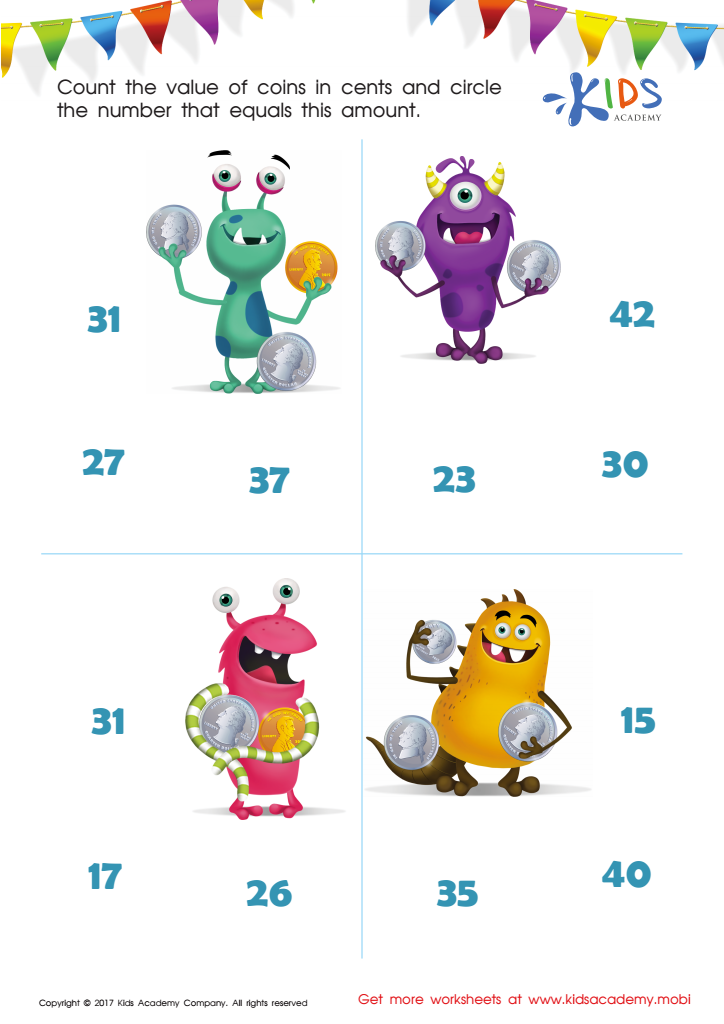
How Many Coins Money Worksheet
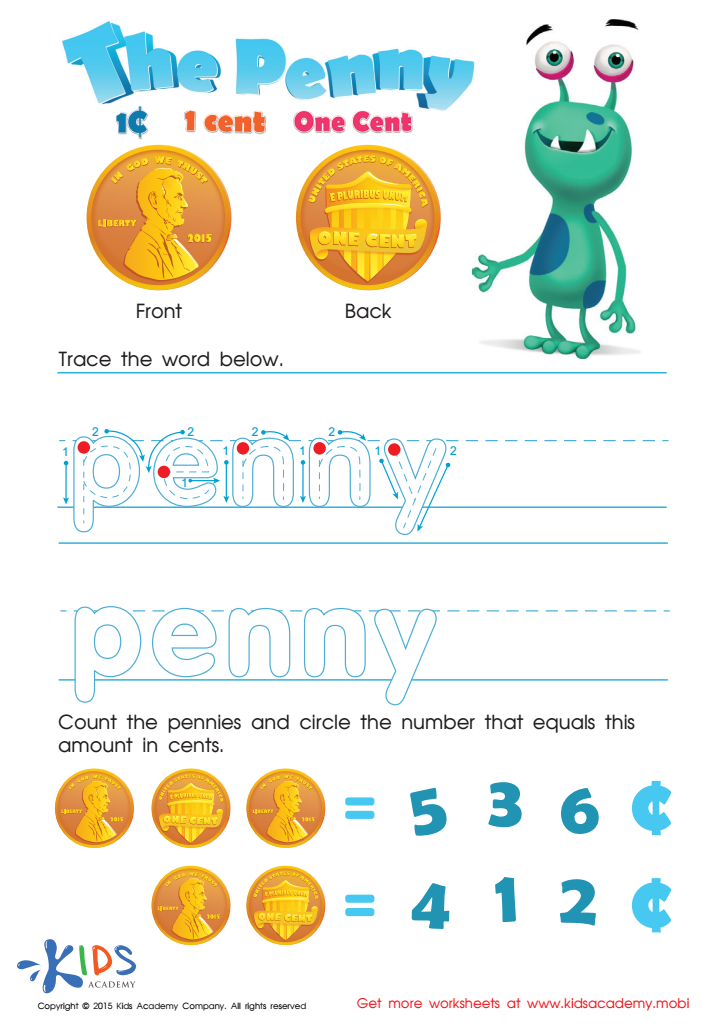
One Cent or the Penny Money Worksheet
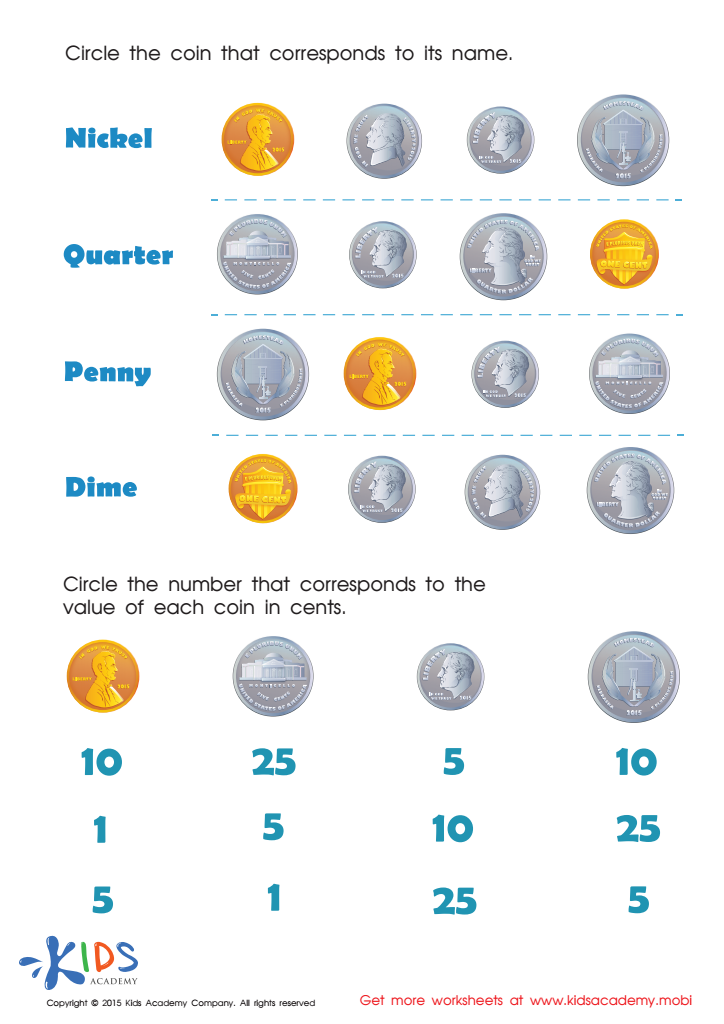
Coin Names and Values Money Worksheet
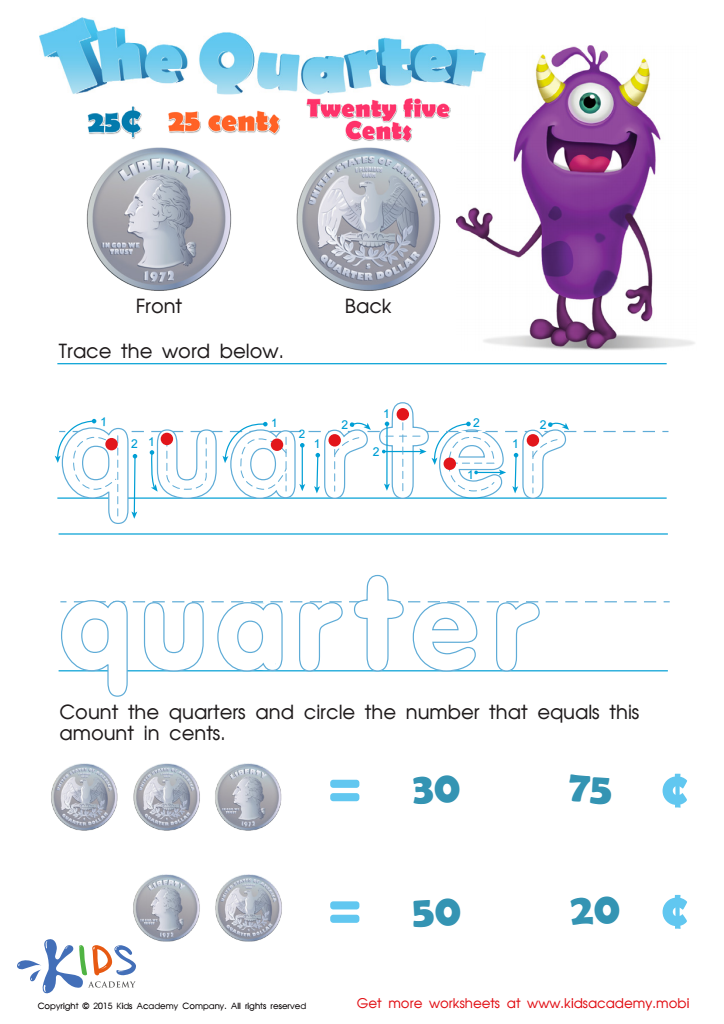
Twenty Five Cents or the Quarter Money Worksheet








Money recognition is an essential skill for 8-year-olds, and parents and teachers should prioritize its development for several reasons. First, understanding money helps children make informed decisions. By recognizing different denominations, they learn to evaluate costs, compare prices, and manage their allowance or savings effectively.
Second, early financial literacy lays the groundwork for responsible money management in adulthood. Developing a strong foundation enables children to grasp the concept of budgeting and saving, fostering a sense of independence and responsibility. Parents and teachers can incorporate money recognition into everyday activities, such as grocery shopping or saving for a desired toy, making the learning process relatable and engaging.
Furthermore, as the world becomes more complex, financial literacy becomes increasingly crucial. Familiarity with money not only empowers children to navigate financial transactions but also fosters critical thinking and problem-solving skills.
Lastly, learning about money can lead to healthier financial behaviors, reducing the risk of debt and fostering a positive relationship with saving, spending, and investing. By emphasizing money recognition, parents and teachers cultivate a generation that is not only aware of money but confident in managing it, setting the stage for a successful financial future.








