Logical Reasoning Geometry Worksheets for 8-Year-Olds
3 filtered results
-
From - To
Nurture your 8-year-old’s critical thinking and geometry skills with our engaging Logical Reasoning Geometry Worksheets! Ideal for young learners, these worksheets blend fun and education seamlessly by focusing on puzzles and problems that improve spatial awareness, shape recognition, and logical thinking. Each activity is designed to challenge and stimulate young minds, encouraging problem-solving and analytical skills essential for academic success. Created with educational best practices, our worksheets are perfect for home or school use, providing a solid foundation in geometry. Ignite your child's passion for math through practical, hands-on learning with our thoughtfully crafted worksheets.
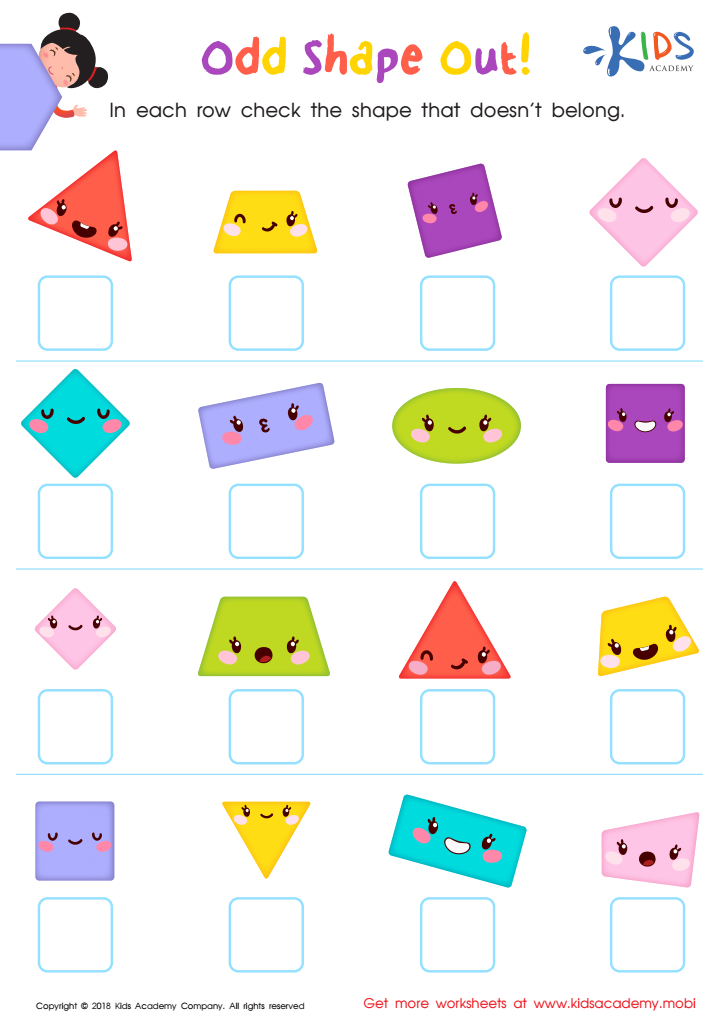
Odd Shape Out Worksheet for Grade 3
 Assign to My Students











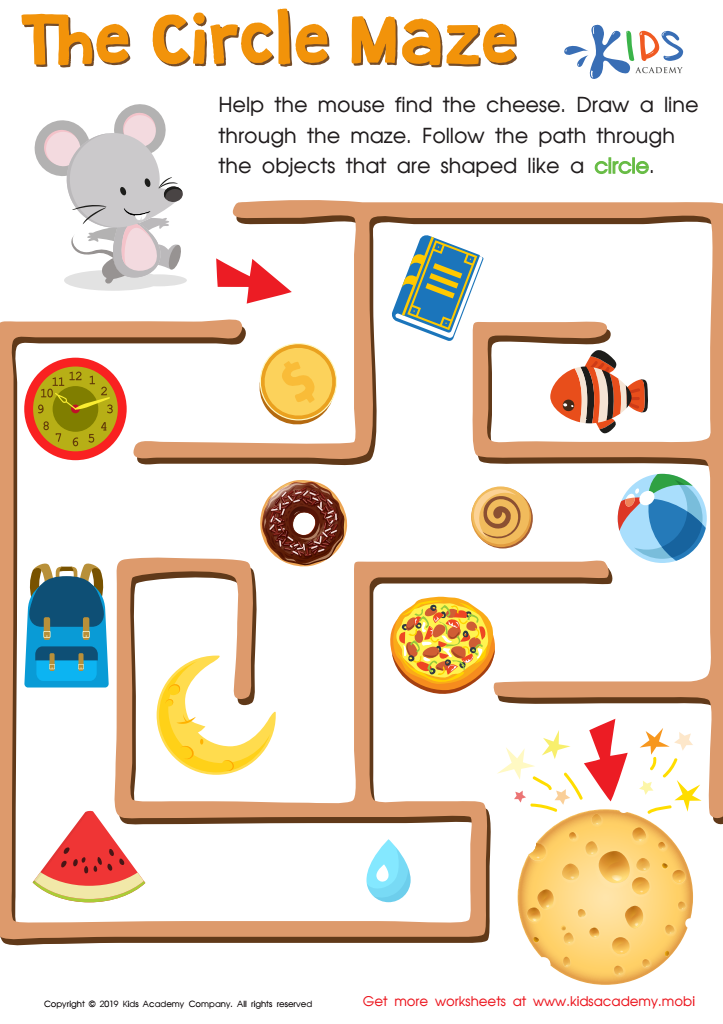
The Circle Maze Worksheet
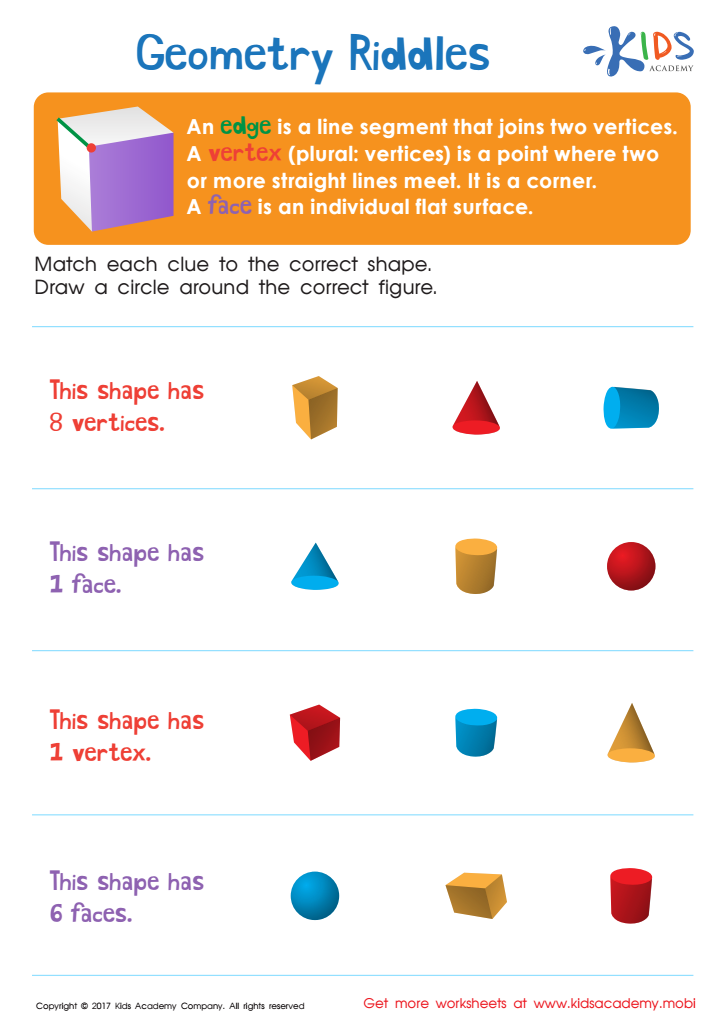
Geometry Riddles Printable








Parents and teachers should care about logical reasoning and geometry for 8-year-olds because these skills lay the foundation for critical thinking, problem-solving, and academic success. At this age, children's brains are highly receptive to new ways of thinking, making it an ideal period to introduce concepts that will benefit them throughout their education.
Logical reasoning helps children learn how to make connections, recognize patterns, and analyze situations methodically. These skills are crucial not just for mathematics, but for science, reading comprehension, and even social interactions. For instance, understanding cause and effect or making predictions based on given information require logical reasoning.
Geometry, on the other hand, introduces children to spatial awareness and shapes, which are fundamental concepts in math. Learning geometry helps enhance visual and spatial perception, skills that are applied in everyday tasks such as reading maps, understanding graphs, and even playing sports. Mastering shapes and their properties also makes abstract math concepts more concrete and relatable.
Together, logical reasoning and geometry can make other subjects easier to grasp and foster a child's overall cognitive development. They promote curiosity, encourage persistence in problem-solving, and provide satisfaction when a problem is solved, contributing to a positive attitude towards learning. Therefore, emphasizing these areas can set the stage for future academic achievement and personal growth.








