Visual representation comprehension Geometry Worksheets for 8-Year-Olds
3 filtered results
-
From - To
Explore our engaging Visual Representation Comprehension Geometry Worksheets designed specifically for 8-year-olds! These worksheets enhance spatial understanding and geometric skills through fun, age-appropriate activities. Each worksheet encourages kids to visualize different shapes, identify patterns, and solve problems, all while building confidence in their math abilities. With colorful illustrations and interactive tasks, children will enjoy learning about geometry in an enjoyable way. Perfect for classroom use or at-home practice, our materials are crafted to foster critical thinking and comprehension. Empower your young learner to master geometric concepts with our comprehensive worksheets that turn learning into an enjoyable adventure!
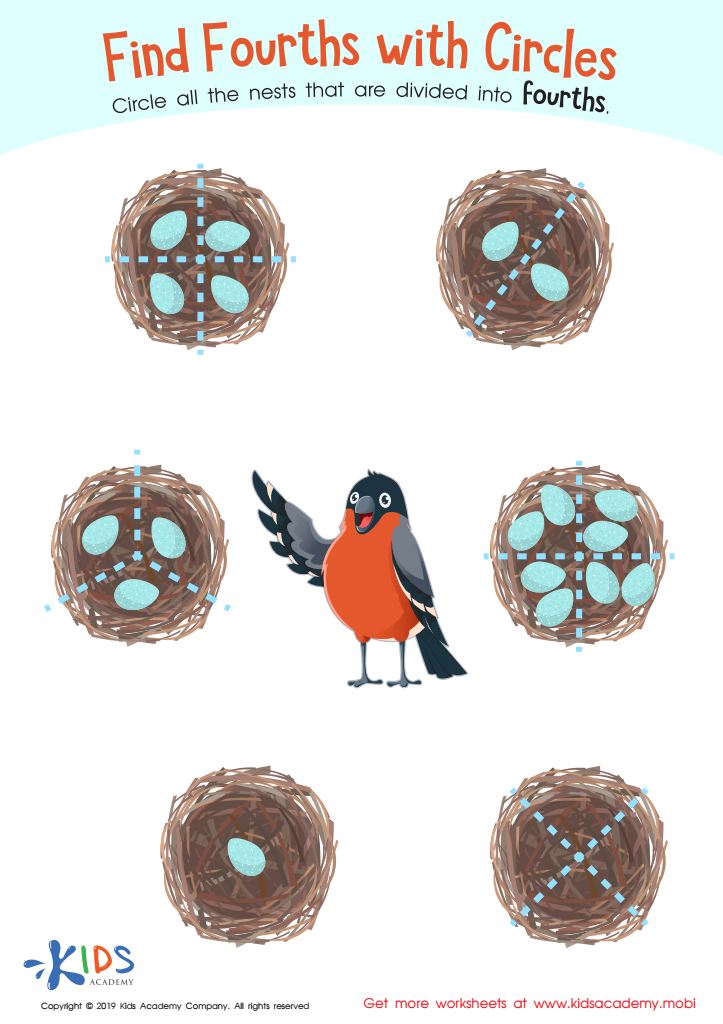
Find Fourths Circles Worksheet
 Assign to My Students











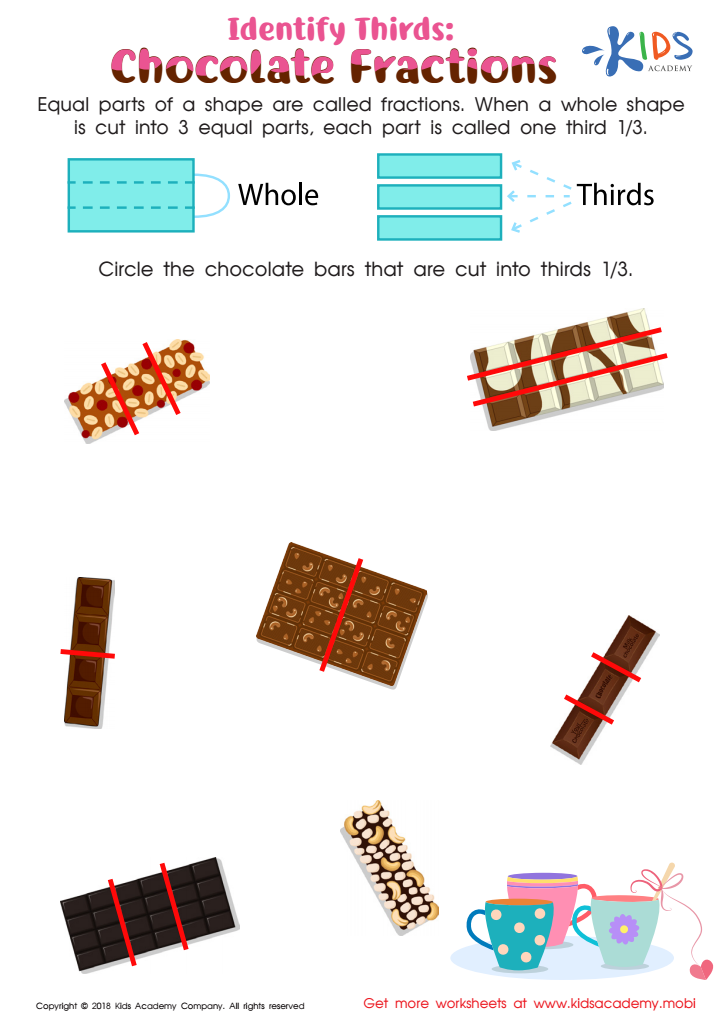
Identify Thirds: Chocolate Fractions Worksheet
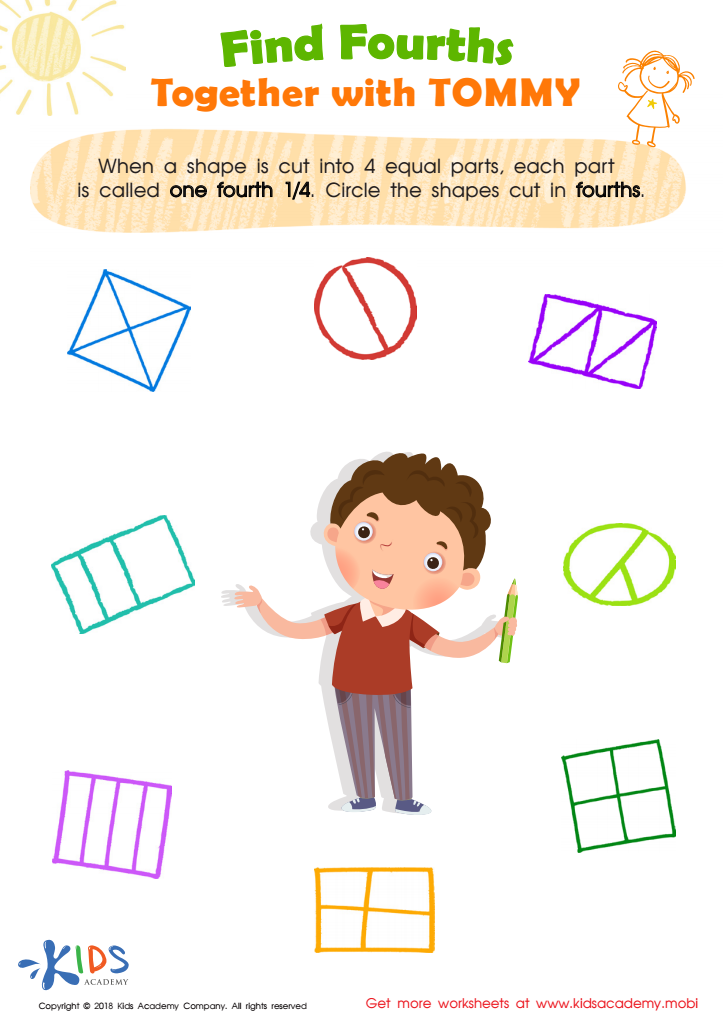
Find Fourths Together with Tommy Worksheet








Understanding visual representation in geometry is crucial for 8-year-olds as it lays the foundation for critical thinking and problem-solving skills. At this age, children are transitioning from concrete to abstract reasoning, and geometrical concepts often reach them through shapes and spatial relationships. By enhancing their comprehension of visual representation, parents and teachers can help students develop a mental framework to interpret and manipulate these concepts effectively.
Geometry is not just about memorizing shapes; it encourages creativity and reasoning. Parents and teachers should highlight the importance of visuals, such as diagrams, models, and drawings, in enabling children to visualize problems, which can improve their overall mathematical understanding. Engaging in activities that involve drawing, building, or using technology can foster spatial awareness and enhance cognitive skills such as critical thinking and logic.
Moreover, strong visual representation skills in geometry can link to real-world applications, making math more relevant to daily life. By fostering this early comprehension, adults are equipping children with tools for success in future math courses and STEM fields, promoting lifelong learning and curiosity. Hence, supporting visual representation comprehension in geometry should be a priority for educators and parents alike, nurturing capable and confident learners.








