Cursive writing practice Numbers Worksheets for 8-Year-Olds
10 filtered results
-
From - To
Enhance your child's cursive writing skills with our specially designed Cursive Writing Practice Numbers Worksheets for 8-year-olds. Perfect for young learners, these engaging worksheets help kids develop both their numbers and handwriting simultaneously. By combining the elegance of cursive writing with the practicality of number practice, our worksheets promote fine motor skills and improve numeric literacy. Ideal for home or classroom use, these printables provide a fun and educational experience, fostering confidence and proficiency in both writing and math. Download our free, high-quality worksheets today and watch your child's skills flourish!
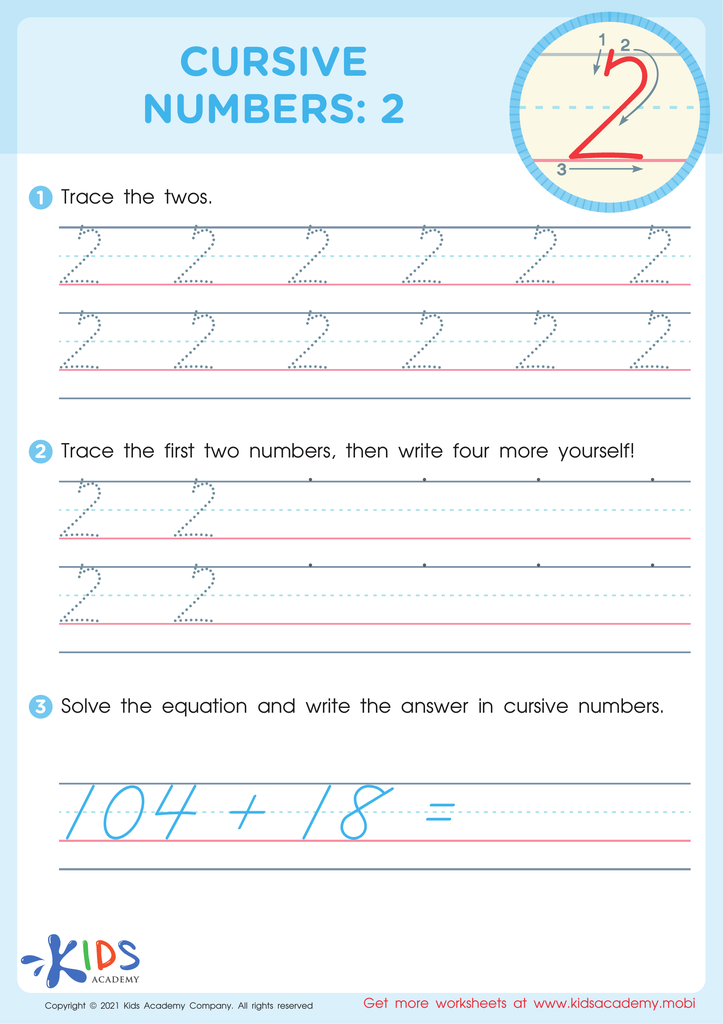
Cursive Numbers: 2 Worksheet
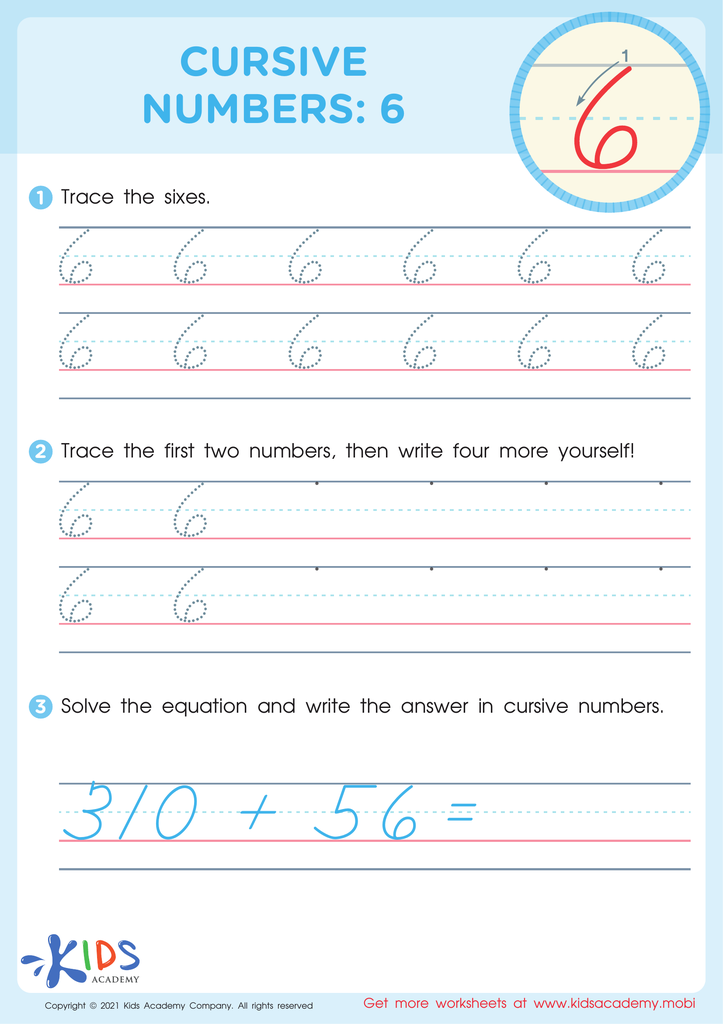
Cursive Numbers: 6 Worksheet
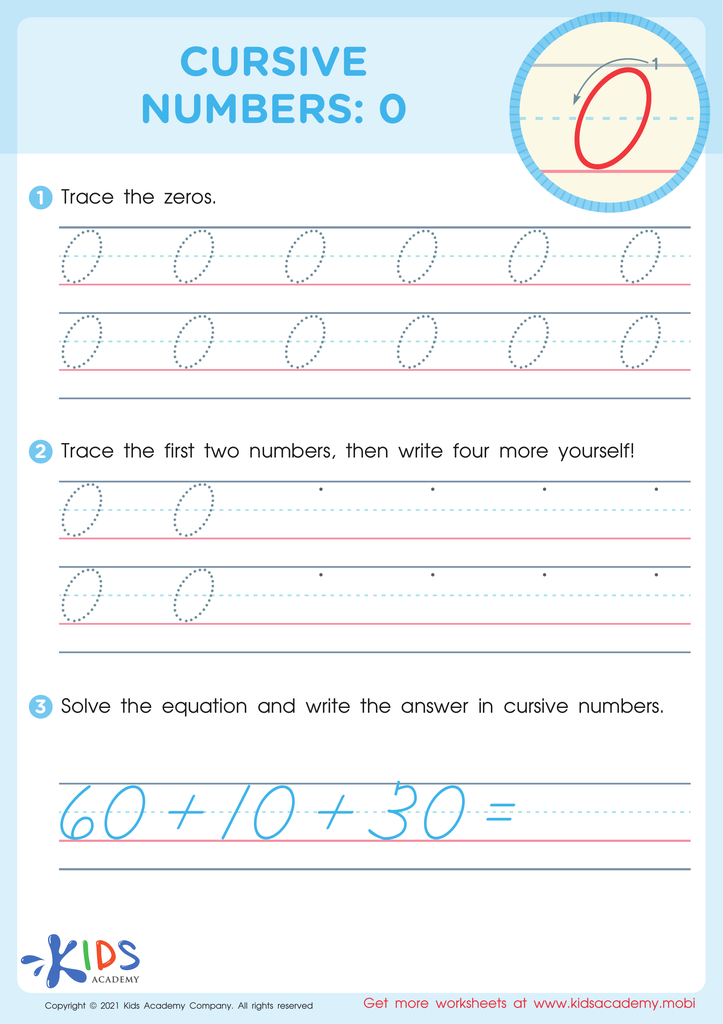
Cursive Numbers: 0 Worksheet
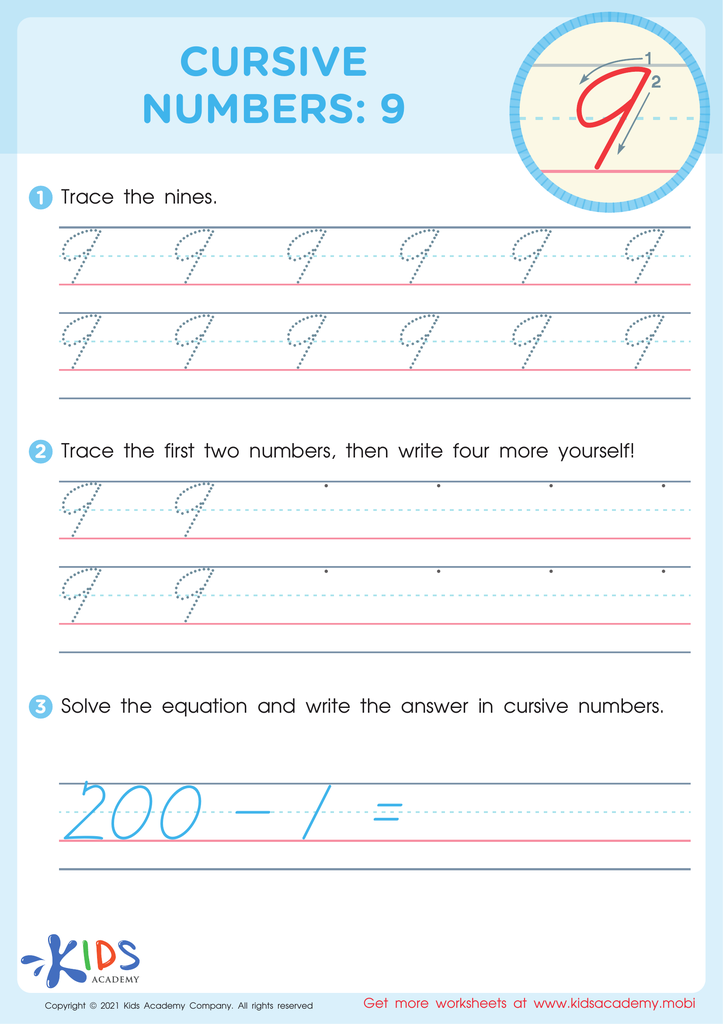
Cursive Numbers: 9 Worksheet
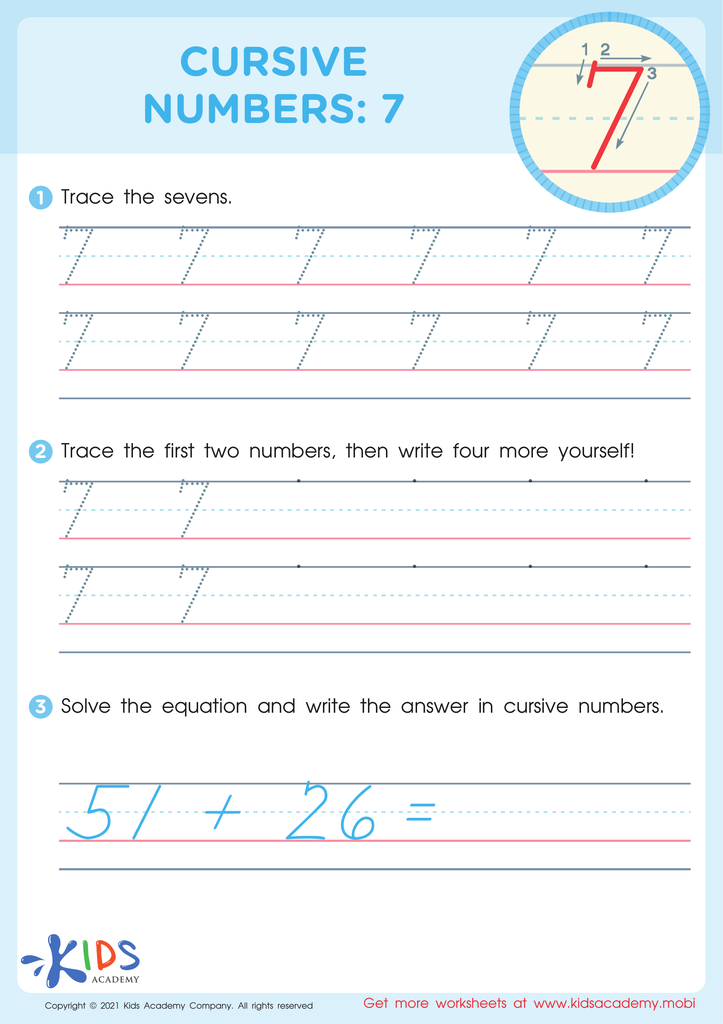
Cursive Numbers: 7 Worksheet
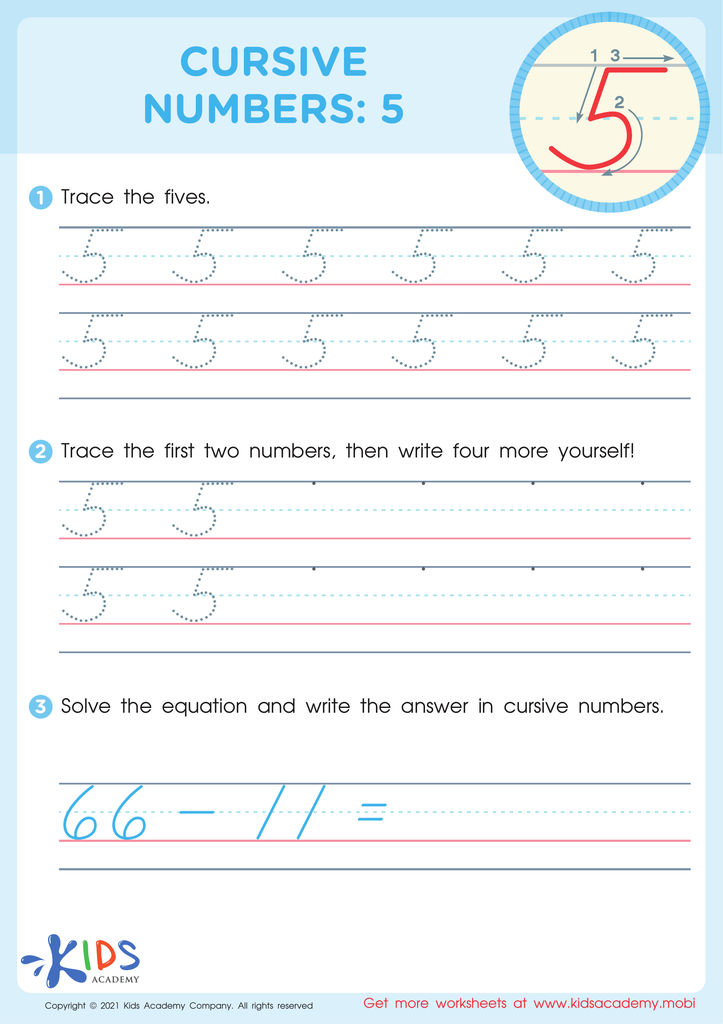
Cursive Numbers: 5 Worksheet
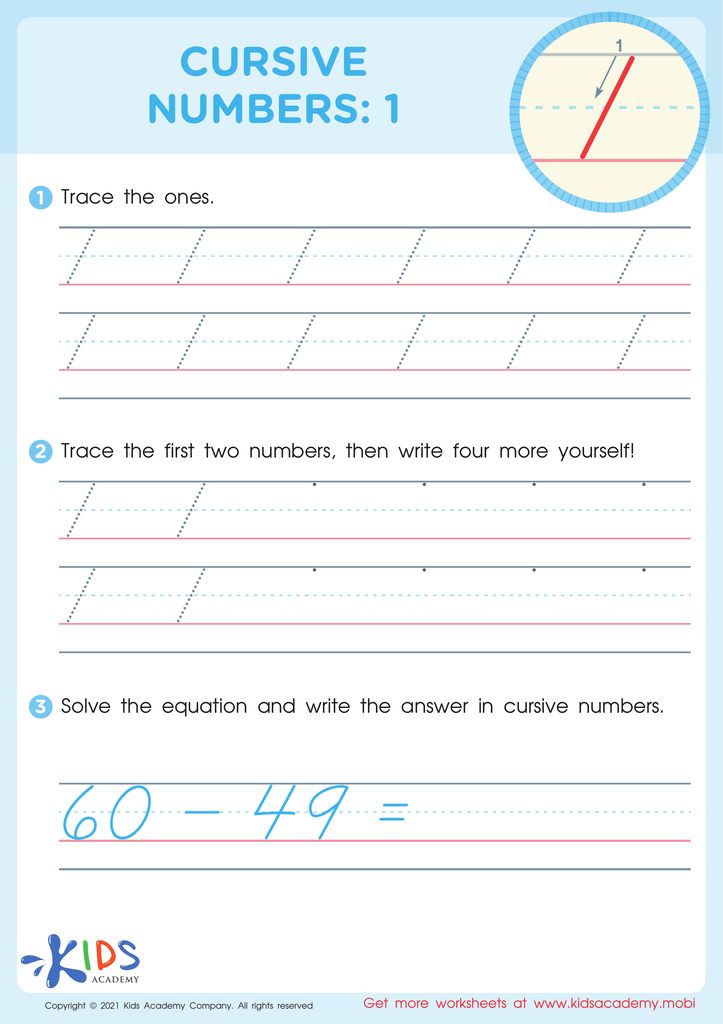
Cursive Numbers: 1 Worksheet
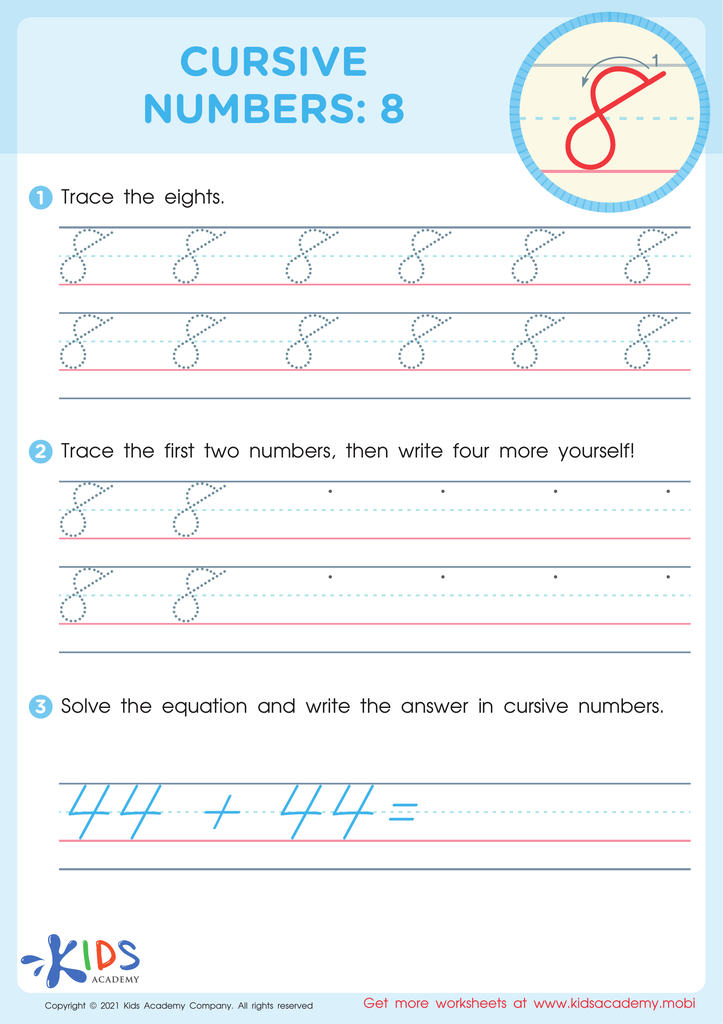
Cursive Numbers: 8 Worksheet
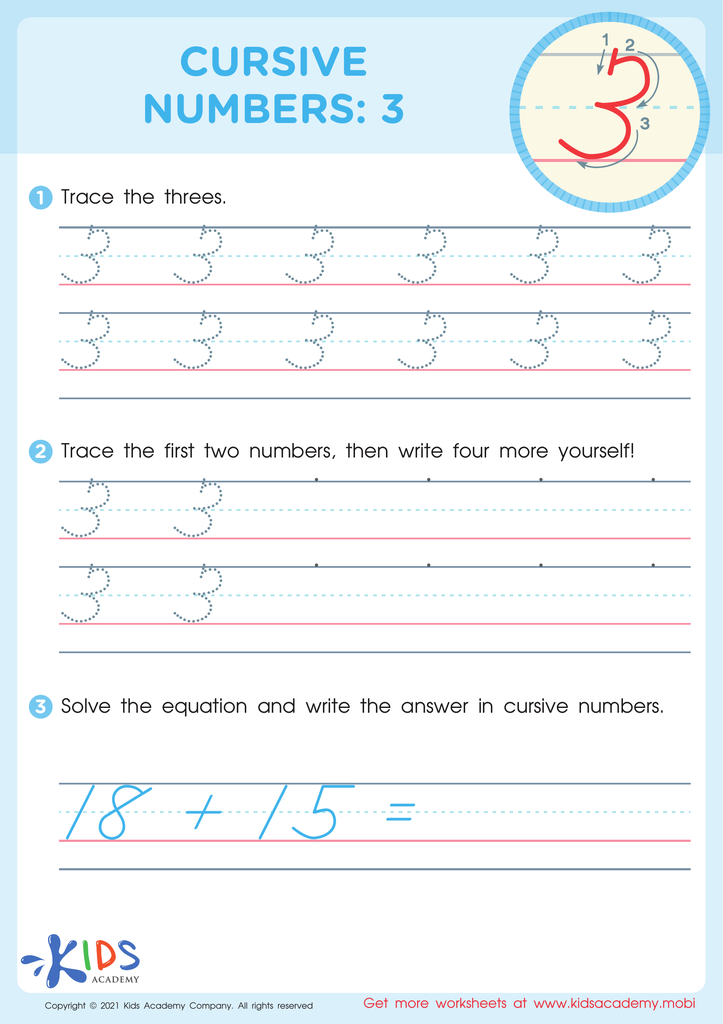
Cursive Numbers: 3 Worksheet
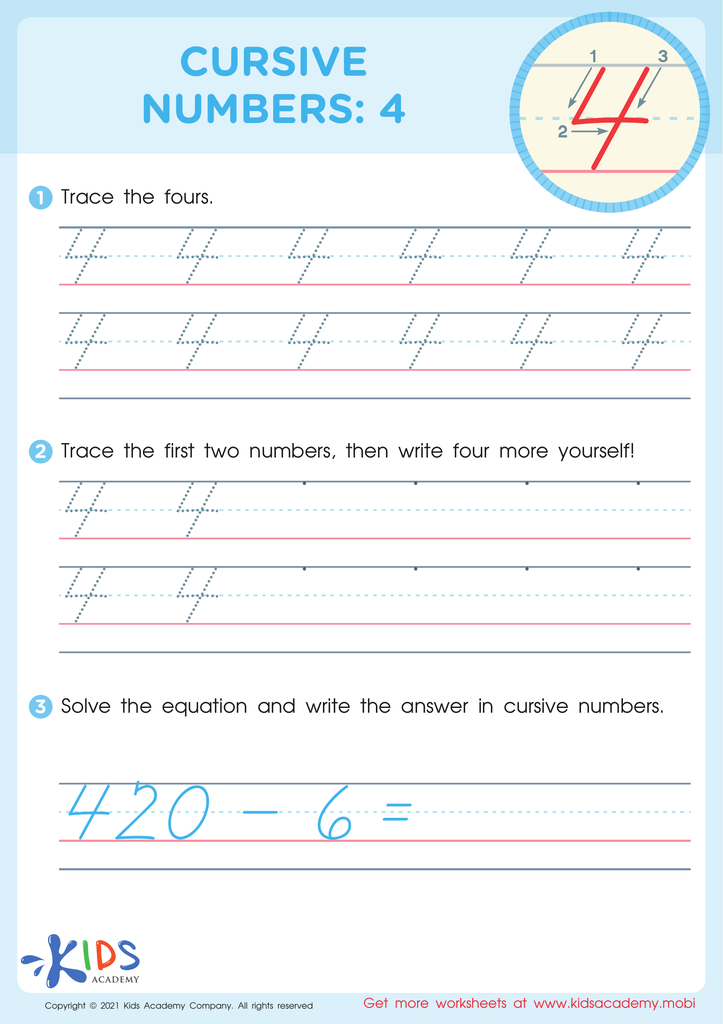
Cursive Numbers: 4 Worksheet








Parents and teachers should care about cursive writing practice for 8-year-olds because it fosters essential developmental and academic skills. Cursive writing is more than just a way of writing letters differently; it’s a practice that can enhance motor skills, improve cognitive development, and boost literacy.
Firstly, writing in cursive requires fine motor skills and hand-eye coordination. By learning the fluid, interconnected motions of cursive, children develop stronger hand muscles and better hand control, which can improve their overall handwriting, including print.
Secondly, cursive writing can improve cognitive abilities. It involves different neural pathways than typing or printing. Research shows that learning cursive can enhance brain development related to memory, focus, and comprehension. These cognitive benefits translate to better academic performance in areas like reading and writing.
Additionally, cursive writing has historical and practical significance. Many important documents are written in cursive, and being able to read them allows students access to a broader range of texts. Understanding cursive also means students can communicate in this style, offering a unique form of personal expression.
For 8-year-olds, a critical age for developing foundational skills, integrating cursive writing practice allows them to grow academically and personally. By including this practice, parents and teachers help ensure a well-rounded educational experience.








