Counting skills Math Worksheets for 8-Year-Olds - Page 7
150 filtered results
-
From - To
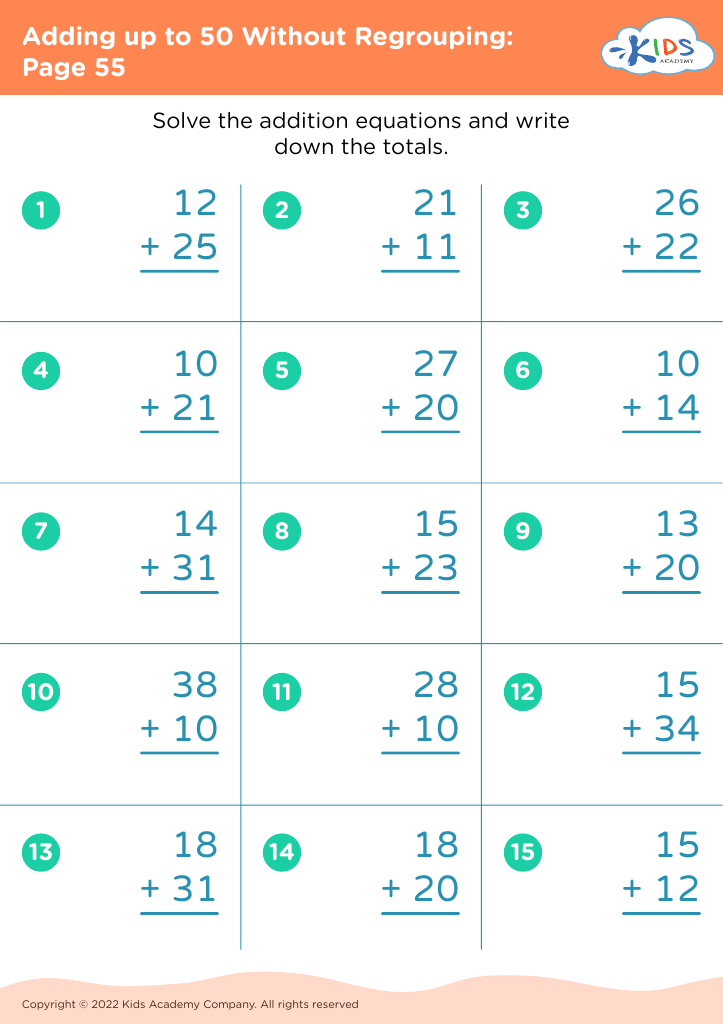
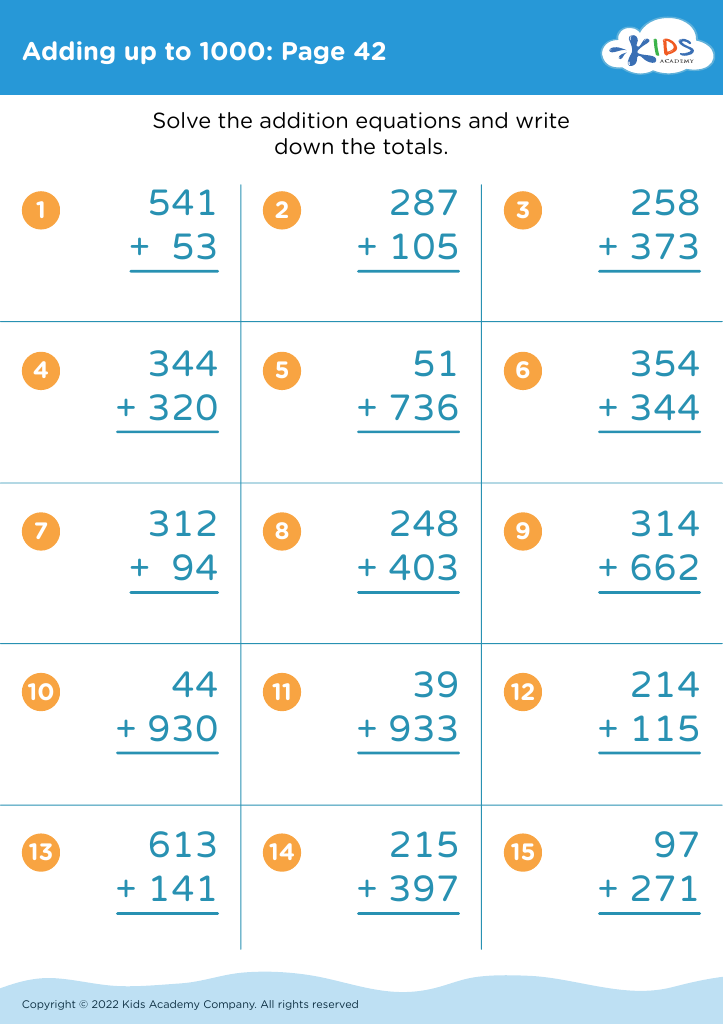
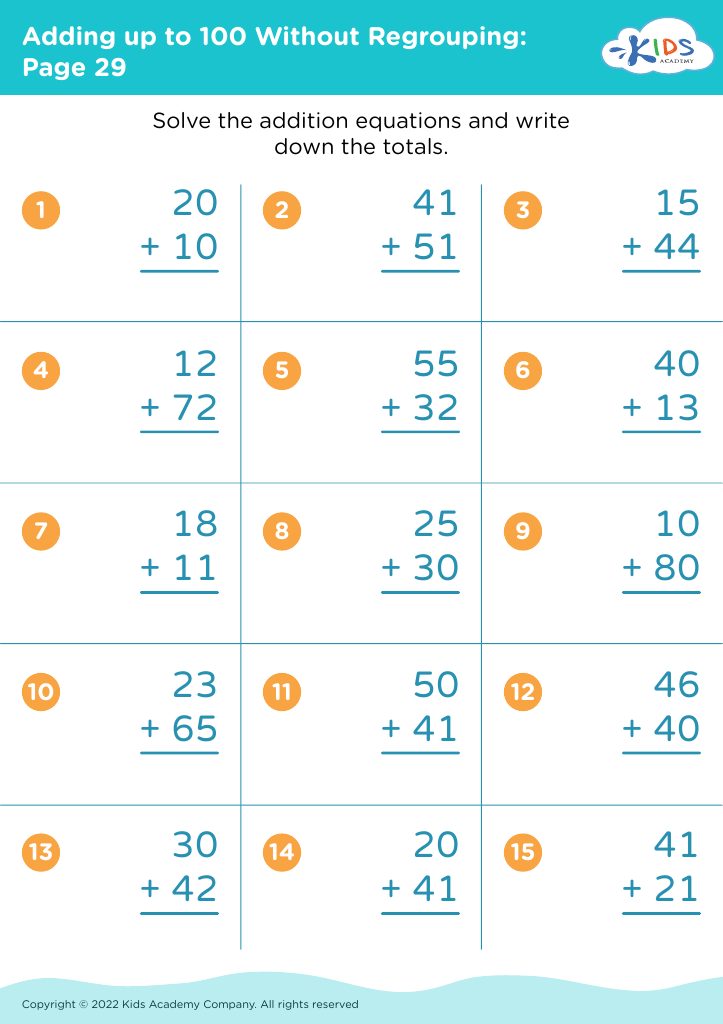
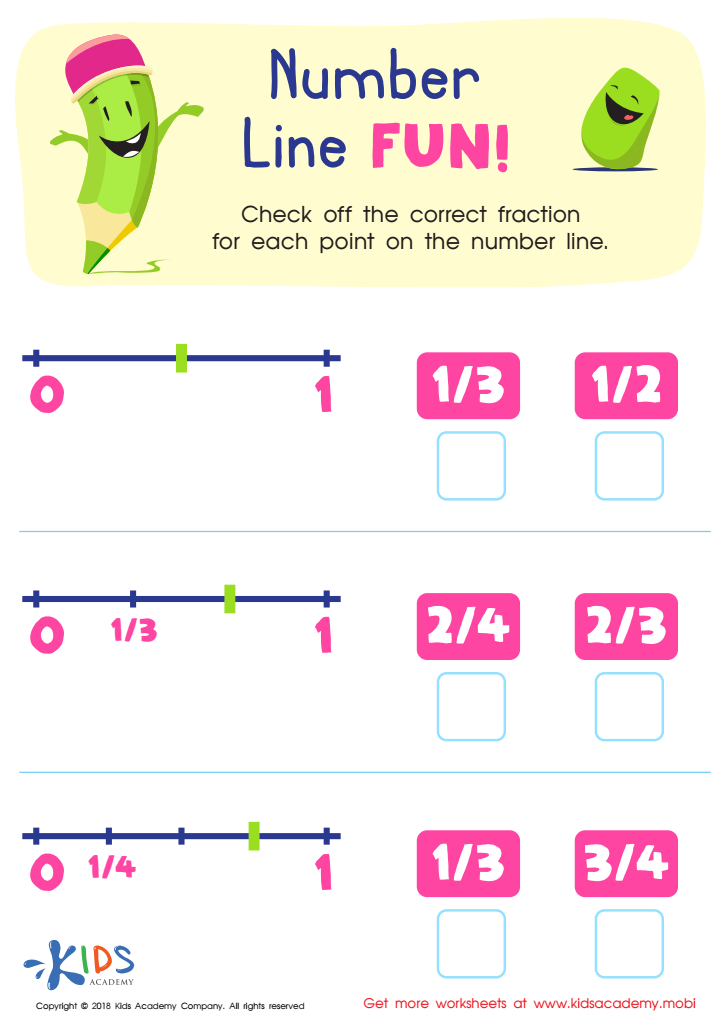
Number Line Fun Worksheet
 Assign to My Students
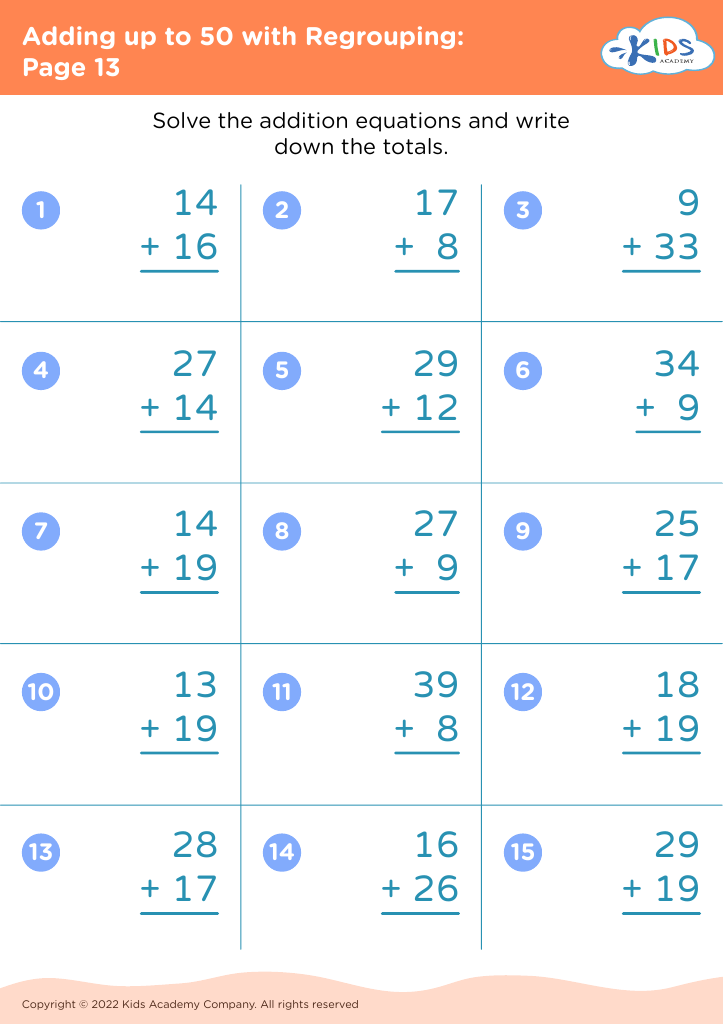
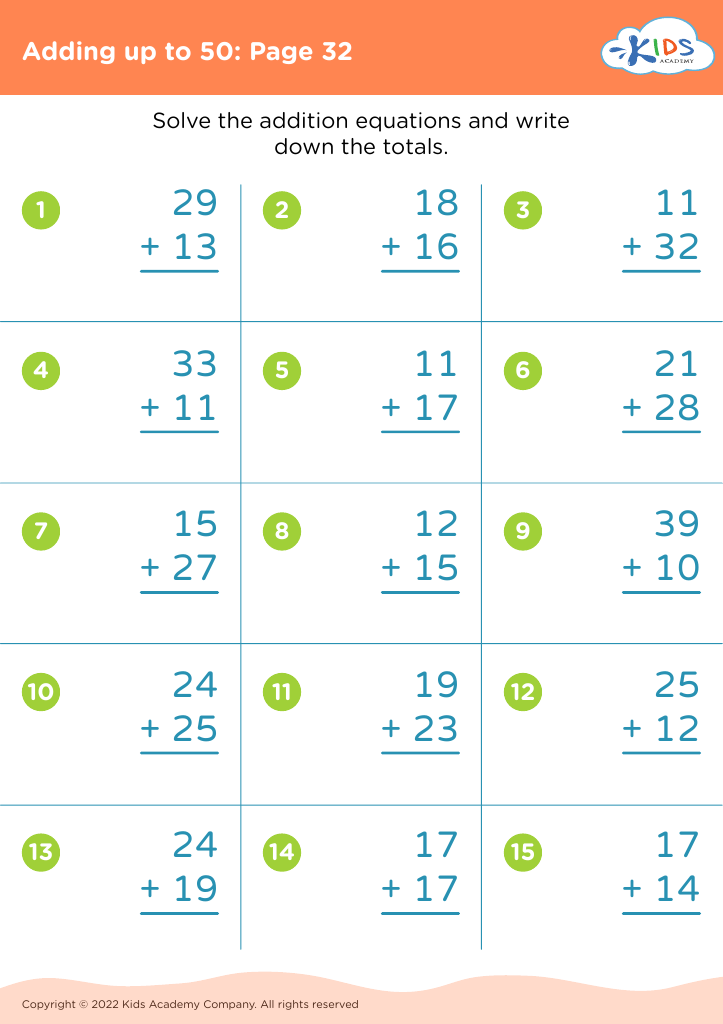








Counting skills are foundational to math literacy and are crucial for the cognitive development of 8-year-olds. Mastering these skills ensures that children understand numbers, which is essential for more complex mathematical concepts. For one, counting supports addition, subtraction, multiplication, and division—the basic operations that underpin future math learning.
Understanding how to count helps kids develop number sense, the ability to recognize, relate, and interpret different numerical values critically. Number sense forms the bedrock for problem-solving and logical thinking required in various real-life situations, such as handling money or measuring ingredients while baking.
Beyond academics, fluency in counting boosts a child's confidence and improves their willingness to engage in mathematical activities, making them more likely to explore science, technology, engineering, and mathematics (STEM) fields in the future.
From a psychological standpoint, proficiency in counting can foster a growth mindset. Successfully embracing numerical challenges teaches children perseverance and resilience, skills transferable to many areas of life.
Therefore, parents and teachers should prioritize counting skills to equip 8-year-olds with essential tools for academic success and everyday problem-solving, setting the stage for a well-rounded and confident individual ready to navigate complexities of the world.








