Critical thinking skills Math Worksheets for 8-Year-Olds
8 filtered results
-
From - To
Boost your child's analytical abilities with our Critical Thinking Skills Math Worksheets for 8-Year-Olds, designed to enhance problem-solving and logical reasoning. Our engaging worksheets cover a range of topics, including patterns, puzzles, and complex word problems, ensuring your child not only learns math but also develops vital critical thinking skills. Each worksheet offers a unique challenge, encouraging kids to think deeply and independently. Perfect for home or classroom use, these printable worksheets make learning math fun and effective. Get started today and help your 8-year-old build a strong foundation in both math and critical thinking!
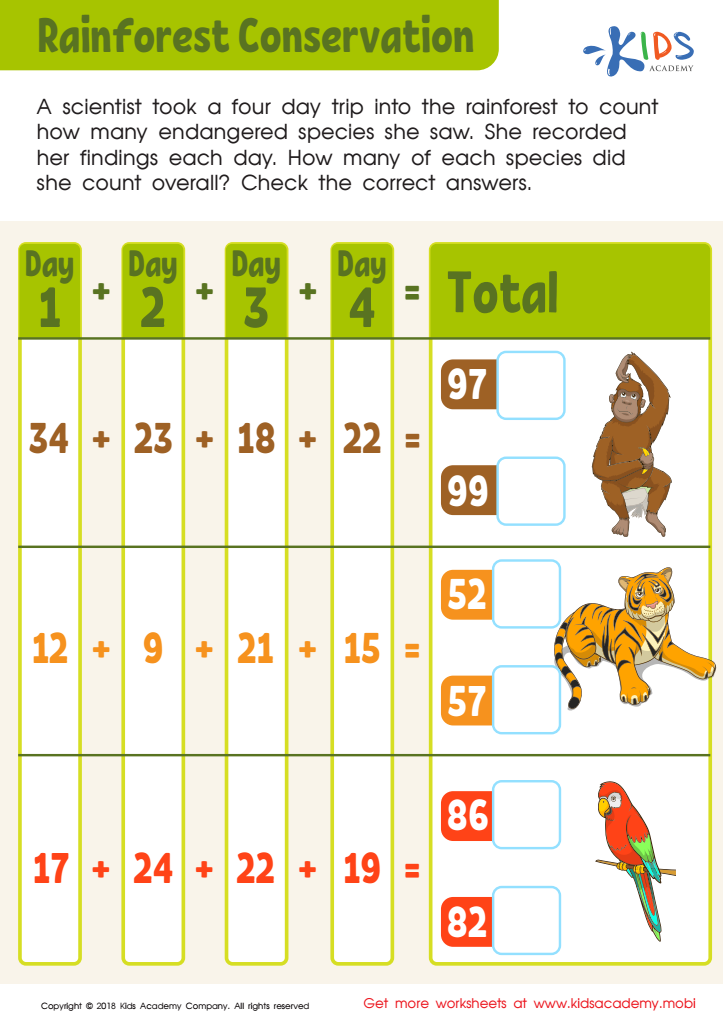
Rainforest Conservation Worksheet
 Assign to My Students
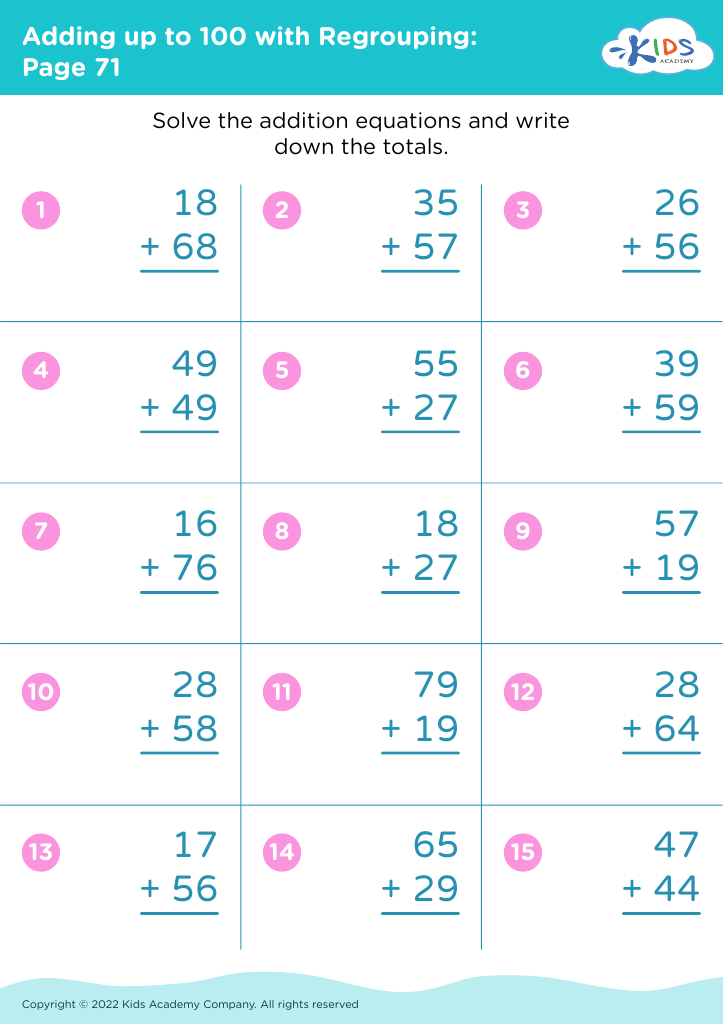
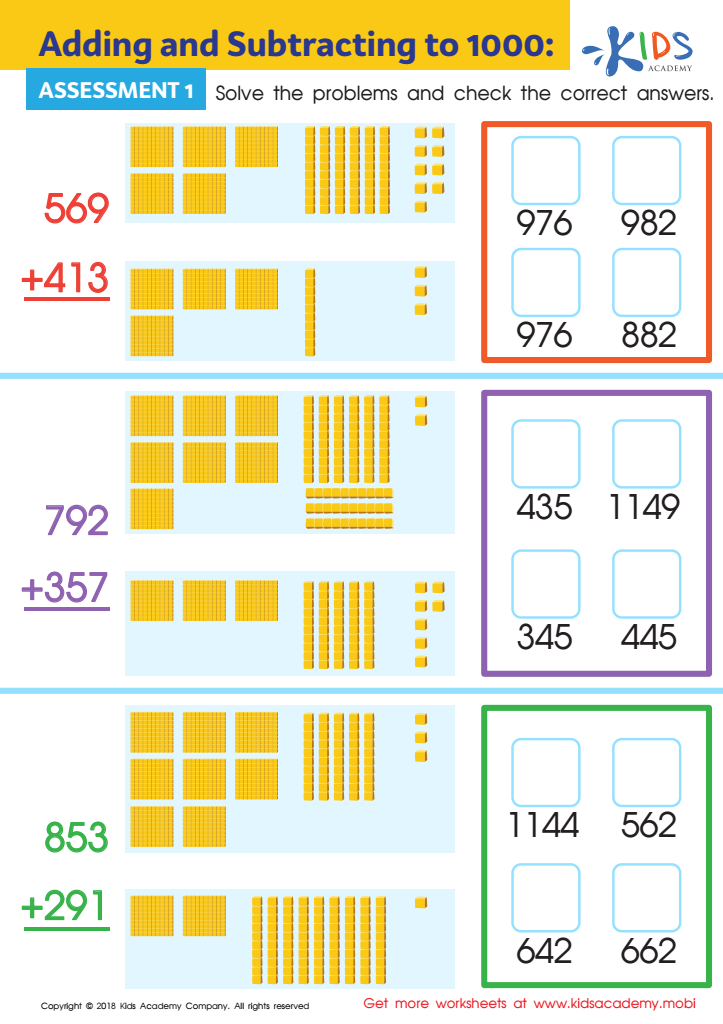
Adding and Subtracting to 1 Worksheet: Assessment 1
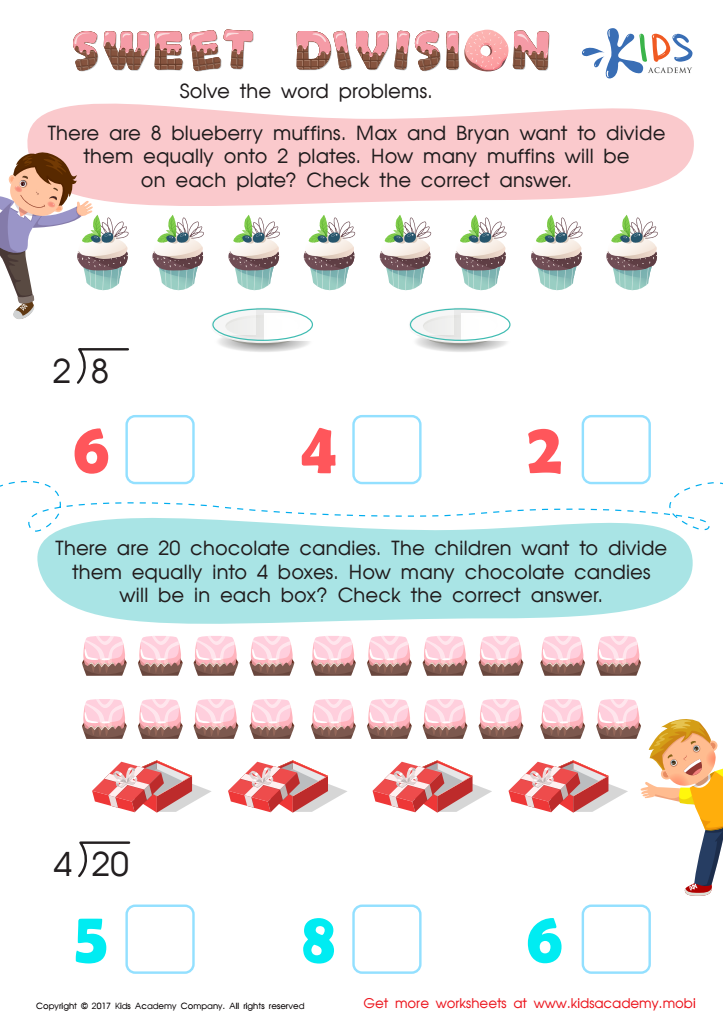
Division Word Problems Worksheet







Parents and teachers should prioritize critical thinking skills in math for 8-year-olds because it builds a strong foundation for their future academic and real-life problem-solving abilities. Critical thinking in math involves analyzing problems, making logical connections, and drawing conclusions based on evidence. By developing these skills early, children learn to approach challenges methodically rather than just memorizing formulas and procedures.
First, critical thinking in math fosters deeper understanding. Instead of rote learning, children engage with concepts, exploring the 'why' behind math operations. This deeper comprehension promotes long-term retention and the ability to apply knowledge in various contexts.
Second, it enhances decision-making and independence. As kids learn to evaluate multiple solutions and determine the best approach, they become more confident and self-reliant. They use reasoning to justify their answers and develop perseverance in tackling difficult problems.
Moreover, critical thinking in math is vital across other subjects and everyday situations. It empowers children to translate mathematical reasoning to science, social studies, and even creative areas, cultivating versatile learners. It also aids in practical life skills like calculating costs, understanding schedules, and managing simple budgets.
In essence, fostering critical thinking skills in math at a young age equips children with essential tools for academic success and everyday life, nurturing a generation of thoughtful, analytical, and resourceful individuals.








