Developing problem-solving abilities Math Worksheets for 8-Year-Olds
6 filtered results
-
From - To
Unlock your child's potential with our expertly designed math worksheets, tailored specifically for 8-year-olds. Our engaging activities focus on developing problem-solving skills through practical applications and fun exercises. These worksheets are crafted to enhance critical thinking, build confidence, and pave the way for academic success. Whether tackling word problems, arithmetic, or logical reasoning tasks, your child will gain valuable skills in a playful and stimulating environment. Our age-appropriate materials align with educational standards, ensuring a comprehensive learning experience. Nurture your child's mathematical abilities and foster a love for learning with our top-quality educational resources!
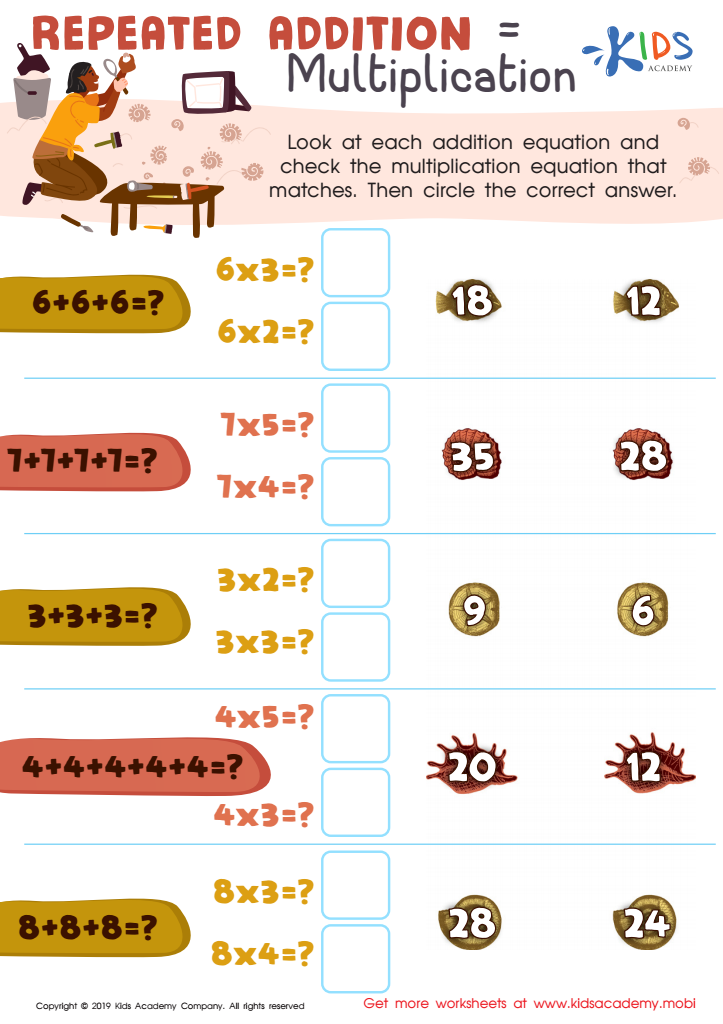
Repeated Addition = Multiplication Worksheet
 Assign to My Students
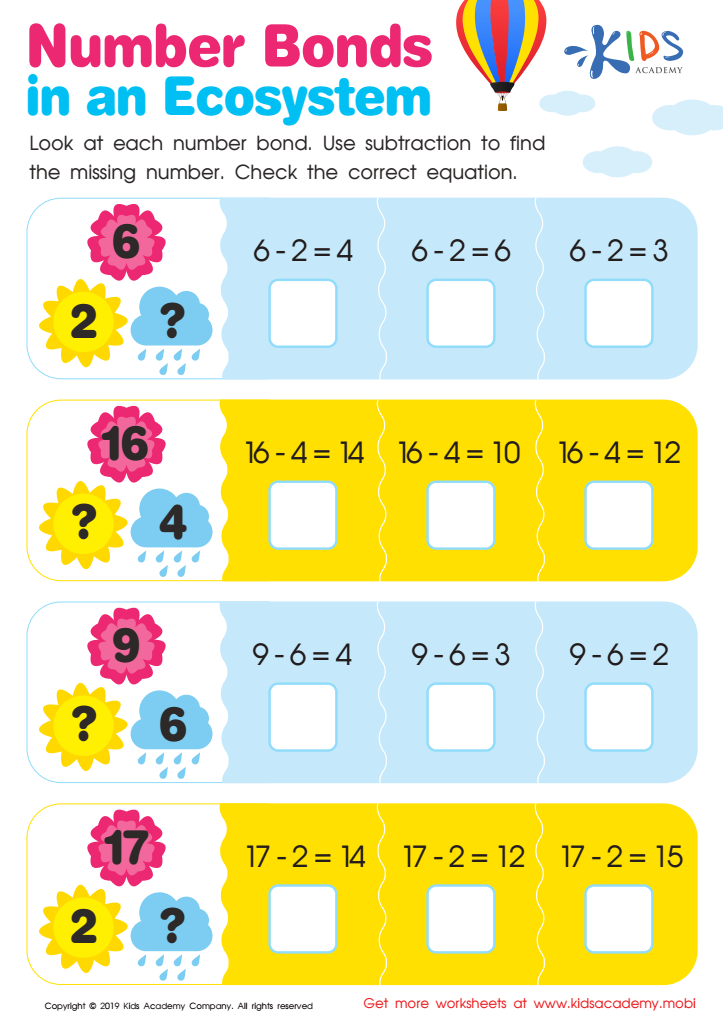
Number Bonds in an Ecosystem Worksheet
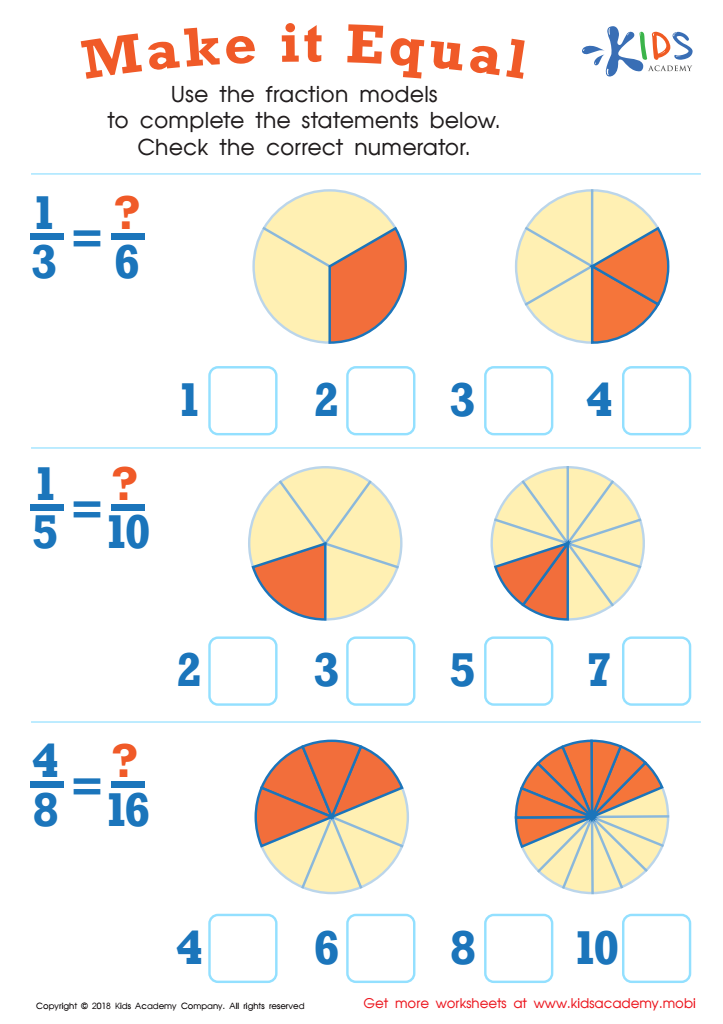
Make It Equal Worksheet
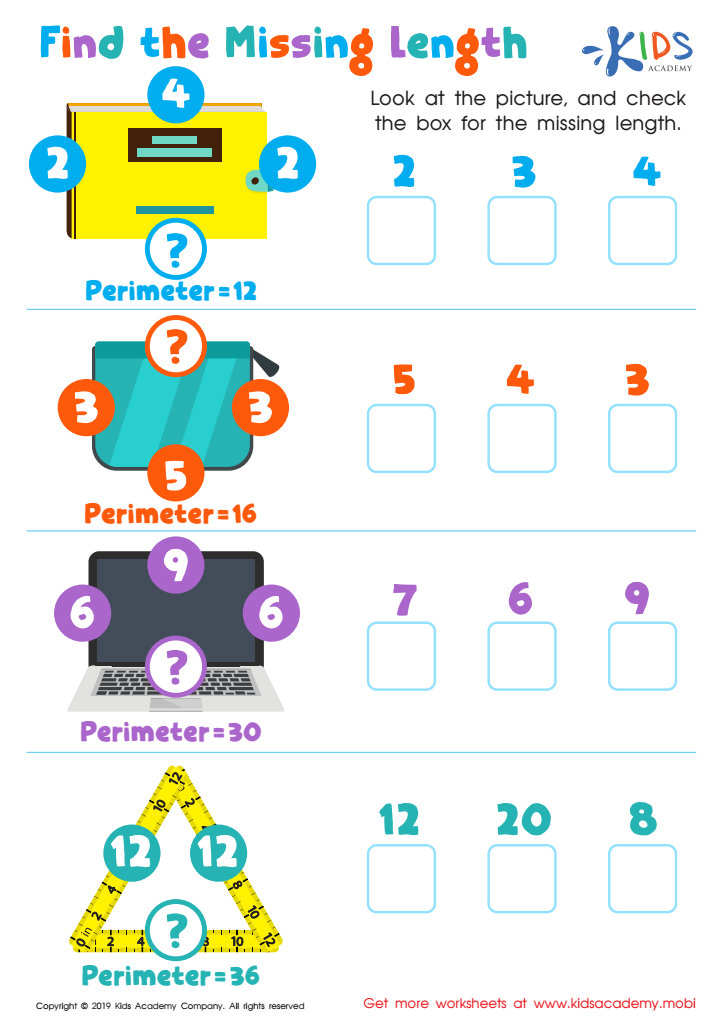
Find the Missing Length Worksheet








Developing problem-solving abilities in math for 8-year-olds is crucial for several reasons that benefit both academic growth and life skills. At that age, children are at a formative period where cognitive development is rapid. Encouraging problem-solving strengthens critical thinking, enhancing their capacity to analyze and approach various situations thoughtfully.
Firstly, math problem-solving fosters logical reasoning, a skill that transcends academic subjects and applies to daily decision-making. When children develop these abilities early, they become more adept at handling challenges, driving a sense of independence and self-efficacy. For example, working on word problems enhances their understanding of how to break down complex tasks into manageable steps.
Additionally, early engagement with problem-solving in math boosts confidence. As children successfully navigate problems, their self-esteem grows, promoting a positive attitude towards learning. It also helps them develop perseverance; they learn that persistence and effort can lead to solutions, even if the path is tricky.
Lastly, math problem-solving nurtures creativity. Children think of multiple ways to reach a solution, encouraging innovative thinking and flexibility. These skills, fundamental to STEM education, are increasingly valued in today's problem-solving-centric world. Hence, fostering mathematical problem-solving in early education cultivates a foundation for lifelong learning and versatile, capable individuals.








