
Enhancing vocabulary Math Worksheets for 8-Year-Olds
3 filtered results
Difficulty Level
Grade
Age
-
From - To
Subject
Activity
Standards
Discover our "Enhancing Vocabulary Math Worksheets for 8-Year-Olds," designed to develop mathematical terminology and boost comprehension in young learners. These engaging worksheets combine math concepts with vocabulary enhancement, making learning fun and effective. Children will explore key terms in math, improving their ability to communicate complex ideas and solve problems confidently. By integrating vocabulary into math lessons, students build a strong foundation, empowering them in future math challenges. Our printable worksheets cater to varied learning styles, ensuring every child can grasp essential concepts. Transform your child's learning experience and watch them thrive in both math and language with our expertly crafted resources!
Favorites
With answer key
Interactive
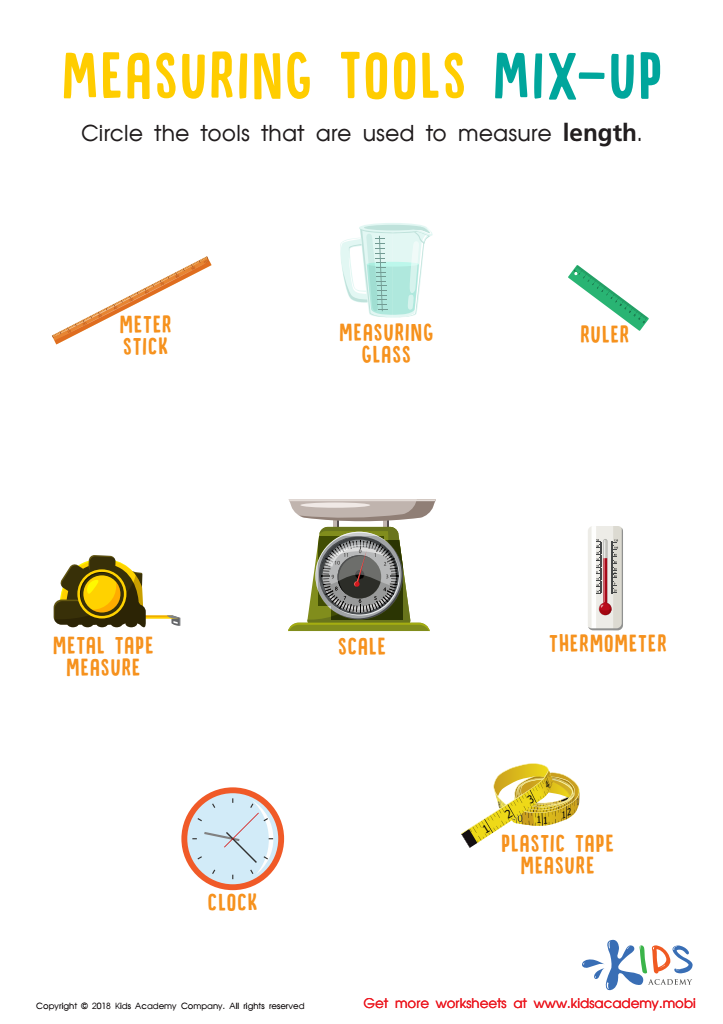
Measuring Tools Mix–up Worksheet
Test your child's knowledge of measuring instruments! In this worksheet, have them identify which items are used for measuring length. Talk through the items with them, then ask them to circle the right answer. Use this PDF to challenge your child and learn more about measuring tools.
 Assign to My Students
Measuring Tools Mix–up Worksheet
Worksheet
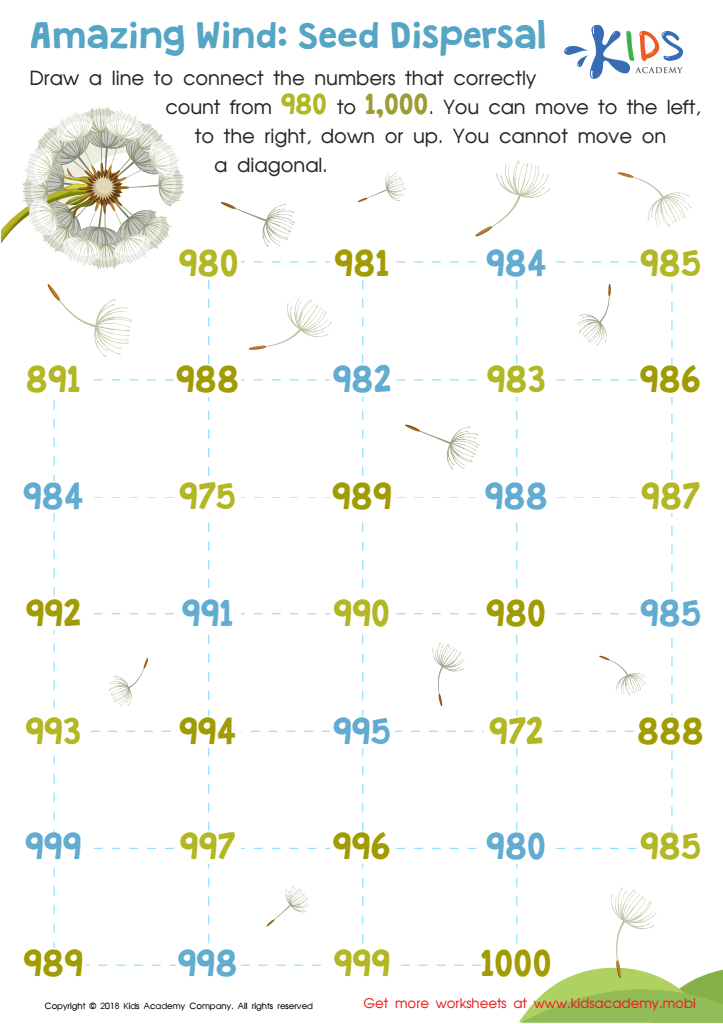
Amazing Wind: Seed Dispersal Worksheet
Let your child have fun and practice math skills with this worksheet! They'll use traceable lines to disperse a dandelion's seeds, building number sense, sequencing, fine motor, and hand-eye coordination. Discern between similar numbers and strengthen reasoning skills as they enjoy the familiar activity of blowing the seeds away.
Amazing Wind: Seed Dispersal Worksheet
Worksheet
Join Kids Academy for Free
Who is primarily going to use this learning content?







Enhancing vocabulary in math for 8-year-olds is crucial for several reasons. At this developmental stage, children are not only mastering basic arithmetic but also starting to explore more complex concepts, such as fractions, multiplication, and word problems. A strong math vocabulary equips them with the language skills necessary to understand instructions, communicate their reasoning, and solve problems effectively.
When children develop a robust vocabulary around mathematical terms—like "sum," "difference," "estimate," or "equivalent"—they can better grasp what is being asked in various math-related contexts. This understanding streamlines their ability to follow classroom discussions, enhances their confidence in participating, and fosters a more positive learning environment. Additionally, a richer vocabulary leads to improved comprehension in mathematical reasoning, ultimately resulting in stronger performance on assessments and everyday problem-solving.
Moreover, instilling these skills early helps close achievement gaps among diverse learners and supports lifelong mathematical literacy. For parents and teachers, engaging in activities that promote mathematical vocabulary—such as games, conversations, and puzzles—can make math fun while reinforcing essential skills. Ultimately, a solid vocabulary foundation empowers children, giving them the tools they need to succeed academically and in real-life situations that involve math.








