Fine motor skills development Math Worksheets for 8-Year-Olds
6 filtered results
-
From - To
Enhance your child's fine motor skills while mastering math with our specialized worksheets designed for 8-year-olds. Kids Academy offers a range of engaging activities that not only improve mathematical understanding but also refine essential fine motor skills. These expertly crafted worksheets help children develop precise hand movements through fun, interactive tasks such as tracing, cutting, and drawing alongside solving math problems. Whether it's basic arithmetic, shapes, or geometry, every worksheet provides a dual focus on cognitive and motor skill advancement. Perfect for classroom use or extra practice at home, our materials support comprehensive developmental growth in a fun, educational manner.
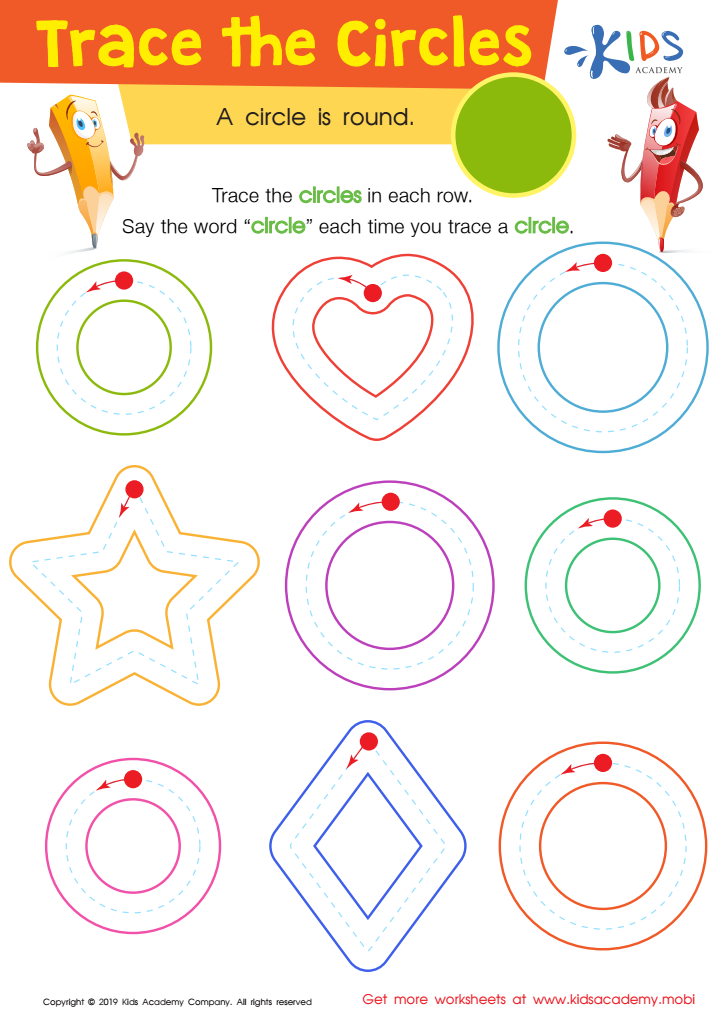
Trace The Circles Worksheet
 Assign to My Students
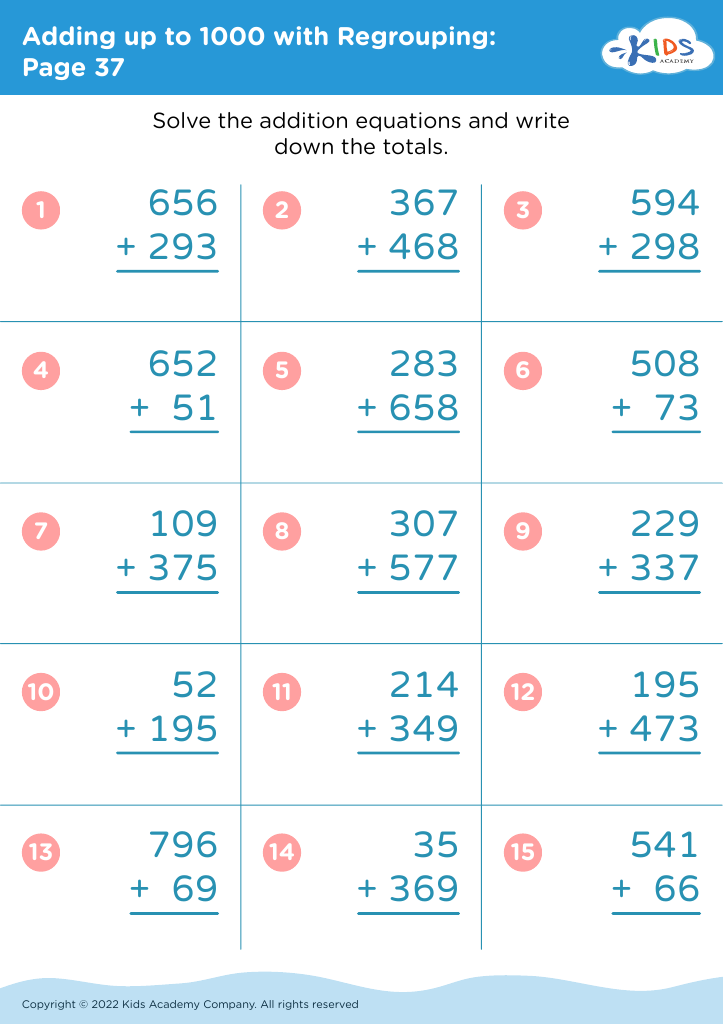
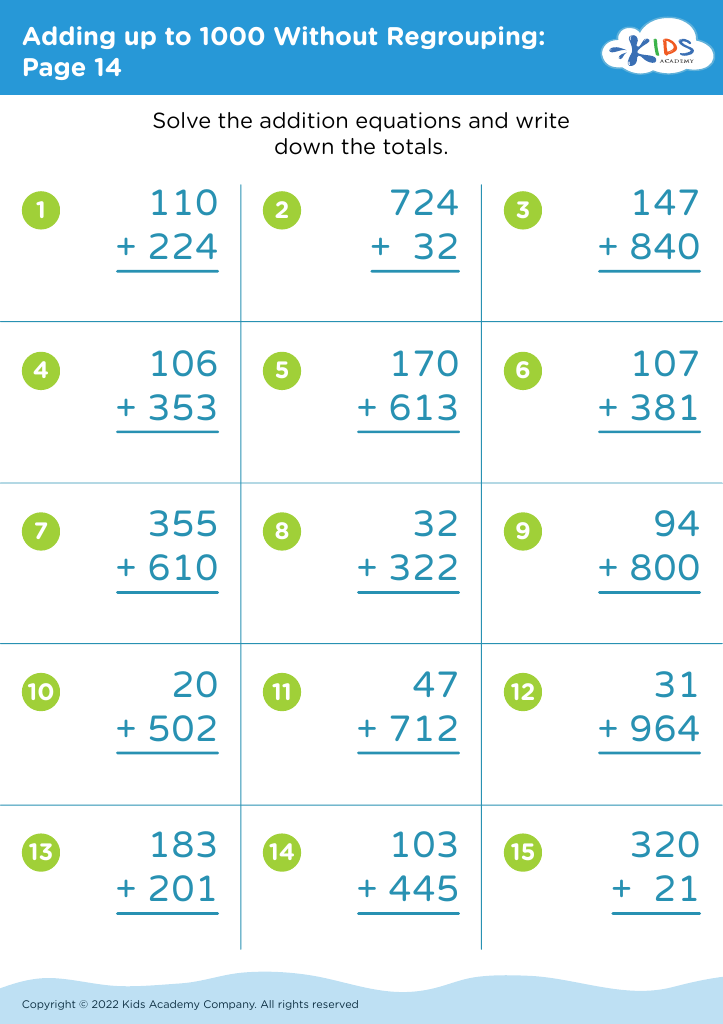
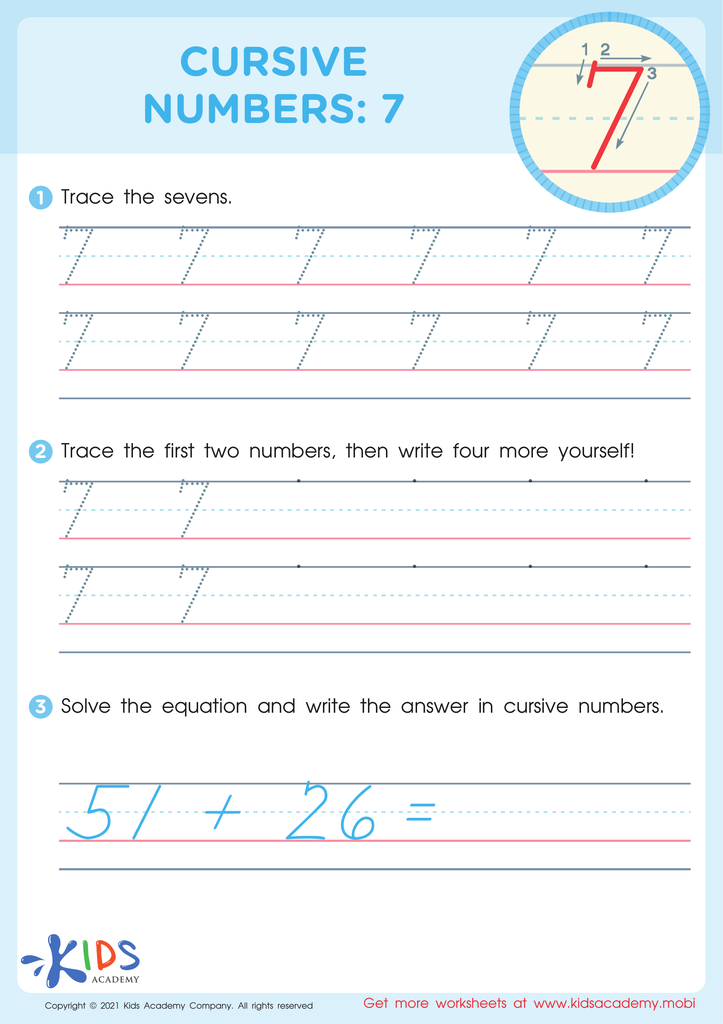
Cursive Numbers: 7 Worksheet
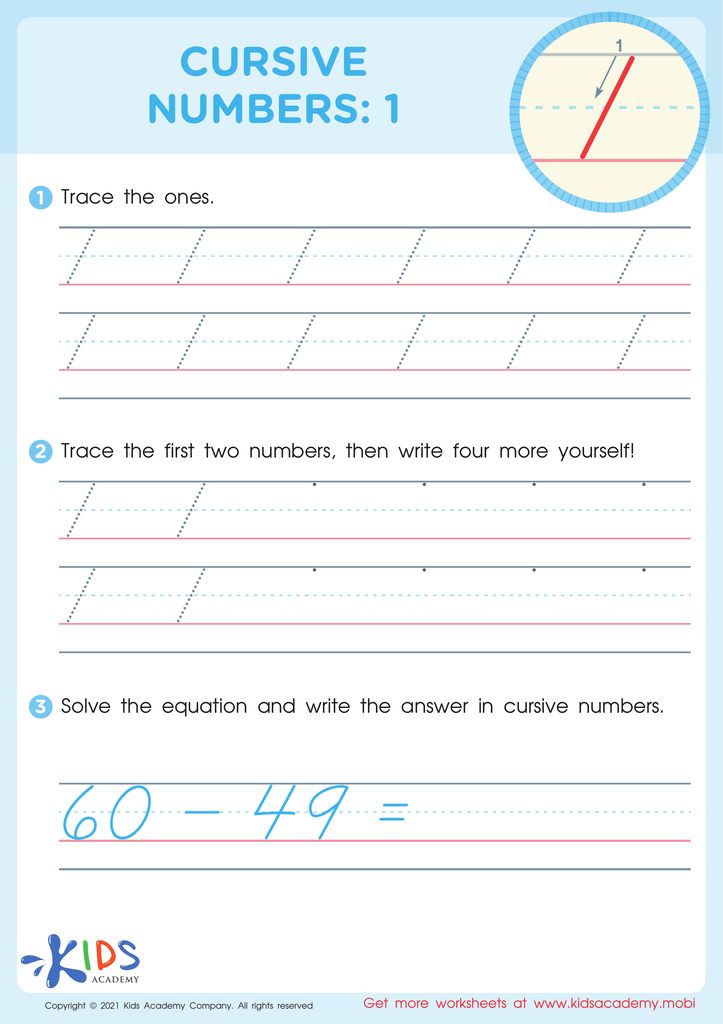
Cursive Numbers: 1 Worksheet
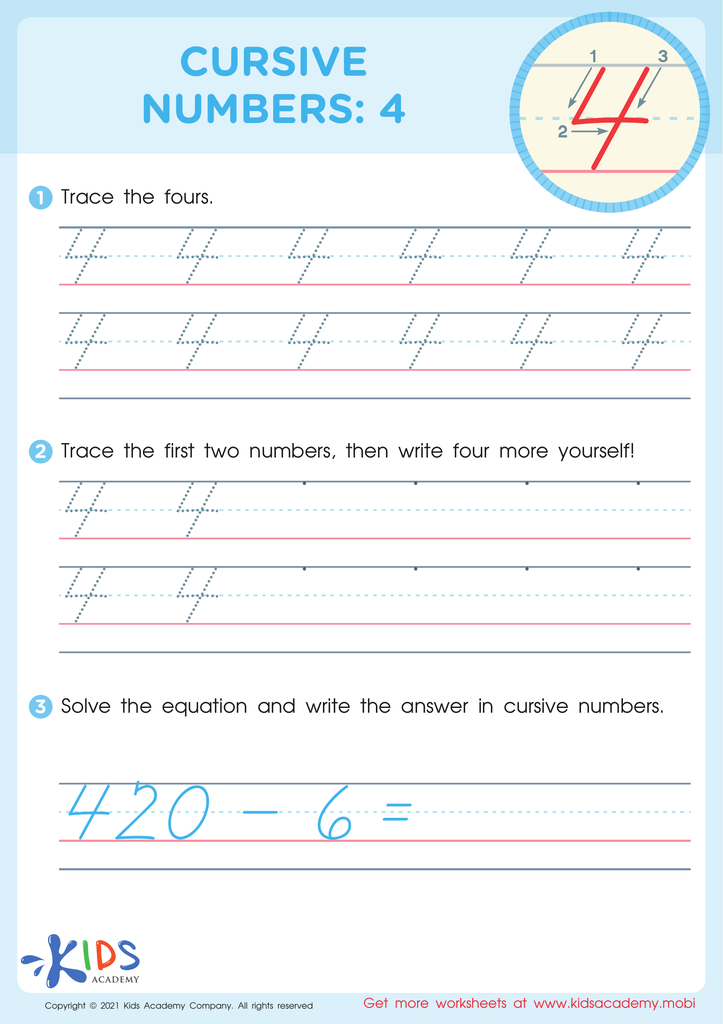
Cursive Numbers: 4 Worksheet








Fine motor skills development is crucial for 8-year-olds, as it significantly impacts their ability to engage effectively in both academic and everyday tasks. Parents and teachers should prioritize these skills because fine motor control aids in mathematics achievement, demonstrating how physical and cognitive development are intertwined. Math at this age often requires physical manipulation of objects, writing numbers, drawing shapes, and measuring items, all of which depend on precise hand movements.
For tasks such as writing equations, drawing geometric shapes with tools like compasses and rulers, or aligning columns for addition and subtraction, kids need steady hand-eye coordination and refined dexterity. These activities can be laborious for children with underdeveloped fine motor skills, leading to frustration and hindering their enjoyment and progress in math. Moreover, fine motor skills also help build neural connections in the brain that assist with problem-solving and other cognitive functions.
Beyond academics, fine motor skills are essential for daily life activities such as using utensils, buttoning shirts, or tying shoelaces. Early mastery of these skills increases independence and confidence. By focusing on fine motor activities through tasks that intertwine with math—like cutting shapes, threading beads, or assembling puzzles—parents and teachers set children up for both academic success and practical self-sufficiency.








