Enhance your 8-year-old's math skills with our engaging Fraction Addition Worksheets! Designed specifically for young learners, these worksheets simplify complex concepts, making it easy for kids to grasp the fundamentals of adding fractions. Featuring colorful visuals and step-by-step instructions, our activities promote hands-on learning and boost confidence in math. Whether your child is at home or in the classroom, these worksheets offer a fun and effective way to practice and reinforce fraction addition skills. Encourage your child’s mathematical journey today with our curated collection of worksheets that make learning fractions a delightful adventure! Perfect for supplementing any math curriculum!

Check out this FREE Trial Lesson on Math for age 8!

Sorting Objects into 3 Categories

Favorites
With answer key
Interactive
  • 8
  • Fraction Addition
  • Math
Fractions: Assessment 1 Worksheet

Fractions: Assessment 1 Worksheet

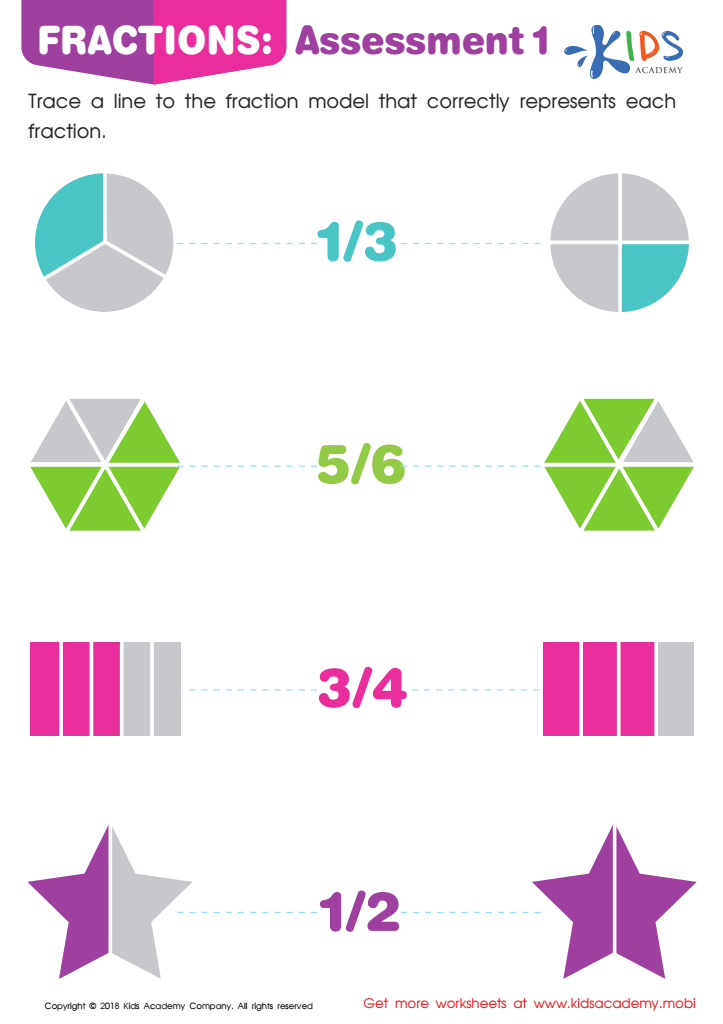
Master fractions easily with this worksheet! It has four sets of fraction models and fraction equations with two models each. Guide your kids to trace a line to the correct fraction model for each equation.
Fractions: Assessment 1 Worksheet
Worksheet
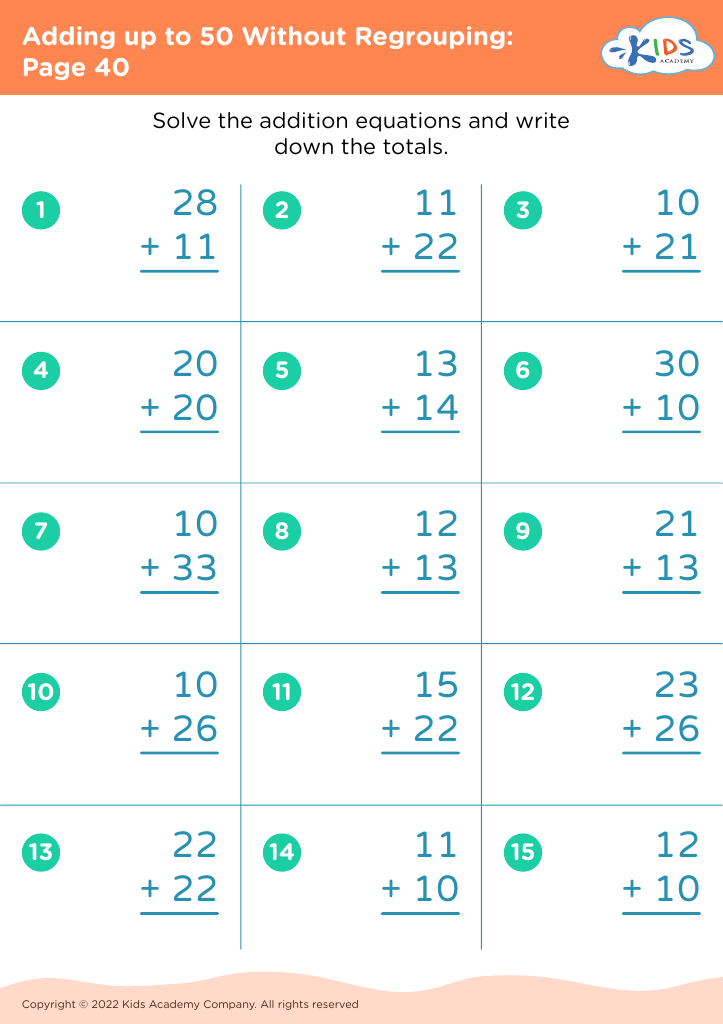
Adding up to 50 Without Regrouping: Page 40
Worksheet
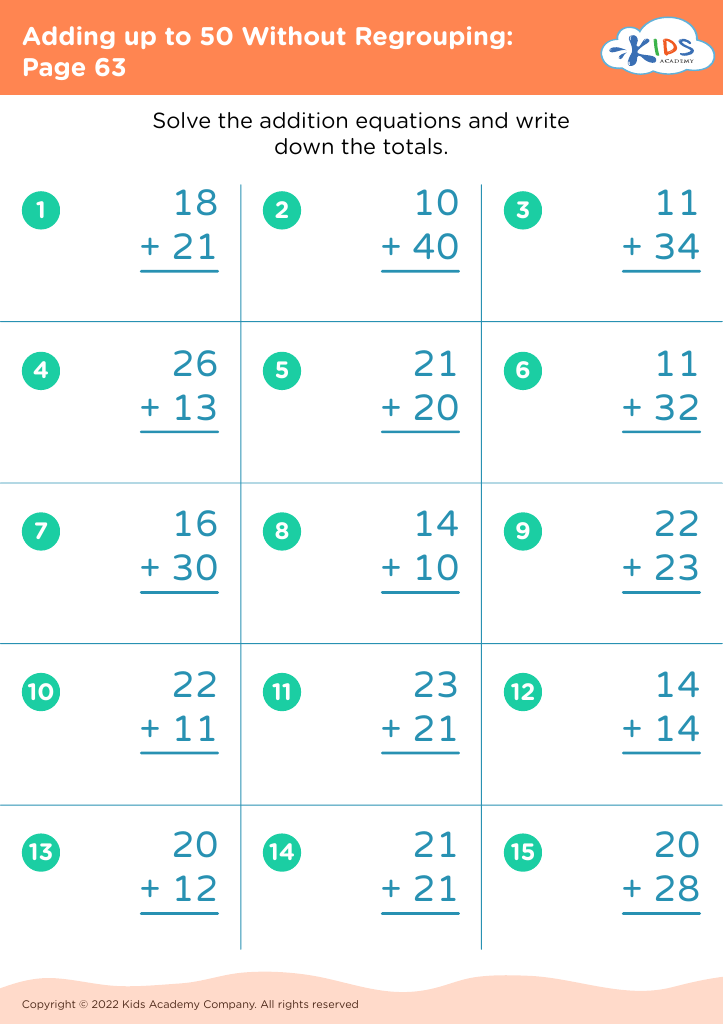
Adding up to 50 Without Regrouping: Page 63
Worksheet
Fractions: Assessment 3 Worksheet
Fractions: Assessment 3 Worksheet
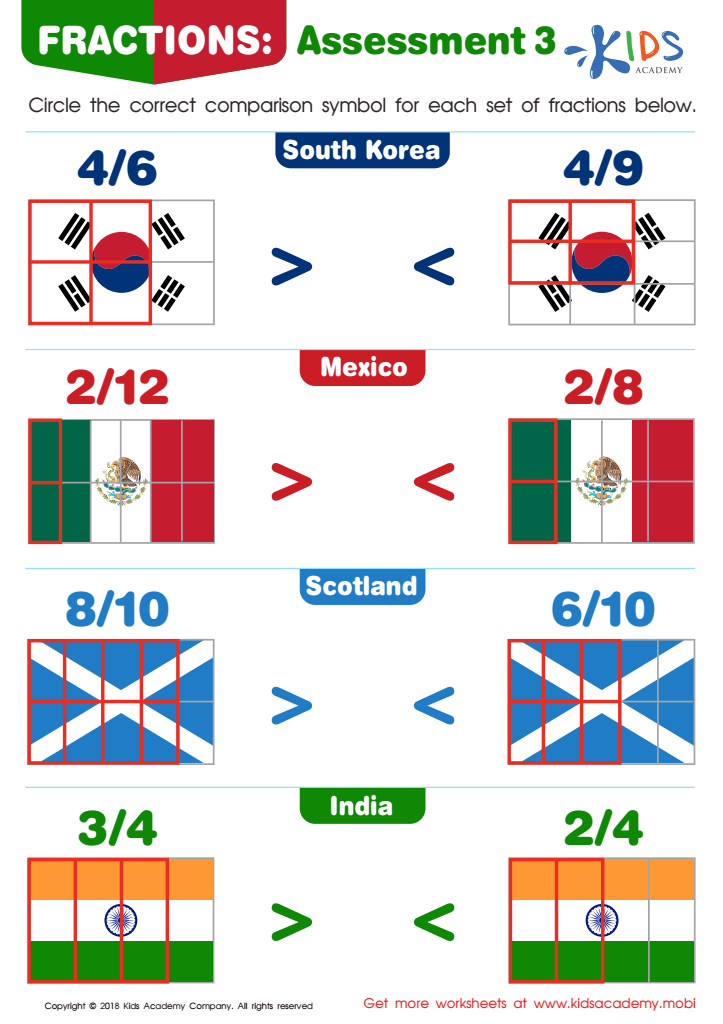
This worksheet helps teach kids about fractions and introduces them to countries and their flags. Have them read the country names and point to the flags. Then help them assess the fractions, and ask them to circle the symbol that shows their values.
Fractions: Assessment 3 Worksheet
Worksheet
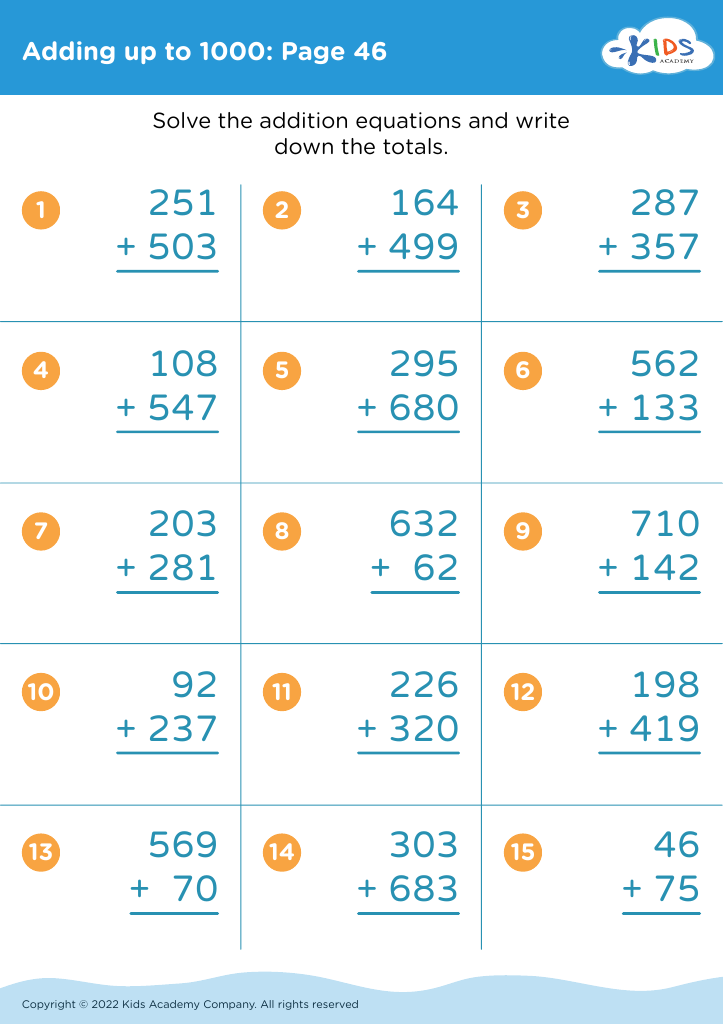
Adding up to 1000: Page 46

Adding up to 1000: Page 46

Adding up to 1000: Page 46
Worksheet
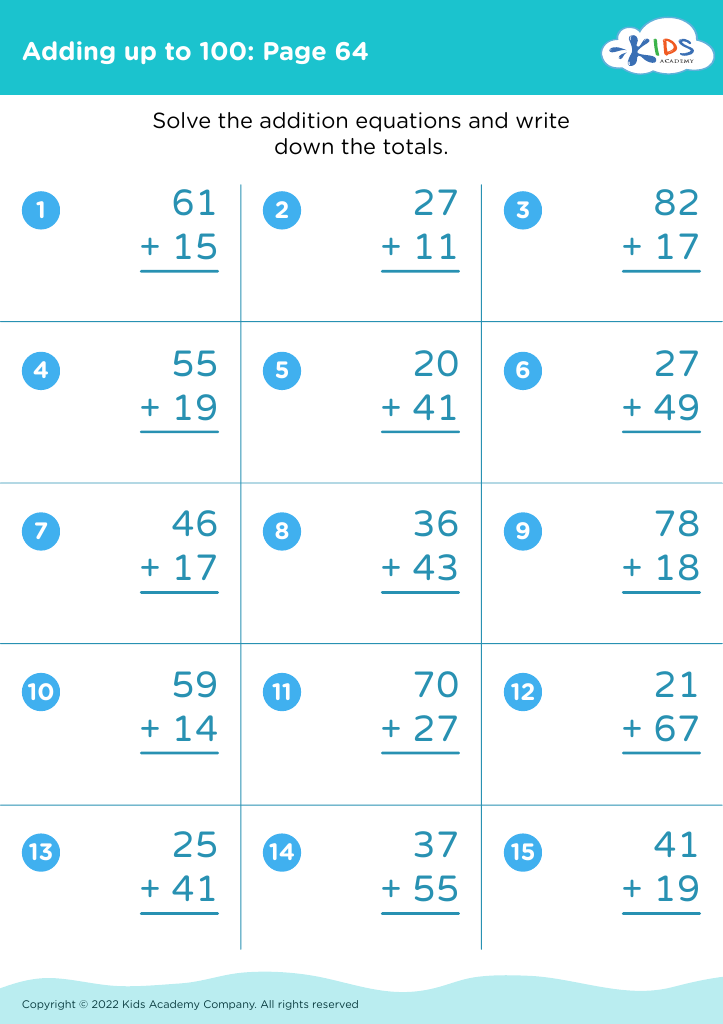
Adding up to 100: Page 64

Adding up to 100: Page 64

Adding up to 100: Page 64
Worksheet
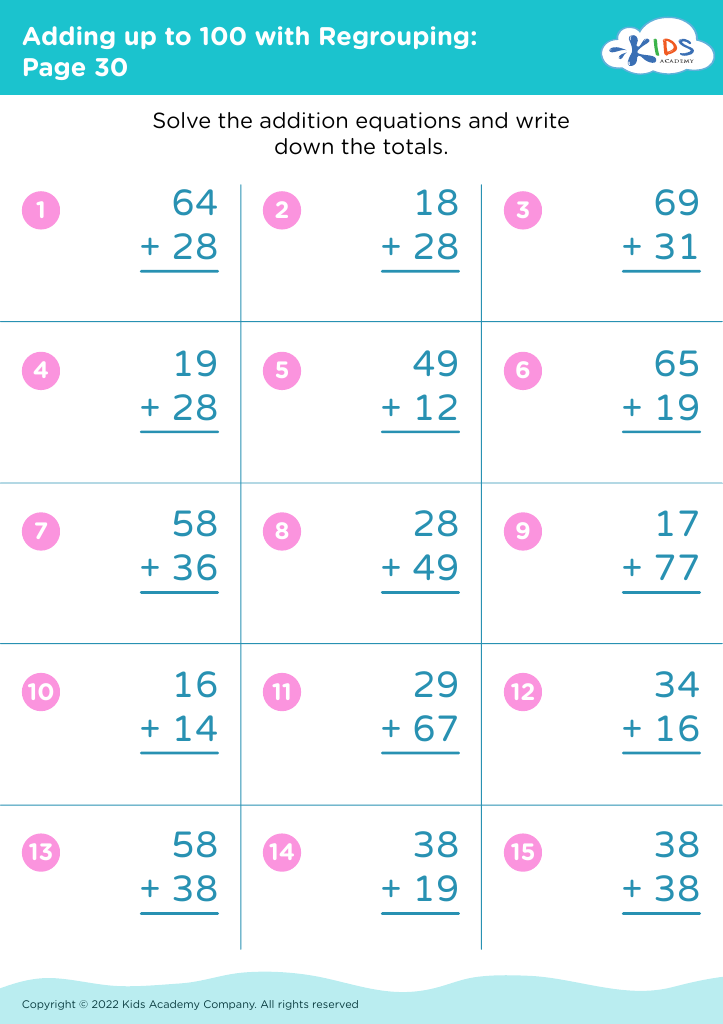
Adding up to 100 with Regrouping: Page 30
Worksheet
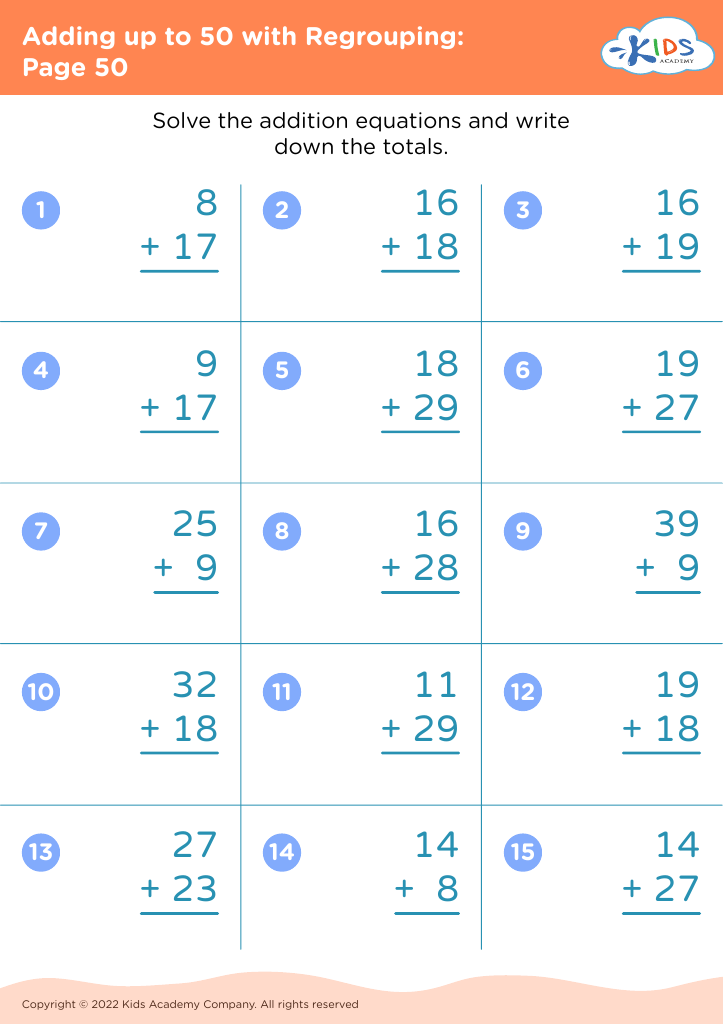
Adding up to 50 with Regrouping: Page 50
Worksheet
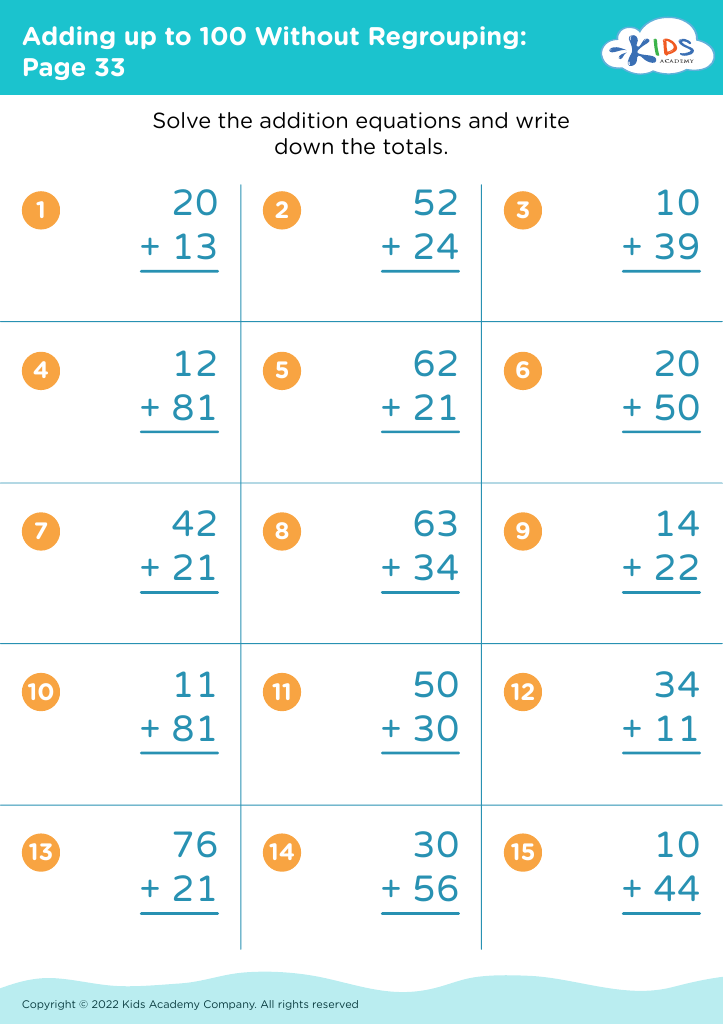
Adding up to 100 Without Regrouping: Page 33
Worksheet
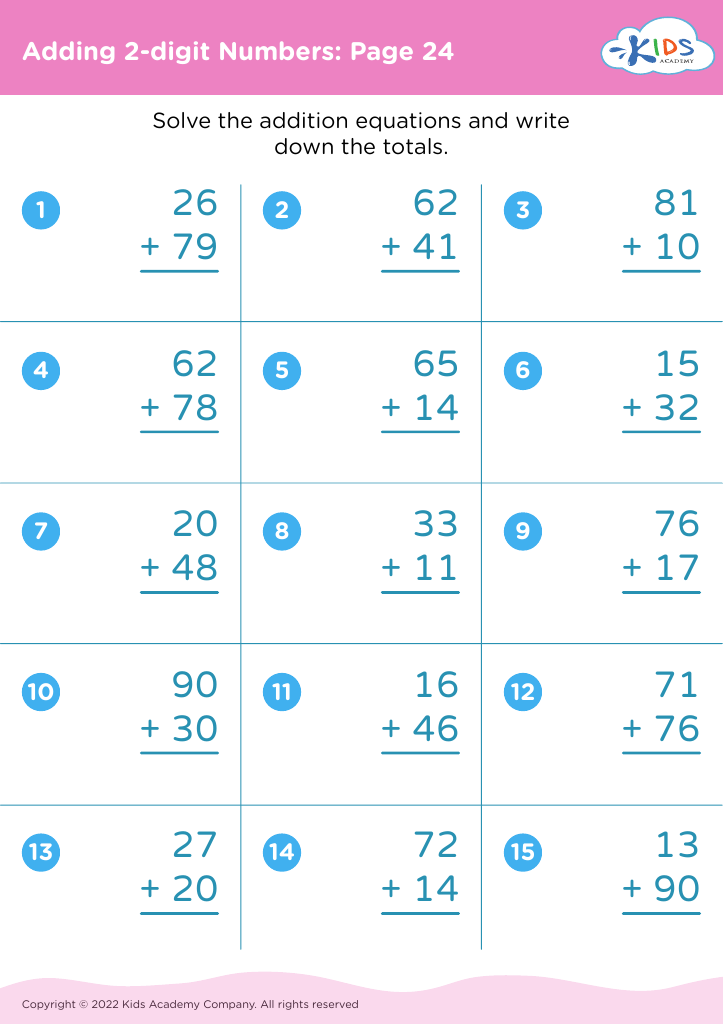
Adding 2-digit Numbers: Page 24

Adding 2-digit Numbers: Page 24

Adding 2-digit Numbers: Page 24
Worksheet
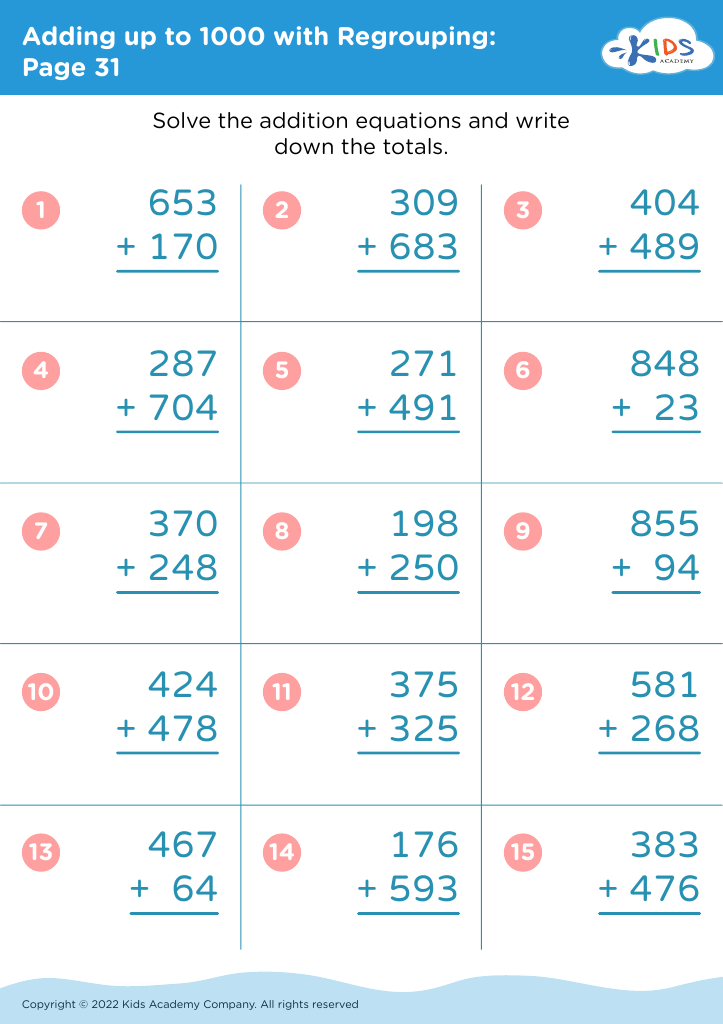
Adding up to 1000 with Regrouping: Page 31
Worksheet
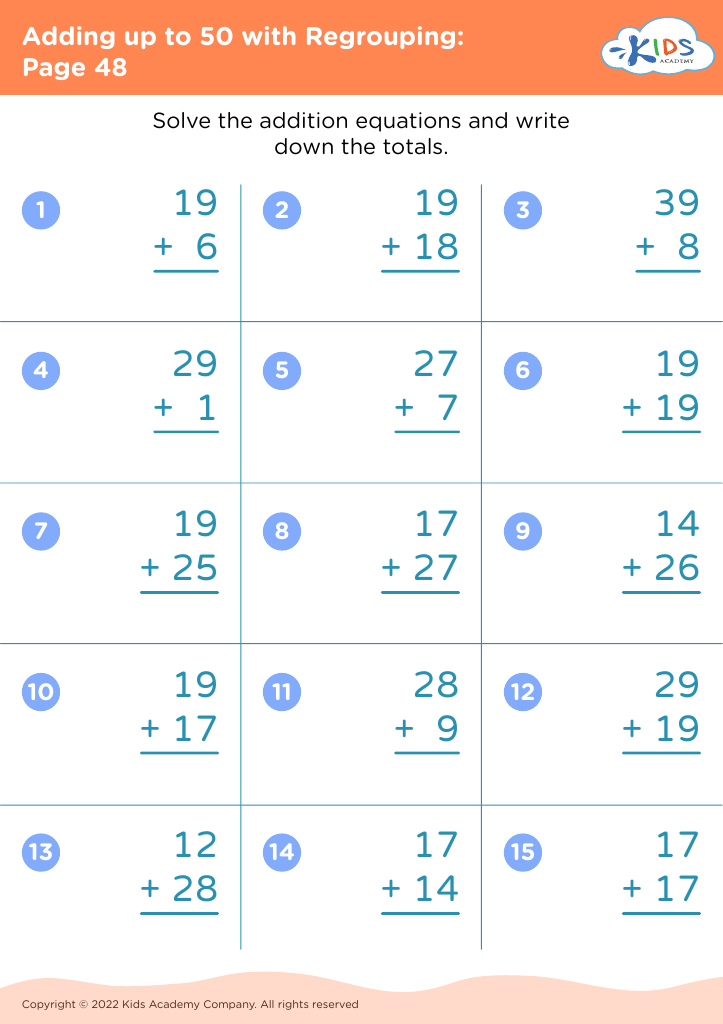
Adding up to 50 with Regrouping: Page 48
Worksheet
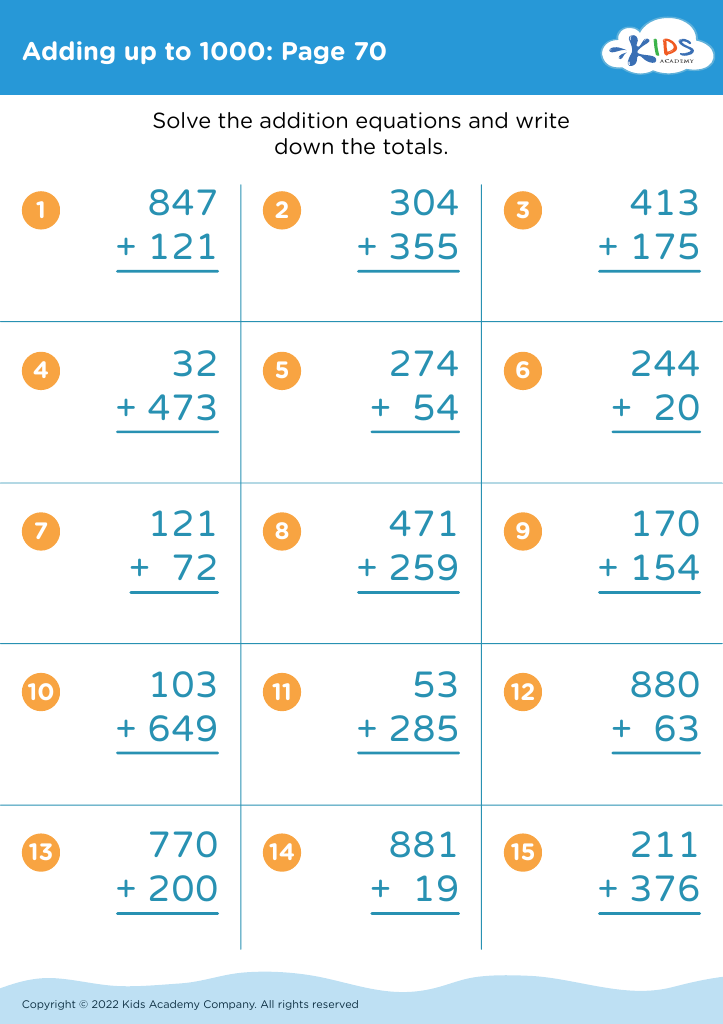
Adding up to 1000: Page 70

Adding up to 1000: Page 70

Adding up to 1000: Page 70
Worksheet
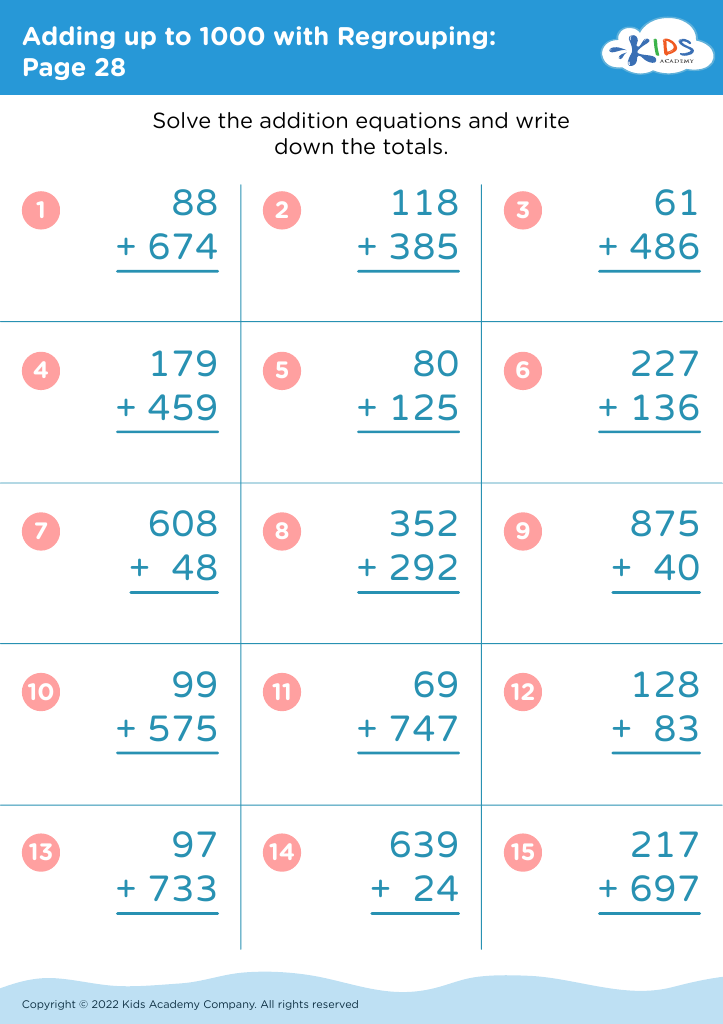
Adding up to 1000 with Regrouping: Page 28
Worksheet
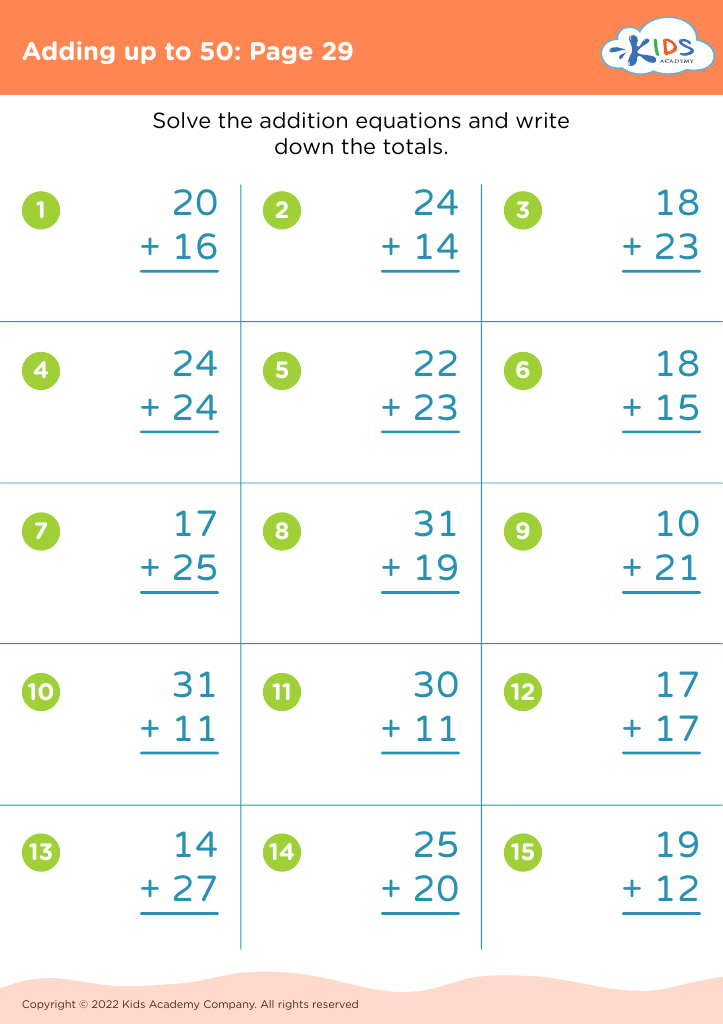
Adding up to 50: Page 29

Adding up to 50: Page 29

Adding up to 50: Page 29
Worksheet
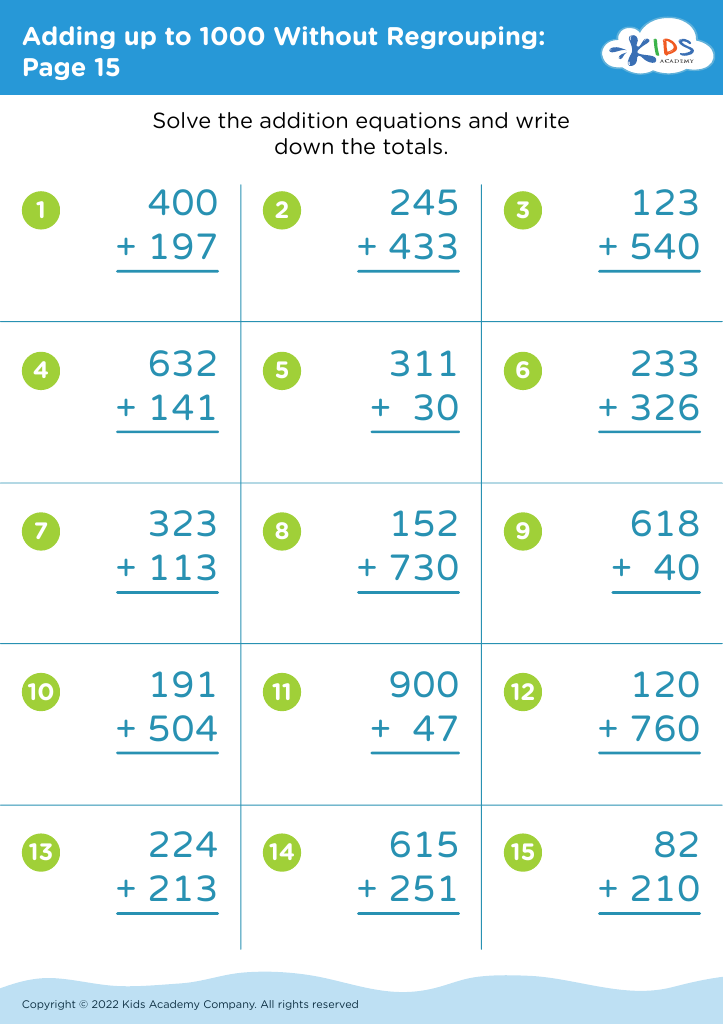
Adding up to 1000 Without Regrouping: Page 15
Worksheet


Fraction addition is a critical skill for 8-year-olds, as it forms the foundation for more advanced mathematical concepts. At this age, children are beginning to develop their understanding of fractions, which are essential for grasping concepts of proportion, ratios, and ultimately, understanding decimals and percentages. Mastery of fraction addition helps children build confidence in their math skills, promoting a positive attitude towards learning.

Parents and teachers should place importance on this topic because fraction addition is frequently encountered in real-life situations, such as cooking, budgeting, and sharing. Understanding how to add fractions equips children with practical skills they will use throughout their lives.

Additionally, teaching fraction addition fosters critical thinking and problem-solving skills. It encourages students to think logically about how to combine parts to make a whole, nurturing important cognitive processes. With a strong grasp of this fundamental concept, students become better prepared for collaborative and complex problem-solving tasks in the future.

Moreover, effective teaching of fractions can support overall academic achievement. Students who struggle with fractions may face difficulties in higher-level mathematical concepts, limiting their educational opportunities. By investing time in teaching and reinforcing these skills early on, both parents and teachers set children up for long-term success.