Filters

7 filtered results

Clear all filters
Favorites
With answer key
Interactive

7 filtered results

Difficulty Level

Grade


Welcome to our "Historical Knowledge Math Worksheets for 8-Year-Olds" page! Here, we blend math skills with fascinating historical insights to create an engaging learning experience. Designed for children typically in the third grade, these worksheets combine arithmetic tasks with historical facts, helping young learners grow both mathematically and intellectually. Students will dive into fun math activities while exploring various influential events, figures, and cultures from history. Perfect for enhancing critical thinking, these resources make learning enjoyable, encourage curiosity, and support educational development. Discover the joy of history and math today with our carefully crafted worksheets!

Check out this FREE Trial Lesson on Math for age 8!

Introduction to Arrays

Favorites
With answer key
Interactive
  • 8
  • Historical Knowledge
  • Math
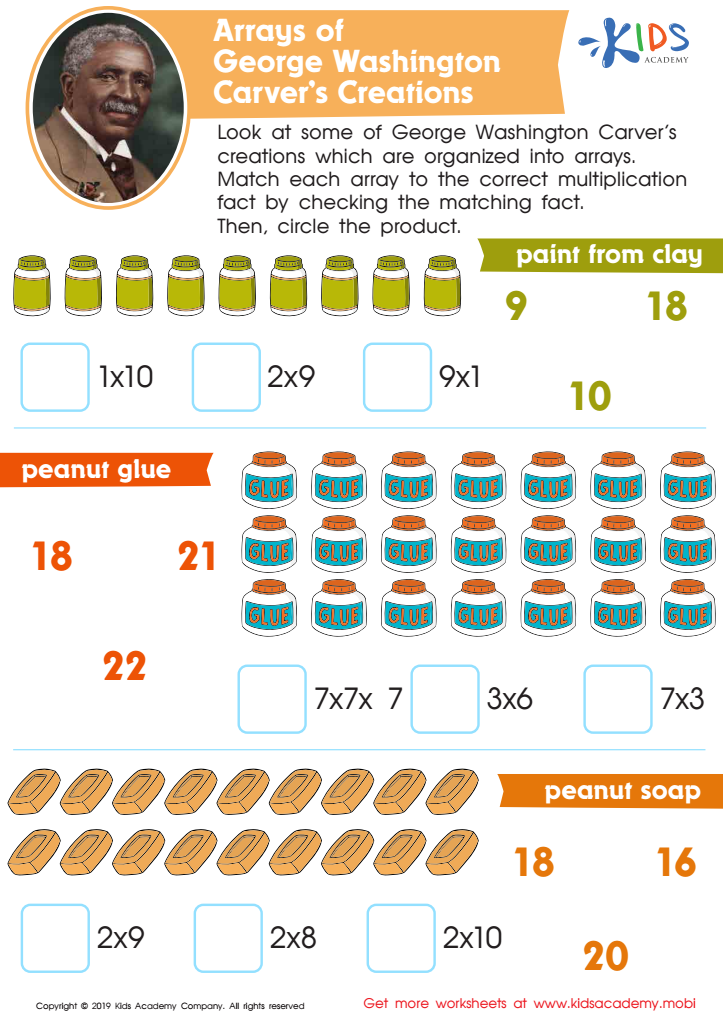
Arrays of George Washington Carver’s Creations Worksheet

Arrays of George Washington Carver’s Creations Worksheet

Remind your child of what George Washington Carver created. Can they tell you? This worksheet has arrays with his creations. Match the array to the multiplication fact and help your child to circle the product.
Arrays of George Washington Carver’s Creations Worksheet
Worksheet
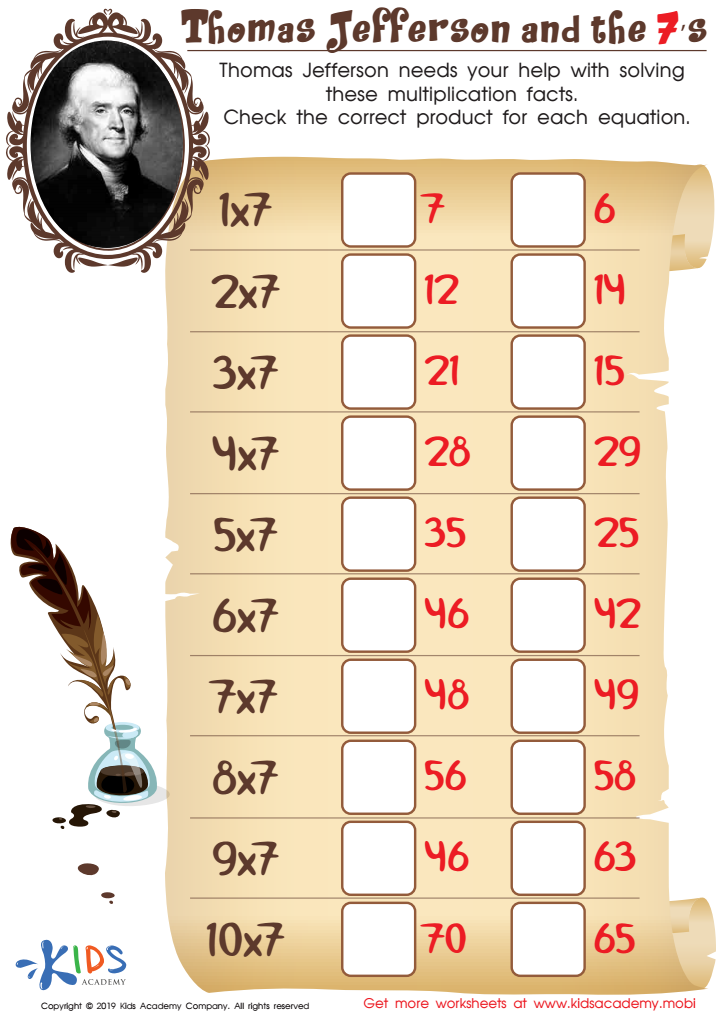
Thomas Jefferson and the 7’s Worksheet

Thomas Jefferson and the 7’s Worksheet

Thomas Jefferson championed education and wants kids to know their times tables. Help your child with this worksheet focusing on 7's. Check the box for the correct answer for each multiplication problem. Make sure your child gets the facts right!
Thomas Jefferson and the 7’s Worksheet
Worksheet
Thomas Edison’s Invention Arrays Worksheet

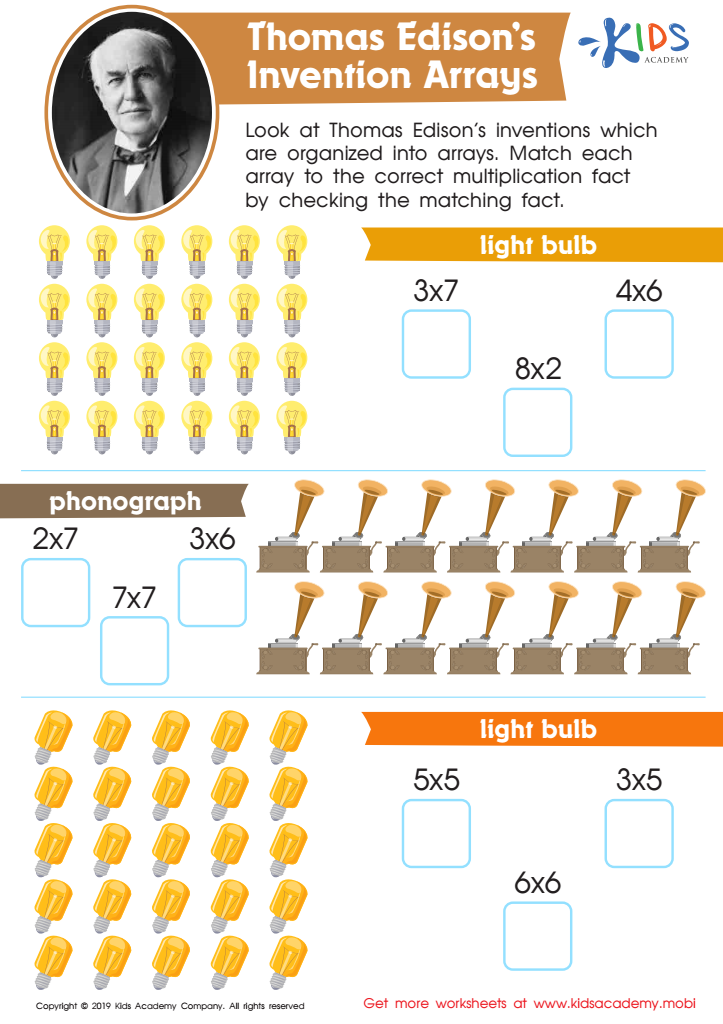
Thomas Edison’s Invention Arrays Worksheet

Test your students' knowledge on history by asking them what Thomas Edison invented. If they get the right answer, provide more information on other inventors. Check out this printout of Edison's light bulb inventions laid out in arrays. Get them to match each array to the correct multiplication fact.
Thomas Edison’s Invention Arrays Worksheet
Worksheet
Arctic Explorers Worksheet
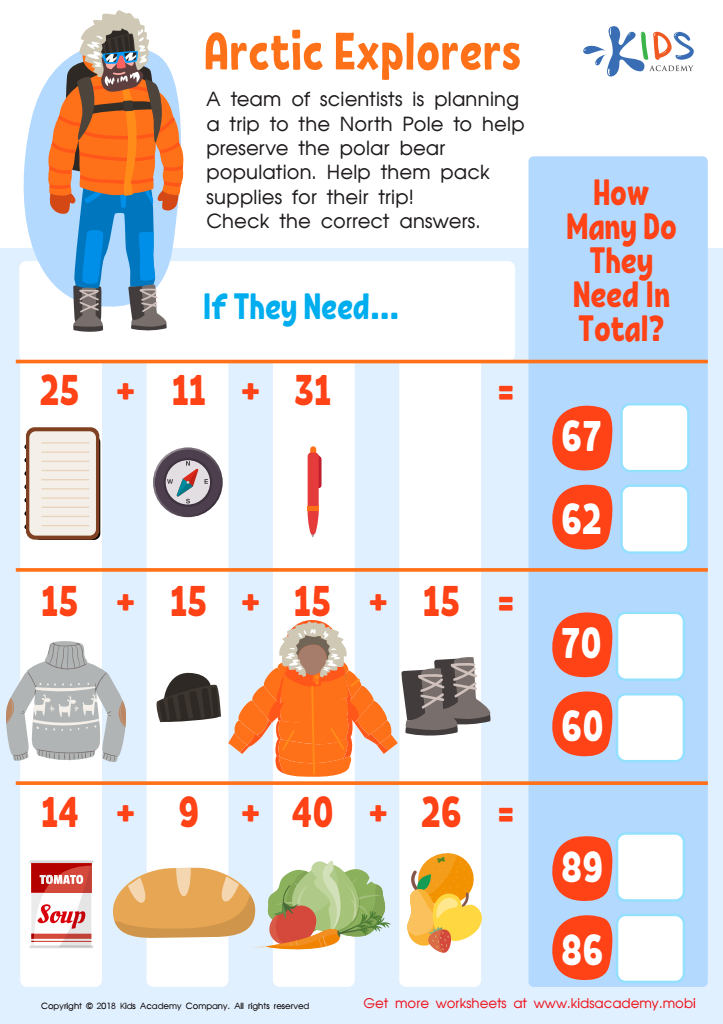
Arctic Explorers Worksheet

Help your child pack supplies for a team of scientists' trip to the North Pole! Before beginning, explain how efforts are needed to protect endangered animals like polar bears. Encourage them to check the correct clothing needed for the extremely cold region. For example, warm and protective clothing is essential.
Arctic Explorers Worksheet
Worksheet
Independence Day Arrays: Rows and Columns Worksheet

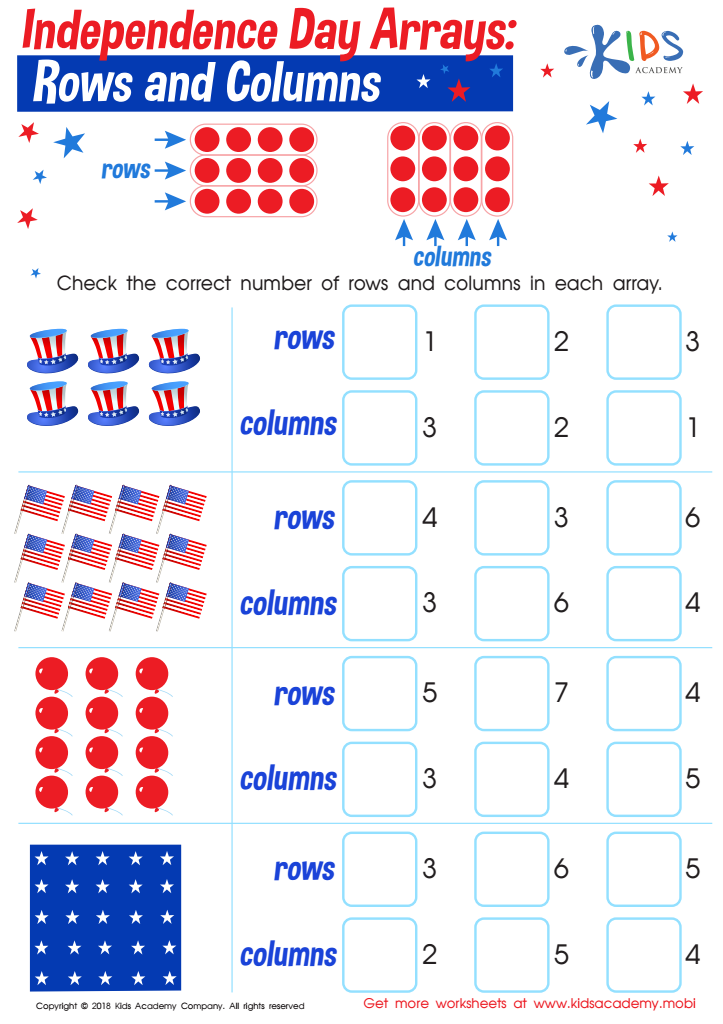
Independence Day Arrays: Rows and Columns Worksheet

Does your child know when Independence Day is? They might love the family picnics and fireworks, or they may not understand the significance of the holiday. After this worksheet, they'll comprehend it better. Help them look at the images and count the number of rows and columns in each array.
Independence Day Arrays: Rows and Columns Worksheet
Worksheet
Ben Franklin’s Invention Arrays Worksheet

Ben Franklin’s Invention Arrays Worksheet

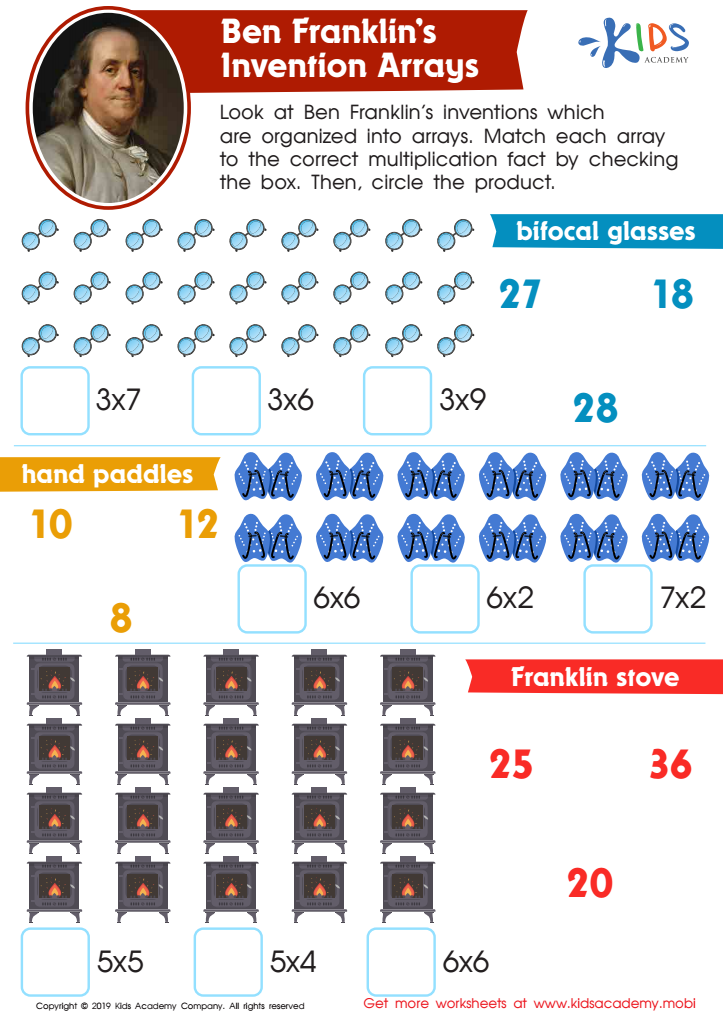
Have your child guess some of the inventors of the popular items we use today. For instance, the light bulb was invented by Thomas Edison. Look at Ben Franklin's inventions and help your kids match the arrays to the correct multiplication fact. Check the box and circle the product.
Ben Franklin’s Invention Arrays Worksheet
Worksheet
Archeology Word Problems Worksheet


Archeology Word Problems Worksheet

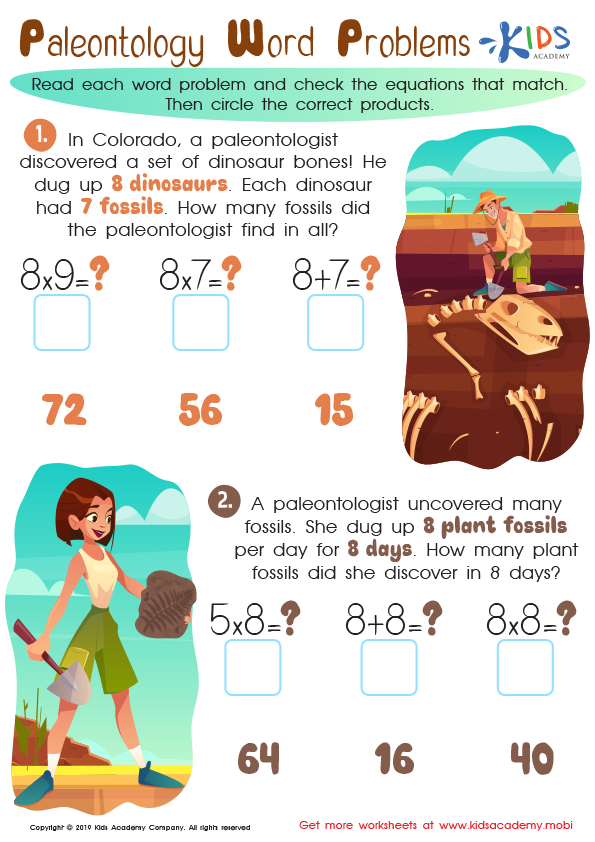
Encourage your child to explore their career options! Show them an archeologist's job with this worksheet - featuring a picture of a dinosaur bone discovery. Read the accompanying text, then solve the word problems. Help your kids circle the correct answers to better understand this profession.
Archeology Word Problems Worksheet

Worksheet


Parents and teachers should care about Historical Knowledge Math for 8-year-olds because it enhances a child's learning experience by contextualizing mathematical concepts within history. This approach helps children connect math to real-world problems and historical figures, fostering a deeper understanding of its relevance. For instance, learning about ancient civilizations that used basic geometry for building structures can make concepts like shapes and measurements more engaging.

Incorporating history also enriches a child's cultural awareness and improves critical thinking skills, as they learn to analyze the motivations and challenges that past mathematicians faced. Understanding the evolution of mathematical ideas encourages creativity and persistence — important life skills.

Moreover, studying mathematical history helps combat stereotypes about who can excel in math; children see diverse figures as contributors to these fields, thereby broadening their own potential. Building a positive relationship with math at an early age empowers children to approach it with confidence. In fostering a child’s love for learning, incorporating historical knowledge makes math not just a subject, but a compelling narrative woven into the fabric of society. By doing so, parents and teachers cultivate informed, curious, and engaged learners who appreciate the world around them.