
Understanding Sequences Math Worksheets for 8-Year-Olds
14 filtered results
Difficulty Level
Grade
Age
-
From - To
Subject
Activity
Standards
Our "Understanding Sequences Math Worksheets for 8-Year-Olds" offer engaging exercises to help children master the concept of sequences in a fun and interactive way. These expertly designed worksheets cover everything from basic numerical sequences to more complex patterns, building essential skills in logic and math. Perfect for both classroom and home use, our materials encourage active learning and critical thinking. With a strong focus on age-appropriate content, these worksheets are tailored to keep 8-year-olds motivated and challenged, setting the foundation for future math success. Download now and watch your child's confidence in math soar!
Favorites
With answer key
Interactive
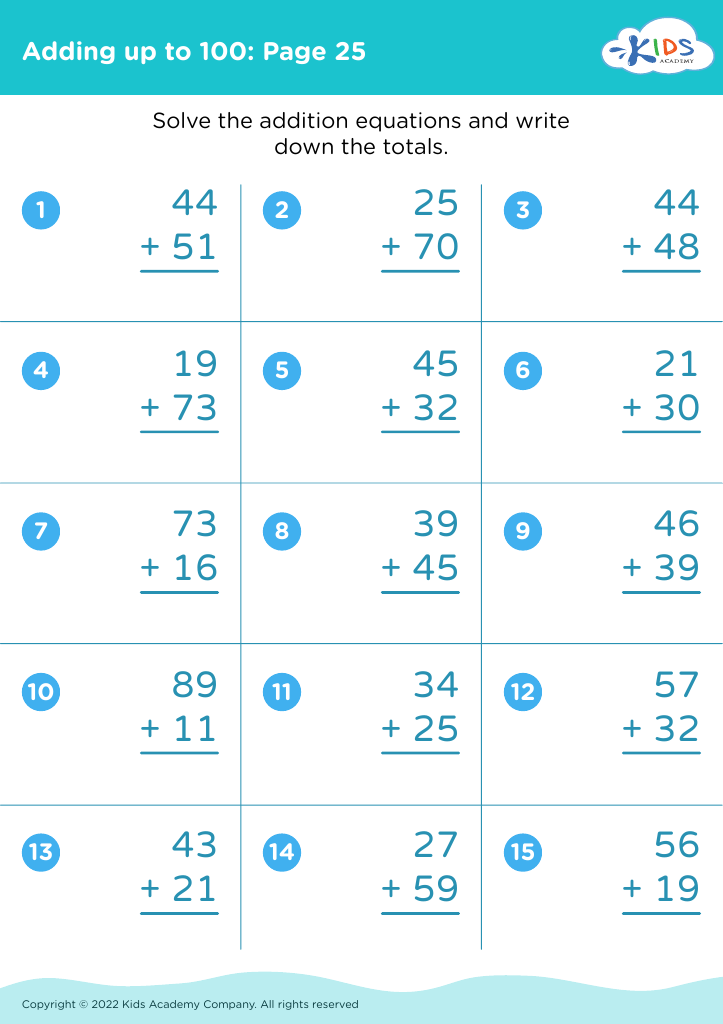
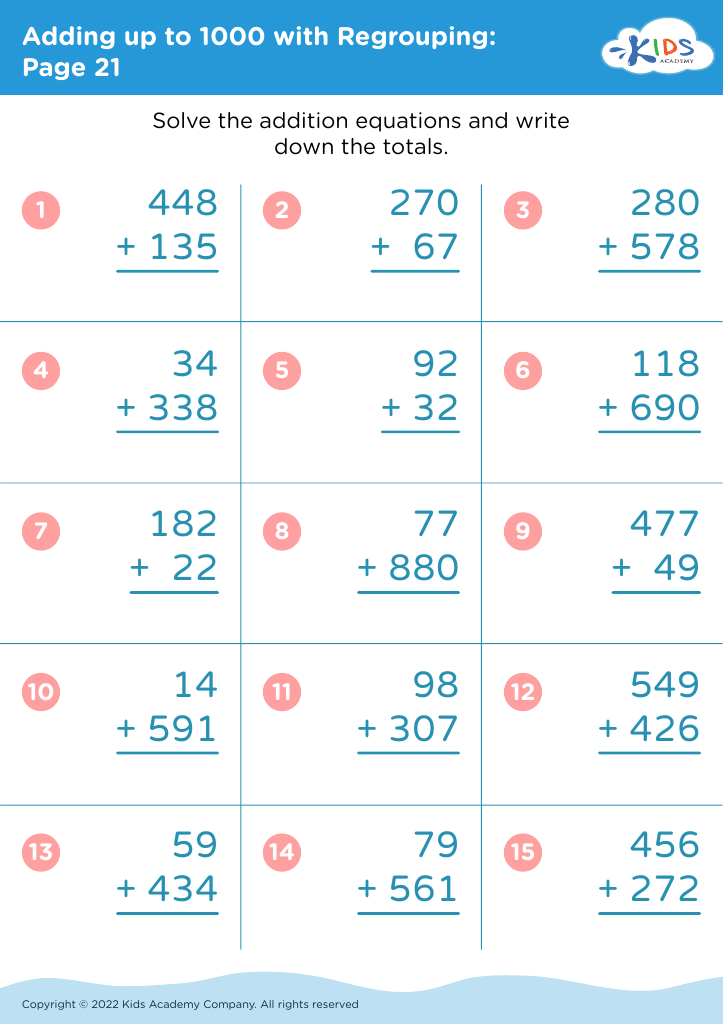
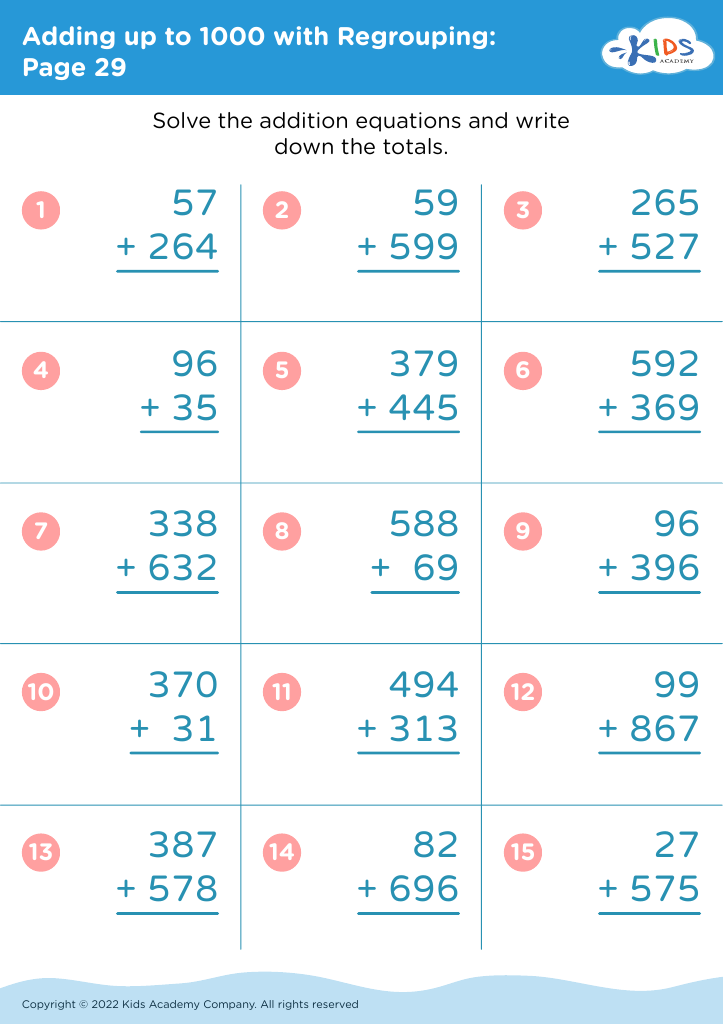
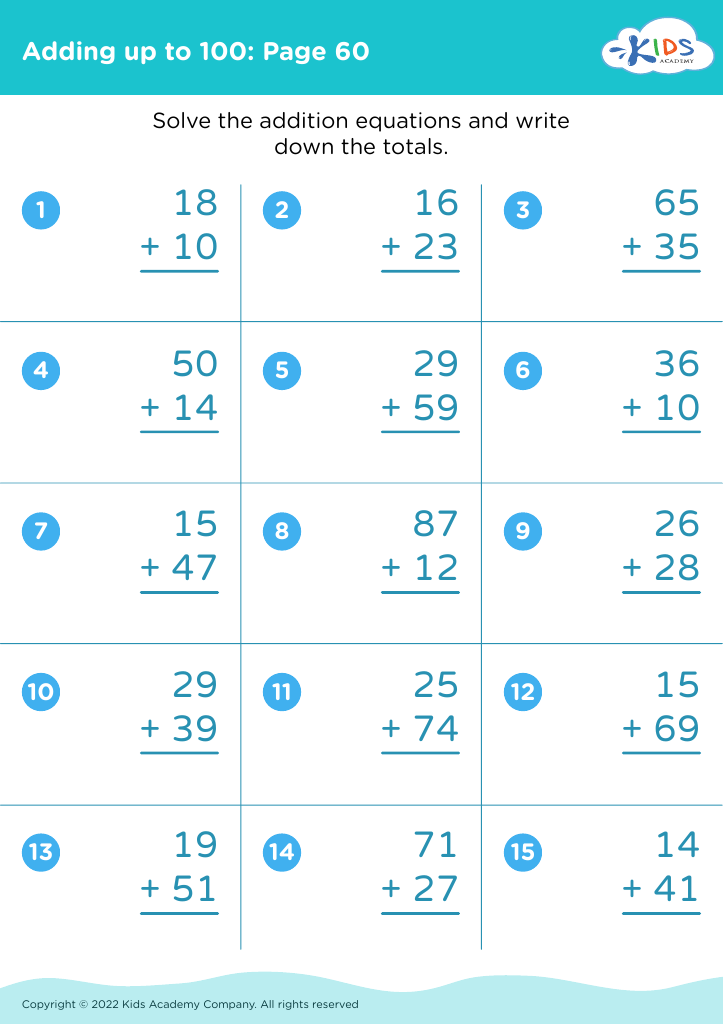
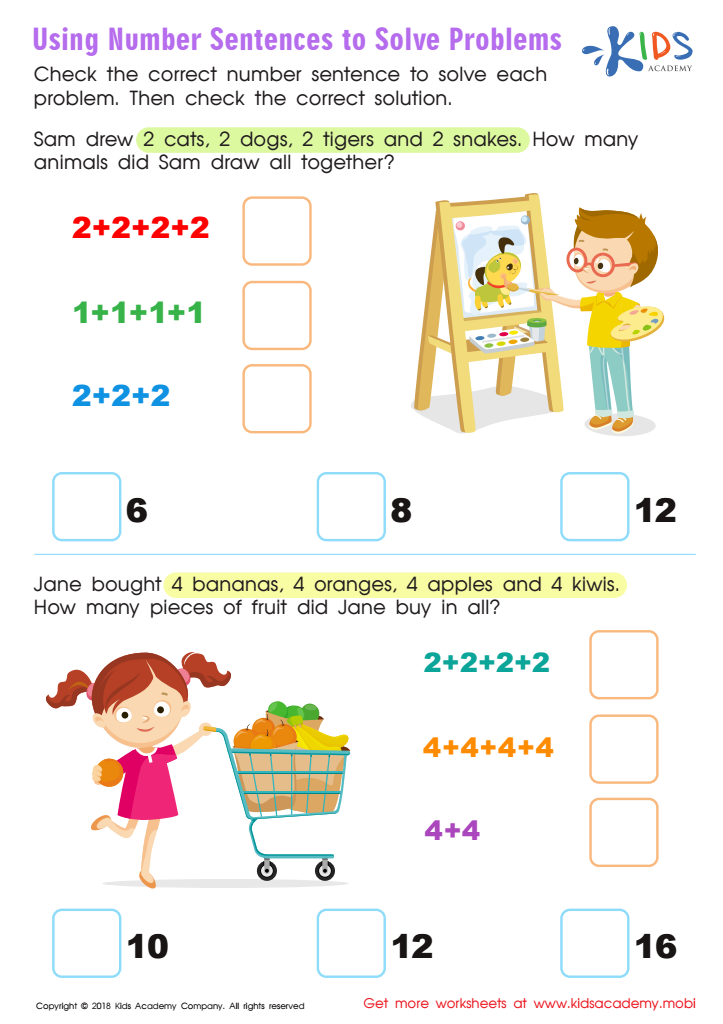
Using Number Sentences to Solve Problems Worksheet
Solving math problems requires an efficient strategy. Picture representation can help young mathematicians with basic addition problems, especially when it involves repeated addends. As they gain confidence, they'll be able to apply their number sentence solving abilities to more complex equations.
 Assign to My Students
Using Number Sentences to Solve Problems Worksheet
Worksheet
Join Kids Academy for Free
Who is primarily going to use this learning content?







Understanding sequences in math is fundamental for 8-year-olds because it builds a crucial foundation for higher-order mathematical thinking and problem-solving skills. When children grasp the concept of sequences, they learn to identify patterns, which is a key cognitive skill that enhances their ability to predict and analyze information. This skill extends beyond mathematics, influencing their competency in reading, science, and even everyday decision-making.
For parents and teachers, fostering an understanding of sequences helps children improve their logical reasoning abilities. Recognizing and creating sequences is integral for programming, understanding timelines, and managing tasks efficiently. It aids in understanding more complex mathematical concepts such as multiplication, division, algebra, and geometry in later stages of education.
Moreover, working with sequences can make math more engaging and enjoyable for young learners. Through activities like pattern games, number sequences, and puzzles, children view math not just as abstract numbers but as exciting and relevant experiences. It can boost their confidence as they master new concepts, ensuring they are better equipped for future academic challenges.
Therefore, prioritizing the understanding of sequences promotes a lifelong love for learning, develops critical thinking, and provides essential skills for academic success and everyday life. For these reasons, parents and teachers should invest time and effort into teaching sequences to 8-year-olds.








