Visual discrimination Math Worksheets for 8-Year-Olds
7 filtered results
-
From - To
Enhance your 8-year-old’s mathematical skills with our engaging visual discrimination math worksheets! Tailored to promote critical thinking and sharpen observation skills, these worksheets incorporate fun activities that challenge students to differentiate shapes, numbers, and patterns effectively. By honing their visual discrimination abilities, children will build a strong foundation for solving complex math problems. Perfect for both classroom and home use, our worksheets are designed to encourage independent learning and boost confidence in early math concepts. Discover a wealth of creative exercises that make learning both enjoyable and effective. Unlock your child's potential in math with our captivating visual discrimination worksheets today!
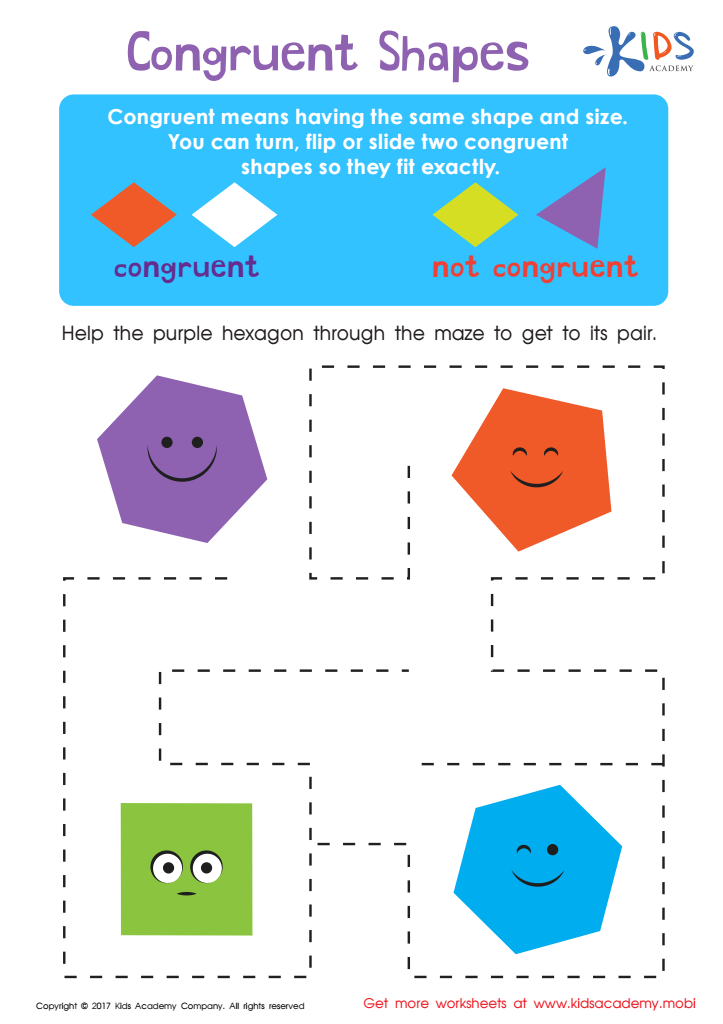
Congruent Shapes Worksheet
 Assign to My Students
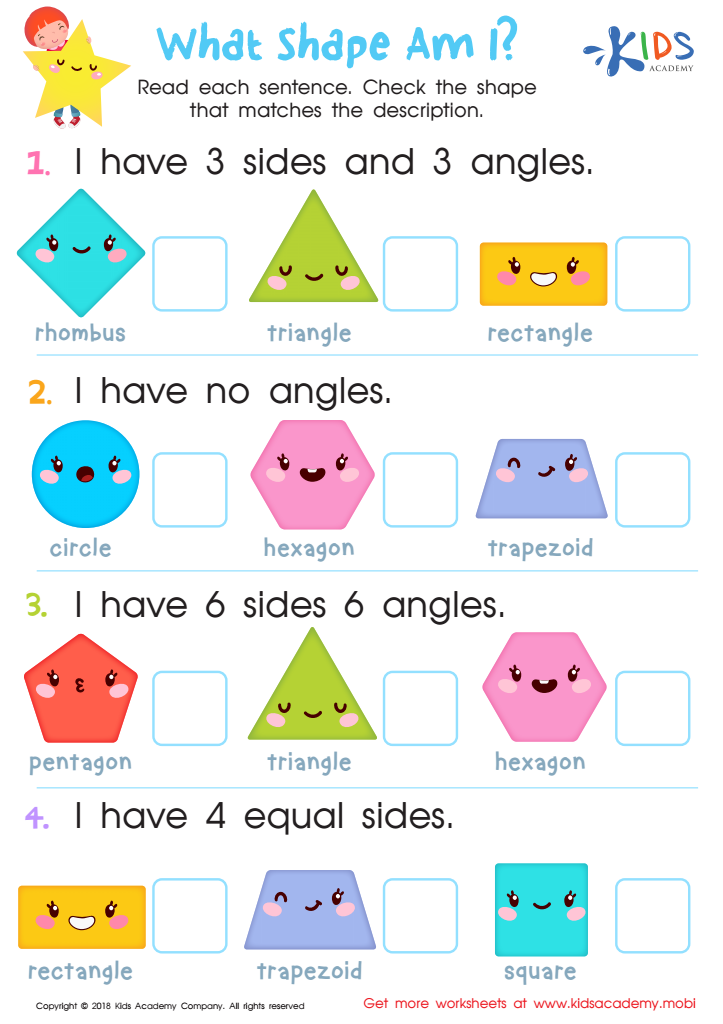
What Shape Am I? Worksheet
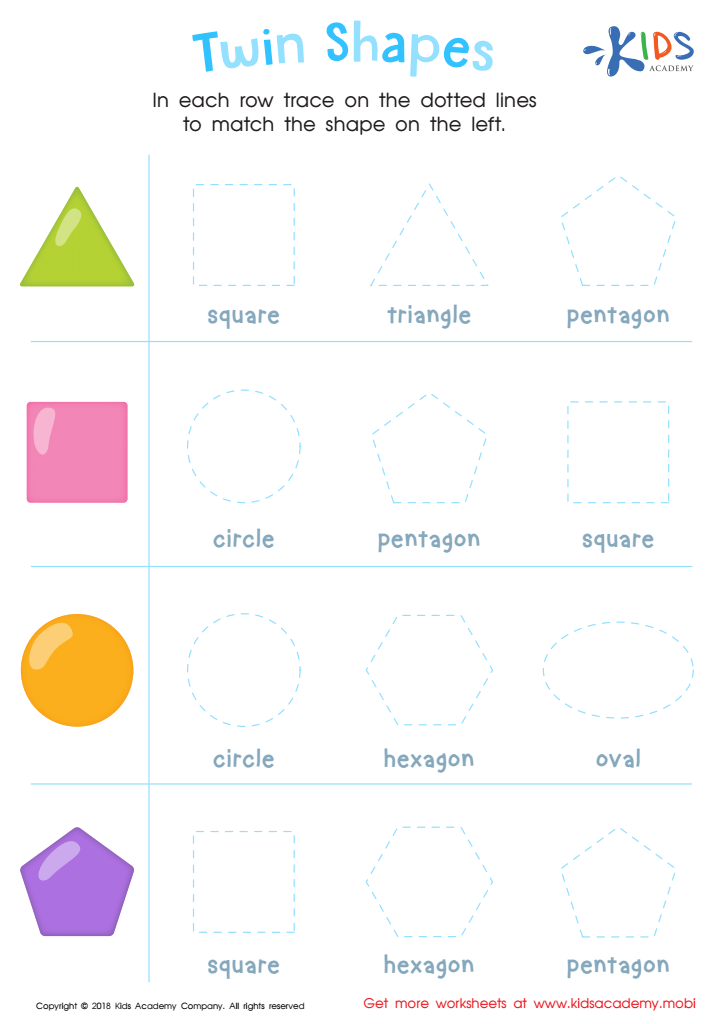
Twin Shapes Dot-to-Dot Worksheet




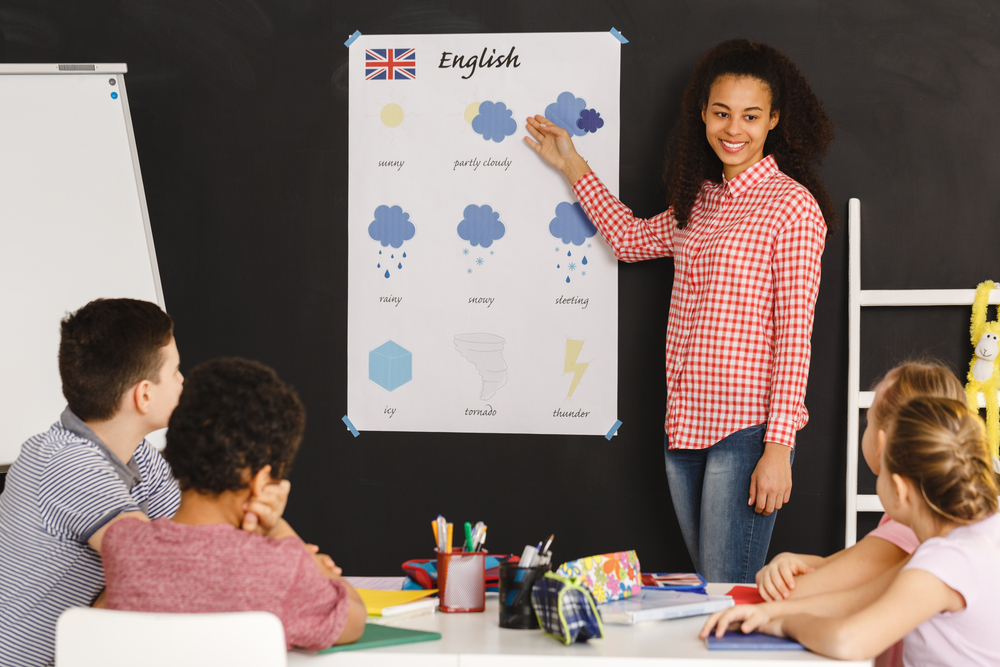


Visual discrimination is a critical foundational skill for 8-year-olds, especially in math. It involves the ability to differentiate between various shapes, sizes, and patterns, which enables students to recognize and interpret numerical information effectively. Developing this skill can greatly enhance a child's mathematical abilities, leading to improved problem-solving and critical thinking skills.
Teachers and parents should care about visual discrimination because it directly impacts students’ success in subjects like geometry, measurement, and data interpretation. For instance, recognizing the difference between similar geometric shapes is essential for understanding concepts such as area and perimeter. Moreover, strong visual discrimination skills can help children organize and interpret information graphically, assisting them in tackling word problems and visual representations of data.
Additionally, children with improved visual discrimination are often more confident in their math abilities, leading to a positive attitude towards learning. Encouraging activities that promote this skill, such as puzzles, matching games, or pattern identification, provides a fun and engaging way for parents and teachers to support cognitive development. Ultimately, fostering visual discrimination in math not only enhances academic performance but also empowers children to become motivated and independent learners.








