Visual fraction representation Math Worksheets for 8-Year-Olds
3 filtered results
-
From - To
Discover engaging visual fraction representation math worksheets designed for 8-year-olds! Our resources help young learners understand fractions through captivating visuals and interactive activities. These worksheets make complex concepts approachable by breaking down fractions into easy-to-understand illustrations, including pie charts and fraction bars. Perfect for reinforcing classroom learning, these materials encourage kids to identify, compare, and manipulate fractions with confidence. With a blend of fun and educational content, our visual fraction worksheets enhance critical thinking and problem-solving skills. Ideal for homeschooling or supplementary practice, these resources will inspire a love for math while building a strong foundational knowledge of fractions!
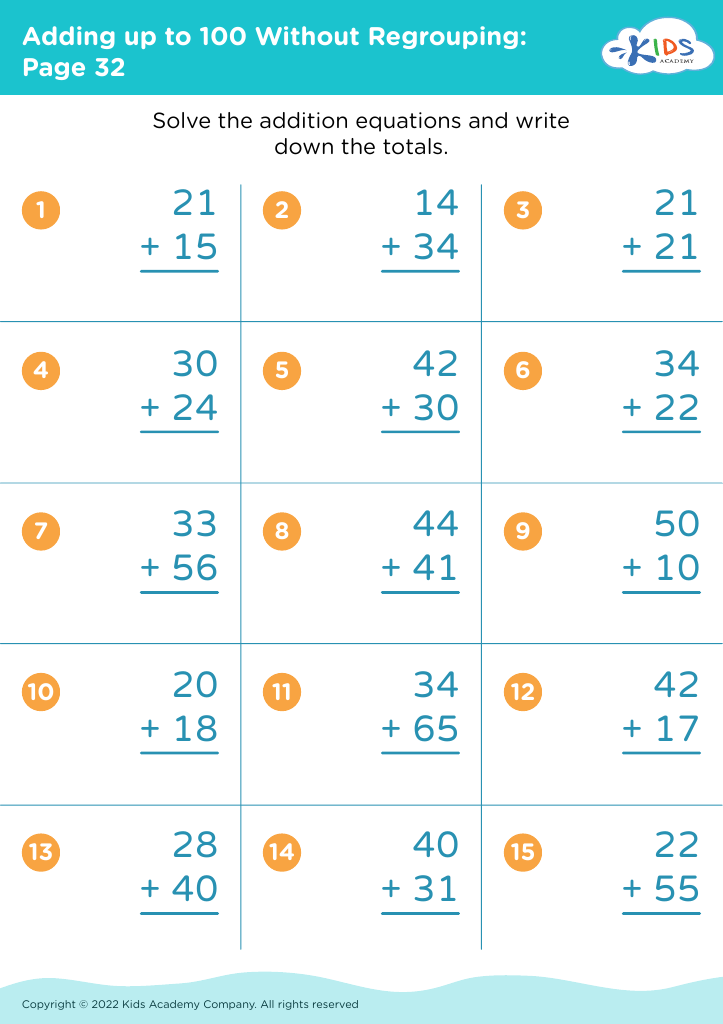
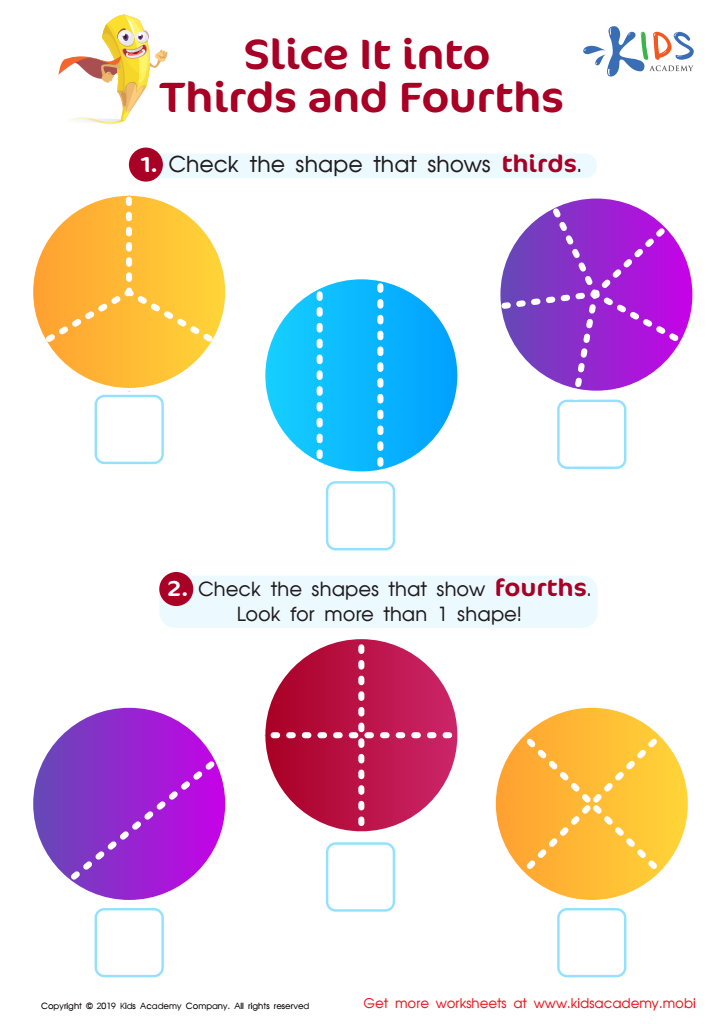
Slice in Thirds Fourths Worksheet
 Assign to My Students
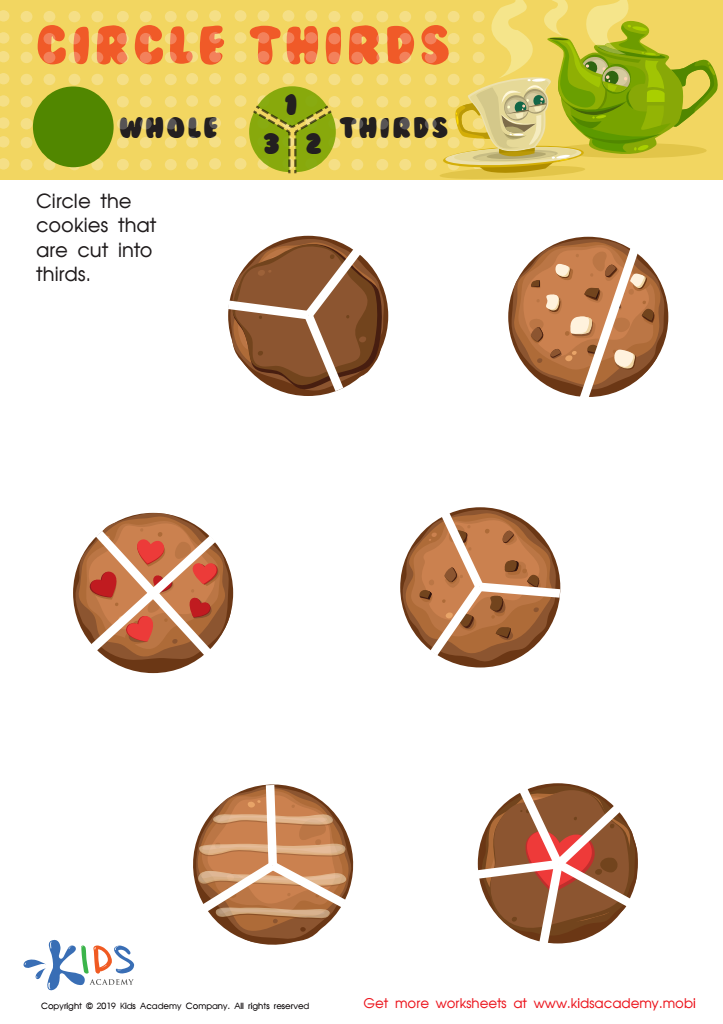
Circle Thirds Worksheet






Visual fraction representation is crucial for 8-year-olds as it lays the foundational understanding of fractions, which are fundamental in mathematics. At this age, children are often transitioning from whole numbers to more complex numerical concepts. By using visual aids—such as pie charts, bar models, or fraction strips—teachers and parents can help children grasp the concept of parts of a whole, making abstract ideas more concrete.
These visual tools not only enhance comprehension but also improve problem-solving skills, as students learn to visualize how fractions compare, combine, and can be subdivided. Engaging with visuals encourages critical thinking and helps children strategize when faced with mathematical problems.
Moreover, visual fraction representation can reduce math anxiety by making learning interactive and enjoyable. When children can see fractions in action, they are more likely to engage and participate, fostering a positive attitude toward math.
Investing time in teaching fractions visually at this critical age equips children with powerful cognitive tools that align with their developmental capabilities, leading to greater success in higher-level math as they progress. Thus, reinforcing the importance of visual representations in fraction concepts is vital for the academic growth and confidence of young learners.








