
Comparing lengths Measurement Worksheets for 8-Year-Olds
7 filtered results
Difficulty Level
Grade
Age
-
From - To
Subject
Activity
Standards
Discover our engaging "Comparing Lengths Measurement Worksheets" designed for 8-year-olds, perfect for enhancing their measurement skills. These worksheets help students learn to compare and contrast lengths using fun activities and clear illustrations. Children will develop critical thinking as they practice measuring various objects, understanding concepts of longer, shorter, and equal lengths. Each worksheet is tailored to combine learning with interactive challenges that keep young learners motivated. Ideal for classroom or at-home practice, these resources foster a solid foundation in mathematics while encouraging confidence in measurement skills. Explore our collection and support your child's numerical literacy today!
Favorites
With answer key
Interactive
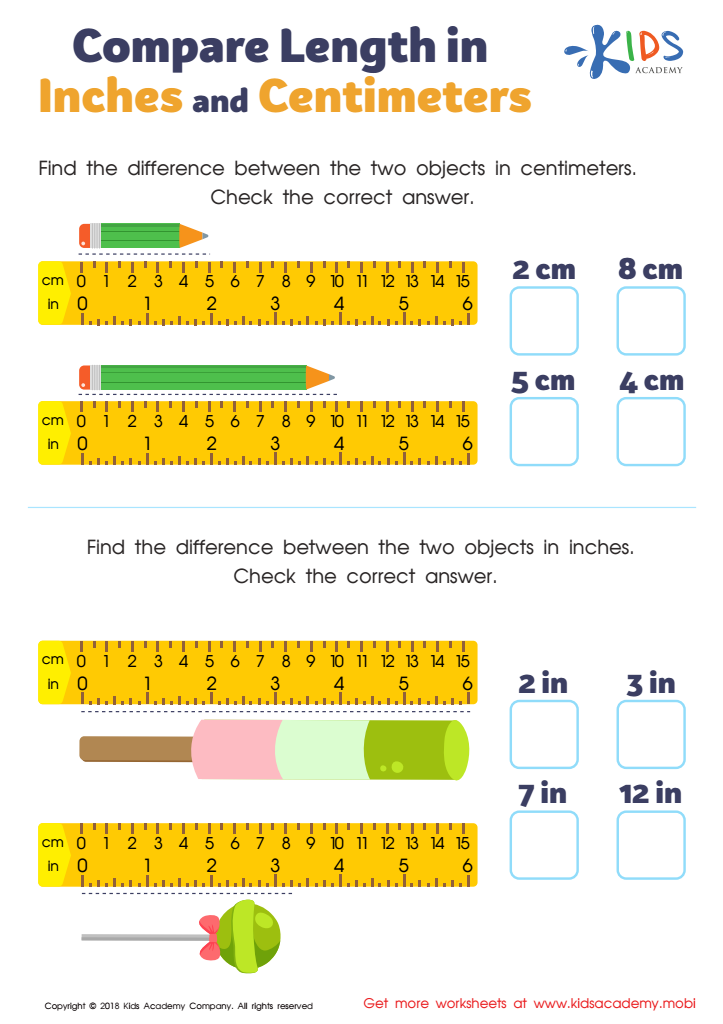
Compare Length in Inches and Centimeters Worksheet
This worksheet has your child measuring objects in both centimeters and inches. The first task requires measuring both objects in centimeters, then finding their difference. The second task is the same but in inches.
 Assign to My Students
Compare Length in Inches and Centimeters Worksheet
Worksheet
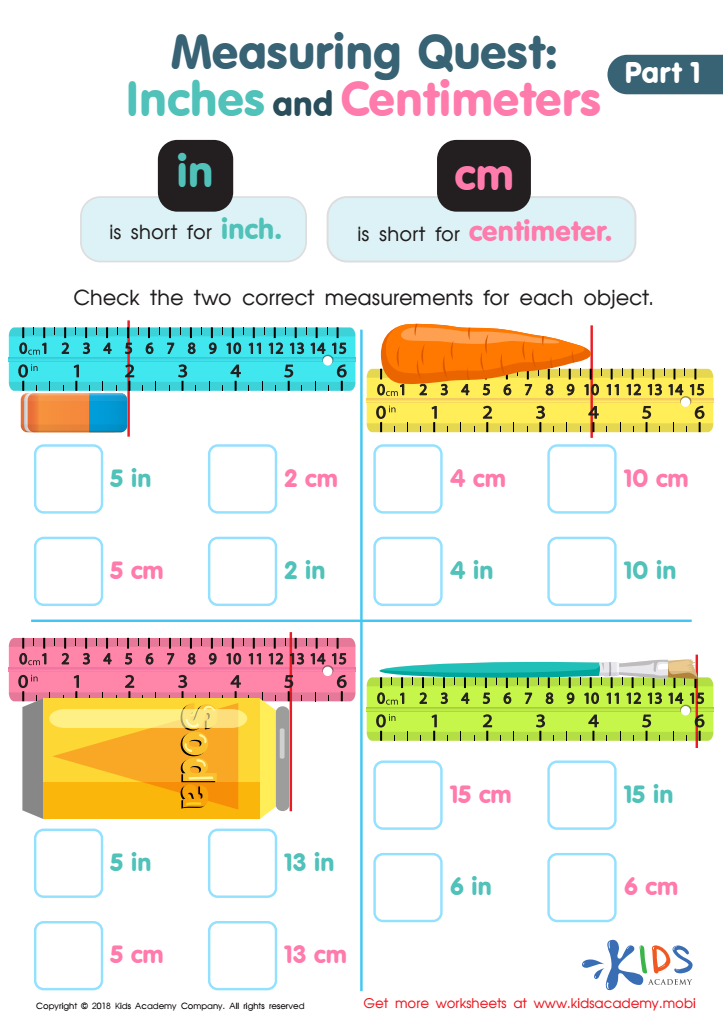
Measuring Quest: Inches and Centimeters Worksheet
Your child will measure items in both inches and centimeters and check the correct measurements from the options given. The metric ruler states 2.5 cm equals 1 inch, and 15 cm equals 6 inches. This worksheet helps ensure accurate measurements, despite the different figures.
Measuring Quest: Inches and Centimeters Worksheet
Worksheet
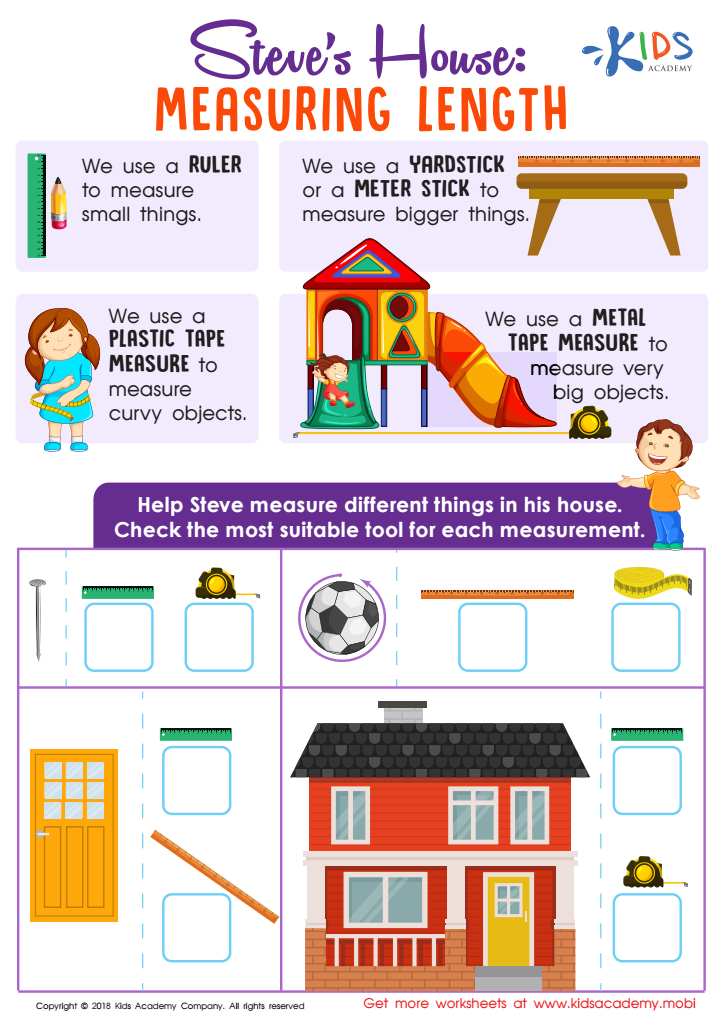
Steve's House: Measuring Length Worksheet
Introduce your kids to the various measuring tools and their uses. Explain how a ruler, plastic tape, yard stick, and metal tape measure are used to measure different objects. Guide them as they help Steve measure things in his home with the correct tool.
Steve's House: Measuring Length Worksheet
Worksheet
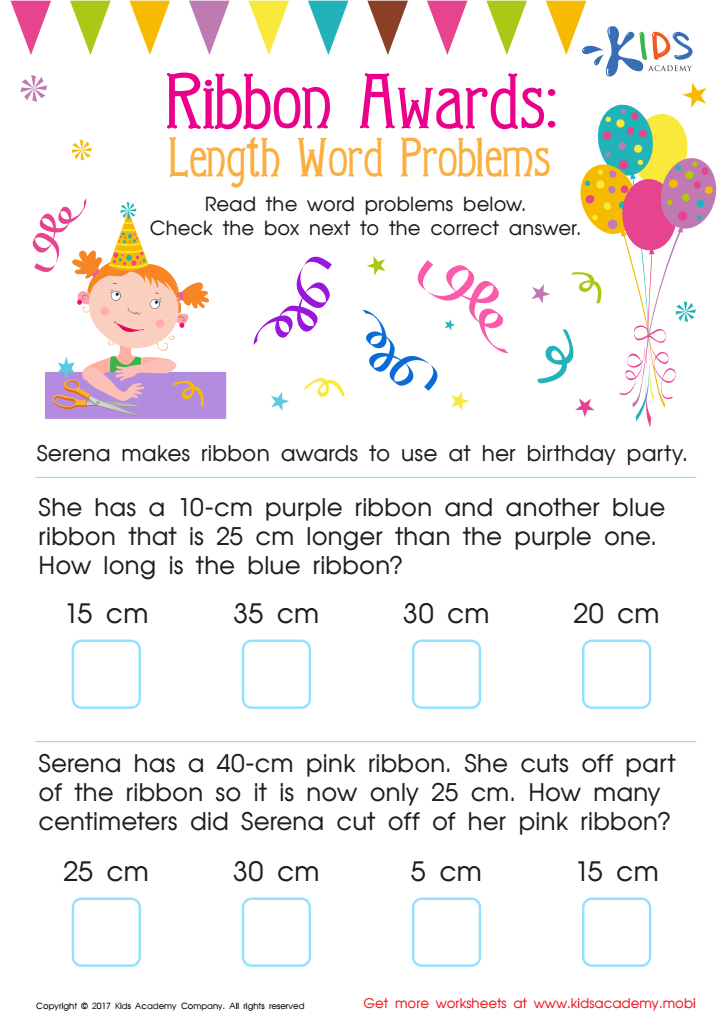
Length Word Problems Worksheet
Word problems help grade 2 students practice measurement using everyday scenarios. This worksheet provides practice in working with centimeters and inches, like measuring ribbon. It's a great way to learn and apply math skills.
Length Word Problems Worksheet
Worksheet
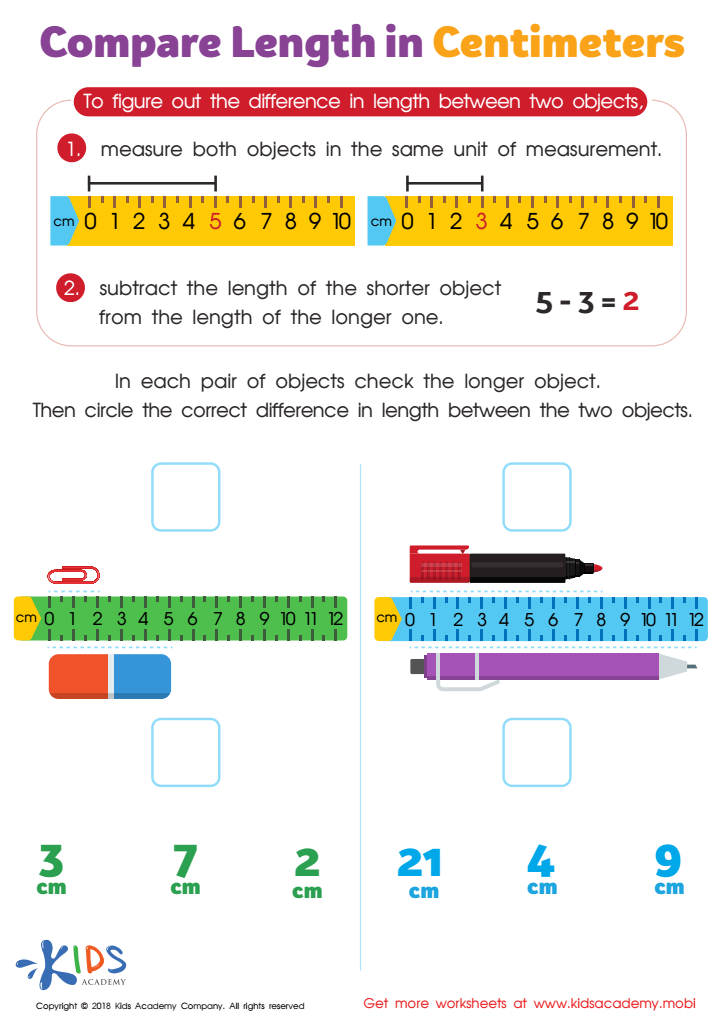
Compare Length in Centimeters Worksheet
To do this worksheet, your child needs to be able to measure accurately, add and subtract. They must measure both items and subtract the shorter from the longer to work out the difference in length.
Compare Length in Centimeters Worksheet
Worksheet
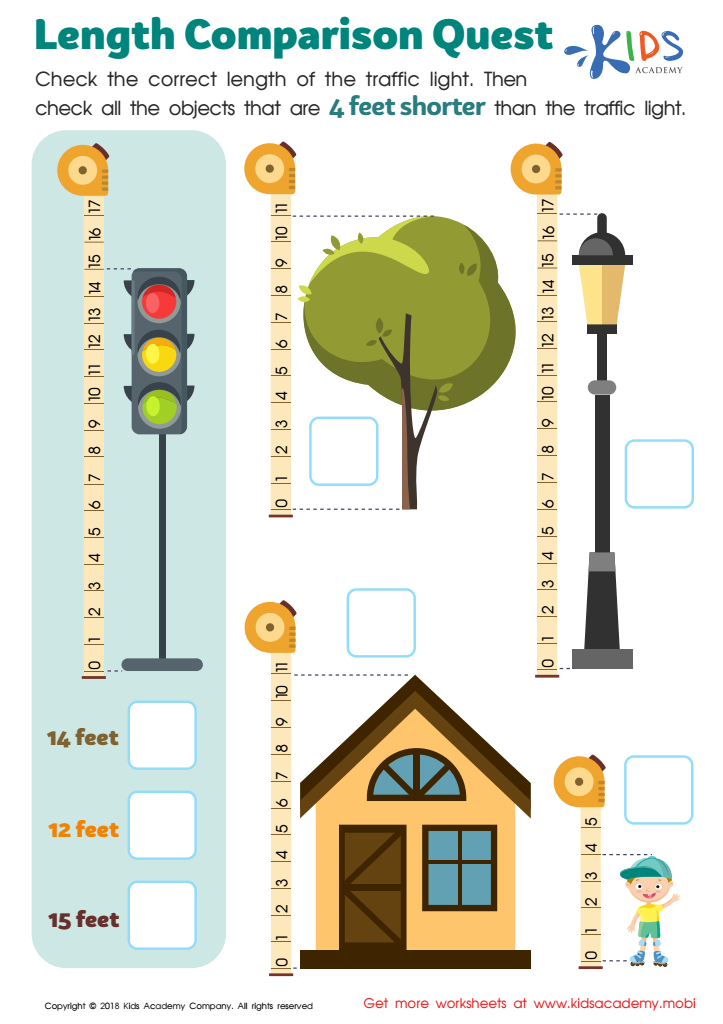
Length Comparison Quest Worksheet
Knowing measurement tools and how to use them is just the start. To be proficient, your kid must be able to accurately compare objects and their lengths. With the 'Length Comparison Quest' worksheet, they will check the correct length of the traffic light in the picture and then compare other objects to it, marking those that measure 4 feet shorter.
Length Comparison Quest Worksheet
Worksheet
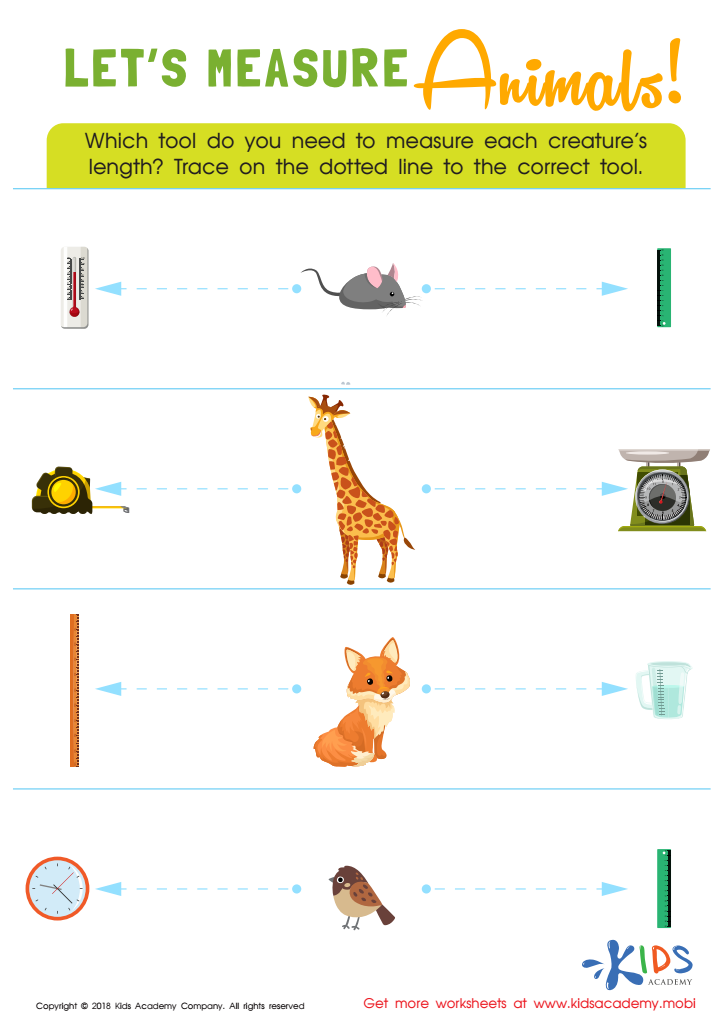
Let's Measure Animals! Worksheet
Have your students measure the length of animals like a mouse, giraffe, fox, and bird using this fun tracing sheet. They must carefully follow the dotted lines to the correct measuring tool, and by the end of the colorful worksheet, they'll know more about measuring and the different tools used.
Let's Measure Animals! Worksheet
Worksheet
Join Kids Academy for Free
Who is primarily going to use this learning content?








Understanding and mastering the concept of comparing lengths is crucial for 8-year-olds as it lays the foundation for various fundamental life skills and mathematical concepts. At this age, children are developing cognitive abilities that enable logical reasoning and critical thinking. Engaging with measurement, particularly comparing lengths, enhances their spatial awareness and helps them relate mathematical concepts to the real world.
Parents and teachers should care about this measurement skill because it fosters problem-solving abilities; children learn to analyze different objects and scenarios, developing strategies to determine which is longer or shorter. This skill also supports future learning, particularly in geometry and data interpretation, encouraging a more rounded understanding of mathematics.
Moreover, integrating measuring activities into daily life, such as cooking or crafting, can bridge the gap between education and real-world applications, making learning more meaningful and enjoyable. It reinforces the importance of measurement in daily tasks, from art projects to understanding distances. By nurturing this area of learning, adults help children build confidence, promoting a positive attitude towards math and science as they progress through their educational journey. Ultimately, fostering measurement skills in young learners equips them with essential tools for success in various academic and everyday contexts.








