
Historical Knowledge Multiplication Worksheets for 8-Year-Olds
5 filtered results
Difficulty Level
Grade
Age
-
From - To
Subject
Activity
Standards
Explore our engaging Historical Knowledge Multiplication Worksheets designed specifically for 8-year-olds! These interactive exercises combine math practice with fascinating historical themes, making learning multiplication both educational and fun. Our worksheets encourage young learners to enhance their multiplication skills while discovering important historical figures, events, and facts. Perfect for classroom use or at-home learning, these resources support critical thinking and retention by connecting math concepts with history. Help your child develop a love for learning as they sharpen their multiplication abilities and delve into the past. Bring history to life through mathematics today!
Favorites
With answer key
Interactive
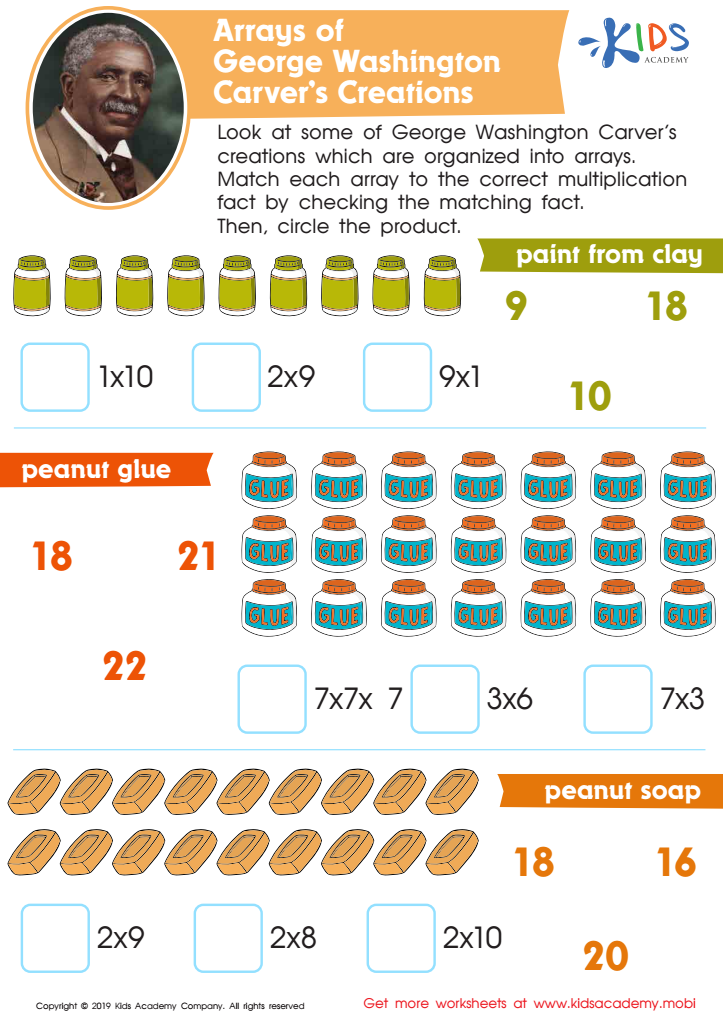
Arrays of George Washington Carver’s Creations Worksheet
Remind your child of what George Washington Carver created. Can they tell you? This worksheet has arrays with his creations. Match the array to the multiplication fact and help your child to circle the product.
 Assign to My Students
Arrays of George Washington Carver’s Creations Worksheet
Worksheet
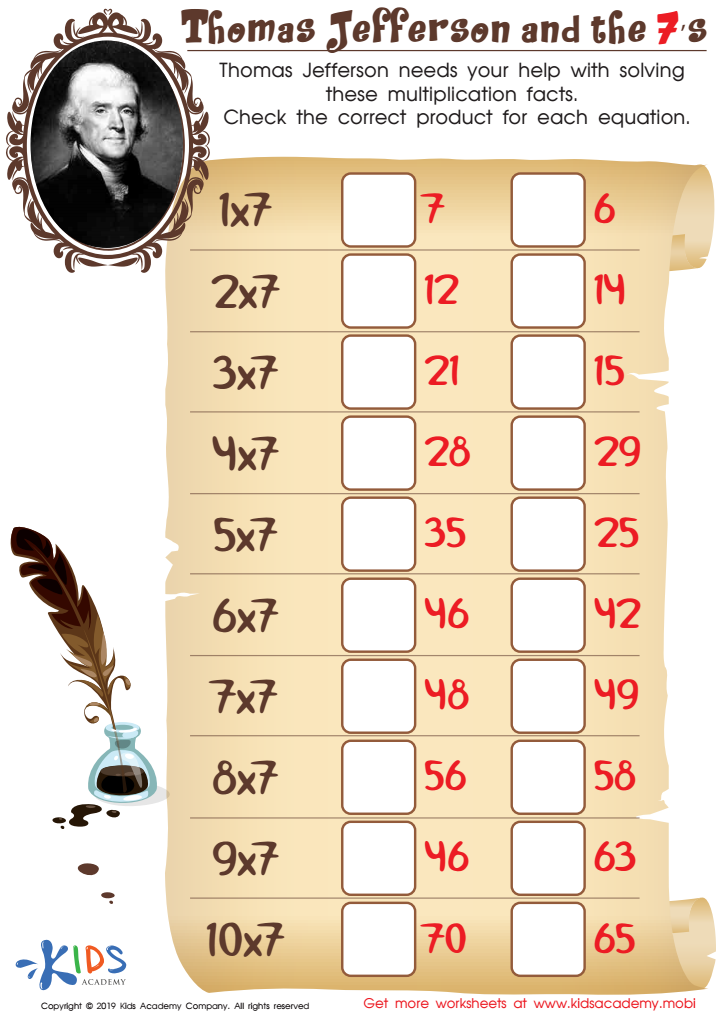
Thomas Jefferson and the 7’s Worksheet
Thomas Jefferson championed education and wants kids to know their times tables. Help your child with this worksheet focusing on 7's. Check the box for the correct answer for each multiplication problem. Make sure your child gets the facts right!
Thomas Jefferson and the 7’s Worksheet
Worksheet
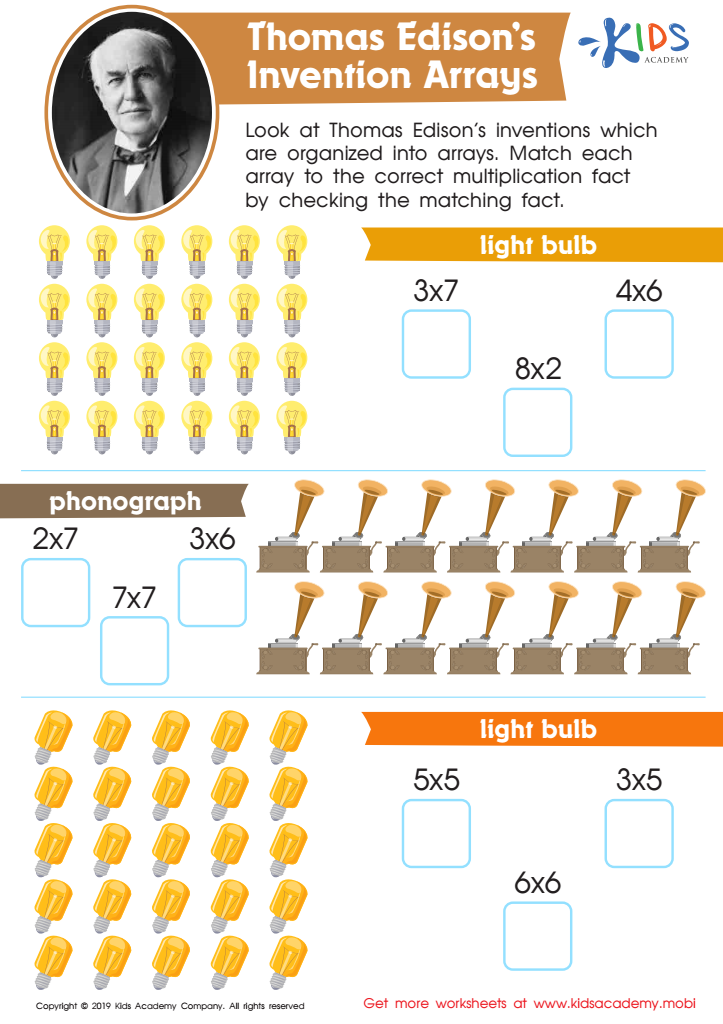
Thomas Edison’s Invention Arrays Worksheet
Test your students' knowledge on history by asking them what Thomas Edison invented. If they get the right answer, provide more information on other inventors. Check out this printout of Edison's light bulb inventions laid out in arrays. Get them to match each array to the correct multiplication fact.
Thomas Edison’s Invention Arrays Worksheet
Worksheet
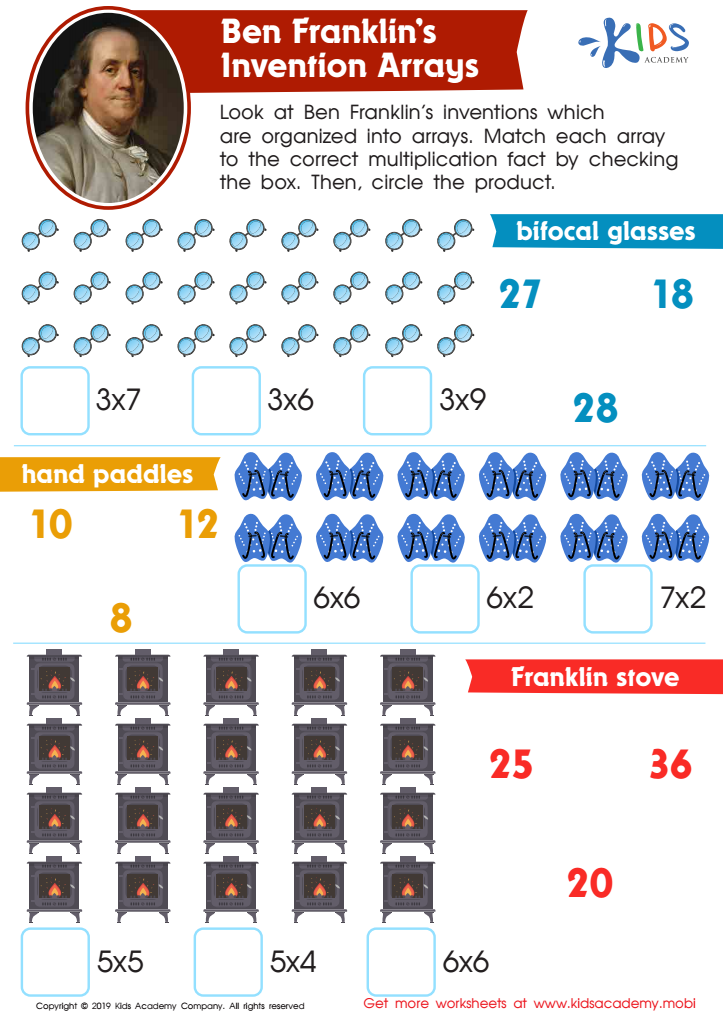
Ben Franklin’s Invention Arrays Worksheet
Have your child guess some of the inventors of the popular items we use today. For instance, the light bulb was invented by Thomas Edison. Look at Ben Franklin's inventions and help your kids match the arrays to the correct multiplication fact. Check the box and circle the product.
Ben Franklin’s Invention Arrays Worksheet
Worksheet
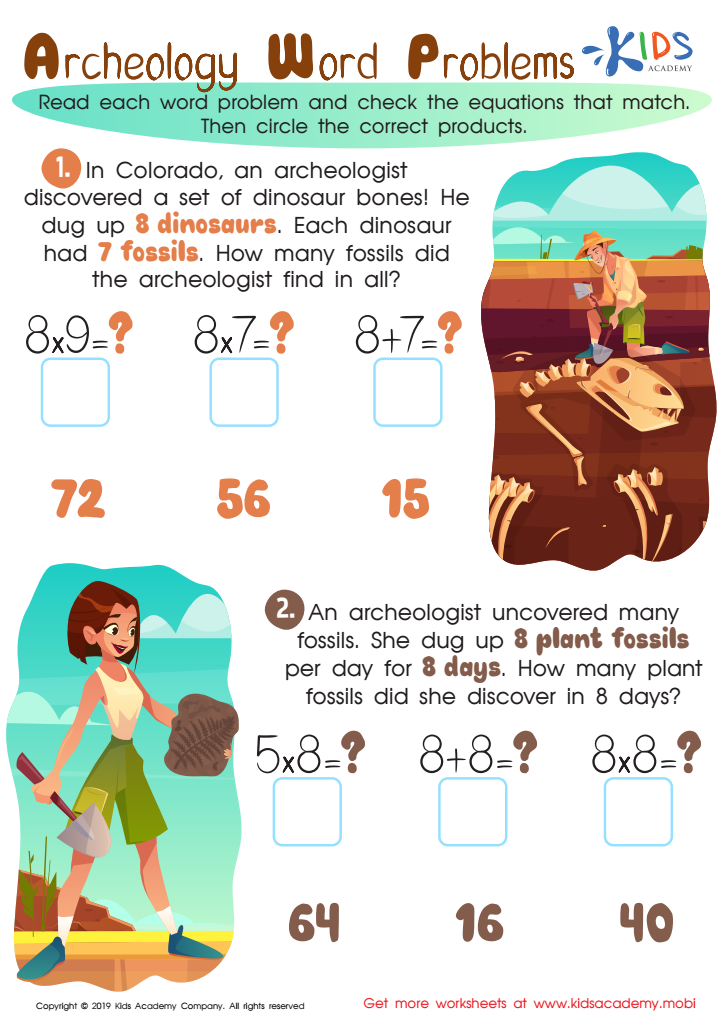
Archeology Word Problems Worksheet
Encourage your child to explore their career options! Show them an archeologist's job with this worksheet - featuring a picture of a dinosaur bone discovery. Read the accompanying text, then solve the word problems. Help your kids circle the correct answers to better understand this profession.
Archeology Word Problems Worksheet
Worksheet
Join Kids Academy for Free
Who is primarily going to use this learning content?







Historical Knowledge Multiplication involves guiding 8-year-olds to connect historical facts and events with mathematical concepts, sparking a deeper understanding of both history and math. Parents and teachers should care about this approach for several compelling reasons.
Firstly, it fosters critical thinking. By encouraging students to explore historical data, they learn to analyze patterns and draw conclusions—skills essential in both academic and real-world situations. For example, calculating population growth throughout history can lead to discussions about societal changes, making math more meaningful.
Secondly, it enhances engagement. Young learners often benefit from interdisciplinary instruction. By integrating history with math, educators can create lessons that resonate more with students, keeping their focus and interest alive. This approach can help transform subjects that some may find tedious into exciting explorations.
Lastly, it builds foundational skills. Understanding how to manipulate data and recognize historical trends is a vital skill that extends beyond the classroom. Children develop numeracy and literacy skills through multifaceted learning, positioning them better for future academic success.
In summary, Historical Knowledge Multiplication is an effective tool for educators and parents looking to enrich their children’s educational experience, molding well-rounded, informed citizens who can approach problems from various perspectives.








