Multiplication practice Times Tables Worksheets for 8-Year-Olds - Page 2
33 filtered results
-
From - To
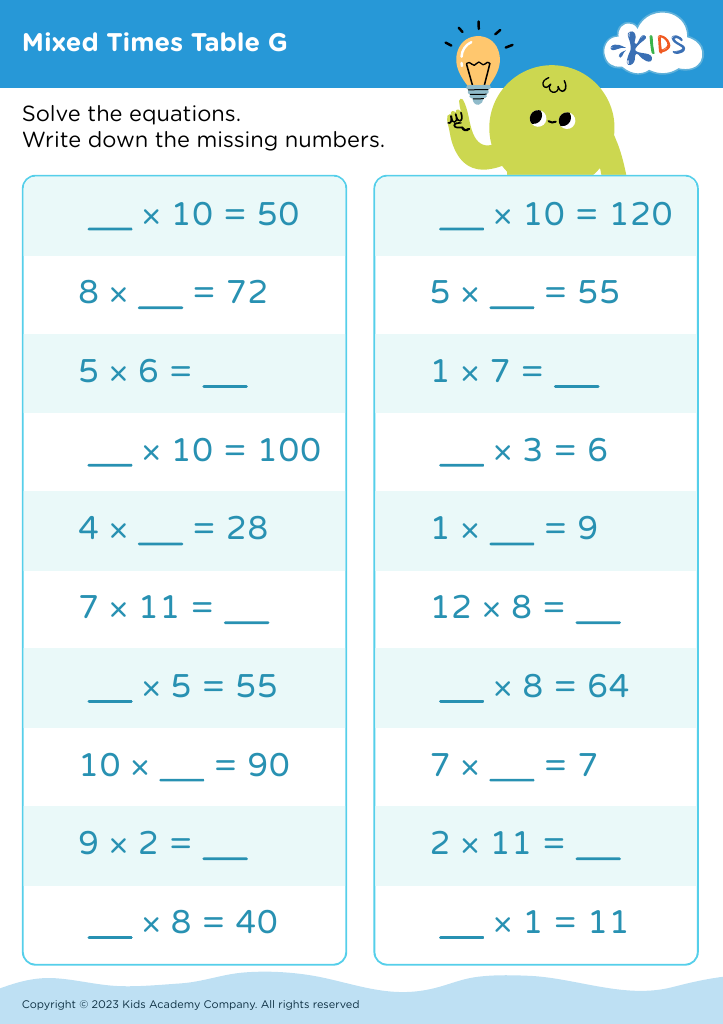
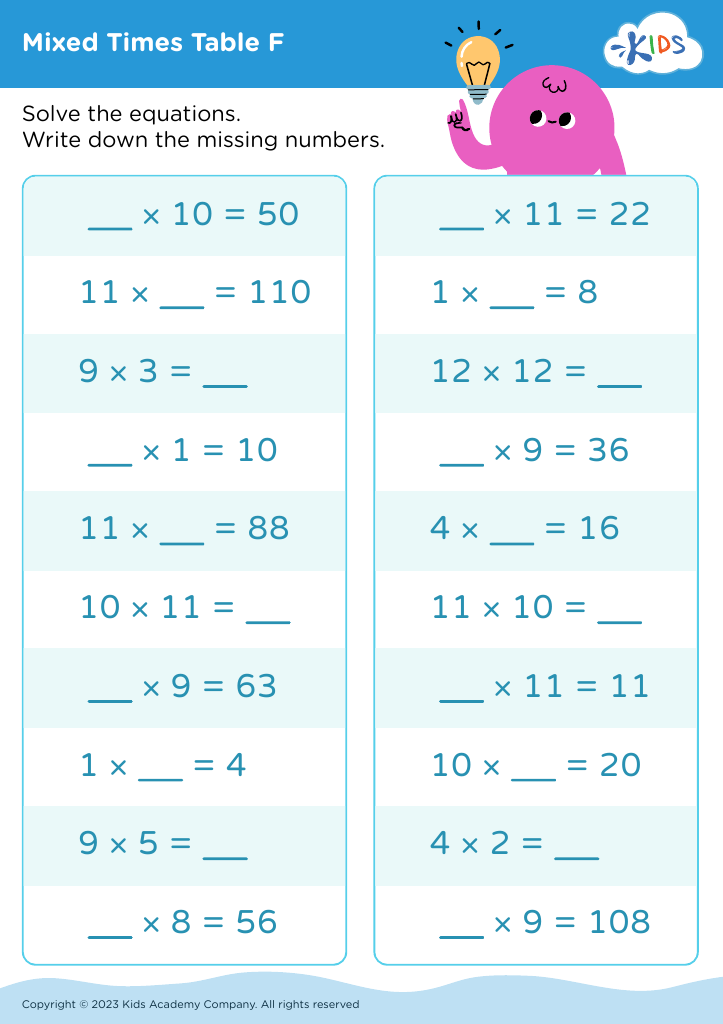
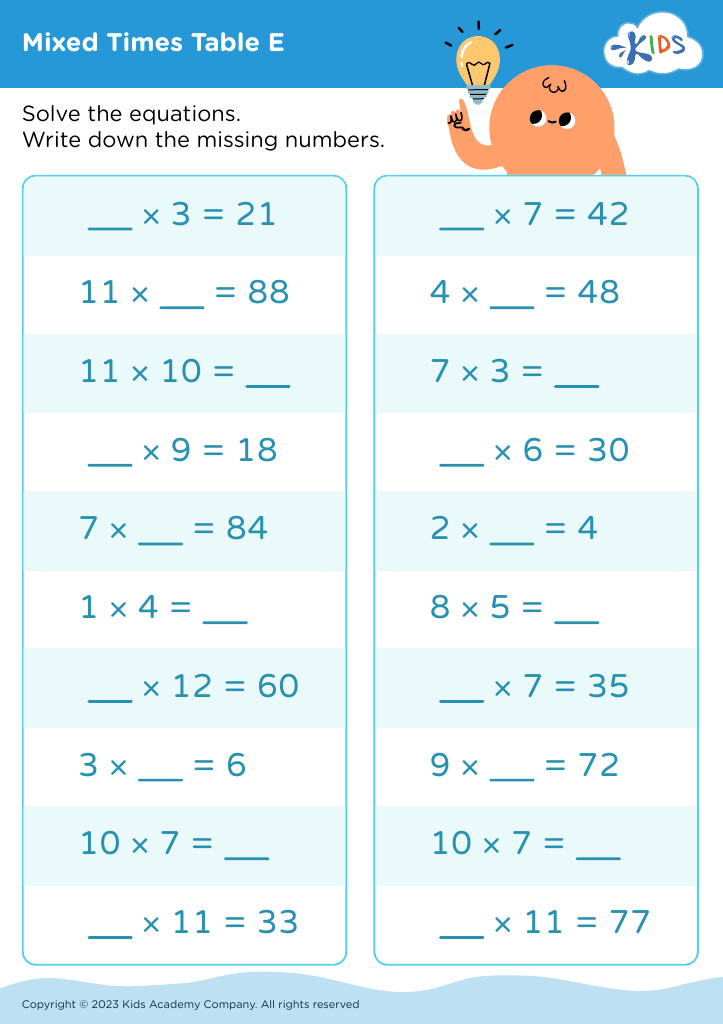
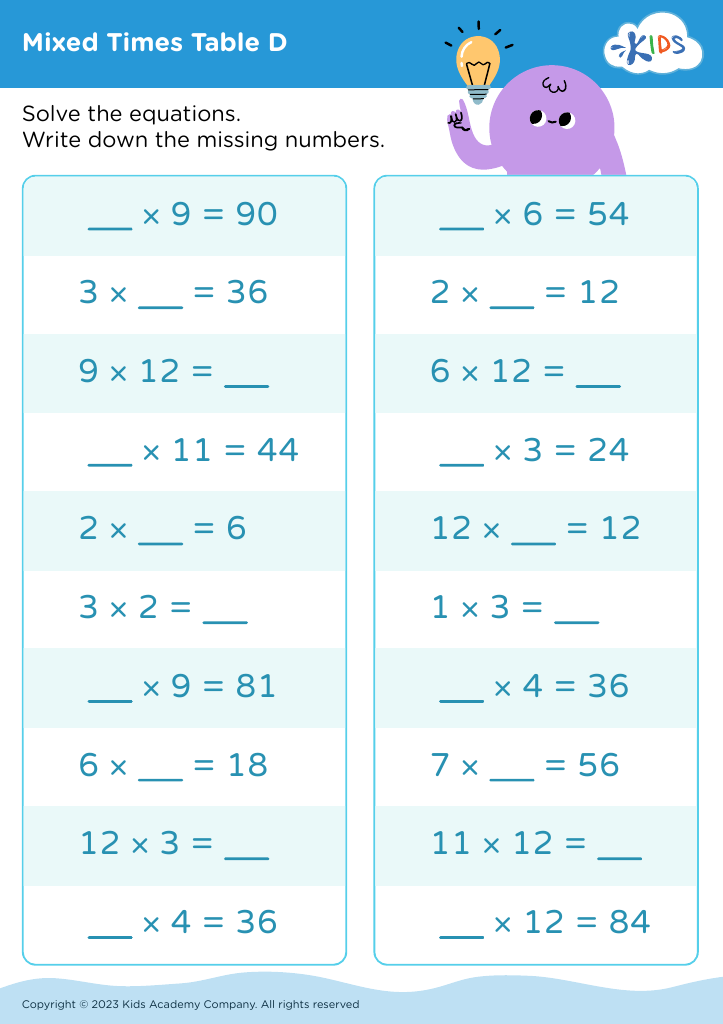
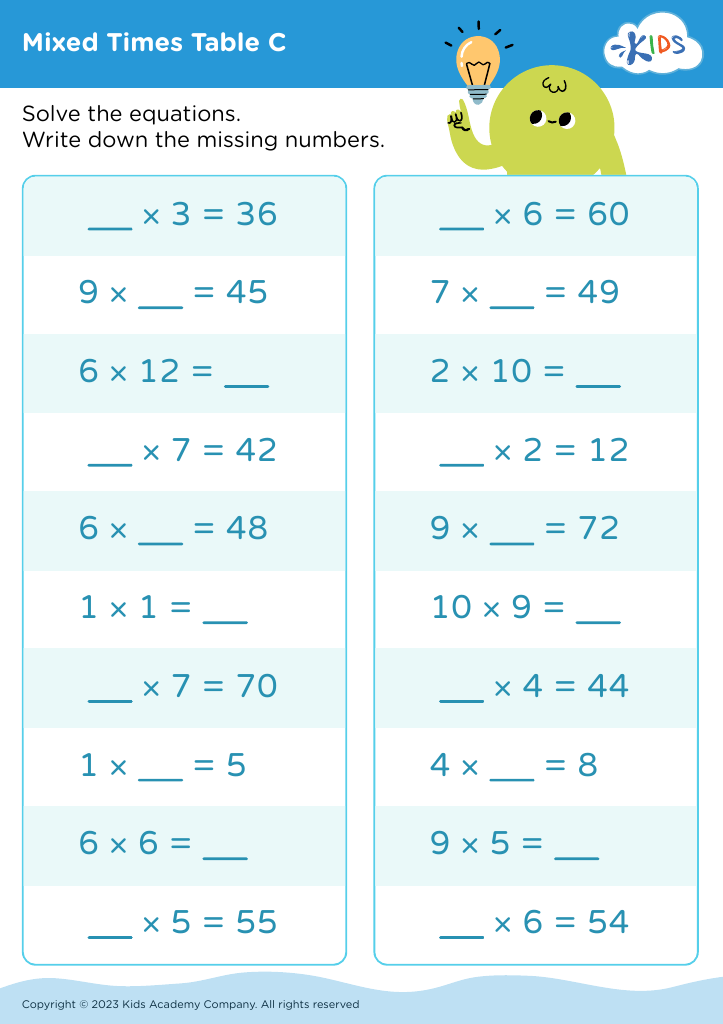
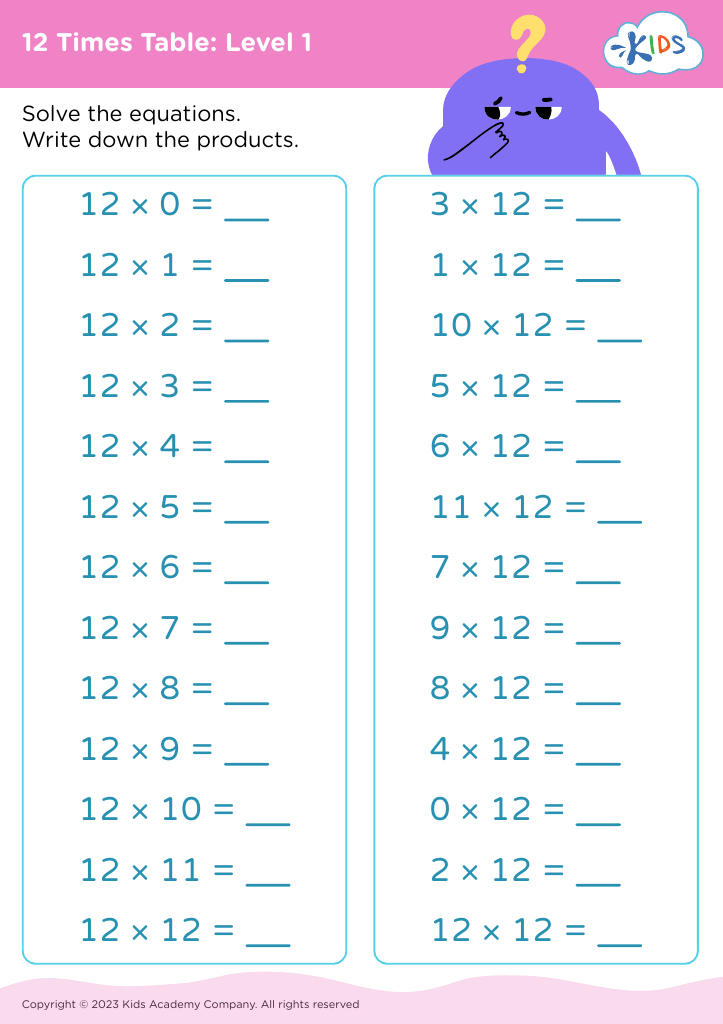
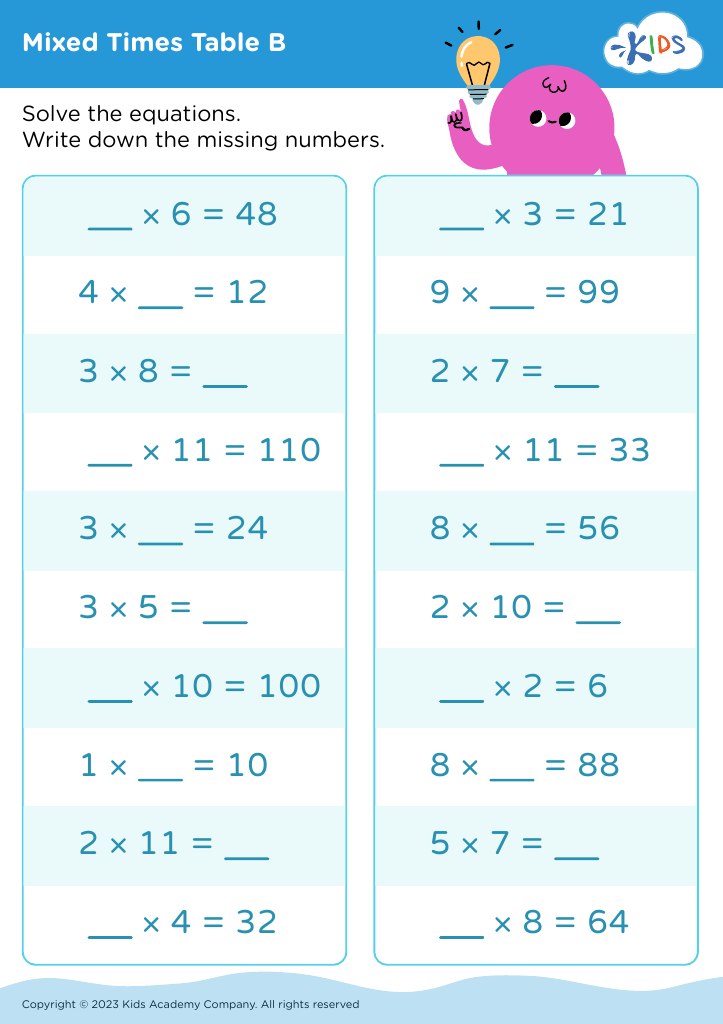
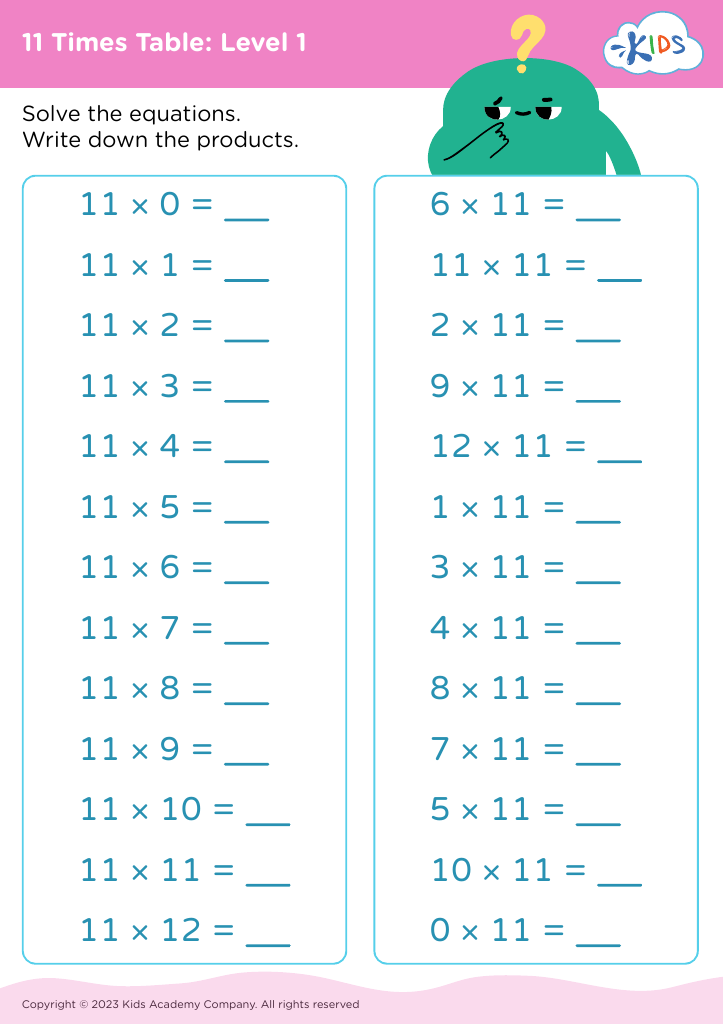
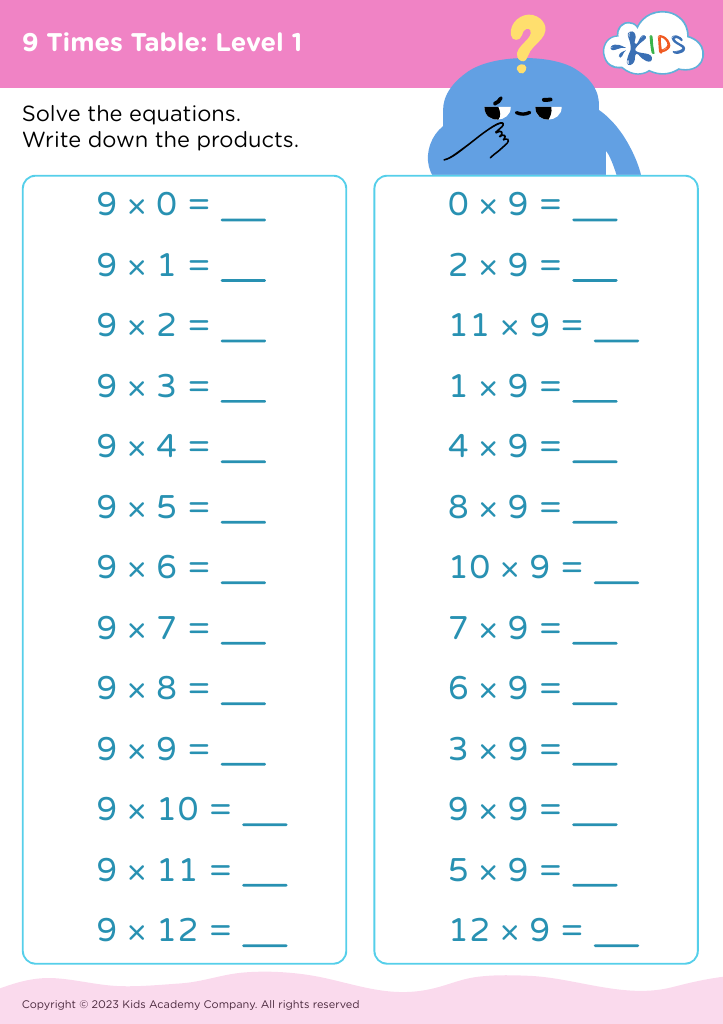




Multiplication practice and understanding times tables are crucial for 8-year-olds for several reasons. First, this foundational concept supports a child's overall mathematical learning and confidence. Mastering times tables helps students perform more complex math operations with ease, reducing anxiety and building a strong mathematical mindset. Second, proficiency in multiplication supports real-life skills. Children frequently encounter multiplication in daily activities, such as calculating the total cost of items or determining time durations. This practical application emphasizes why mastery is essential beyond the classroom.
Moreover, multiplication practice enhances cognitive development by improving memory and problem-solving skills. Regular engagement with times tables strengthens neural pathways, facilitating quicker and more efficient recall of information. Additionally, having a strong grasp of multiplication is tied closely to success in higher-level mathematics, including fractions, division, and algebra. This lays a strong academic foundation, enabling children to approach future mathematical challenges with confidence.
For parents and teachers, prioritizing multiplication practice for 8-year-olds means fostering an environment that encourages disciplined study habits and resilience. It also provides children with a sense of achievement and competence, motivating them to continue seeking knowledge and cultivating a lifelong love for learning. By investing in their multiplication skills at an early age, adults are effectively setting children up for long-term academic and personal success.








