Coloring skills Building Vocabulary Worksheets for 8-Year-Olds
3 filtered results
-
From - To
Discover our "Coloring Skills Building Vocabulary Worksheets for 8-Year-Olds" at Kids Academy! These meticulously crafted worksheets combine the creativity of coloring with the essential task of vocabulary building, ensuring a fun and educational experience for young learners. Designed specifically for 8-year-olds, each worksheet encourages children to engage with words meaningfully and joyfully. By connecting colorful visuals with new vocabulary words, these worksheets not only enhance language skills but also spark creativity and enthusiasm for learning. Perfect for use at home or in the classroom, help your child expand their vocabulary while enjoying a creative activity.
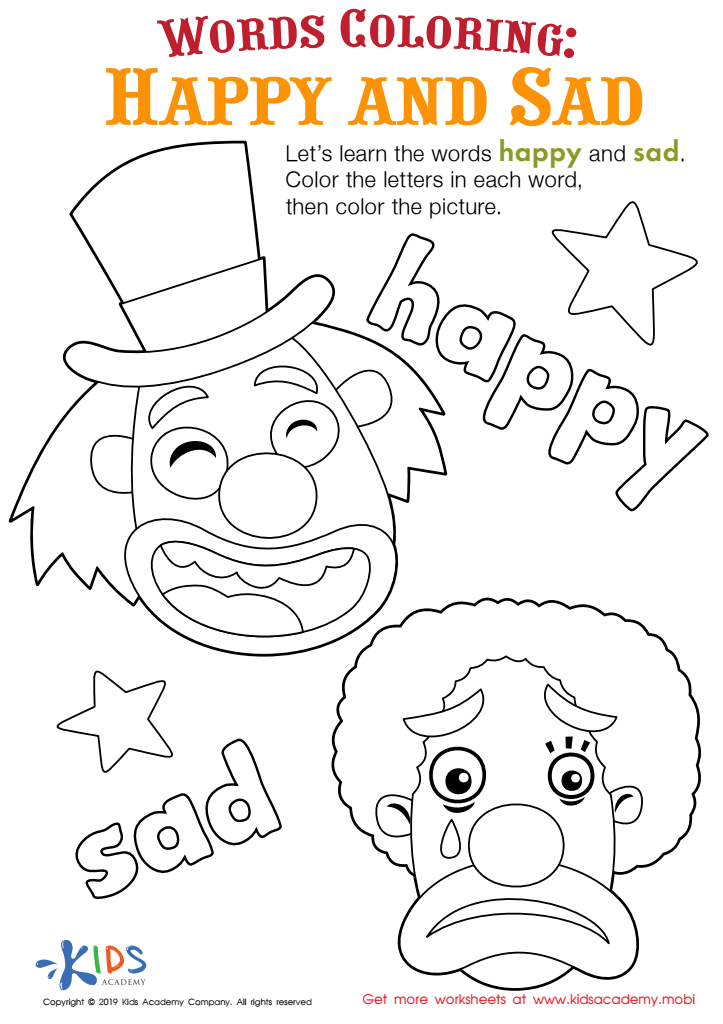
Happy and Sad Words Coloring Worksheet
 Assign to My Students











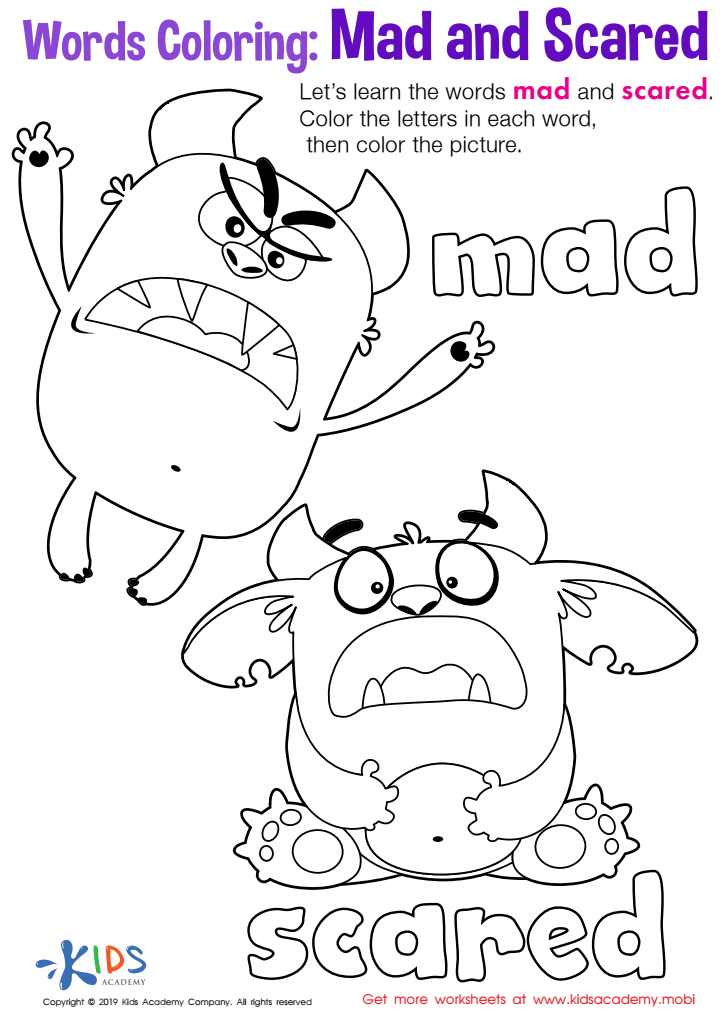
Mad and Scared Words Coloring Worksheet
Assign to My Students
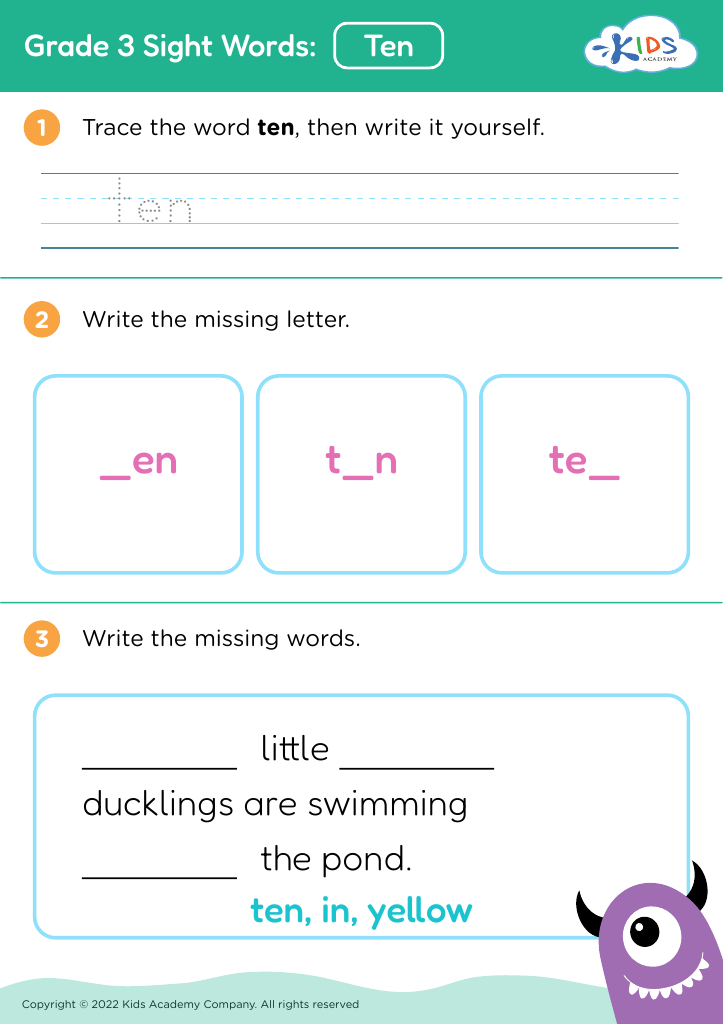




.jpg)


Coloring is more than just a fun activity; it plays a significant role in children's developmental process, especially around the age of 8. Firstly, it enhances fine motor skills through the precise movements required to stay within lines, providing crucial practice for writing. Secondly, it supports cognitive development by teaching children about boundaries, shapes, patterns, and colors.
Building vocabulary through coloring activities, such as themed coloring books accompanied by new words, allows for simultaneous learning and reinforcement. For example, a coloring book focused on animals can introduce terms like "herbivore," "habitat," or "camouflage." When children color a picture of a chameleon blending with its environment, they can better grasp the concept of 'camouflage' through planned, hands-on interaction.
Oral discussions during or after coloring can further reinforce new vocabulary. When parents and teachers ask questions like, "What color did you use for the lion?" it encourages descriptive language and contextual use of new words. This interactive method of learning enhances memory retention as the child associates words with vivid, self-created images.
Thus, investing time in coloring activities with an educational twist supports fine motor development and adds a meaningful and engaging layer to vocabulary acquisition, forming a multi-faceted approach in fostering linguistic and cognitive growth.








