Phonics practice Building Vocabulary Worksheets for 8-Year-Olds
3 filtered results
-
From - To
Enhance your child's reading skills with our Phonics Practice Building Vocabulary Worksheets designed specifically for 8-year-olds. These engaging worksheets focus on phonics essentials, helping students decode words, recognize patterns, and improve overall vocabulary. Through fun exercises and interactive activities, children will develop crucial reading strategies that foster confidence and comprehension. Our resources cater to different learning styles, ensuring each child can grasp phonics concepts effectively. With a blend of creativity and structured practice, these worksheets promote literacy skills while keeping the learning experience enjoyable. Visit our website for printable activities that support phonics mastery and vocabulary enrichment effortlessly!
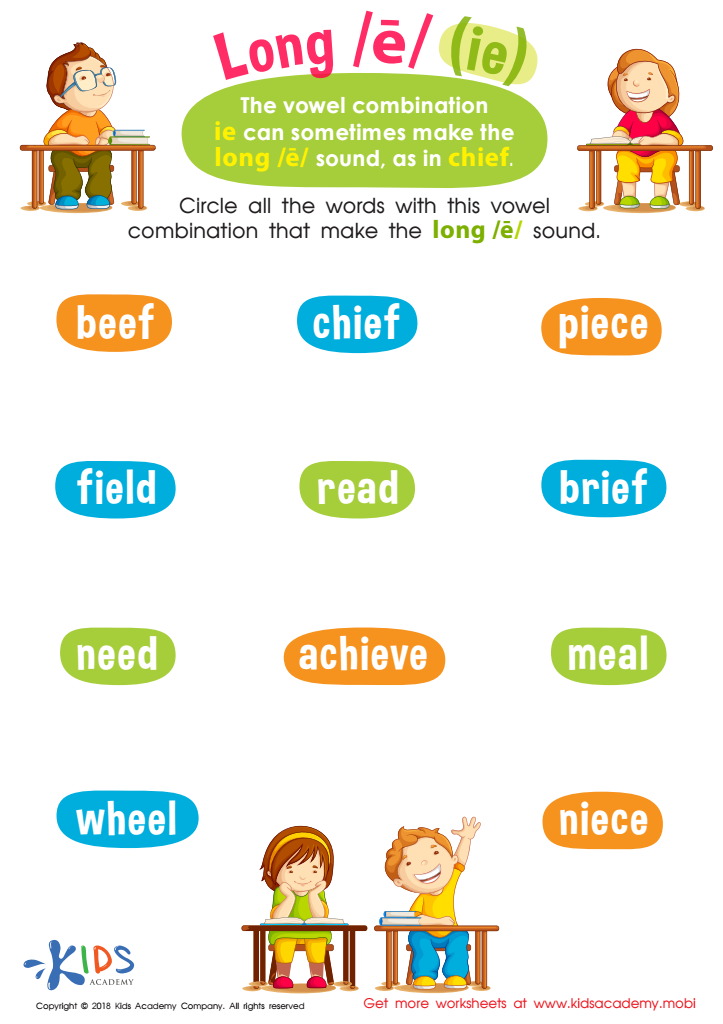
Reading: Long E and IE Worksheet
 Assign to My Students











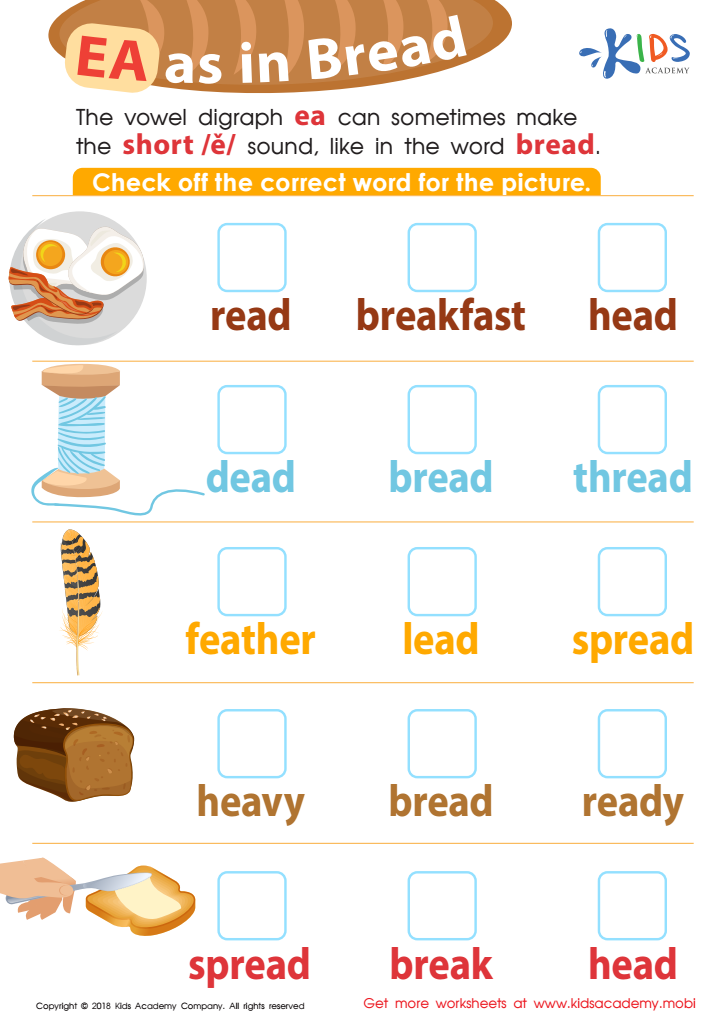
Reading: EA as in Bread Worksheet
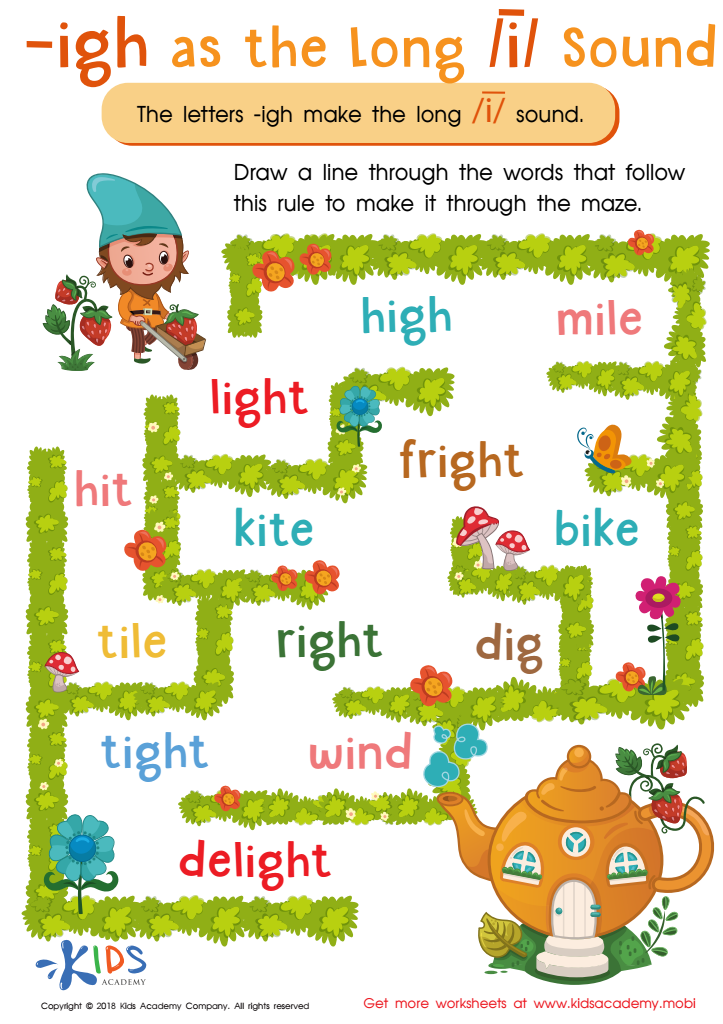
Reading: IGH as Long I Worksheet








Phonics practice and vocabulary building are crucial elements in the literacy development of 8-year-olds, and both parents and teachers should prioritize these components for several reasons. Firstly, phonics is the foundation of reading, helping children understand the relationship between letters and sounds. Proficient phonics skills enable them to decode new words, enhancing reading fluency and comprehension. Consequently, a strong grasp of phonics empowers children to explore texts more confidently, fostering a love for reading.
In conjunction with phonics, vocabulary development plays an essential role in literacy. A robust vocabulary enables children not only to understand what they read but also to express their ideas articulately. Exposure to new words, through spoken language and reading materials, enhances cognitive skills and critical thinking, essential for academic success.
Furthermore, parents and teachers who actively engage in phonics and vocabulary practice contribute to a child's overall confidence and motivation in learning. This partnership creates a supportive environment, reinforcing the skills learned in school and encouraging a lifelong love for literacy. By caring about and investing in these practices, parents and teachers can equip children with the necessary tools for educational achievement and future success.








