Phonics recognition Building Vocabulary Worksheets for 8-Year-Olds
4 filtered results
-
From - To
Enhance your 8-year-old's literacy skills with our Phonics Recognition Building Vocabulary Worksheets! Designed to make learning engaging, these worksheets focus on promoting phonics knowledge while expanding vocabulary. Students will enjoy various activities that strengthen their ability to decode words, recognize sounds, and understand letter patterns. Each worksheet is crafted to provide a fun yet educational experience, helping children gain confidence in reading. By practicing phonics recognition, kids will build a rich vocabulary, laying a solid foundation for future literacy success. Explore our comprehensive collection today to engage young learners in overcoming reading challenges while fostering a love for words!
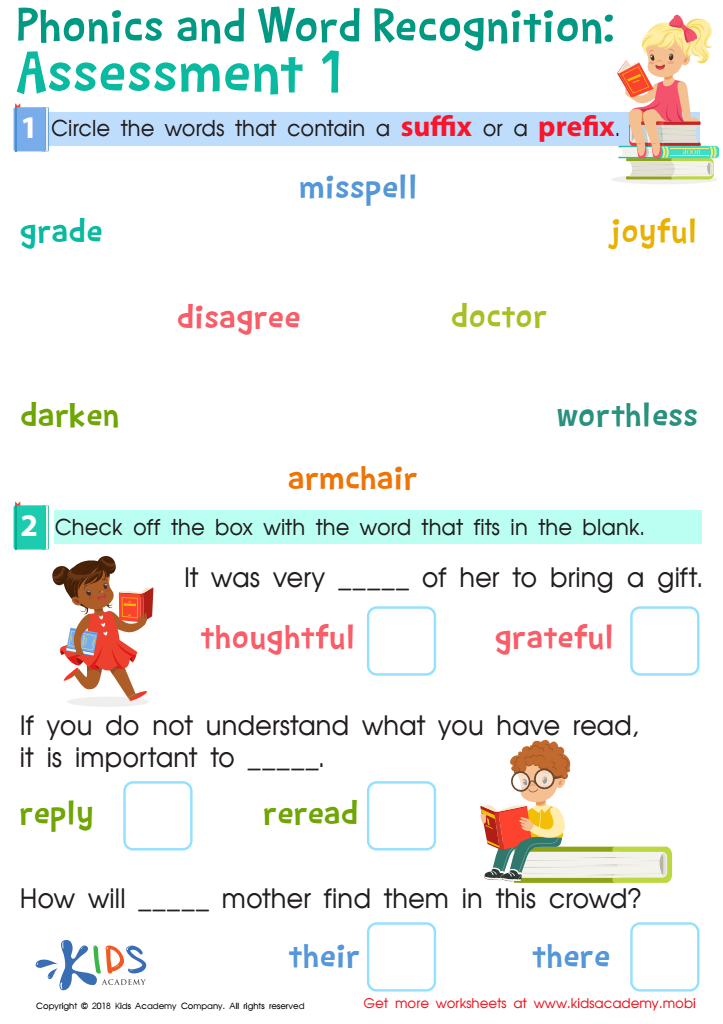
Phonics and Word Recognition: Assessment 1 Worksheet
 Assign to My Students











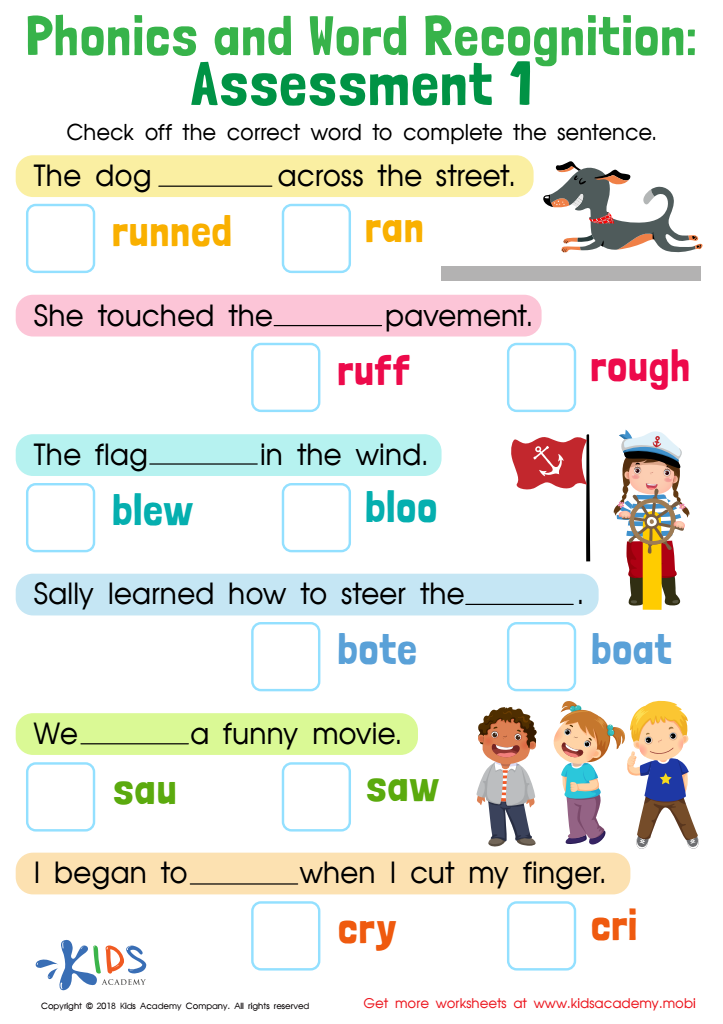
Phonics and Word Recognition: Assessment 1 Worksheet
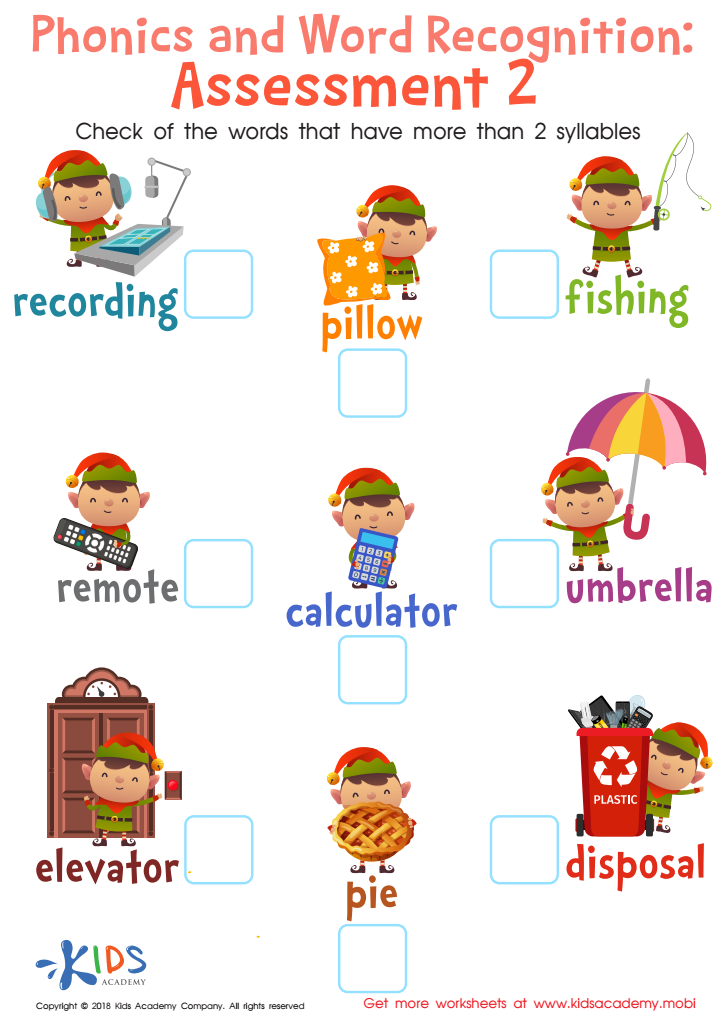
Phonics and Word Recognition: Assessment 2 Worksheet
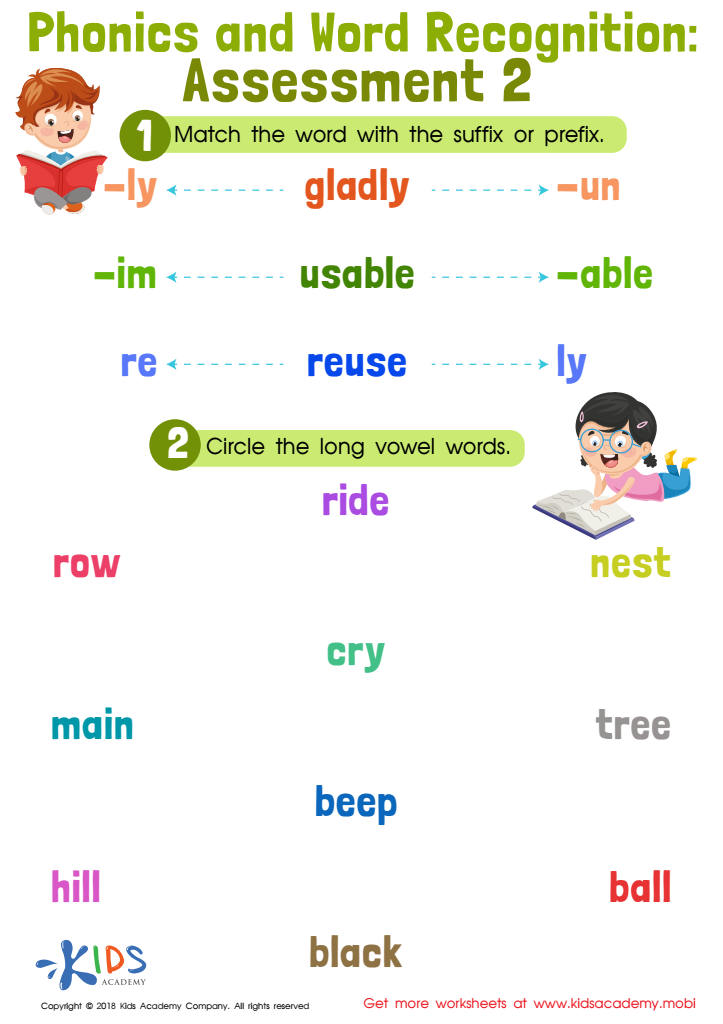
Phonics and Word Recognition: Assessment 2



.jpg)


.jpg)

Phonics recognition and building vocabulary are crucial components of literacy development for 8-year-olds, impacting their overall academic success and love for reading. At this age, children are still developing foundational reading skills, and a strong grasp of phonics helps them decode new words independent of assistance. This skill is essential for encouraging fluent reading, which in turn fosters comprehension and enjoyment of texts.
Teachers and parents play a vital role in enhancing children's phonics knowledge and vocabulary. When children can confidently recognize phonetic patterns, they feel empowered to tackle unfamiliar words in books, bridging the gap between spoken and written language. Furthermore, a robust vocabulary lays the groundwork for effective communication and comprehension across all subject areas, enabling children to articulate their thoughts and engage critically with content.
By cultivating these skills at home and in the classroom, educators and caregivers ensure children are prepared for more complex reading materials in the future. Additionally, early investment in phonics and vocabulary not only boosts academic achievement but also nurtures a lifelong love for reading—an invaluable tool for learning throughout life. Ultimately, supporting these skills at age 8 paves the way for success in both school and beyond.








