
Understanding context Building Vocabulary Worksheets for 8-Year-Olds
3 filtered results
Difficulty Level
Grade
Age
-
From - To
Subject
Activity
Standards
Enhance your child's reading savvy with our expertly crafted "Understanding Context Building Vocabulary Worksheets" for 8-year-olds. These engaging activities are designed to help young readers effortlessly decipher words through context clues, boosting their comprehension and vocabulary skills. Each worksheet provides practical exercises that challenge kids to infer meaning from surrounding text, promoting critical thinking and language proficiency. Perfect for both classroom and home use, our resources ensure children gain the confidence and mastery necessary for academic success. Empower your child today with dynamic learning tools that make understanding context both fun and educational. Visit Kids Academy for top-tier worksheets that inspire growth.
Favorites
With answer key
Interactive
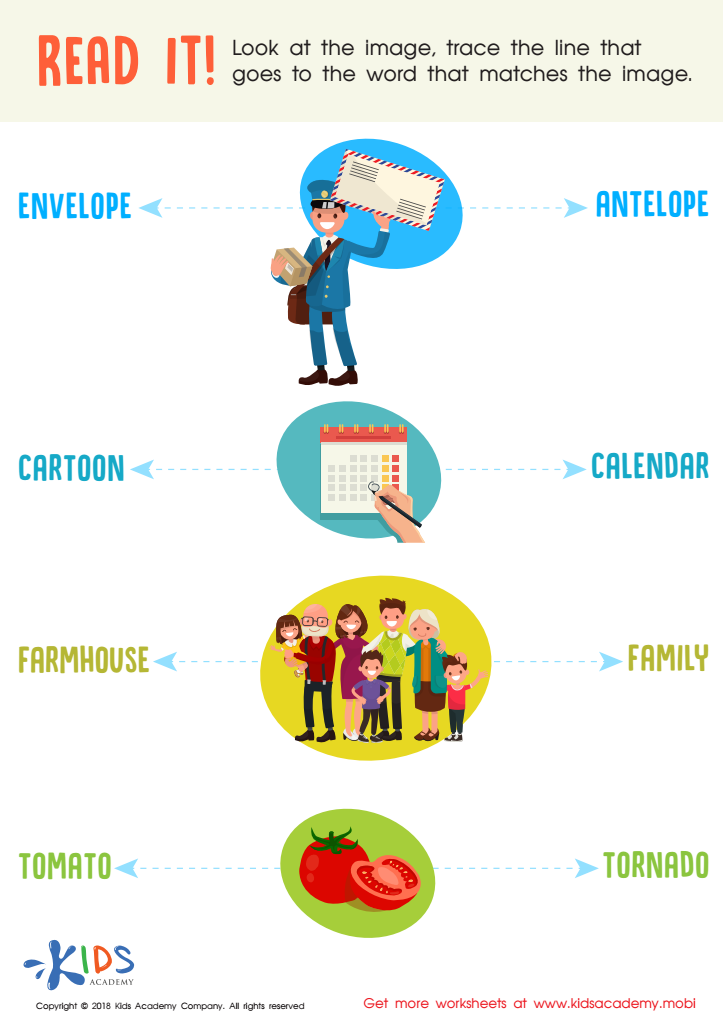
Read It! Worksheet
Point to each image on this worksheet, asking your child what it is. Read the 2 options then help your child trace the line to the correct word. It'll keep them engaged and provide visual stimulation.
 Assign to My Students
Read It! Worksheet
Worksheet











Join Kids Academy for Free
Who is primarily going to use this learning content?






.jpg)

Understanding context and building vocabulary are crucial for the development of 8-year-olds, and it's essential for parents and teachers to focus on these areas. At this age, children are at a critical stage of developing their language skills, which serve as the foundation for their future academic success and social interactions.
Understanding context helps children comprehend the meaning of words and sentences based on the situation, going beyond simple definitions. It enables them to make connections between ideas, understand nuances, and appreciate different perspectives. This skill is incredibly important not just in reading and writing, but also in everyday communication and problem-solving. For example, understanding the context of a word in a story enhances a child's ability to visualize the plot, infer meanings, and engage deeply with the material.
Building a rich vocabulary, on the other hand, empowers children to express themselves more clearly and accurately. A robust vocabulary is linked to better reading comprehension, which is essential for academic achievements across subjects. It also boosts a child’s confidence in speaking and listening, which are key components of emotional and social development.
Parents and teachers should thus prioritize these aspects through engaging activities, such as reading diverse books, playing word games, and having meaningful conversations. This investment promotes a well-rounded linguistic growth that paves the way for lifelong learning and effective communication.








